ITV expects revenues to recover in 2022 and return to pre-pandemic levels.
The group also hopes to expand on international business and increase global formats in countries around the world.
Commenting on ITV’s vision for the next five years, Carolyn McCall the chief executive said: “The vision we set out for ITV Studios in 2018 was to strengthen and grow our UK and international production business into a high quality and diversified global business.
“We have made very significant progress and we are now a key scaled player in the global content market, diversified by genre, geography and customer base and we are in a position of strength to take advantage of the growing demand for quality content.”
Also commenting was managing director of ITV Studios, Julian Bellamy, who added: “Today we are the number one commercial producer in the UK, one of the largest independent producers of unscripted content in the US and one of the biggest global producer/distributors in the world.”
MADE has revised its revenue guidance amid supply chain issues.
The home retailer has warned investors of a £12m to £15m loss to earnings, now standing at between £365m and £375m.
“MADE has continued to deliver significant progress on its key strategic priorities as set out at the time of the IPO,” said the group in a statement today.
“On supply chain, the group has built stock positions to deliver significantly better lead times to consumers for 2022 and beyond as orders placed with suppliers are now in or close to our warehouses.”
The group debuted on the London Stock Exchange this year.
Dr Martens has posted a 46% increase in half-year profits to £61.3m.
Revenues also jumped 16% in the period between April and September to £369.9m.
Growth in sales was particularly high in the US, where the business grew 57%. In Europe, the group grew 12%.
“Our strong first-half performance combined with the continued momentum in DTC trading into the second half gives us confidence in achieving market expectations for the full year. I remain hugely excited about the growth potential of the Dr. Martens brand.,” said chief executive, Kenny Wilson.
Dr Martens opened 13 stores in the first of the year and will open a further 10 in the second half of the year.
Video editing technology company Blackbird plc have announced a successful capital raise to fund expansion into new markets.
The focus will be on their ‘Powered by Blackbird’ intellectual property that provides lighting fast video editing and content publishing to organisations.
The funds will be deployed in the growth of their engineering team and expansion of their patent portfolio.
“With our core business in rude health we are incredibly excited to announce a placing to raise £8.0 million to enter new markets with our “Powered by Blackbird” intellectual property,” said Blackbird plc CEO, Ian McDonough.
“Recent contract wins for the Company include Univision, Eurovision Sport and a further expansion with TownNews to 80 regional US stations. “Powered by Blackbird” already has its first customer in our current sector focus of professional Media and Entertainment. The Company has also recently been awarded “Best Tech Company 2021” by the SportsPro OTT awards.
“While our reputation builds in the professional Media and Entertainment vertical, our technology has advanced through API development and the first “Powered by Blackbird” licence deal has shown our applicability to companies across multiple video markets. The creator economy, enterprise video and content distribution markets are of huge scale and have attractive growth rates offering a massive opportunity built around our existing intellectual property.”
Blackbird have recently posted record results for the six months to 30th June which saw revenues rise 21% to £867k.
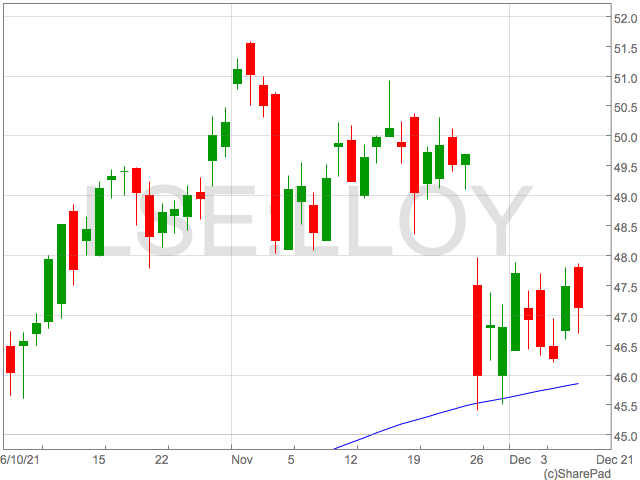
The Lloyds share price has was subject to heighten volatility as the Autumn started but has since become stuck in a very tight trading range.
While this may not be an immediate cause for concern for some, it does raise the question why Lloyds shares haven’t joined in the rally to the extent other companies have since the announcement of the new COVID variant.
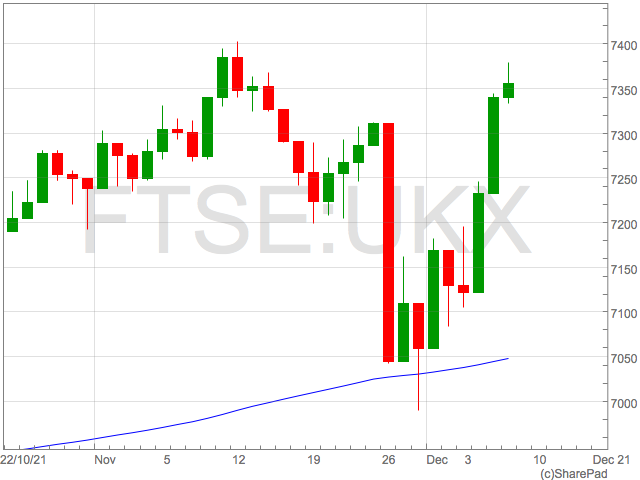
Omicron was announced 26th November and caused the most severe selling of equities in 2021.
All industry groups were hit in a broad sell off as the market panic sold into low volumes due to the Thanks Giving Holiday.
The Lloyds share price was particularly heavily hit that day giving up more than 7% of it’s value. However, unlike many shares in the FTSE 100, Lloyds is yet to recover the losses recorded since.
Indeed, Lloyds shares are down 4.88% from the close 25th November 2021 at the time of writing. This ranks Lloyds 89th out the 100 shares in the FTSE 100 since in terms of performance since the close 25th November. Darktrace is the worst performer, down 13%, whilst BHP is the top performer, gaining 7.9%.
Lloyds shares had previously surged following strong UK economic news that significantly increased the chances of a rate hike in the bank’s December meeting.
#Markets appear to be deciding that the #Omicron variant is not going to have too much impact on the recovery. The US Fed and Bank of England meet next week. Will they have a similar view? It's time to normalise #interestrates and "retire" transitional.
With possible economic disruption caused by the new Omicron variant, Lloyds may miss out on the opportunity to achieve increased Net Interest Margins with higher rates, if the Bank of England keeps rates on hold.
This will not only be a concern for investors around the December BoE meeting, but will persist into 2022 as uncertainty reigns.
With the UK government outlining new restrictions, the UK could well see a economic downturn in Q1 which would not only push back expectations of a rate hike, but even impact the quality of Lloyds’ assets such as mortgages and loans.
The UK government has now ended furlough and may be hesitant to reintroduce fresh measures alongside COVID restrictions. This would have a detrimental impact on the UK economy and UK-focused shares such as Lloyds.
If this scenario plays out, investor should expect the Lloyds share price to underperform the wider market in a similar way to the last two weeks.
Alan Green joins the Podcast to discuss key market themes and a selection of UK equities.
We kick off with looking at UK housing prices and how the market could develop in 2022.
In terms of equities, we discuss Berkeley Group Holdings (LON:BKG), Technology Minerals (LON:TM1), Revolution Bars (LON:RBG) and Conroy Gold (CGNR).
Berkeley Group Holdings shares jumped after it announced a 36% increase in revenue. We drill down into the figures and the forces driving higher sales.
Technology Minerals is a newly listed company in London specialising on battery metals through a number of projects included mining and recycling. We discuss their projections and plans as a public company.
Revolution Bars is one of many companies in the Travel and Leisure sector ready to take off on any certainty on the outlook for COVID.
Conroy Gold shares have exploded higher in recent trading sessions, we briefly touch on their operations and what caused the jump.
After 14 years, Taylor Wimpey CEO is stepping down.
Pete Redfern will continue at the group until a successor has been appointed. The board is considering internal and external candidates.
“Pete has made an invaluable contribution to the business during his almost 15 years as CEO, including having successfully led the company through a global financial crisis and the recent pandemic,” said chairman Irene Dorner.
Redfern commentd: “It has been a privilege to work at Taylor Wimpey for the last two decades and to lead a business of which I am so proud, working with so many exceptional people both within the business and through our partnerships.
“The business is in excellent health and is well positioned for strong future growth. Accordingly, I am confident that now is the right time for fresh leadership as Taylor Wimpey starts the next chapter.”
“I am extremely proud that Taylor Wimpey is a five-star home builder for customer service, with the highest construction quality scores in the volume house building industry and outstanding employee engagement.”
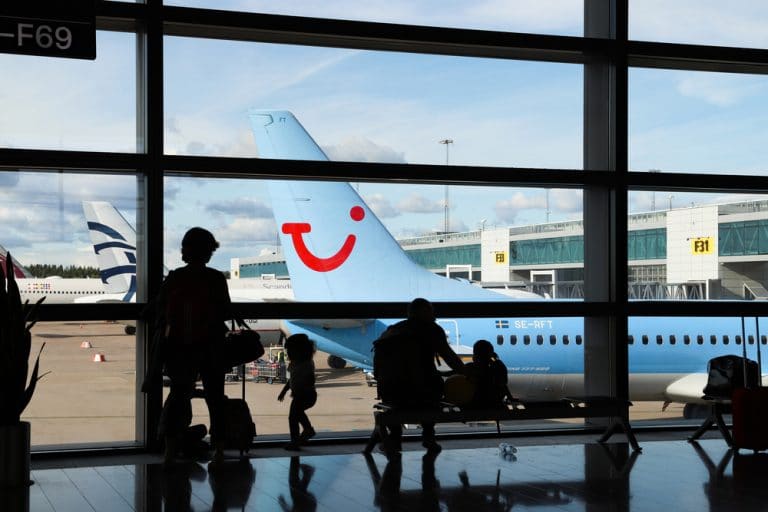
Travel company Tui has narrowed losses from €3.5bn to €2.4bn (£2.1bn) for the year to the end of September.
The group remains optimistic about next year’s summer, however, is concerned about rising cases and the Omicron variant.
“It is still too early to make a real forecast for the 2022 summer season,” said chief executive, Friedrich Joussen.
“But we are optimistic that tourism will be able to recover to 2019 levels next summer. We want to, we can and we will find our way back to economic strength.”
“The increased media coverage of rising incident rates and the emergence of new Omicron variant has weakened this positive momentum, particularly for winter.”
“There will be flexibility in deciding whether to offer winter programme capacity at the lower end of the range depending on the so-called fourth corona wave and possible policy decisions with regard to the Omicron variant.”
The group had a 40% fall in revenues for the year to the end of September. Bookings for next summer have increased by 535,000 since its last update.
“The UK, which is typically the most advanced booked due to the earlier launch of its summer programme, is already 52% sold for May. At this early stage, we believe summer 22 volumes will recover close to normalised summer 19 levels, supported by the stronger starting position and a travel environment underpinned by the continued success of vaccinations.”
“It remains difficult to forecast the further course of the pandemic and its impact on customer behaviour. In view of the uncertain environment, the executive board believes it would not be appropriate to issue a specific forecast for the new financial year 2022 at this time.”
Berkeley Group have yet again produced a very respectable set of results with pre tax profits rising 26% in the six months to 31st Oct 21, when compared to the same period a year ago.
Berkeley’s pretax profit rose to £290.7m, up from £230.8m last year. The jump in profits was helped by increased sales with revenue surging 36% to £1,220.7m.
Berkeley Group specialise in high-end developments in London and the South East and are often seen as a bellwether for the health of the Uk property market.
Berkley Group accounts for around 10% of new homes in London and the South East and is now seeing sales reservations at pre-pandemic levels.
“Berkeley are sounding confident in these results and are allocating additional capital to their land buying efforts accordingly. The group’s ability to redevelop complex sites in and around the capital, taking land that others fear to touch and transforming it into premium properties is their key attraction for investors,” said Steve Clayton, manager of the HL Select UK Growth Shares fund.
The HL Select UK Growth Shares Fund holds shares in Berkeley Group Holdings so Clayton and the fund’s investors would have been pleased to see Berkeley shares up over 5% at 9am in London.
“Berkeley lock significant future margin into their development plans and so far, the cost pressures seen across the industry have not impacted upon the group. No surprise to see the shares reacting positively,” said Clayton.
“Historic investment into land acquisition, at times when others have been wary or unable to commit, has left the group with a clear growth runway ahead. Capital continues to be strictly managed, with the group choosing to invest in land currently, given the future returns it expects are high. The ongoing dividend to shareholders provides a useful yield, but really Berkeley Group is a growth vehicle, built around the predictable delivery of future developments at attractive margins. Supply of housing in the capital and South East remains tight and bond markets are signalling that no nasty surprises on interest rates are expected any time soon. That backdrop should give Berkeley plenty of potential in the years ahead.”
A video that was obtained by ITV News shows government staff joking about last year’s number 10 Christmas party held during the lockdown.
In the video, Boris Johnson’s press secretary Allegra Stratton is rehearsing a press conference in December last year after the government continued to insist no party took place.
At the time of the party, government restrictions stated that people should not be attending Christmas parties – and gatherings in London of over people indoors were banned. According to reports, around 40-50 people attended the government party.
Number 10 continues to insist that there was “no Christmas party. Covid rules have been followed at all times.”
Responding to the video, Labour MP David Lammy, said it was a “kick in the face” to nurses and doctors who spent the pandemic working in hospitals.
Labour leader Sir Keir Starmer commented: “People across the country followed the rules even when that meant being separated from their families, locked down and – tragically for many – unable to say goodbye to their loved ones.”
“They had a right to expect that the government was doing the same. To lie and to laugh about those lies is shameful.
“The prime minister now needs to come clean and apologise. It cannot be one rule for the Conservatives and another for everyone else.”