Rentokil Initial impresses as North America builds momentum

Rentokil Initial shares jumped on Thursday after the pest control group revealed building momentum in its North American business.

The group posted quarterly revenue of $1.81 billion, marking year-on-year growth of 4.6% for the three months ending 30 September 2025. Organic revenue growth was 3.4% across the group.

Rentokil Initial shares rallied on the back of the update and were 9% higher at the time of writing.

The biggest driver of shares was improvement in the company’s North American division.

Following a period of uncertainity around the US and a major acquisition, the region is now showing signs of growth, with pest control services organic revenue growing 1.8% compared to just 0.1% in the first half, and total revenue growth for the region coming in at 4.6%.

Business services continued their strong trajectory with revenue growth of 14.4%.

Management attributed the North American upturn to enhanced digital marketing, improved sales execution and rigorous pricing discipline.

Internationally, revenue rose 4.6% with organic growth of 3.3%, up from 2.7% in the first half. The UK led the improvement with strong performances in pest control and property services, whilst southern European markets including Spain, Portugal and Greece continued to show momentum.

The group completed 21 bolt-on acquisitions year-to-date, generating $39 million in annualised pre-acquisition revenue. Separately, Rentokil finalised the sale of its French workwear business on 30 September for an enterprise value of €410 million, with net proceeds of €370 million.

“We are encouraged by our performance in the third quarter as the overall positive trends we described at our interim results have continued into the second half,” said Andy Ransom, Chief Executive of Rentokil Initial.

“In North America, it is pleasing to see the actions we have taken to improve sales execution and to evolve our digital marketing strategy are driving positive lead flow and overall sales momentum in the quarter. Our satellite branch openings remain on track to reach 150 by the end of the year, we have re-commenced the gradual integration of commercial branches during the quarter and our cost efficiency programme is on track.

“Current trading is in line with expectations and our outlook for the remainder of the year remains unchanged, as such, we expect to deliver FY 2025 financial results in line with market expectations.”
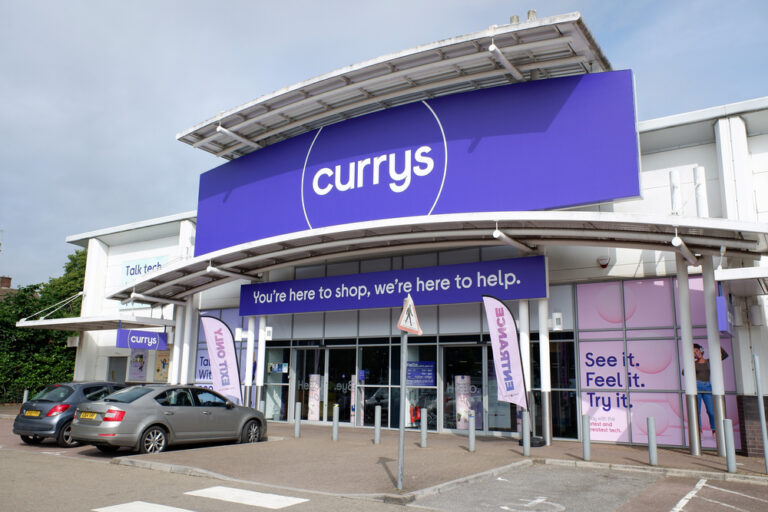

Currys: up over 35% in under two months, shares now 144.5p and heading higher

It has been interesting to note the recent strength in the share price of the £1.54bn-capitalised Currys (LON:CURY) group. 
After having fallen away to 106p at the beginning of last month, the subsequent rise in price really is noteworthy – they are now up over 35% at 144.5p. 
Obviously there have been repeated ‘takeover’ hints whirling around the marketplace since the group received two separate bid approaches in March last year – from Elliott Advisers and JD.com, at that stage they were trading in the 50p to 65p range. 
Both bidders backed away from furthering such intentions ...

Unilever reports steady growth in third quarter 2025

Unilever produced ‘broad-based growth’ in the third quarter of 2025, achieving underlying sales growth of 3.9% as it reconfirmed its full-year outlook ahead of the planned Ice Cream demerger.

The consumer goods giant reported turnover of €14.7 billion for Q3, down 3.5% year-on-year, primarily impacted by currency headwinds of 6.1% and net disposals of 1.0%.

Over the nine-month period, turnover reached €44.8 billion, down 3.3% from 2024.

Volume growth of 1.5% in the quarter is particularly encouraging. The group enjoyed continued strong demand across the portfolio, with the company’s Power Brands doing well with 4.4% underlying sales growth.

Beauty & Wellbeing led growth with underlying sales up 5.1% in Q3, generating €3.2 billion in turnover. Personal Care delivered solid performance with 4.1% underlying sales growth in the quarter, though faced currency challenges with turnover down 4.8% over nine months.

The soon-to-be spun-out ice Cream division achieved 3.7% underlying sales growth in Q3 (€2.3 billion), with a strong nine-month performance of 5.1%. The division’s demerger is expected to be completed in Q4 2025.

“Unilever delivered a solid third-quarter performance, with 4% sales growth in the period, landing the consumer goods company in the middle of its full-year target range,” said Aarin Chiekrie, equity analyst, Hargreaves Lansdown.

“That marks a small step up from the growth rates seen in the first half, helped by an improved performance in emerging markets and the continued strength of its Power Brands. These are a collection of 30 high-profile brands, including the likes of Dove, Domestos and Hellmann’s, and together contribute to around 75% of group sales.

“Unilever reported earlier in the week that its spin-off of its Ice Cream business, now known as The Magnum Ice Cream Company, has hit a speed bump in the form of the US Government shutdown.

“All preparation work is on track from Unilever’s side, but with federal employees temporarily laid off, there’s simply no one available to approve the paperwork. Unilever’s still confident of getting Magnum floated on the stock market before the end of 2025 and intends to provide investors with a revised timetable as soon as possible after the US government shutdown ends.”

Unilever shares were almost dead flat at the time of writing.

New AIM admission: Richmond Hill Resources explores Quebec

Richmond Hill Resources has moved from a spirits brand owner to a natural resources business. As part of the transformation, the company has switched from Aquis to AIM. At the same time as the move the company acquired Bulawayo CC Ventures for £3.3m in shares (£3.15m) and cash £150,000).  
This purchase brings mineral exploration titles in Quebec. The focus is copper, but there could be other metals in these areas.  
A placing raised £1.4m at 1p/share. A WRAP retail offer of up to £250,000 raised an additional £76,000. The cash will fund exploration and working capital and takes the ...

ITV shares fall as Liberty Global cuts stake

ITV shares were down sharply on Wednesday after Liberty Global cut its stake by half in a £135m share sale.

Liberty Global was the group’s largest shareholder, and while its involvement has kept takeover speculation alive, a formal bid never materialised.

After ten years of poor share price performance since Liberty initially bought a 6.4% stake in ITV, Liberty looks to have had enough and thrown in the towel on 50% of its holding.

However, this doesn’t mean that the prospect of a takeover has gone away. Over the years, ITV has been the subject of bid speculation concerning multiple parties that may now see an opportunity to pounce.

“Liberty Global halving its stake in ITV is a significant development as it effectively removes a potential blocker if someone makes a takeover offer for the media group,” said Dan Coatsworth, head of markets at AJ Bell.

“Liberty Global previously held 10% of ITV which effectively gave it a front seat to either consider a bid down the line, or to stop others swooping in on the cheap. It originally bought a 6.4% stake from Sky and then topped up, citing the stake purely as an investment.

“Over the years, Liberty Global showed no interest in wanting to own ITV outright but it stayed put on the shareholder register, quietly observing as the media group was subject to perennial bid talk.”

ITV shares were 8% lower at the time of writing.

FTSE 100 jumps on interest rate hopes 

The FTSE 100 was firmly on the front foot on Wednesday as traders digested a softer-than-expected UK inflation reading that pointed to further interest rate cuts by the BoE before the end of the year.

London’s leading index was trading at 0.9% higher at the time of writing.

UK CPI came in below the psychologically key 4% level, and although the 3.8% reading is far above the Bank’s target rate of 2%, it was lower than expected, and markets appear to deem it acceptable to cut rates. Interest rate futures quickly priced in additional rate cuts later this year.

“A lower-than-expected reading of UK inflation makes a near-term cut to interest rates more likely and this boosted housebuilders,” said AJ Bell investment director Russ Mould

“It also led to weakness in the pound which is typically good news for the FTSE 100 because it increases the relative value of the overseas earnings which dominate the index.”

Persimmon, Barratt Developments and Berkeley Group rose between 2%-3%.

Barclays was the top FTSE 100 riser after the bank released an encouraging set of Q3 results and announced a fresh £500m share buyback. The bank did reveal a higher provision for the motor finance scandal, but it was far lower than that of its peers.

“If investors were looking for some reassurance after a tricky little spell for the banking sector then Barclays has provided it,” Russ Mould explained.

“Barclays was caught up in market concerns about the US private credit situation last week, with the company having some direct exposure to the collapse of sub-prime auto lender and car retailer Tricolor. It also has the broadest US exposure among its London-listed peers.”

Barclays shares were over 4% higher at the time of writing.

Reckitt Benckiser was another FTSE 100 group to report on Wednesday, and its shares received a strong reaction in early trade. However, gains quickly turned to losses despite their reporting surprisingly strong third-quarter sales growth, which will go a long way toward squashing fears of stagnation. 

“Core like-for-like sales growth of 6.7% was well ahead of market forecasts, with the beat driven by impressive growth in emerging markets,” explained Aarin Chiekrie, equity analyst, Hargreaves Lansdown.

“The group’s portfolio has been streamlined in recent years, but there’s something to be said for focusing on strong brands, with household names like Dettol, Durex, and Vanish all continuing to impress.

“The only slight disappointment was that full-year guidance wasn’t raised, but with such a strong start to the second half, full-year targets look well within reach.”


AIM movers: Greenroc Strategic funding and Polarean Imaging considers leaving AIM

2

Greenroc Strategic Materials (LON: GROC) has secured a €5.2m secured loan facility to finance work at the Amitsoq graphite mine in south Greenland and the establishment of a European pilot plant to produce active anode material. The loan can be drawn down over the first two years and has a maturity of five year. The lender can choose to take shares at a 20% discount to the market price when the loan matures. The share price increased 14.6% to 2.75p.

An interim trading update from market research services provider System1 Group (LON: SYS1) says interim revenues were 7% lower at £17.1m, but it is winning new clients. Existing clients are being retained but they are spending less. The share price recovered 11.1% to 240p.

Molecular diagnostics company Novacyt (LON: NCYT) expects second half revenues to be slightly higher than those in the first half and the full year loss will be lower than in 2024. The long-term strategy is to generate double digit annual growth in revenues and keep gross margin above 60%. New product launches will help. The share price rose 10.9% to 43.15p.

Advanced coatings provider Hardide (LON: HDD) had a strong fourth quarter that enabled its to move into profit. In the year to September 2025, revenues rose by around one-quarter to £6m, which is higher than forecast. Aerospace revenues are building up. Cavendish expects the pre-tax profit to improve from £100,000 this year to £700,000 this year. There is spare capacity to grow into. The share price is 8.11% higher at 8p.

Shares in Trellus Health (LON: TRLS) rebounded 7.69% to 0.7p after it signed a contract with a leading global contract research organisation (CRO), although it will not immediately extend the company’s cash beyond December. This was mentioned in yesterday’s trading statement. The 12 month contract will support recruitment and enrolment for an ongoing clinical trial in immunology and inflammation. The contract will start later this year. Trellus Health has also been granted preferred vendor status with another CRO. Additional funding is still required.

Wines retailer Virgin Wines (LON: VINO) reported full year figures in line with expectations and the increased spending on marketing is showing signs of paying off. Revenues were flat at £59m and the pe-tax profit declined from £1.7m to £1.6m. However, customer retention is improving and there was a 29% increase in customer acquisition in the first quarter as the marketing spending starts to pay off. Commercial and Warehouse Wines sales are growing strongly. The additional investment in growing the business means that Virgin Wines will fall into loss on higher revenues this year before returning to profit next year. The share price improved 5.53% to 51.5p.

FALLERS

Lung imaging technology developer Polarean Imaging (LON: POLX) is undertaking a strategic review of the business. This includes whether to stay on AIM, where liquidity has been poor. The cost base is also being assessed. Leaving AIM could help to reduce costs and could make it easier to generate additional funding. The share price dived 46.3% to 0.215p.

Oxford BioDynamics (LON: OBD) is raising £7m at 0.3p/share. The clinical diagnostics company will use the cash for working capital as test sales build up and it seeks licencing and distribution agreements. The share price fell 37% to 0.315p.

Shares in Trafalgar Property Group (LON: TRAF) returned from suspension down 14.3% to 0.015p after it published accounts for the year to March 2025.

Budget tax changes could wipe £4bn off FTSE, warns IG

The UK stock market could lose billions in value if the Chancellor makes even modest changes to key retail investor taxes, new analysis from IG suggests.

Research by the trading platform found that a two percentage point rise in dividend and capital gains tax could knock £4bn off the FTSE.

For a government that says it wants to help promote the UK stock market, pushing ahead with rumoured changes seems counterproductive.

The analysis, published as part of IG’s ‘Hands off our investments’ campaign, combines established economic research on tax-equity value relationships with Office for National Statistics investor ownership data.

Currently, investors receive a £500 tax-free dividend allowance before paying rates of 8.75%, 33.75%, or 39.35% depending on their income bracket. Capital gains tax stands at a £3,000 annual exemption, then 18% for basic rate taxpayers and 24% for higher earners.

The platform’s modelling also examined changes to pension tax. Cutting the tax-free lump sum from £268,000 to £50,000 could reduce annual pension contributions by around £800m, the research found. This is money that may be destined for London-listed shares.

Even a smaller reduction to £100,000 would trigger a £300m fall in contributions, based on Institute for Fiscal Studies estimates of how savers respond to tax incentives.

IG is calling on the government to freeze all three policies ahead of next month’s Autumn Budget. The company argues that raising these taxes—often viewed as easy revenue targets—risks undermining efforts to encourage wider share ownership.

The Chancellor has yet to comment on potential tax changes.​​​​​​​​​​​​​​​​

“The government has been clear about its ambition to shift the UK away from a savings-first mindset and encourage more Brits to invest, supporting the stock market and growing their wealth,” said Michael Healy, UK Managing Director at IG.

“That goal would be seriously undermined if any of the tax areas we’ve highlighted are targeted in next month’s Autumn Budget.

“If we want to build a nation of investors, we cannot make it less attractive to invest – whether that’s in an ISA, outside of an ISA, or in a pension. We’re asking the government to keep their hands off our investments: no raids on pensions, no hikes to dividend tax, and no increase to capital gains tax. Britain needs long-term investors, not short-term tax grabs.”

Barclays shares jump as investors cheer £500m buyback

Barclays shares rose on Wednesday after the bank announced Q3 results and surprised investors with a £500m share buyback.

Barclays delivered solid performance in Q3 2025, with group profit before tax of £2.1bn and a RoTE of 10.6%, down from 12.3% in Q3 2024. 

Such has been the strength of RoTE year to date that the group upgraded its outlook for the year. 

All divisions achieved double-digit RoTE during the quarter. 

Group income rose 9% year-on-year to £7.2bn, with net interest income outside the Investment Bank and Head Office increasing 16% to £3.3bn, demonstrating strong underlying momentum across the retail and commercial banking businesses.

This was a period when all divisions performed well. No area produced blowout results, but in combination, there was a lot to like.

Barclays UK posted a 16% increase driven by structural hedge income and the Tesco Bank acquisition, whilst the UK Corporate Bank grew revenues by 17% on higher deposit and lending balances. 

The Investment Bank delivered 8% growth, driven by gains across Global Markets and Investment Banking, supported by stable income streams. 

The US Consumer Bank saw the strongest performance with 19% income growth, reflecting repricing initiatives.

Although Barclays isn’t one of the most exposed to the motor finance scandal, it is impacted through its Clydesdale subsidiary and was forced to increase provisions by £235m after recent developments.

But the motor finance update wasn’t enough to dampen the mood around a £500m share buyback. 

“Barclays’ latest results show a bank quietly outperforming despite headline noise,” said Matt Britzman, senior equity analyst, Hargreaves Lansdown.

“The extra charge tied to motor finance grabbed attention, but investors had largely priced that in already with shares underperforming in recent weeks. Strip out that provision and profits were 13% ahead of expectations, helped by revenue growth that beat forecasts by 2%, driven mainly by strong US card spending. 

“Guidance was lifted – though mostly to match consensus – and a fresh £500 million buyback underlines confidence in the bank’s capital strength. Investment banking edged past estimates but lacked the big gains seen at US rivals, leaving Barclays leaning on its diversified model to deliver steady progress without any major fireworks.”

Barclays shares were 3% higher at the time of writing.

FTSE 100 carves out minor gains as optimism returns

The FTSE 100 rose again on Tuesday as a weaker pound helped support the index following a strong session for US stocks amid hopes of progress in US/China trade talks and positive earnings.

London’s flagship index was 0.4% higher at the time of writing.

“It’s hard to imagine that markets were in panic mode only four days ago,” said Russ Mould, investment director at AJ Bell. “It’s like all the troubles faded away over the weekend, and investors are back in risk-on mode.

“Wall Street enjoyed a particularly strong session on Monday, and that optimism has extended to Asia and Europe on Tuesday. The focus is now on US interest rate cuts, the new corporate reporting season, and US/China trade talks.

Segro was the FTSE 100’s top riser after the group announced a promising uptick in rental agreements and a growing pipeline of data centre business. 

Segro’s latest update shows an encouraging rebound in momentum across its logistics and industrial portfolio. £22 million of new rent signings in the quarter and a 37% uplift on rent reviews underline resilient tenant demand despite a still challenging rate backdrop,” explained Adam Vettese, market analyst for eToro.

“Its data centre strategy is emerging as a powerful growth driver, with new pre lets helping deliver the most productive quarter of development since early 2024 and capacity expansion in key markets like London.”

Segro shares were 3% higher at the time of writing, with the group emerging as one of the FTSE 100’s most direct ways of playing the AI story.

Unilever shares slipped marginally on news that the spinout of its Magnum has been delayed due to the US government shutdown.

“Unilever is in the process of demerging its ice cream division, now known as The Magnum Ice Cream Company, onto the US stock market. But the deal has hit a snag, in the form of the US Government shutdown,” said Steve Clayton, head of equity funds, Hargreaves Lansdown.

“With federal employees laid off until Congress agrees a new funding deal, there’s simply no-one available to approve the paperwork, putting the demerger on hold. With neither the White House nor the opposing Democrats seemingly prepared to give ground on spending, Magnum’s stock-market debut is stalled for now.”

Unilever shares were down around 1% at the time of writing.

Bunzl shares slipped 2% after announcing a steady, yet fairly uninspiring, Q3 performance. 

Miners were the biggest drag on the index on a sector basis as both diversified and precious metals miners fell. However, it was the precious metals that were the most heavily hit as the gold price continued to pull back from its record run. 

“Gold edged lower on Tuesday as investors took profits following recent record highs, while signs that the US government shutdown could be resolved this week could add to the selling pressure,” said Joseph Dahrieh, Managing Principal at Tickmill.

Fresnillo lost over 4% and was the biggest faller, and gold-focused miner Endeavour gave up 3%.