The Argo Blockchain share price dipped again in June as company provides monthly update

Argo Blockchain Share Price

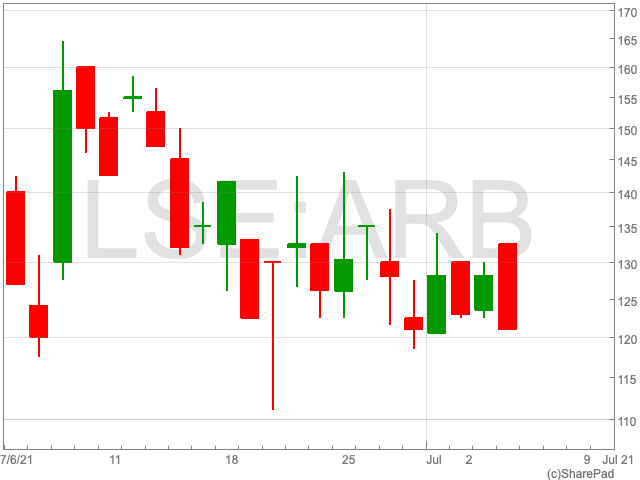
The Argo Blockchain share price (LON:ARB) continued its steady decline throughout June, falling by 3.15% over the past month. From its high-point of 284p in the middle of February, the Argo Blockchain share price is down by well over 50%, sitting at 121.55p at the time of writing.

While Bitcoin keeps threatening to go up or down, the mining company made an announcement today, which could impact the outlook of the Argo Blockchain share price.
Argo Blockchain Considers Secondary Listing

Argo Blockchain confirmed on Tuesday that it is considering a secondary listing in America on the Nasdaq, although it hasn’t yet decided when.

The Bitcoin miner said its proposed listing depends on market and other conditions, and cannot guarantee that the proposed listing will be completed.

Operational Update

In June, Argo Blockchain mined 167 Bitcoin, up by one compared to May, bringing the total number of Bitcoin mined in 2021 to 883.

Based on daily foreign exchange rates and cryptocurrency prices in June, mining revenue for the month came to £4.36m, down from £5.51m in May.

Argo Blockchain now owns 1268 Bitcoin.

Bitcoin

Bitcoin traded below $30,000 in June, the first time since January as China strengthened its regulations giving rise to fears of a crackdown across the world as well as a reluctance of institutions to invest.

Peter Wall, Chief Executive of Argo said: “June has seen big changes in the cryptocurrency sector, with the reduction in total global hash rate and mining difficulty as mining machines have come offline in China. We’ve seen the global hash rate drop from over 150m TH/s to just 90m TH/s in the space of a month and mining difficulty adjusted to reflect this reduction.”


Ukraine and London come together for eagerly anticipated Fintech Summit

0

Ukraine and London will be joining forces on 15 July for the first ever UK-Ukraine Fintech Summit.

The event brings London, the financial centre of the world, together with Ukraine, which is emerging as a major world player in technology.

Despite previous negative perceptions surrounding Ukraine, the country is steadfastly forging a new image of innovation and technological capability.

There is increasing optimism around new business opportunities in a post-Brexit world, exemplified by the trade deal between the UK and Ukraine, making now an ideal moment to connect fintech’s brightest minds from both regions.

The main organisers of the event will be the Embassy of Ukraine in the United Kingdom of Great Britain and Northern Ireland and Sigma Software Group, a software company of Ukrainian origin.

The summit, aimed at discovering emerging economic opportunities and exploring technologies that are disrupting their industries will be co-organised by TheCityUK, the UK-based financial and related professional services industry, and the London Stock Exchange Group.

UK Investor Magazine is proud to be a media partner of the event which will include the following talking points:

  • Learn about the vast post-Brexit opportunities in technology, development, and innovation between the two countries.
  • Discover partnership opportunities with the top executives of the National Bank of Ukraine, TheCityUK, Open Banking Europe, the government of Ukraine, and the most prominent FinTech startups.
  • Unveil how “The Offshoring Destination of the Year” has helped global blue-chip companies develop the most innovative products and attract millions of users, and how it can help your company today.

The event, which takes place on Thursday 15 July at 15:00 BST, can be registered for by using this link, and features a host of esteemed speakers from the worlds of fintech and politics.

The UK-Ukraine FinTech Summit is a part of FinTech Week London, which is taking place between 12 and 16 July.

Ocado, reopening risks and copper exploration with Alan Green

Alan Green joins the UK Investor Magazine Podcast as we digest the latest update from the UK government on the reopening and removal of COVID-19 restrictions.

With all UK restrictions set to be removed 19th July we explore what it could mean for markets and UK shares. On the announcement of the vaccine last year we saw a ‘buy everything’ move in stock markets that then evolved into value vs growth stock allocation.

We explore whether it is now becoming a stock pickers market and look at some of the stock specific stories moving prices including Morrisons and Ocado.

Morrisons is the middle of a takeover frenzy as Private Equity eyes up the grocer’s property portfolio.

We discuss Ocado (LON:OCDO), Kavango Resources (LON:KAV) and Watches of Switzerland (LON:WOSG).

There is a wide gender divide in retirement income confidence

0

Retirees have higher confidence in their pensions but gender gap remains

On the whole, British people are positive when it comes to their pension income prospects.

This is according to the AJ Bell Retirement Income Index.

AJ Bell recorded a score of 54 in the first ever AJ Bell Retirement Income Index, where anything above 50 suggests people have confidence that their pensions offer sufficient income to support them through retirement. A score below 50 suggests a lack of confidence.

There is, however, a ‘yawning’ divide between men and women.

Men recorded a Retirement Income score of 59, while women scored 49, indicating they are confident and not confident respectively when it comes to their pensions providing retirement income.

Pension income confidence levels are higher among those who have retired – although there remains a big gap between the sexes.

The Retirement Income score of all retired respondents was 68, while female retirees scored 63.

All respondentsMenWomenRetireesRetired menRetired women
Retirement Income Index score (Above 50 = confident; below 50 = not confident)545949687463

Tom Selby, senior analyst at AJ Bell, comments: 

“With the UK economy recovering from last year’s lows, lockdown measures slowly being eased and many investors enjoying stellar returns over the past 12 months, you might expect Brits to be confident about their pension prospects.”

“Furthermore, there is a significant divide between men and women, with men recording a Retirement Income score of 59 and women a score of 49. This suggests that while men are confident about their retirement incomes, women are not”

“This likely in part reflects that women, on average, tend to build up much smaller retirement pots than men. In fact, among those who have entered drawdown since 2015 the average pensions of men are around a third (34%) bigger than women**,” Selby said.

OPEC agree to disagree providing challenge to inflation consensus

Oil prices rise to a three-year high after countries fail to reach an agreement

Opec+ have postponed a decision on whether or not to ramp up oil production as major players within the cartel have failed to reach an agreement on supply levels.

The Financial Times reported that it is unclear when talks will start again.

Russia and Saudi Arabia proposed raising production levels by 400,000 barrels per day every month from August through to the end of the year.

In addition, they pushed to extend extend the Opec+ supply deal beyond the initially planned April 2022 end date, the Financial Times reported.

The UAE, however, stood in the way of a deal, suggesting that the baseline from which production cuts are calculated should be increased.

Oil prices rose to a three-year high after the countries failed to reach an agreement.

Jamie Maddock, equity research analyst at Quilter Cheviot, commented on some of the ramifications of the news emerging from the OPEC+ discussions:

“Unlike previous meetings where the agreements have centred around holding back product to boost prices, the point of contention this time round was whether producers should increase supply. Combined with the rising oil demand driven by easing travel restrictions, the impasse in discussions and inability to find an agreement on increasing supply will provide further support to oil prices to the clear benefit of oil producing nations,” said Maddock.

“Crucially, it could also provide a challenge to the consensus view that global inflation is simply transitory.”

“But there’s also a risk that the stalemate presents a challenge to sustained OPEC+ cohesion in the future. With plentiful latent supply and now a breakdown in OPEC cohesion, we could see more volatility in oil prices going forward.”

“But for the time being, the oil majors are reaping the benefits, enabling rapid debt paydown and comfortably funding old and new energy investment. While at the same time, the prospect of enhanced shareholder returns are increasing.”

FTSE 100 brushes off volatile Asian markets

0

The FTSE 100 shrugged off volatility in Asian markets to trade flat on Tuesday morning, with the FTSE 250 retreating just slightly from the record highs it recently attained on reopening hopes.

“Concerns over the Chinese tech sector and its relationship with the state probably feel quite remote to an index which is dominated by a lot of traditional and old economy businesses,” said AJ Bell investment director Russ Mould.

“More attention might fall on the US PMI figures out later today with the markets likely to be hoping for a number which suggest steady growth rather than a blow-out reading.”

Investors are continuing to weigh both recovery and inflation and rate hike risks.

FTSE 100 Top Movers

IAG (3.02%), Ocado (2.24%) and Tesco (1.99%) are heading up the FTSE 100 during the morning session on Tuesday.

British Land (-2.72%), Land Securities (-2.02%) and Informa (-1.74%) make up the bottom three on the UK index so far today.

Ocado

Ocado is revelling as shoppers are increasingly buying their goods online, helping the grocer to record a 20% rise in sales

Ocado reduced its half-year pre-tax loss by £17.3m to £23.6m, as its revenues jumped nearly 20% to £1.2bn over the half-year period ending in May. 

The FTSE 100 company’s underlying profits over trebled to £61m, although the company made a the firm made a pre-tax loss of £23.6m thanks to impairment charges of £104m.

Sainsbury’s

Despite the widespread easing of coronavirus restrictions, Sainsbury’s (LON:SBRY)sales surpassed its expectations as many people opted to stay at home to eat and drink. 

Over a 16-week period ending at the end of June, the FTSE 100 company’s sales rose by 1.6% compared to the same period a year prior. 

As a result, Sainsbury’s increased its guidance for its full-year underlying pre-tax profit by £40m to £660m.

Supply@ME confirms completion of deal to acquire TradeFlow Capital Management

0

Supply@ME has restructured its board as the company enters “the next phase of its scalable growth”

Supply@ME (LON:SYME), the fintech platform which provides the ‘Inventory Monetisation’ service to manufacturing and trading companies, confirmed on Tuesday that it has completed the acquisition of TradeFlow Capital Management.

Supply@ME bought the company for £4m in cash and 813m of its shares.

TradeFlow has been valued at approximately £31 million by an independent valuation company.

“The acquisition will establish Supply@ME as the market leader in inventory monetisation and will generate a number of highly attractive synergy benefits for the company in terms of funding and customer origination,” said Supply@Me chief executive Alessandro Zamboni.

“By joining together, we now have an enhanced platform with an offering for the supply chain sector which is unparalleled.”

“We are also assembling an exceptionally strong board with the depth and breadth of experience necessary to maintain our momentum and we will continue to strengthen this team as opportunities present.”

Having completed the deal, Supply@ME has restructured its board as the company enters “the next phase of its scalable growth”.

The firm confirmed it has appointed two new Executive Directors, Tom James and John Collis, who will reman in charge of TradeFlow.

The Supply@ME share price is up 2.64% in early trading on Tuesday.

Ocado sales jump as pandemic sees surge in online grocery shopping

0

Ocado reduced its half-year pre-tax loss by £17.3m to £23.6m

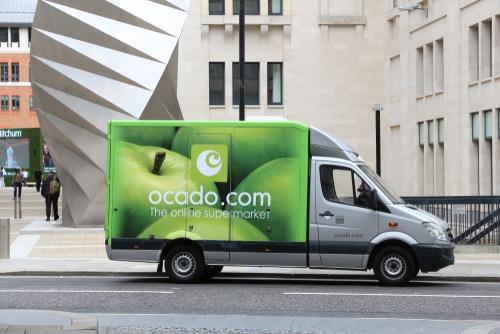
Ocado is revelling as shoppers are increasingly buying their goods online, helping the grocer to record a 20% rise in sales.

Ocado reduced its half-year pre-tax loss by £17.3m to £23.6m, as its revenues jumped nearly 20% to £1.2bn over the half-year period ending in May.

The FTSE 100 company’s underlying profits over trebled to £61m, although the company made a the firm made a pre-tax loss of £23.6m thanks to impairment charges of £104m.

Tim Steiner, Ocado’s chief executive, said: “As we head towards a post Covid-19 future, it is increasingly clear that the landscape for grocery worldwide has changed, for good.”

Amisha Chohan, equity research analyst at Quilter Cheviot, commented on Ocado’s positive results:

“Over the last eighteen months, we have shown that the Ocado model works even in the most challenging and fluid of environments,” said Chohan.

“Ocado’s interim results confirm the encouraging trend coming from Ocado Retail, with group profit ahead of consensus expectations.”

“After a dry spell in terms of signing new partners for Ocado’s Smart Platform (OSP), mainly as a result of Covid travel restrictions, Ocado has announced a major new partnership with Auchan Group’s Alcampo in Spain.”

“Although the initial contract is for one centralised fulfilment centre (CFC), we believe there is considerable scope for the Group to add more over the years across different geographies.”

“And as travel restrictions ease, Ocado will look to sign further deals and partnerships for their leading technology from both new and existing partners. Further partnership deals should act as a positive share price catalyst.”

One question that remains is whether or not British customers will continue to shop online as lockdown restrictions are gone. Ocado’s competitors have their store locations as a contingency.

Sainsbury’s raises profit guidance on increased sales as customers stay home

0

Sainsbury’s raised its guidance for its full-year underlying pre-tax profit to £660m

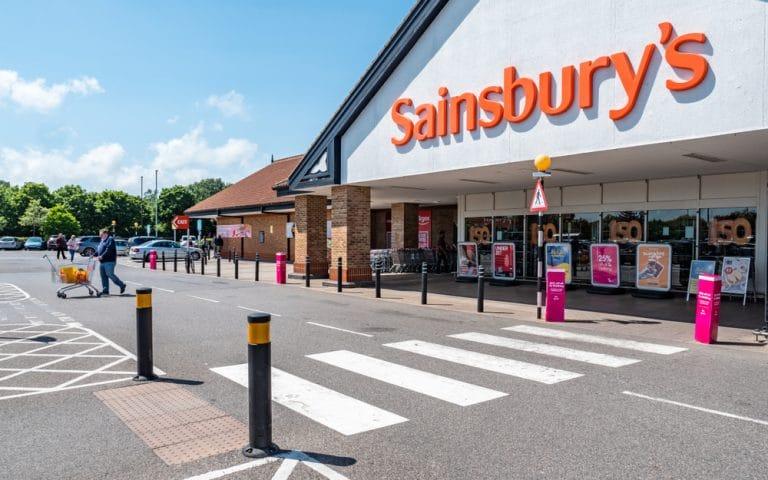
Despite the widespread easing of coronavirus restrictions, Sainsbury’s (LON:SBRY) sales surpassed its expectations as many people opted to stay at home to eat and drink.

Over a 16-week period ending at the end of June, the FTSE 100 company’s sales rose by 1.6% compared to the same period a year prior.

As a result, Sainsbury’s increased its guidance for its full-year underlying pre-tax profit by £40m to £660m.

The grocer said that the proportion of its sales being made online had risen from 8% to 18% as a result of the pandemic.

Chief executive Simon Roberts said: “Over the coming months we expect to see customer shopping patterns normalise further and we are well set up to serve them however they want to shop.”

“We are focused on offering our customers even better value and regularly creating new and exciting products for them to try.”

Commenting on Sainsbury’s results, Ross Hindle, analyst at Third Bridge, said:

“Sainsbury’s has already lost 50 basis points of market share since the start of 2021, with discounters being the main benefactors. A hike in inflation and the subsequent price pressure is only going to make that worse.”

“Four headwinds are on the horizon for Sainsbury’s and its big 4 counterparts: the lifting of lockdown restrictions, an end to the furlough scheme, rising inflation, and a rise in unemployment.”

“Overall the UK supermarket landscape remains attractive to private equity investors. While Morrisons has been hogging the limelight, it wouldn’t be surprising if Sainsbury’s begins to attract speculative bids from interested suitors. Sainsbury’s is attractive to private equity investors because of its vast store-footprint, product range, including Argos, and its scale. It is the second-largest grocer in the UK, it owns the majority of its own stores, and it has a strong digital presence. Our experts say Sainsbury’s hi-tech in-store operations and efficient online delivery services will give them an edge in the coming years.”

Rockfire share price surges on updates from copper and gold mines

0

Rockfire Share Price

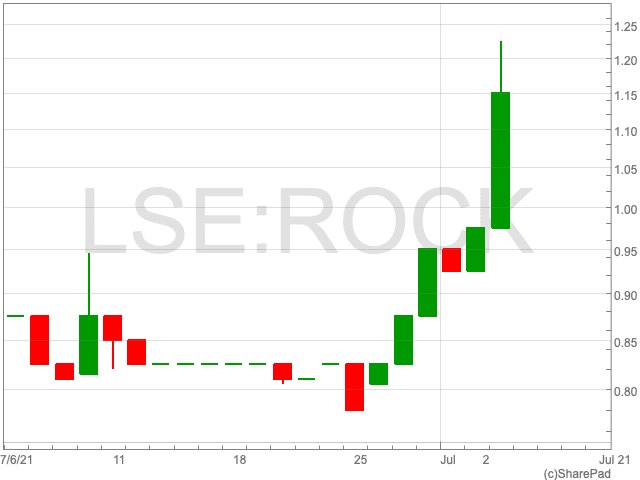
The Rockfire share price (LON:ROCK) has rallied since its exploration update on 24 June. It is up by 22.05% on Monday and has now increased by 42.09% over the past five days. At 1.19p per share the Rockfire share price is at its highest point in over five months. The company’s update was regarding both its copper and gold projects.

Exploration Update

Rockfire confirmed last week that its exploration programmes had commenced at its 100% owned project in North Queensland, Australia.

Access track and drill pad preparation has begun at the Copperhead porphyry project in preparation for diamond drilling, a company statement read, with the drilling supervisor due to arrive on site this week to assess logistics.

With regard to its gold drilling, a high-definition gravity survey has started at the Plateau gold deposit, part of the Lighthouse tenement. This survey is designed to detect concentrations of sulphides at depth, beneath the 1.4 million tonnes @ 1.20 g/t Au already discovered in the top 100 m from surface at Plateau. Roughly 70% of this survey is complete, according to Rockfire.

In addition, extension soil sampling has been completed at the Bell Rock gold prospect, which also lies within the Lighthouse tenement and is 3.5 km southeast of Plateau. Soil samples from Bell Rock have returned high gold-in-soil values up to 0.4 g/t Au.

David Price, Chief Executive Officer of Rockfire, commented: “Our preparation for diamond drilling at Copperhead is progressing well with access track reestablishment well underway.Drill rig mobilisation is anticipated as soon as the access tracks and drill pads have been completed. In the meantime, a camp, core yard and logistical base has been established in anticipation for drilling.”

Rockfire

Rockfire is an exploration company with a portfolio of 100%-owned near-surface gold and large-scale copper projects in Queensland, Australia. Each of the gold projects are located within 50 km of operating gold mines and the Company’s copper projects lie within 250 km of Australia’s largest copper refinery.

The company’s flagship project, the Plateau Gold Deposit, is part of the Lighthouse Tenement, and bears significant geological similarities to the nearby Mt Wright gold mine (45km to the northeast), where 1.5 million ounces of gold have been mined. More than 14,000 m have been drilled within the Lighthouse tenement.