FTSE 100 shrugs off inflation fears to trade above 7,125 for first time in a month

0

While the rest of Europe took a nap, the FTSE 100 continued to ascend on Friday morning despite some mixed data coming from the UK.

The FTSE 100 is now trading above 7,125 for the first time in a month and is around 40-50 points away from the then-14 and a half-month peak struck in early May.

“Most of the big figures underperformed. Industrial production for April contracted by 1.3%, against the 1.2% expansion forecast and the 1.8% managed in March. The slowdown in manufacturing production wasn’t quite as severe, but even then, it came in at -0.3%, well off both the 1.5% estimate and March’s 2.1%,” said Connor Campbell, financial analyst at Spreadex.

The monthly GDP reading for the three months to the end of April was slightly more promising, rising from 2.1% to 2.3%, though it did fall short of the 2.4% forecast.

“Yet neither the pound nor FTSE 100 seemed bothered by these misses. Sterling was unchanged against the dollar and down just 0.1% against the euro, while the index climbed 0.6% thanks to its miners,” Campbell added.

Looking to this afternoon and the Dow Jones is heading for another static start, with the futures suggesting an unchanged open just under 34,500.

“Investors may have been nervous ahead of yesterday’s US inflation numbers but despite consumer prices rising at their fastest rate since 2008, and more than economists expected, shares were up,” according to AJ Bell investment director Russ Mould.

“Perhaps central banks really have convinced the markets that any rise in inflation will be short-lived and will not force them to ramp up rates too rapidly.

FTSE 100 Top Movers

Halma (2.76%), along with mining companies, Fresnillo (2.38%) and Glencore (2.27%), headed up the FTSE 100 during the morning session on Friday.

Trailing at the back of the pack are Just Eat (-2.36%), Ashtead (-1.78%) and BT (-1.18%).

Trident Royalties anticipates rise in production at Mimbula copper mine

0

Trident expects the production of copper to reach a yearly run rate of 30,000 metric tons by the end of 2022

Trident Royalties (AIM:TRR), announced on Friday a $73 million equity financing for its Mimbula Copper Royalty and the project operator, Moxico Resources.

The mining royalties company also said the move will lead to a substantial increase in production.

Trident has confirmed it will build a self-operated solvent extraction and electrowinning processing facility. This, the firm expects, will allow the production of copper to reach a yearly run rate of 30,000 metric tons by the end of 2022.

Adam Davidson, Chief Executive Officer of Trident commented:

“We are incredibly pleased to see such a significant development for a key asset within Trident’s royalty portfolio. The financing conducted by Moxico to materially expand copper production at the Mimbula copper mine underscores the value of acquiring royalties over quality assets being advanced by experienced management teams,” said Davidson.

“The Mimbula Copper Royalty provides Trident’s investors with long-life copper exposure – a key base and battery metal – from an operating asset with further upside potential located in a prolific copper district.”

Trident Royalties are mining royalties and streaming company with a diverse range of royalties covering precious, base and battery metals.

Having presented at the December UK Investor Magazine Virtual Investor Conference, Trident Royalties returned to update investors of recent progress at the company.

Trident Royalties are on a path achieving critical mass with robust pipeline of deals having already acquired 12 mining royalties.

Naked Wines confirms loss of £10.7m due to pandemic despite surge in sales

0

Naked Wines saw a 78% increase in sales in the US market and will continue its focus on the region

Naked Wines (LON:WINE) saw its sales surge during the pandemic, as the wine subscription company particularly saw growth in the US market.

While pubs, restaurants and bars have remained closed throughout much of last year, Naked Wines saw its sales increase by £340.2m.

The AIM-listed company also saw its customer levels rise by 53% in the year to March.

Naked Wines invested £50m in new customers, up from £23.5m the year before, which the company said will be paid back three times over over the next five years.

The more than doubling of investment saw the firm make a before tax loss for the year of £10.7m.

Naked Wines saw a 78% increase in sales in the US market and will continue its focus on the region.

A of now, the firm is the largest direct to consumer wine seller in America, as it has adapted its operations to the rising levels of consumer demand.

James Andrews, personal finance expert at money.co.uk, said:

“Naked Wines has seen a slump in profits as a result of the COVID-19 pandemic, with many consumers reconsidering whether wine subscriptions are an affordable option in the wake of a financially difficult period.”

“With the recent news of its share price increases, this slump will come as disappointing for shareholders who are yet to see the company turn a profit.”

“Whilst Naked Wines benefited from the closure of the hospitality industry, and some consumers choosing to opt for a more luxury wine subscription service, it’s still not clear whether this will be enough to increase the company’s profitability despite rising share prices. Whilst it’s certainly not too damaging, the next year of growth for Naked Wines will determine its place in the online wine space.”

UK GDP continues to grow in April

0

GDP in Britain rose by 2.3% in April on strong retail spending

The UK economy expanded in April by the quickest rate since the coronavirus opening last summer.

Data shows strong levels of retail spending, while children have fully returned to school, as the prospect of a return to levels of output last seen before the pandemic looks in sight.

Gross Domestic Product in Britain increased by 2.3% in April, setting the country up for a solid performance during Q2.

Having slightly exceeded economists’ forecasts, the value of goods and services produced was 3.7% below its level from February 2020, before the pandemic. This is the smallest gap since the beginning of the economic crisis.

Jonathan Athow, ONS deputy national statistician for economic statistics, said: “Strong growth in retail spending, increased car and caravan purchases, schools being open for the full month and the beginning of the reopening of hospitality all boosted the economy in April.”

Hinesh Patel, portfolio manager at Quilter Investors, commented on what the data reveals about the path of the UK economy:

“Given this GDP reading covers April and doesn’t quite take into account all of the lockdown easing we have seen to date, the government will be pleased with the direction the economy is heading. Consumers are clearly making up for lost time and the government will be hoping they continue to spend the lockdown savings many have been fortunate to accumulate,” Patel said.

“Real-time data, such as restaurant and holiday bookings, also remains robust after the initial surge in April and we are seeing discretionary spending hold up as things look to get back to normal. There is obviously uncertainty about the last step of easing going ahead on time and Sunak will not want any delay to be long lasting. But, given the depths of where we were last year, the economy is clearly returning to health. The removal of social distancing when the time comes will give an additional turbo charge to the economy.”

“Much of this optimism though is fairly priced into markets, however, and the Bank of England won’t be able to sit on their hands if the economic recovery strengthens further. With inflation concerns persisting, although slightly overblown in our opinion, Bailey and co may need to act sooner than they may wish.”

JLEN NAV falls, but dividend remains attractive

JLEN Environmental Assets Group Ltd (LON: JLEN) continues to build up its portfolio of environmental infrastructure assets, although recent changes to UK tax rates have hit the stated NAV. The annualised total shareholder return since flotation is 7.4%.
Wind still dominates the portfolio, accounting for nearly one-third of its value, while anaerobic digestion accounts for 26% and solar for 23%. The company’s assets produced 977GWh of electricity in the year to March 2021.
JLEN generated £39.5m in cash from operations, up from £36.2m the year before. The proposed increase in UK corporation tax ...

Bitcoin pushes past $38,000 as banking regulator calls for tough controls

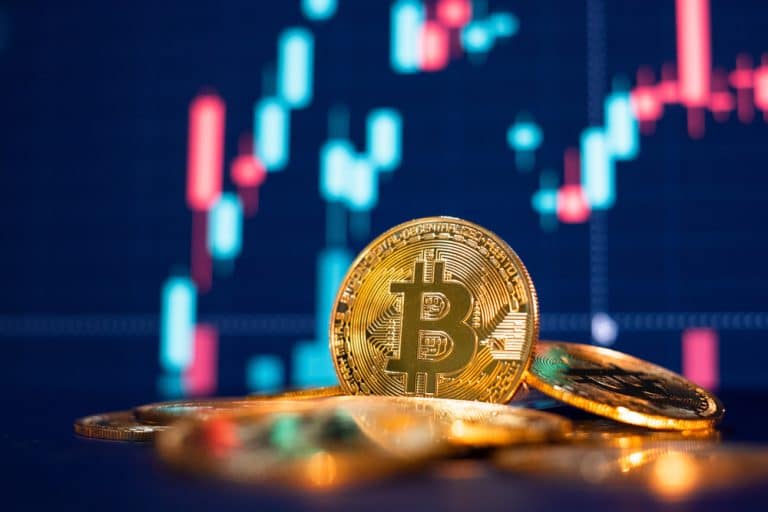
The committee proposed a risk weighting of 1,250% for bitcoin

Global regulators are calling for the toughest possible capital rules for crypto assets, even more so than more traditional assets such as stocks.

Proposals by the influential Basil Committee on Banking Supervision have suggested that bitcoin should be subjected to a new “conservative prudential treatment”.

The committee’s findings were part of a report released on Thursday as policy officials across the world put together plans to regulate the volatile yet rapidly growing market.

While banks’ exposure to the industry is still limited, the Basel Committee suggested that “the growth of crypto assets and related services has the potential to raise financial stability concerns and increase risks faced by banks”.

The report cited a number of risks including market and credit risk, fraud, hacking, money laundering and terrorist financing risk.

Bitcoin surpassed $38,000 on Thursday, making further ground on Wednesday’s rally, after the digital currency became legal tender in El Salvador.

The committee proposed a risk weighting of 1,250% for bitcoin, but not for stable coins which are fully backed by reserves.

“A $100 exposure would give rise to risk-weighted assets of $1250, which when multiplied by the minimum capital requirement of 8% results in a minimum capital requirement of $100 (ie the same value of the original exposure, as 12.5 is reciprocal of 0.08),” the proposal said.

Although bitcoin has been ruled as a risky asset, the reaction by the market suggests it was expecting an even stricter ruling.

“As cryptocurrencies begin to make their way into the traditional financial ecosystem, it is only normal to expect various regulatory bodies to begin to set and then also try to coordinate regulatory initiatives to protect savers and investors,” Denis Vinokourov, head of research at Synergia Capital told CoinDesk.

“Risk is over-regulation, but equally lack of regulation will also prevent further adoption en masse. Basel’s proposal to split assets into groups makes logical sense given the different volatility and risk parameters,” Vinokourov added.

US inflation climbs at fastest rate in nearly 13 years

0

US consumer prices rose by 5% in May

US consumer prices rose by the most since 2008 during the month of May as concerns over inflation escalate.

Compared to the same month a year ago, consumer prices increased by 5% in May, according to the Bureau of Labor Statistics.

It is the most significant increase since August 2008, when prices rose by 5.4%, and is 0.8% higher than April’s price rise.

Pent-up demand in the US is facing up to a shortage of goods, from lumber and steel to chemicals and semiconductors, that are used in the manufacturing processes of key goods.

As consumers are increasingly venturing outside of their homes, services such as restaurants and hotels have also seen rising inflation.

The Bureau of Labor Statistics said in its report that when volatile goods, such as food and energy, were not accounted for, core CPI increased by 3.8% in May, compared to 3% the month before.

The Fed has said on a number of occasions that inflation levels were likely to be temporary.

This, and the fact the prices were subdued for some time, meant that the Fed took a more relaxed approach towards inflation.

Robert Alster, CIO at investment management firm Close Brothers Asset Management comments: “Inflation has been the measure to watch in recent months amid the deployment of Covid stimulus packages and the vaccine rollout. With prices rising, economists are left with a key question, what is driving the surge in inflation and, critically, is it transitory or persistent?“

“The reality is there are a number of factors at play ranging from oil prices to wage growth – all underpinned by a surge in demand. What is abundantly clear is that the Fed, and policy makers around the world, will be keeping a close eye on US inflation in the coming months to see whether this is a trend.”

“Regardless, we’re likely to hear more calls for action to deter rising inflation from the hawkish side of the administration. Whether these calls are heeded, and we see monetary policy levers being pulled, will depend on the next few months of data.”

ECB keeps interest rates at 0% while monetary policy unchanged

0

ECB reaffirms that inflation only temporary

The European Central Bank (ECB) confirmed on Thursday that it would be keeping interest rates at the same level, as well as keeping its bond buying programme the same.

The ECB’s interest rate of 0% remained unchanged, while its deposit rate for banks remained at -0.5%. The pandemic emergency purchase programme (PEPP) stayed at the same level of £1.6trn, as the asset purchase programme remained at €20bn.

Investors will remain curious as to how long the ECB will maintain its monetary stimulus.

“The Governing Council expects the key ECB interest rates to remain at their present or lower levels until it has seen the inflation outlook robustly converge to a level sufficiently close to, but below, 2% within its projection horizon, and such convergence has been consistently reflected in underlying inflation dynamics,” the ECB said in a statement.

Data has revealed that inflation in the eurozone has surpassed the block’s target of close to but below 2%.

The ECB said in the past that it expected prices to rise this year, but said the move was only temporary.

Economists anticipated that zero changes would be made, despite the rising levels of inflation.

During May, inflation touched 2%, the level of the central bank’s target, however it stoked concerns that prices could go above acceptable levels.

Commenting on the ECB Monetary Policy Statement and maintaining a dovish tone, Jesus Cabra Guisasola, Associate at Validus Risk Management, said: “As most market participants expected, the ECB maintained its dovish tone and decided to leave its ultra-loose policy unchanged by keeping the current PEPP purchases at the fastest pace for the third quarter of 2021.”

“While there are clear signals of optimism around the European economy, after a pickup in vaccinations and falling coronavirus cases. There are still uncertainties surrounding the euro-area and its recovery.”

“The pandemic is leaving a legacy of high debt and weak balance sheets with an uneven recovery between southern and northern European economies. Hence, the ECB prefers to continue with its wait-and-see monetary policy stance and not disrupt the funding market in the short-term.”

“An environment where the European economy recovers at different paces with inflation below the 2% target, could lead to a weaker euro. Nevertheless, there is a market consensus for a weaker dollar in the coming months and we could see EURUSD testing 1.25, a level not seen since early 2018.”

Vietnam: Unlocking value and harnessing growth with Vietnam Holding IT

The UK Investor Magazine Podcast is joined by Craig Martin, Chairman of Dynam Capital, manager of the Vietnam Holding (LON:VNH) Investment Trust.

Vietnam was Asia’s fastest growing economy in 2020, expanding 3%, so it is fitting Vietnam Holding was the best performing London-listed Investment Trust in May in terms of Net Asset Value.

Vietnam’s economy is becoming increasingly digital with many Vietnamese using smart phones for digital transactions, but with around 60% of the population still unbanked, there is significant opportunity for greater adoption as the middle class grows.

Vietnam Holding provides exposure to the evolution in the Vietnamese economy through banking shares, but also steel and construction companies.

The Vietnamese government is spending $119 billion on infrastructure in an effort to increase GDP through 2025.

Despite Vietnam being a communist country, Craig highlights sentiment round Vietnam being a country of 100 million entrepreneurs and discusses the changes he has seen on the ground in his 27 years in the country.

Find out more about Vietnam Holding on their website here.

Auto Trader set to benefit as pandemic accelerates shift to online buying

0

Auto Trader share price up by 6.72% during the morning session

Auto Trader (LON:AUTO) has said that the Covid-19 has accelerated a change in the way cars are being bought in the UK.

“There has been a dramatic shift towards buying online,” said Auto Trader chief executive Nathan Coe.

“We now have more buyers than ever turning to Auto Trader to help with their next car purchase,” he said, arguing that his company could stand to benefit from the trend over the longer-term.

The online car seller confirmed its revenue fell by 29% to £263m for the year ending in March, while its profits fell by 37% to £157.4m.

Auto Trader said its results were impacted by free advertising or discounted rates for large periods of 2020 and 2021.

The group is also restoring its dividend with a 5p final payment, while its share price is up by 6.72% during the morning session.

AJ Bell investment director Russ Mould, who believes the recent results mean Auto Trader could be well positioned going forward:

“The drop in full year profit announced at Auto Trader is firmly in the rearview mirror now as investors focus instead on the buoyant market conditions which are helping to drive a gear change in profitability in the current financial year,” said Mould.

“The profit drop resulted from the discounts and free advertising slots given to clients during the pandemic and this action may well have strengthened and deepened these relationships.”

“This is crucial as Auto Trader’s profit growth is heavily reliant on upselling an increasing range of services to its car dealership customer base.

“The company’s dominant market share means it benefits from a network effect – it is the one most visited by prospective car buyers because it has the most listings. Car retailers are therefore compelled to use its products, reinforcing its position.”

“The company is also working on new innovations like offering guaranteed part-exchange and allowing users to make reservations on vehicles.”