Tesco Share Price: investors pressure supermarket to provide healthy options

0

Tesco Share Price

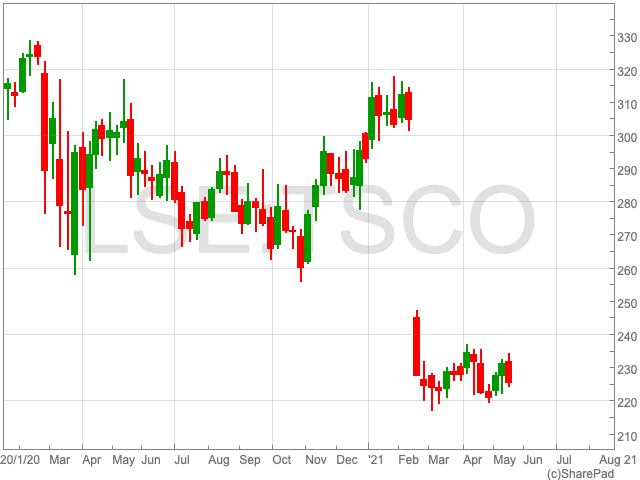
The Tesco share price (LON:TSCO) held steady during the pandemic, as supermarkets benefitted from more people staying at home. Over the Christmas period, and into the new year, it surged above 300p per share before a sharp dive below 230p share, where it remains now. Investors are curious about the cause of the dip and if it represents a buying opportunity.
Special Dividend

The current Tesco share price is concerning for investors. However, it does not neccessarily reflect the outlook of the FTSE 100 supermarket chain. Following the $10.6bn sale of its businesses in Thailand and Malaysia to Dhanin Chearavanont’s CP Group, Tesco made a £5bn special dividend payment.

The payment amounted to 50.93p per share, or just over 21% of Tesco’s market cap. The sale reduced the supermarket’s total market capitalisation by around 20%. As a result, the company carried out a share consolidation, as it would have dropped by the amount of the dividend when it was paid out anyway. The share consolidation was 15 new shares for every 19 previously held. Therefore, the recent share dip in the Tesco share price should not scare off potential investors.

Tesco Health Food Pledge

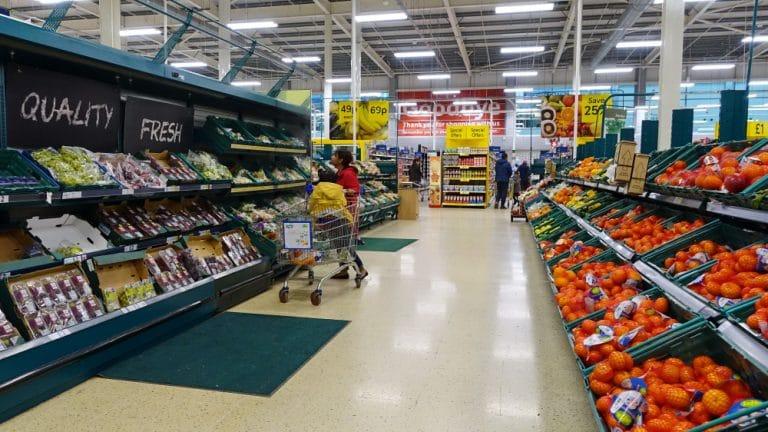
Earlier this month Tesco shareholders managed to pressure the supermarket to commit to promoting healthy food. As a result, Tesco has expanded its “major new programme of reformulation” across its European businesses. A group of seven investors, holding £140bn in assets, and headed up by campaign group ShareAction, put forward the first nutrition-based shareholder resolution at a FTSE 100 company.

Louisa Hodge, a representative from ShareAction said: “By filing a shareholder resolution, our investor coalition sent a strong message to Tesco and to other supermarkets that shifting sales toward healthier options is important.”

Unhealthy food is not typically considered among other issues when it comes to ethical investing, however, the supermarket industry could be set to change. “Most asset managers now have a wide range of strategies and funds claiming to address climate change, but health gets little more than a nod in their annual investment reports,” argued Kieron Boyle, chief executive of Guy’s & St Thomas’ Foundation, in the Financial Times.

The issue the power of collective shareholder action, along with changing trends in the food industry. The future prospects of the Tesco share price may depend on its ability to provide healthier options for its customers.


Solar Energy UCITS ETF: an opportunity to invest in a “global megatrend”

The Solar Energy UCITS ETF (LON:TANN) is set to be listed on the London Stock Exchange in June and will be available for sale across Europe. Its launch, on the HANetf platform, will offer exposure to the ever-growing solar industry as establishes itself as the world’s largest source of energy.

Solar Energy

Solar energy is the fastest-growing source of new energy capacity, with forecasts for $4.2trn of new solar capacity investment by 2050. In most major countries, solar energy is now the most affordable new source of electricity. This is according to the Solar Energy Industries Association, who also said that its costs continue to decline.

Solar Energy UCITS ETF

The Solar Energy ETF will track the EQM Global Solar Energy Index (SOLARNTR). The index tracks companies that derive significant revenue from solar energy-related business practices. This includes manufacturing of solar cells and systems, producers of solar power generation and manufacturers of solar-powered charging systems, among other things. The top ten holdings in the in the Solar Energy ETF include Motech Industries, TSEC Corp, DAQO New Energy Corp, Meyer Burger Technology and United Renewable Energy Co Ltd. Over the past twelve months the SOLARNTR index back-test performance has achieved returns of 211.32%.

Hector McNeil, co-Founder and co-CEO at HANetf, said: “The global solar energy investment
opportunity is very exciting for investors and enables them to focus on a global megatrend in the
switch away from dirty energy to clean energy.

“The Solar Energy UCITS ETF ‘TANN’ provides a more focused opportunity than simply looking at
clean energy and is the first pure-play exposure to the global solar energy industry and its growth
prospects distinct from the wider clean energy investment universe which takes in more companies
and different technologies. It not only expands our offering in the thematic space but adds
significantly to our expanding range of clean & renewable energy and ESG ETFs.”

Interim Results – EV Driving Growth

Nexus Infrastructure plc (AIM: NEXS) 175p (170-180p) Mkt Cap £80m reported interims to March showing that all its fundamental growth drivers were positive. NEXS, provides essential utility infrastructure to the UK housebuilding and commercial sectors and increasingly for eSmart Networks. The Group's £302m order book is ahead year-on-year and has grown over the past six months which is underpinned by electric vehicle charging and smart grid solutions and enforced by Government support for new housing and the 10 Point Plan for a Green Industrial Revolution.
Interim revenue fe...

FTSE 100 down as risks over Covid-19 in emerging markets remain a threat

0

Having opened up the day trading higher following inflation and bitcoin-inspired setbacks, the FTSE 100 has lost some ground in mid-morning trading on Thursday. Down by 0.25% it is trading at 6,933, someway of the 7,000 marker.

“While the markets don’t want central banks to start raising interest rates too soon, they’re also clearly worried about rising prices running away and creating a situation where policymakers have no choice but to act,” said Russ Mould, investment director at AJ Bell.

“Overnight minutes from the US Federal Reserve suggesting some members favour a tapering of asset purchases may actually reassure investors that the Fed can keep the economy bubbling away without letting it overheat.”

Mould also suggests it is too soon to say the FTSE 100 is clear of any risks associated with the ongoing Covid-19 situation.

“The risks associated with the pandemic haven’t gone away – while the developed world finally seems to be gaining some control over Covid-19 the situation is very different in emerging markets and this could be a threat to the commodity-focused firms on the FTSE 100, given a lot of demand comes from developing countries,” Mould said.

FTSE 100 Top Movers

Experian (2.85%), Associated British Foods (1.66%) and Auto Trader (1.55%) are the biggest risers on the FTSE 100 so far on Thursday.

While, at the bottom end, Fresnillo (-3.21%), Tesco (-2.99%) and Rolls-Royce (-2.91%) have lost the most ground.

Kingfisher

Kingfisher (LON:KGF), owner of B&Q and Screwfix, announced on Wednesday that its sales reached £3.4bn as lockdown restrictions encouraged people to take on the challenge of carrying out their own home renovations. The company’s total sales rose sharply by 61.9% during Q1 to the end of April.

Specifically, B&Q saw its sales jump by 82.7%, bringing in £121.2m, while Screwfix made £615m, as consumers made preparations ahead of the summer. Despite its strong sales, the FTSE 100 company said its supply chains were severely disrupted by the container blocking the Suez Canal back in March.

Trainline shares dive as government reveals new ticketing platform

0

It could take nine months for the Great British Railways app to become fully operational

Trainline shares (LON:TRN) plummeted on Thursday as the UK government outlined its plans to launch a rival ticketing platform.

Having fallen by almost a third, Trainline shares are down by 23.79% at the time of writing.

Under the new plan, commuters will be able to purchase tickets via a website called Great British Railways.

The FTSE 250 company listed in London two years ago grew in popularity with consumers who were able to buy and hold tickets on their devices in a matter of seconds.

Reports are suggesting that it could take in the region fo nine months for the Great British Railways app to become fully operational.

AJ Bell investment director Russ Mould commented on the news:

“When there are limited barriers to entry for a business there are always risks as rail ticket seller Trainline is discovering to its cost today, lending credence to financier George Soros’ decision to short the stock through his UK investment arm,” said Mould.

“When your potential competitor is the state the threat can be almost existential and the sweeping changes to the UK railway network which have been announced contain an important detail which is potentially devastating to Trainline’s business model.”

“The new Government-backed Great British Railways body is set to sell tickets in England and, while it won’t be set up for a couple of years, once it’s in place the plan is also to simplify the process of buying tickets,” Mould said.

“This has two implications for Trainline – potentially a lot of people will buy tickets from this new centralised body and if the previous labyrinthine ticket pricing system is made easier to navigate, the company will have less of a role in helping passengers find the best available price.

“Innovations like offering people predictive travel information and telling them how busy services are may make some difference at the margin in maintaining loyalty to Trainline’s site but it is hard to believe it will be enough.”

UK house prices grew in March at fastest rate since 2007

1

The cost of the average property rose by 10.2% to a high of £256,405

House prices increased at the quickest rate in 14 years during March as the chancellor extended the government’s stamp duty relief policy.

According to the Office for National Statistics, the cost of the average property rose by 10.2% to a high of £256,405 in the year up to March.

A surge in demand for detached houses saw their value grow by 11.7%.

London saw the lowest growth for the fourth consecutive month, at 3.7%, while the Yorkshire and Humber region saw a surge of 14%.

“UK average house prices increased by more than 10 per cent in the year to March 2021, the highest rate of annual growth since 2007 and the 11th consecutive monthly rise,” said Sam Beckett, head of economic statistics at the ONS. The figures come as Rishi Sunak extended the government’s stamp duty holiday, in addition to other measures aimed at propping up the UK housing market.

Despite a downturn in the wider UK economy, the property market remained resilient, as house prices reached record levels. One cause for this was a surge in demand, as people saved more during the pandemic, and then reassessed their living situations.

Some experts think that house prices could keep up their impressive form for the remainder of the year.

Mike Scott, chief analyst at the estate agency Yopa, told The Guardian: We believe that the lifting of Covid-19 restrictions – combined with people’s reassessed post-pandemic housing needs, the ‘accidental savings’ that many have made over the past year and the desire for a post-pandemic fresh start – will keep house prices high for at least for the rest of this year.”

“There may well be price decreases in some market sectors, such as inner-city flats, but these will be more than outweighed by price rises for property types that are in high demand for the post-pandemic lifestyle.”

Nationwide’s has suggested that high demand and limited supply could fuel a summer boom, with house prices possibly returning to double-digit annual growth rates by June.

Kingfisher raises guidance on lockdown DIY surge

0

Kingfisher’s total sales rose sharply by 61.9%

Kingfisher (LON:KGF), owner of B&Q and Screwfix, announced on Wednesday that its sales reached £3.4bn as lockdown restrictions encouraged people to take on the challenge of carrying out their own home renovations.

The company’s total sales rose sharply by 61.9% during Q1 to the end of April.

Specifically, B&Q saw its sales jump by 82.7%, bringing in £121.2m, while Screwfix made £615m, as consumers made preparations ahead of the summer.

Despite its strong sales, the FTSE 100 company said its supply chains were severely disrupted by the container blocking the Suez Canal back in March.

Kingfisher said that “reflecting continued strong demand” Q2 like-for-like sales were now forecast to be up by 8.2%, while it expected H1 sales growth to be in the “mid-to-high teens” – ahead of previous expectations of “low double-digit” growth.

Kingfisher also anticipates full-year 2021-22 adjusted profit before tax to be in the region of £580m-£600m, ahead of its previous forecasts.

Thierry Garnier, chief executive officer of Kingfisher, commented on the company’s results and its next steps.

“We continue to see high levels of demand from both new and existing customers, with clear progress made on our ‘Powered by Kingfisher’ strategic priorities, especially in four key areas,” said Garnier.

“Firstly, e-commerce continues to be our fastest-growing channel with two-year growth of over 250%, now accounting for 21% of Group sales. During the quarter we established a new agile operating model for our technology and digital teams, and further strengthened these teams with multiple new hires.”

“Secondly, we are excited to have launched Screwfix as a pure-play online retailer in France in late April. Thirdly, our new own exclusive brand kitchen range is now available in all key markets, with very positive results despite lockdown restrictions.”

“And finally we continue to develop, test and roll out multiple innovative propositions for our customers, with more compact store tests, a new mobile app for Screwfix, self-checkout terminals and our new tool for 3D kitchen and bathroom design. We have also started to roll out our NeedHelp services marketplace in B&Q and Poland.”

The Kingfisher share price is down by 1.33% at early morning trading to 371.30p per share.

EasyJet looks to busy June as airline posts £701m loss

0

EasyJet reported a sharp rise in bookings of 105,000 as government revealed “green-list”

EasyJet (LON:EZJ) said on Thursday that it anticipates a surge in demand for flights from June as the airline posted £701m loss for H1 of the current financial year.

The FTSE 250 company said its results could have been worse if not for its cost-saving programme which is expected to bring £500m in savings for the year to September, as the devastating impact of the coronavirus pandemic continues to damage the industry.

Around this time last year EasyJet made an underlying loss of £193m during H2, as flight schedules were beginning to slow down as the pandemic came to Europe.

The low-cost airline made a loss before tax of £645m.

EasyJet reported a sharp rise in bookings of 105,000 as the government put forward its “green-list” for destinations that require testing without a quarantine. It is also expecting to fly just 15% of its pre-crisis capacity during Q3.

Neil Shah, director of research at Edison Group says that no company will be awaiting the complete lifting of travel restrictions more than EasyJet as the company posted its half-year results.

“Financial results were unsurprisingly negative, as passenger numbers for the six months ending 31 March 2021 decreased by 89.4% to 4.1 million compared to the 38.6 million for the same period last year. Total revenue decreased by 90% to £240 million, with passenger revenue decreasing by 91% to £170 million. The company undertook major restructuring and cost reduction process alongside maintaining an investment-grade balance sheet, which meant that results came in on their expectations,” said Shah.

Commenting on the results, Johan Lundgren, EasyJet chief executive said:

“With leisure travel taking off in the UK again earlier this week where we are the largest operator to Green list countries and with so many European governments easing restrictions to open up travel again, we are ready to significantly ramp up our flying for the summer with a view to maximising the opportunities we see in Europe.  We have the ability to flex up quickly to operate 90% of our current fleet over the peak summer period to match demand,” said Lundgren.

“We know there is pent-up demand – we saw this again when Green list countries were released and added more than 105,000 seats – and so we look forward to being able to help many more people to travel this summer supported by our industry-leading flexible customer policies which means they can book with confidence.”

“Over the past six months, we have successfully undertaken a major restructuring and cost reduction process alongside maintaining an investment-grade balance sheet with significant liquidity and managing our cash burn better than expectations. This has delivered results in line with guidance. Our agility, trusted brand and famous value means we are well placed to bounce back in the recovery.”

New standard listing: Oxford Cannabinoid Technologies

Oxford Cannabinoid Technologies is a medicinal cannabis company focused on developing pain relief treatments using cannabinoids.
It has licenced one compound from a Japanese pharma firm and is developing other compounds. Phase 1 trials are expected later next year for the licenced compound and possibly another one. As the prospectus says, fewer than 10% of phase 1 clinical trial molecules end up as an approved drug.
Imperial Brands owns 10.87% of the company and has been a shareholder since January 2018. The University of Oxford has said that it will not enter into any other projects with the ...

5G progress at MTI Wireless

MTI Wireless Edge (LON: MWE) grew its first quarter revenues even though the comparative figures were for a relatively strong period only hampered by Covid-19 in the last few weeks. The company’s antennas and irrigation control businesses have good long-term growth prospects.
MTI has three divisions. The antennas division has been the core business of MTI Wireless and it has significant growth potential. 5G investment continues to build up and MTI’s customers supply international telecoms companies.
Water irrigation control and monitoring subsidiary Mottech provides Motorola-based technology t...