Phoenix Group confirms sale of Ark Life Assurance in £200m deal

0

Phoenix does not expect to see its solvency or long-term free cash positions materially impacted by the transaction

Phoenix Group Holdings (LON:PHNX) announced on Tuesday that it has entered into an agreement to sell Ark Life Assurance Company DAC to Irish Life Group Limited for a total €230m (£197m).

The cash consideration is payable on completion and expected by early 2022, subject to customary regulatory and anti-trust approvals, Phoenix said.

The FTSE 100 company does not expect to see its solvency or long-term free cash positions materially impacted by the transaction.

“This transaction simplifies our European operations and accelerates the cash release from this business. The Group expects to redeploy the capital into higher return growth opportunities to drive incremental future cash generation,” the company said.

Ark Life is a closed book business which manages heritage savings and protection products in Ireland, and was acquired by Phoenix as part of the ReAssure acquisition in 2020. Ark Life contributed £1.8 billion of assets under administration to Phoenix’s Heritage division as at 31 December 2020. While Irish Life is one of Ireland’s leading life and pensions companies.

The Phoenix Group share price is up by 0.46% during the morning session on Tuesday.

Halfords enters software market with launch of Avayler

0

Avayler confirms first customer

Halfords (LON:HFD) confirmed on Tuesday its launch of Avayler, a new company offering Halfords’ software to streamline delivery for companies that operate in various locations.

Avayler confirmed its first customer, American Tire Distributors (ATD), a leading supplier of tyres, as well as owner of online retailer Tirebuyer.com.

The software was developed to manage Halfords’ own garages, mobile vans and retail stores, bringing together systems and services developed inhouse by Halfords.

The Avayler Mobile product uses algorithms to calculate the available time slots for the customer according to where the nearest van is located and the parts available, Halfords says. It then uses dynamic pricing to value those slots accurately. The customer can track where the van is and receive notifications and updates while the colleague is en route.

Graham Stapleton, CEO of Halfords, said: “We’re proud to be launching Avayler today with ATD as our first client. This is an historic moment for Halfords and another major milestone in our transition to become a market leading motoring services focused business.”

“The Avayler platform has enabled us to optimise our motoring services operations across our stores, garages and mobile vans, reducing operating costs, growing profits and delivering a better customer experience. We’re very excited about the opportunities this platform will create for Halfords in the UK and internationally.”

Stuart Schuette, president and CEO for ATD, added: “At ATD, we’re committed to helping our customers thrive in an evolving industry. We continuously search around the world to bring new technology and capabilities that complement our customers’ businesses.”

“As the trend toward mobile tire installation continues to grow, ATD is looking forward to accelerating access to best-in-class technology for our customers that are interested in entering the mobile tire installation business. We’re excited to partner with Avayler to bring this offering to our tire retailers.”

British Land closes in on pre-pandemic levels

0

Rent collection sees improvement on easing of restrictions

British Land (LON:BLND) confirmed on Tuesday that its rent collection from retailers has risen as its sites have reopened on the easing of lockdowns.

The FTSE 100 company said it collected 99% of rent due from its offices last month.

The land owner added that since the restrictions were lifted, footfall and sales have risen by 86% and 94% respectively across its locations.

British Land confirmed in an operational update that 85% of June’s £87m rent has been collected. Approximately half comes from offices and half from retail.

Compared to numbers from before the pandemic, footfall was at 86% since indoor hospitality reopened, while sales were at 94%, according to British Land.

Retail parks, according to the FTSE 100 company, are outperforming other areas of retail, running at 96% and 99% of pre-pandemic levels. The value of retail parks also rose during June by 0.7%.

Simon Carter, CEO British Land said: “With lockdown restrictions lifting, we have seen a notable improvement in activity across our markets and our business is performing well. On our retail parks, footfall and sales are close to pre pandemic levels, rents are stabilising with recent deals in line with March ERV and there are indications that retail park values are starting to rise as more investors target the market.”

“At Storey, our flexible workspace offer, activity is above pre pandemic levels. Elsewhere on our Campuses, we see good occupier interest for new and refurbished space, which we expect to be supportive of office rents and values as we move through the year.”

The British Land share price is up by 0.88% on Monday.

GoldStone Resources share price soars following approval for Ghana mine

0

GoldStone Resources Share Price

The Goldstone Resources share price (LON:GRL) is up by 10.63% on Monday, one of the top three performing companies on the AIM, as the miner gave an operational update in addition to agreements reached with creditors. The jump comes following a sharp dip in the middle of June, and means it is now up by 51.29% since the beginning of the year.

Ghana

Goldstone Resources received approval from the Minerals Commission to begin the irrigation and leaching of ore placed on the heap leach pad at its Homase mine in Ghana.

The AIM-listed company remains on track to achieve the target production of 25,000 ounces of gold for the first eight months of production, with first gold pour expected to occur in the third quarter of this year.

Bond Settlement

The Goldstone Resources share price was also propped up as the company came to an agreement for the settlement of its twenty outstanding unsecured bonds of $50,000 each with the bondholders.

The offer has been accepted by all bondholders, who have agreed to full and final settlement of the bonds in exchange for the issue of, in aggregate, 12,000,000 new ordinary shares of 1p each in the capital of the company, a statement released by Goldstone Resources confirmed on Monday.

Verbal agreement has been received from BCM Investments Limited, which will be allotted its 3,600,000 bond settlement shares immediately following signature of a written Bond Settlement Agreement. Goldstone Resources said it will provide further updates in due course.

NatWest says investors have too much faith in cash

2

Inflation could be causing the real value of savings to fall

NatWest conducted research which found that the majority of parents and guardians in the UK who are setting aside money for their children, are doing so with cash.

This could be damaging for their savings as their money may not grow in value, especially when considered against alternative options, including stocks and shares.

While the majority of parents, at 76%, are saving money for their children, 83% are doing so in cash.

When considering the impact of inflation, this means that the real value of their savings could be falling.

It was reported last month that for the first time in nearly two years, inflation went beyond its target, putting pressure on the Bank of England to increase interest rates.

Consumer price inflation (CPI) jumped from 1.5% in April to 2.1% in May as the cost of fuel, clothes and dining out all surged.

Additionally, 8% are unsure where to look for advice, and 66% believe investment support should be available through baby-services such as NCT.

Natwest has lunched a Junior ISA which it says makes investing more ‘accessible to all’.

Peter Flavel, CEO Coutts & NatWest’s Wealth Businesses, said: “It’s encouraging to see how many people are saving and investing for their children, but with so much of these savings being cash, the concern is that the customer isn’t aware that the impact of inflation means the purchasing power of these ‘safe’ cash balances actually goes backwards over the longer term. We want to play our part in informing those who are looking to make their money go further.”

“The NatWest data also revealed that nearly one in five (18%) UK parents or guardians that is saving for their child is doing so by putting away cash in their own account, with 15% using NS&I Premium or Children’s bonds. Less than one in four (23%) UK parents or guardians is saving or investing for their child via stocks and shares.”

Flavel added: “We think that at least half, maybe even two thirds of ISA balances ought to have been placed in competitively priced stock and shares ISAs, but the continued preference for cash suggests that ISAs aren’t really helping the UK’s medium-term savings pool in the way they best could.”

“Unsurprisingly, the top reason as to why people aren’t saving for their child was because they couldn’t afford to – which was the case for 48%. But interestingly, nearly one in 10 (8%) simply didn’t know where to turn to for advice, and a similar number (7%) simply didn’t know how to do so.”

AxiaFunder: access the new asset class of litigation funding

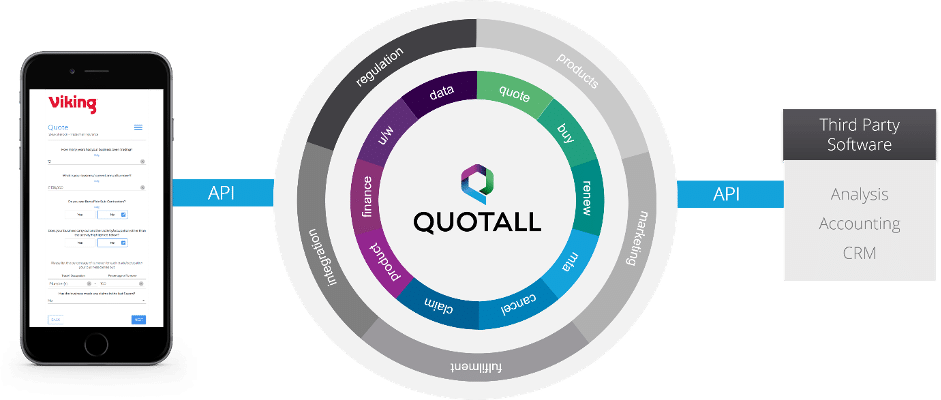
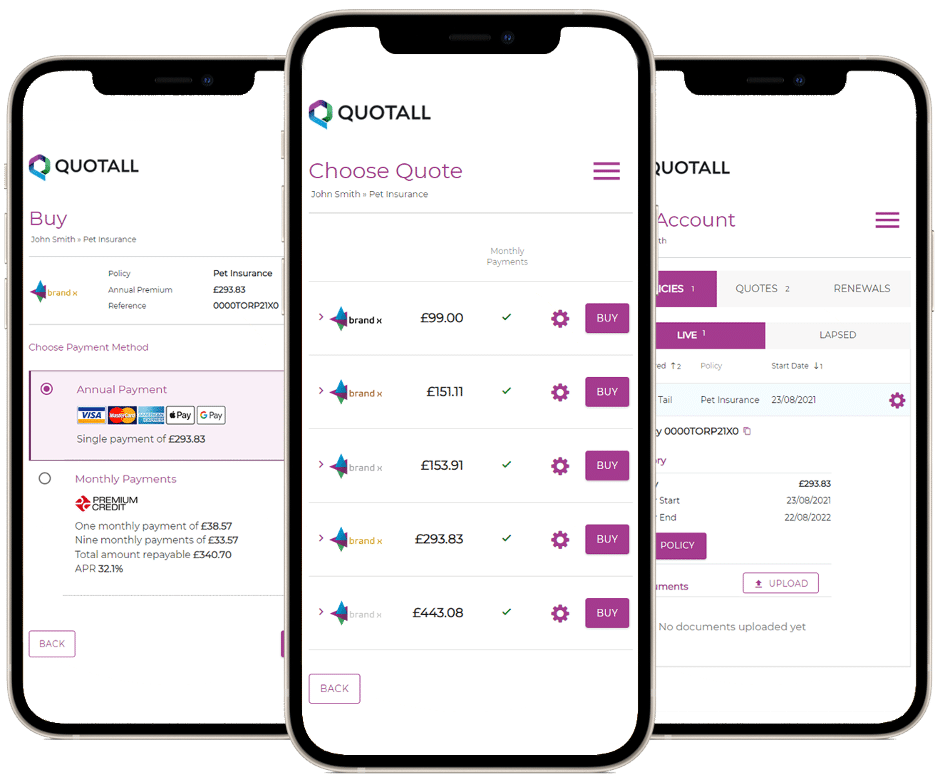
AxiaFunder, is a litigation funding platform that provides individual and institutional investors with the ability to directly invest in a range of litigation cases.

AxiaFunder was established after Founder Cormac Leech’s personal experience within litigation funding found that while there was a substantial market for litigation funding, until AxiaFunder there hasn’t been a platform that provided the means for investors to invest in specific cases directly.

For more information on open opportunities, please click here.

Litigation Funding 

Companies such as Burford Capital have carved themselves out a business model with litigation funding at the centre of their operations. 

However, while shares in companies such as Burford Capital provide exposure to litigation funding, the options for investors to invest directly into individual cases is limited. 

And when observing the substantial profits listed companies are making from litigation funding, it is easy to understand why private investors would want to gain direct exposure to cases.

AxiaFunder highlights the potential for high returns through litigation funding with a 20%+ targeted return on a portfolio of cases accessed through their investment platform. 

An individual case can yield as much as 70% per annum for investors via the AxiaFunder platform, if successful. 

Many cases are settled before they go to trial so investors can potentially enjoy returns in less than a year in some circumstances. 

A successful case on the AxiaFunder platform was settled within just 7 months and returned investors 32% after a breach of contract case was mediated. Of course, as the AxiaFunder team point out, past performance is never a guarantee of future results.

Litigation Funding as a new asset class

One of the standout attractions of litigation funding is the absence of correlation with the broad economic environment.

Litigation, and the need to pursue litigation, is not largely impacted by economic growth in the same way traditional assets such as equities and bonds are. 

Indeed, there is an argument that litigation funding provides investors with an attractive alternative in times of economic uncertainty.

With equities at multiyear highs many investors may think it is a good time to diversify out of equities, and litigation funding will be an option for some high net worth and sophisticated investors to consider. 

There is also an absence of correlation in returns between individual cases which contrasts to equities, for example.

If shares in a UK bank fell due to bad earnings or a deterioration in the broad economic landscape, you’d expect shares of other bank shares to react in a similar way.

This isn’t the situation with litigation funding as each case is entirely unconnected with another. If an investor was to fund the pursuit of justice for Party A against Party B, it would have absolutely no impact on the funding of another case. It should be noted, however, that investment in litigation funding does carry certain risks as we discuss in more depth below.

For more information on open opportunities, please click here.

Why Litigation Funding?


Whilst investing through AxiaFunder provides ESG characteristics in the form of promoting social justice, it goes without saying that the primary objective of an investment is a potential financial return and litigation funding provides plenty of opportunity for just that. 

Typically. AxiaFunder places a 70-75% probability of any case winning  (although it does vary depending on the facts) either via a pre-trial settlement, which occurs at least 80% of the time, or at trial. AxiaFunder investors generally get paid first from any proceeds and therefore any settlement is generally a win for investors.  

The probability of a case winning is assessed using a stringent process employed by AxiaFunder before an investment opportunity goes live on the platform. 

Of the cases reviewed by the team at AxiaFunder, approximately 1 out of 20 actually make it on to the platform. 

The high level of vetting is the consequence of a multi-staged assessment made by a team of litigation professionals to ensure only cases which they believe have a strong chance of success make it on to AxiaFunder’s investment platform. 

Managing Risk

As with all investments, there is the risk of loss of your capital when investing in litigation funding. 

The risk of loss when investing in litigation funding stems from the failure of success in any one case resulting in the loss of capital used to fund the litigation. 

However, cases available to investors through the AxiaFunder platform are subject to a number of procedures to help mitigate any losses. 

The foremost arrangement is the implementation of various insurances help reduce any liabilities of a failed case. 

ATE (After the Event) insurance is required for all cases on the AxiaFunder platform, where there is adverse cost risk, which insures investors against having to pay any additional fees for a lost case.

Some cases, but not all, have insurance covering losses to investors’ own capital, typically protecting 50-80% of the invested capital.

Adding additional support for a successful outcome for investors is the circumstance of the solicitors involved in the cases taking the case on a partial or sometimes full CFA (conditional fee agreement) basis.

A conditional fee agreement means the lawyer will fund their own expense during the litigation process and will only receive a fee, often with some increased uplift, if they win the case. This means the lawyer’s interests are aligned with those of the investors that are funding the case. 

To date AxiaFunder has won 5 cases with zero losses and 7 cases still underway. In the last 3 months there has been a flurry of new cases launched, with offers launched with total requirement of £1.3m, including the platform’s first international case– a software theft case in Barcelona. Some of these are not yet fully funded. 

There are currently 2 cases available for investment on the platform, one of which has over 50% of investors’ capital covered by insurance. If this pace of case launches is maintained, investors should be able to build a diversified portfolio of cases in the months ahead.  

Capital is at risk and returns are not guaranteed and investments are not covered by the Financial Services Compensation Scheme (FSCS). More information on the risks involved in investing can be found in AxiaFunder’s risk warning on https://www.axiafunder.com/risk.

Case Study

Type: Breach of Contract

Litigation funding, of approximately £24,000, was required to fund a breach of contract claim. The claim was initiated by the liquidator of a construction company who built a substantial new house for an individual in the South West of England who subsequently refused to pay for it. The construction company ultimately went into liquidation as a result of the defendant’s failure to pay the contractor anything towards the draft final account figure. In this case, the funding was required to fund the court issue and counsel fees. 

The Claim Form has been issued immediately after the fund raise. This prompted the Defendant to get engaged on the claim – the Defendant’s Protocol response has been received the following month. Consequently, an agreement to mediate later that year has been reached. Following the mediation, the parties have agreed to a settlement that enabled the Company to pay investors back just over £31,000 for a 32% investment gain after just 7 months. Please note that past performance is not a guarantee of future results.

For more information on open opportunities, please click here.

Consumer spending soars in June as Brits socialise and enjoy staycations

0

The outlook for the airline industry remains bleak

Compared to the same period in 2019, consumer spending rose by 11.1% in June, as improved weather conditions and the easing of restrictions led to Brits socialising more and going on holidays within the UK.

Barclaycard data revealed that spending on essential goods rose by 14.7%, the most since before the pandemic began in March 2020.

This came about as a result of surges in supermarket shopping, up 19%, and spending at specialist food and drink outlets, such as butchers and off-licenses, up 76.4%.

While holidays abroad remained restricted, many Brits opted for staycations and to visit friends and family, as spending on fuel increased by 3.6%. It was the first time spending on fuel rose since the beginning of the pandemic.

As Brits enjoyed the mini-heatwave and watched the early stages of the European Championships on big screens, spending at bars and pubs rose by 38.1%.

Barclays suggested that the trend is likely to continue as the Tokyo Olympics draws closer and British people’s appetites to socialise remains strong.

There was a ray of hope for the British travel industry which has been demoralised in recent months, as it saw its first month of growth, at 5.4%, once before the pandemic, as people travelled within the UK. However, when looking at airlines, the outlook is bleaker, as travel agents and airlines saw respective falls of 75.3% and 70.9%.

Raheel Ahmed, Head of Consumer Products, said: “June saw Brits flock back to pubs, bars and beer gardens to watch the football and tennis on the big screens, as the heatwave early in the month encouraged many of us to get out in the sunshine and socialise.”

“The start of the Olympics and the expected easing of restrictions later this month should continue to lift spirits and provide more opportunities for get-togethers, whether that’s a weekend break, a meal out or to celebrate sporting victories. It’s great to see Brits making up for lost time over the past year.”

Plus 500 sees growth slow following bumper 2020

0

Plus 500 revenue for H2 to June 2021 recorded at $346m

Plus 500 (LON:PLUS) said its trading levels had fallen back since the early period of the pandemic, while the company reported ‘positive momentum’.

The fintech company’s revenue for H2 to June 2021 came in at $346m, compared to $564m over the same period of time in 2020, as Plus 500 reaped the benefits from surging demand during the pandemic. For the first six months of 2019, the company’s revenue was recorded at $148m.

Despite the fall in revenue, Plus 500 drew attention to a “very strong period of customer acquisition” during the first half of the year.

The firm said that 136,980 new customers came aboard, down from 198,176 people in 2020. This figure stood at 47,540 in 2019.

Overall, Plus 500 said its financial position remains robust, and cash balances remain healthy, driven by the strong EBITDA performance and continued high cash generation during the period.

David Zruia, Chief Executive Officer, commented: “Plus500’s excellent performance so far in 2021 was driven by the strength and agility of our technology and its ability to respond rapidly to market developments, news events and customer requirements.”

“We have multiple opportunities from which to access future growth through both continued organic investment and targeted acquisitions, by expanding our CFD offering, launching new trading products, introducing new financial products and deepening engagement with our customers,” Zruia said.

“Our long-term ambition is to enable simplified, universal access to financial markets as we continue to transition into a global multi-asset Fintech Group . We are thrilled to be already making significant progress in delivering this vision, with the recent launch of Plus500 Invest and the acquisition of Cunningham and CTS, both of which ensure that Plus500 can offer customers a diversified portfolio of products.”

ASOS and Nordstrom confirm Topshop joint venture

0

ASOS will retain operational and creative control

ASOS (LON:ASC) confirmed on Monday that it has agreed to a joint-venture with Nordstrom, the American retailer, which will invest for a minority position in Topshop, Topman, Miss Selfridge and HIIT.

The partnership is aimed at driving growth between the two brands, and generating new ideas in an effort to improve awareness and engagement in the North American market.

Nordstrom has a strong physical and digital presence in North America, operating more than 350 physical stores alongside online platforms that attract almost two billion annual visits. It already has an established relationship with Topshop, having been the first US retailer to offer the brand to the US market as far back as 2012.

ASOS will retain operational and creative control, but work with Nordstrom to leverage its US market expertise and extensive customer reach to “build an exciting future for these brands in their second biggest market”.

Nick Beighton, ASOS CEO, commented: “With its long-established connection to Topshop, extensive US consumer insight and unparalleled reach right across North America, Nordstrom is the right partner to help ASOS accelerate the growth of our Topshop and ASOS brands in this key market.”

“ASOS is all about giving customers the confidence to be who they want to be. Partnering with Nordstrom will support our US strategy, allowing us to offer that to even more 20-somethings in North America.  We’re excited about the opportunities ahead, collaborating to deliver the best product through engaging, friction-free multi-touch experiences and we can’t wait to see our ASOS edit in Nordstrom stores.”

Pete Nordstrom, President and Chief Brand Officer of Nordstrom, added:

“We could not have found a better partner in ASOS, the world leader in fashion for the 20-something customer,” said Nordstrom.

“We’re excited about offering the ASOS brands to our customers and we know we can help further amplify the recognition of the already popular Topshop and Topman brands. We are thrilled to have the opportunity to work with ASOS to reimagine the wholesale/retail partnership and are excited about our potential as we expand our product offering to a broader audience and deliver on our commitment to helping our customers feel good and look their best.” 

The ASOS share price is down by 0.41% pre-lunchtime on Monday.

Economic uncertainty continues to hold back UK stocks

0

The FTSE 100 is down by 0.46% to 7,089 on Monday. It could have been a lot worse given how investors’ nerves were tested last week with a big sell-off linked to concerns over the strength of the global economic recovery.

“There is a repeat of the same stocks driving down the market – banks, miners and oil producers, all of whom are bellwethers for the state of the economy,” said Russ Mould, investment director at AJ Bell.

“Utilities and real estate were the only sectors in the FTSE 100 pushing ahead on Monday, whereas the FTSE 250 fared a bit better.”

The UK mid cap index avoided any sell-off and traded flat at 22,890, with real estate, consumer non-cyclicals, technology and financials as the strongest performing sectors.

“The UK is now only a week away from the so-called ‘Freedom Day’ where most of the remaining Covid restrictions will be dropped. However, there are growing fears that removal of these restrictions could lead to a resurgence in infections and put the country in a dangerous situation.”

FTSE 100 Top Movers

Admiral Group (4.2%), Ocado Group (1.44%) and Segro (1.37%) are the top performers on the FTSE 100 during the morning session on Monday.

At the other end, Rolls-Royce (-2.81%), IAG (-2.55%) and Whitbread (-2.39%) make up the bottom three of the UK index.