EasyJet Share Price: uncertainty over “green list” could halt bull-run

0

EasyJet Share Price

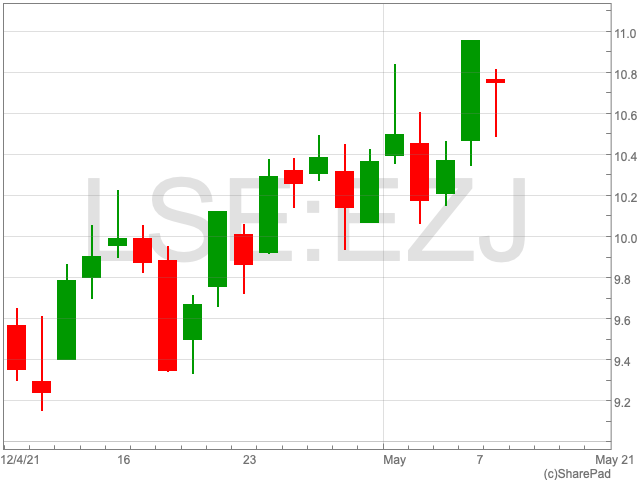
The EasyJet share price had added 10.7% over the past month, now at 1,068p, as destinations across Europe are set to become accessible on May 17. While it has not recovered to its pre-pandemic high of 1,508p, its current level is the highest it has been since lockdowns first came into affect across the UK. However, today, after news came that 12 countries made the “green list”, the EasyJet share price is down by 2.5%, suggesting that investors would like further good news before they can get behind the airline.
Britain to allow foreign travel

Britain has allowed the resumption of international travel from May 17, after a ban which lasted for months. However, a majority of major destinations were left off the list. Much to the dismay of airlines, France, Italy, Spain and the US, failed to make the much anticipated list of destinations.

“Today marks the first step in our cautious return to international travel, with measures designed above all else to protect public health and ensure we don’t throw away the hard-fought gains we’ve all strived to earn this year,” transport minister Grant Shapps said.

It seems as though Brits will have to wait a while longer before they are able to travel to some of their preferred destinations as the list will be reviewed every few weeks.

“This excess of caution from the government is extremely disappointing for everyone who works in the travel sector,” Brian Strutton of the British Airline Pilots Association told Reuters. With the added uncertainty over when passengers will be able to travel to some of Europe’s major destinations, EasyJet’s recent bull-run could come under threat. However, the UK government’s cautious approach could also suggest the likelihood of positive news coming soon being high.

In April, Credit Suisse gave a price estimate for the EasyJet share price of 1,200p, which looks attainable following the company’s recent upward move.
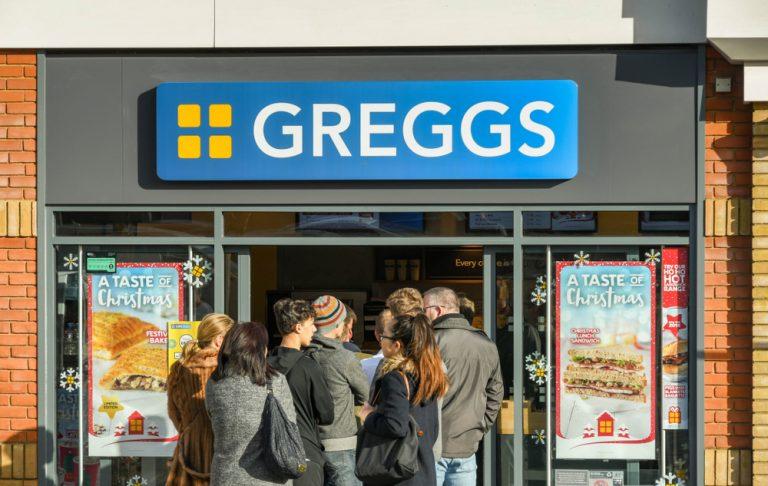

Greggs says profits could return to pre-pandemic levels this year

0

Greggs’ trading statement will “put a smile on the retail sector”

Greggs (LON:GRG) came out on Monday and said its profit levels could reach its pre-pandemic levels as its sales have rebounded.

The UK baker said it has experienced a “strong recovery” as non-essential shops reopened in April.

“If Next’s recent trading statement didn’t put a smile on the retail sector, then Greggs’ certainly will,” said AJ Bell investment director Russ Mould.

The company’s trading statement conceded that while the present moment was an unusual period of trading, it could lead to the company outperforming its profit forecast.

“The reopening of non-essential retail has got people out of the house and Greggs has benefited from increased traffic and temporarily reduced competition from cafes and restaurants,” Mould added.

“A greater number of people returning to the office will also have helped, as workers nip out at lunchtime for a sandwich and a coffee.”

Back in March, Greggs revealed its first full year loss in nearly 40 years as its sales dived due to the Covid-19 outbreak. At that point the baker suggested it would not get back to its pre-pandemic levels until at least 2022.

According to its most recent update Greggs “saw a significant pick up in sales with the reopening of non-essential retail from 12 April, in part reflecting the pent-up demand for retail which has boosted High Street footfall”.

“Now it is betting on a big recovery in pre-pandemic activity once considered ‘normal’, namely going to work in an office, meeting friends and family for social activities, and more movement via personal and public transport around the country. Its stores are conveniently placed to attract people as they go about their day,” Mould argues.

“Many people think we’re going to see structural change in where work is done, however we are still creatures of habit and it wouldn’t be surprising to see queues return to Greggs’ stores for bacon baguettes, sausage rolls and steak bakes slowly build up as more Government restrictions are lifted and companies lay down their long-term working strategies. Even with some people working full time from home, the nation isn’t going to hide away like it did in 2020.”

Bushveld Minerals Share Price: global vanadium ore market set to grow in 2021

0

Bushveld Minerals Share Price

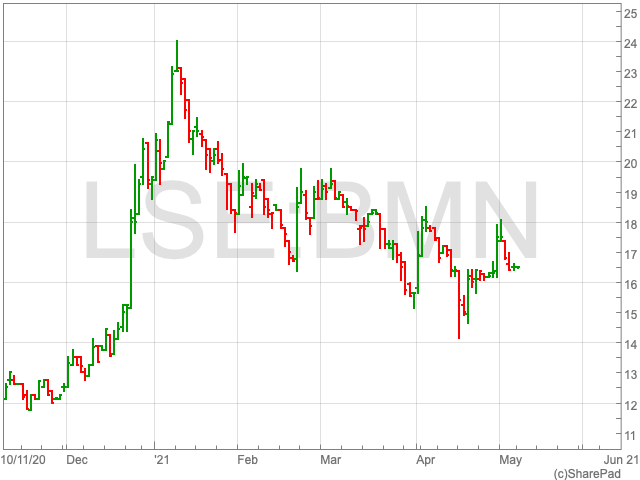
Eight days into 2021 the Bushveld Minerals share price reached 22.9p, surpassing its pre-pandemic high of 21.5p. However, since then it has been a rocky few months for the primary vanadium producer, as its share price now stands at 16.92p per share. Following a strike by employees which was quickly resolved in April, investors are curious about what the remainder of 2021 holds for Bushveld. On a positive note, the outlook for the vanadium market over the next year and beyond could bode well for Bushveld.

Strike at Bushveld’s Vametco mine

It was reported back in April that workers at the AIM-listed company’s Vametco mine in South Africa went on a strike to protest an employee participation plan (EPP). The strike came despite employees already signing an EPP with the Association of Mineworkers and Construction Union (AMCU). Days later Bushveld Minerals confirmed that the strike had been resolved and that workers had safely returned to work. “The impact, if any, of these five days of industrial action on production will be provided in the upcoming quarterly production report,” the company said in a statement.

Vanadium

According to the Vanadium Ore Global Market Report 2021, the chemical element is expected to grow from $1.49bn in 2020 to $1.6bn in 2021 at a compound annual growth rate (CAGR) of 7.4%. The growth will come about as companies reorganise their operations and bounce back from the impact of the pandemic, which brought about a number of restrictive containment measures.

The report also identified the emergence of a trend of using vanadium redox flow batteries (VRFB’s) for energy storage. The trend will bring about a transition of how the vanadium market is presently dominated by steel producers.

It is predicted that the increased use of vanadium in the car industry will drive the market for years to come. It utility in reducing the weight and increasing the fuel efficiency of cars, means that 85% of all cars will use vanadium by 2025.

House prices in April 1.4% higher than in March

0

House price boom in “full swing” says AJ Bell analyst

House prices in April were 1.4% higher than in March on a monthly basis.

Over the last quarter, from February to April, house prices were 0.9% higher than in the three months before, from November to January, according to the house price index.

During April, house prices were up by 8.2% compared to the same month in 2020.

UK house prices grew in April at the quickest rate in over 15 years, research by Nationwide revealed.

House prices in April surpassed the record high from the previous month as the housing market continued its recent momentum.

Laith Khalaf, financial analyst at AJ Bell, commented on the figures:

“The house price boom is still in full swing, as white line fever is pushing buyers into the market to take advantage of the recently extended stamp duty holiday. Mortgage approvals have fallen back in recent months, which hints that some froth may be coming off the very top of the market. But we’re approaching the busy summer season, and there are plenty of tailwinds that will help to keep prices elevated moving forwards.

Khalaf also noted the variety of support offered by the government in addition to the pent-up savings as people remained at home during the pandemic.

“The stamp duty holiday is gradually being tapered away by the end of September, but borrowing costs are still low, and the government continues to offer support in the form of Help to Buy and the Mortgage Guarantee Scheme. We also know that plenty of consumers have built up a war chest over the pandemic which can help them trade up the property market, perhaps to get some extra space for a home office.”

Russell Galley, Managing Director, Halifax, said:

“The average property is now worth £258,204, up 1.4% month on month and 8.2% annually, the highest annual growth rate in 5 years. In cash terms, almost £20,000 has been added to the value of the average home since the market had essentially come to a standstill in April 2020.”

“The stamp duty holiday continues to add impetus to an extremely active market, magnifying the current shortage of available homes as buyers aim to take advantage of the Government scheme. The influence of the stamp duty holiday will fade gradually over the coming months as it’s tapered out but low stock levels, low interest rates and continued demand is likely to continue to underpin prices in the market.”

Iron ore price jumps on expectation of global recovery

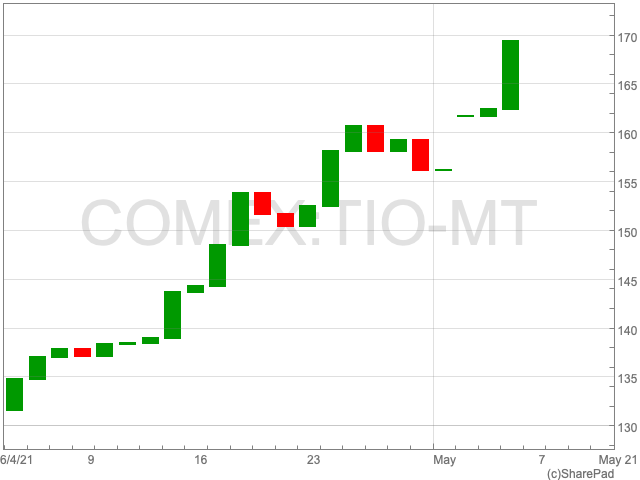
The iron ore composite made it to $169.36

The iron ore composite is up by 4.3% on Monday as expectations of a global recovery from the coronavirus pandemic are growing.

The iron ore composite made it to $169.36, meaning it is now up by 23.5% over the last month.

The latest jump comes in the wake of a recent surge in the price of the commodity used to make steel, buoyed largely by demand from the Chinese economy.

Justin Smirk, senior economist at Westpac, told the Financial Times that it was more than only China driving demand for steel. “I think the reality is the market’s still incredibly tight, we’ve still got very, very strong steel prices,” Smirk added.

Demand for steel after the lockdown is growing as China is being forced to allocate thee steel it produces to export markets, according to Argus Media. Efforts by the Chinese government to curb the production of steel have also had little impact as it even set a new record for steel production.

FTSE 100 struggles to gain momentum despite miners making solid ground

0

The FTSE 100 is up by 0.23% to 7,146.12 during the morning session, as its struggled to gain momentum, even though its major miners made solid ground on the back of rising commodity prices. The index added just enough to keep it in the ballpark of a post-pandemic high.

“Reports that the UK government is pushing ahead with its lockdown-easing plan – regardless of concerns over the Indian Covid-19 variants currently circulating (and, in some areas, surging) – gave the pound a shot in the arm,” said Connor Campbell, financial analyst at Spreadex.

From May 17 up to six people, or two households, will be able to meet indoors, while cinemas, restaurants and pubs will be able to have customers mix inside.

“This appeared to counter any concerns the currency may have had over the SNP’s renewed push for a referendum on Scottish independence and sent the pound up 0.5% against the dollar and 0.7% against the euro,” Campbell said.

“Despite the euro’s losses the Eurozone indices weren’t any more enthusiastic than the FTSE. The DAX was unchanged, a smidge under 15,400, with the CAC a bit better, rising 0.3% to 6,370.”

“After closing at a record high on Friday – the disappointing nonfarm jobs report likely means the Fed will hold off a bit longer before discussing tapering its current stimulus – the Dow Jones is set to go again this afternoon.”

FTSE 100 Top Movers

Mining giants Rio Tinto (3.53%), BHP (3.29%) and Glencore (2.20%) are the top risers on the FTSE 100 so far as the price of copper and iron ore both jumped.

At the other end, IAG (-2.18%), Intertek (-1.79%) and Flutter Entertainment (-1.73%) saw the biggest falls on the index.

The Pound

The British Pound made a flying start to the week on Monday as investors seem reassured that the political climate will remain calm. The Scottish National Party, led by Nicola Sturgeon, won 64 seats in the Scottish Parliament election, one short of a majority.

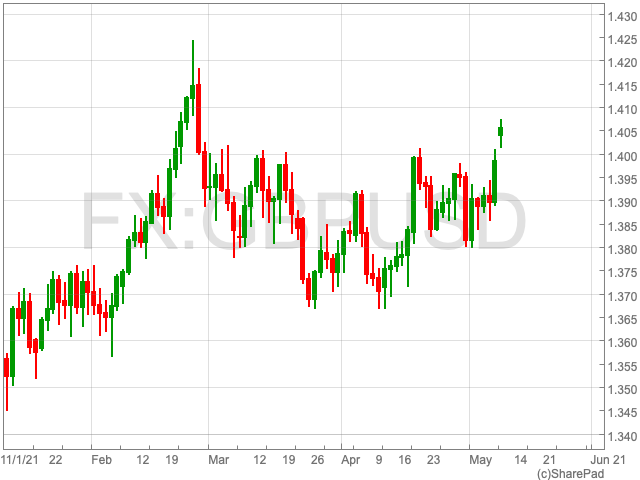
The Pound-to-Dollar rate rose to $1.405, its highest point since the middle of February, while the Pound-to-Euro rate also rose €1.15819. If Scotland gains its independence from the UK then a question would be raised of what the future of the currency would be, as well as the impact on British companies.

Pound rallies to over $1.40 following results of Scottish election

Pound continues rally vs the dollar from last week

The British Pound made a flying start to the week on Monday as investors seem reassured that the political climate will remain calm.

The Scottish National Party, led by Nicola Sturgeon, won 64 seats in the Scottish Parliament election, one short of a majority.

If Scotland gains its independence from the UK then a question would be raised of what the future of the currency would be, as well as the impact on British companies.

The election results, at the very least, suggests that a seccession is unlikely to occur in the near future, as Sturgeon’s party will now refocus on navigating the rest of the coronavirus pandemic.

The Pound-to-Dollar rate rose to $1.405, its highest point since the middle of February, while the Pound-to-Euro rate also rose €1.15819.

“For EUR/GBP, markets will digest the Scottish Parliament election results, where SNP fell short of winning the absolute majority, but where pro-independence parties did not,” says Mikael Olai Milhøj, Chief Analyst at Danske Bank, as reported in Pound Sterling Live.

“We doubt, however, that another independence referendum will be a theme for long, given it will take a long time before such a referendum would take place, as the Conservative government still rejects it,” Milhøj added.

The Pound-to-Dollar rate saw a rally last week, getting as high as $1.3919, after US nonfarm payroll figures came in well below expectations, rising by 266,000 on Friday, as the unemployment rate rose to 6.1%.

Dow Jones estimates had been for 1m new jobs to be added, in addition to an unemployment rate of 5.8%.

Castillo Copper provides operational update as price of copper reaches record high

Castillo Copper working on next phase of exploration for the flagship Mt Oxide Project

Castillo Copper (LON:CCZ), a base metal explorer primarily focused on copper across Australia and Zambia, gave an operational update on its exploration plans as the price of copper reached new highs last week.

In a statement from managing director, Simon Paull, outlined the company’s ongoing work in securing the next phase of its operations.

“Over the past few months, Castillo’s geology and corporate teams have been working tirelessly
behind the scenes on two fronts: the next phase of exploration for the flagship Mt Oxide Project and
identifying prospective strategic partners to develop our Zambia and New South Wales assets,” Paull said.

“With the wet season in north-west Queensland now largely over, we have received approval from the
landowner to recommence exploration activities at the Mt Oxide Project.”

Castillo‘s main priority is to extend known mineralisation discovered at the Big One Deposit. At present, a team is “at site” conducting a geophysical survey along the line of lode, according to the company’s statement. Once the geophysical results are interpreted and new targets formulated, Castillo’s drilling team will complete the remainder of the campaign that was designed in late 2020.

“The drilling crew will then move to the Arya Prospect, where there are two shallow targets around
25m deep. However, most of the intrigue is focused on the huge interpreted 130m thick potential
massive sulphide target that is 1.5km long and 450m wide at a depth of around 430m,” Paull said.

“Contingent on the assays from Big One Deposit and Arya Prospect, further drilling may be required
to build our understanding of these two primary targets. However, there is no shortage of exploration
potential for the Mt Oxide Project as there are another 19 targets that warrant investigation.”

Castillo is largely weighted towards the world copper market, and so the news comes in a timely fashion. The price of copper reached a record high last Friday as part of a wider rally in commodity markets, as economies across the world reopen and demand for minerals grows on amid the world’s transition to green energy.

“More significantly, with more investment now expected to be earmarked for copper exploration, our
corporate team has been extremely busy liaising with prospective strategic partners to develop our
Zambia and New South Wales assets,” said Castillo Copper.

Standard list readmission: National World

It took time to get UKLA approval for the prospectus for the readmission of National World, but more than four months after the acquisition of JPI was completed it has happened and trading in the shares restarted. Local newspapers are a tough business, but if the strategy to generate more online revenues is a success the titles acquired, such as the Scotsman and the Yorkshire Post, could be worth an enormous amount.
Executive chairman David Montgomery is a former editor of the News of the World and chief executive of Mirror Group, while Vijay Vaghela is a former finance director of Reach, whic...

FDA approval provides oxygen for Belluscura float

Two months after gaining FDA 510 (k) clearance for its X-PLO2 R portable oxygen concentrator (POC) medical devices developer Belluscura is planning to join AIM in late May. Belluscura initially planned to float at the end of 2017, but the business was at a much earlier stage. The pre-money valuation is £35m-£40m and the company is seeking £15m of new money.
Existing AIM-quoted company Tekcapital (LON: TEK) set up Belluscura although its stake has been diluted. More recently, warrants and options have been exercised at the cost of £1.25m to take Tekcapital’s stake to 17.1 million shares, compar...