Property finance asset manager Lendinvest has floated so that it can continue to increase its funds under management and particularly its platform assets under management. A greater proportion of platform assets are likely to be lower risk with longer durations. There will also be further investment in technology.
Management believes it can double underlying EBITDA margin and grow underlying EBITDA by up to five times over the medium-term. Greater efficiency will help with this target.
The ambition is funds under management of more than £5bn in 2023-24 with a greater proportion from institutio...
BEPPS Snacks secures £400,000 from the Good Food Fund
The investment is aimed at tackling childhood obesity
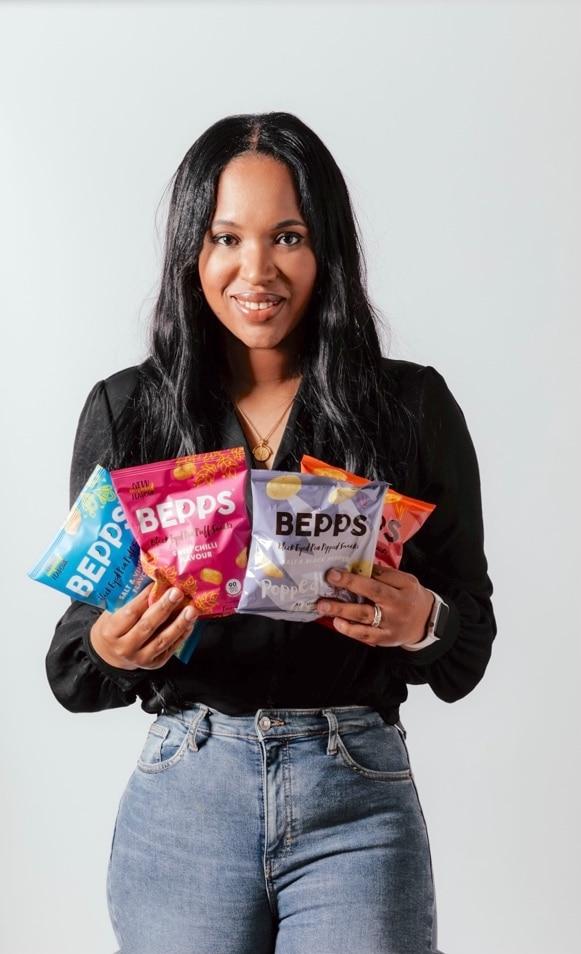
BEPPS Snacks, the London based start-up aiming at tackling childhood obesity, has secured a £400,000 investment from the Good Food Fund.
In addition to the funding, BEPPS will get support and guidance from Missions Venture, a company that nurtures scalable challenger brands.
BEPPS Snacks offer an innovative range of ‘Great Taste Award’ winning pea, pulse and grain snacks, which hero the black eyed pea. Its products are stocked by a range of major retail outlets, including Tesco and Ocado.
The Good Food Fund by Ascension Ventures, seeks to back entrepreneurs making healthy eating accessible to all.
A number of initiatives the Goof Food Fund has invested in include: Rootles, the chocolate coated veg-based biscuits; Naturelly, fruit juice jelly pots and pouches; Insane Grain, puffed sorghum snacks and Snackzilla, company that makes oat cookies.
BEPPS Snacks Founder, Eve Yankah, a working mother inspired by her children to create the brand, commented on the company’s journey so far: “We’ve made some exciting investments in D2C this past year, since Covid, that are starting to pay off – D2C [direct-to-consumer] is our fastest growing channel alongside Grocery.”
“We’ve seen our Amazon sales increase over 300% in the past six months alone. Funds will be used towards further accelerating our D2C growth alongside more trade marketing investment to support our growth within Grocery, we still have a lot of accounts to go after!” Yankah said.
Emma Steele, investment director at Ascension Ventures added: “The Good Food Fund is all about supporting innovative approaches to tackling social inequalities in food, including childhood obesity.”
“BEPPS is building its brand as a fantastic and great tasting healthy snack but also at an affordable price, using very simple and under-utilised ingredients. As with every business, backing the right founder is key and we are excited to be on board this journey with Eve – she is a strong leader and has a great clarity of vision for scaling the business.”
Founder Eve Yankah has donated 60,000 packs of BEPPS so far to food banks via City Harvest in London and nationwide via Woman’s Aid UK.
Evolving trends in the Investment Trusts market with finnCap’s Monica Tepes
The UK Investor Magazine Podcast is joined by Monica Tepes, Investment Companies Research Director at finnCap, to discuss the UK Investment Trust market.
We cover key trends including top level themes such as ESG and Tech ITs then drill down into the sectors currently catching Monica’s eye.
Investment Trusts have enjoyed the benefits of readily available investor funds for new issues and we explore those sectors impacted by the pandemic and how premiums and discounts have behaved as changes in restrictions drive investor sentiment.
Investment Trust providing investors with exposure to technology companies have rode a wave of investor interest and we discuss a recent issue focusing on space in addition to those holding some of the UK’s largest private tech companies.
ESG fund attracted record inflows in 2020 which has led to a wave of new ESG products in the UK and the entire universe adopting rating systems that can leave some investors confused about the true ESG characteristics of certain products.
We discuss niche sectors such as the growth story in Vietnam and one particular fund focussed on Uranium miners.
Watch the latest Vietnam Holding Investor Presentation.
Shares in Soho House owner drop further after low valued IPO
The primary reason for Membership Collective Group going public is to pay debt down
Shares in the Membership Collective Group, the parent company of the private members’ club chain, Soho House, took a dive on Friday, a day after its debut on the New York Stock Exchange.
At the time of writing, shares in the Membership Collective Group are down by 9.57% to $12.66.
The private members’ club group raised $420m via an IPO, after it sold its stock at $14 per share, the lower end of the range it had suggested to potential investors.
Senior people at the company were seeking to pull investors in with lofty plans to extend the Soho House membership model.
Openings in other major European cities were touted including Paris, Rome and Tel Aviv.
Membership Collective Group was hoping to pay down a significant portion of its debt with the money raised from the flotation.
Having raised $450m, it tends to use $223m to lower its $600m of net debt. Interest payments on its debt dragged on its balance sheet during Q1 of the current financial year.
“The main reason for going public is to pay that debt down. We don’t really need it for capital investment,” said Andrew Carnie, MCG global president.
Membership Collective Group has over 119,000 members, while its waiting list holds more than 48,000 applicants.
The company is of the view that it is in a strong position to do well over the coming months as lockdowns ease, while only 10% of subscriptions were cancelled.
Membership Collective Group’s goal is to increase membership revenues from 26% of the total amount to over 50%.
The chain is expecting to post a loss for the year.
FTSE 100 stages recovery despite nervousness over inflation
The FTSE 100 is up by 0.49% during the morning session on Friday to 7,046.11 as concerns over inflation are spreading across the world.
“It feels like fears over inflation have returned with a vengeance this week as central bankers increasingly struggle to mask their own nervousness about rising prices,” says Danni Hewson, financial analyst at AJ Bell.
Nonetheless stocks appear to be in a good mood this morning.
“Travel and hotel stocks trading firmly higher as traditional holiday destinations Ibiza, Majorca, Menorca and Formentera are added to the UK’s amber list and demand for staycations continues to surge,” said Hewson.
“Investors may be hoping for a number which is neither too hot nor too cold when the US reports retail sales figures later. If the reading is a lot higher than expected then there will be concern that the world’s largest economy is overheating but if the data is much weaker then there will be fears the recovery from the pandemic is being knocked off course amid mounting infection rates linked to the Delta variant.”
US reporting season is underway and the UK is soon to follow. This will help to give the markets some sense of direction as they continues to navigate the threats of inflation and Covid-19.
FTSE 100 Top Movers
Whitbread (3.9%), Intercontinental Hotels Group (3.53%) and DCC (3.23%) are leading the way with strong gains on the FTSE 100 as the weekend draws to a close.
Burberry (-4.12%), Just Eat (-3.43%) and Rio Tinto (-1.43%) have seen the biggest fall in the value of their shares this morning.
Rio Tinto
Rio Tinto is struggling to reach its full-year guidance for its iron ore operations as a weather conditions, a shortage of labour and ongoing cultural heritage management issues dragged on the miner’s performance.
The FTSE 100 miner confirmed in its quarterly update on Friday that it exported 76.3m tonnes of iron ore, a fall of 12% compared to the same quarter twelve months ago.
Burberry
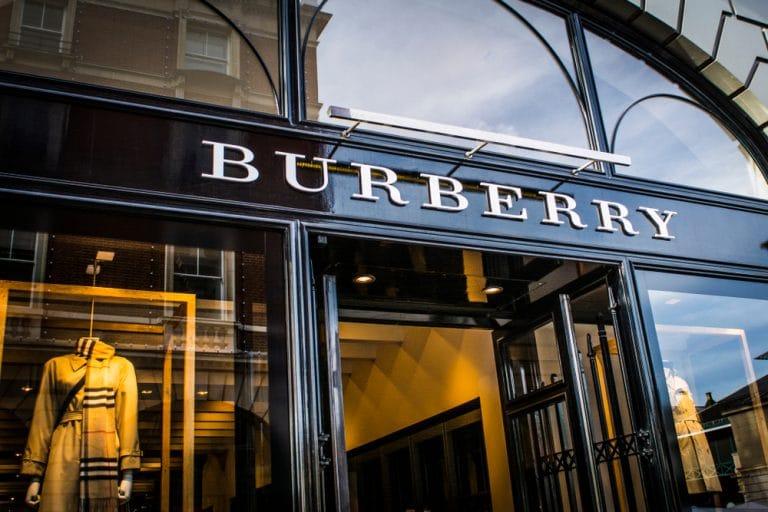
Burberry sales surged back during Q1 of its financial year as its locations opened back up on the easing of restrictions.
The luxury fashion brand also noted that it is attracting younger customers, thanks in part to its collaboration with model Kendall Jenner.
GSK
GSK has set out plans to construct a new life sciences campus in the UK, one of the largest in Europe, as the pharmaceutical company attracted £400m of private investment.
The FTSE 100 company will raise the money by selling land in Hertfordshire and then turning it into a biotechnology campus.
GSK sets out plans for new UK life sciences campus
The projected is expected to commence in 2022
GSK (LON:GSK) has set out plans to construct a new life sciences campus in the UK, one of the largest in Europe, as the pharmaceutical company attracted £400m of private investment.
The FTSE 100 company will raise the money by selling land in Hertfordshire and then turning it into a biotechnology campus.
The projected is expected to commence in 2022 having received backing from the UK government.
Cushman & Wakefield, the real estate services firm, said the site has the potential to be the UK’s second-largest sector cluster for specialist commercial life sciences. It would follow Cambridge, where AstraZeneca is constructing a £1bn global headquarters and research centre.
“Our goal is for Stevenage to emerge as a top destination for medical and scientific research by the end of the decade,” said Tony Wood, senior vice-president of medicinal science and technology at GSK.
“The past 18 months has shown the UK life sciences sector at its best,” he added.
Depending on planning permission, the site could offer a potential 2.5m sq ft of space.
GSK is aiming to create up to 5,000 jobs in the next five to 10 years by building the new campus.
The GSK share price is up by 0.57% during the morning session on Friday.
Rio Tinto struggling to reach iron ore guidance due to production issues
Aboriginal traditional owners continue to put pressure on Rio Tinto over their conduct on previous mining expeditions
Rio Tinto (LON:RIO) is struggling to reach its full-year guidance for its iron ore operations as a weather conditions, a shortage of labour and ongoing cultural heritage management issues dragged on the miner’s performance.
The FTSE 100 miner confirmed in its quarterly update on Friday that it exported 76.3m tonnes of iron ore, a fall of 12% compared to the same quarter twelve months ago.
The largest iron ore producer in the world is now expecting to deliver close to the lower end of its 325m-340m tonnes range in 2021.
Production for the quarter was held back by rainfall in the West Pilbara region, in addition to Covid-induced labour shortages.
Rio Tinto also lost 2m tonnes of iron ore production as it moved buffers and exclusion zones in order to protect areas of “cultural significance”.
Aboriginal traditional owners continue to put pressure on Rio Tinto over their conduct on previous mining expeditions.
The Financial Times reported that analysts believe Rio will announce a large dividend payment of about $8bn when it reports H1 results this month.
Rio Tinto Chief Executive Jakob Stausholm, commented: “The global economy, in particular China, recovered strongly and we are intensely focused on servicing our customers with as much product as we can. However, we faced some challenges in the first half notably at our Pilbara operations, which were impacted by replacement mine tie-ins and materially higher rainfall.”
“Heightened COVID-19 constraints, which resulted in numerous travel restrictions, added further pressure on the business and limited our ability to access additional people, particularly in Western Australia and Mongolia, in order to deliver operational improvements or maintenance initiatives and accelerate projects.”
Stausholm believes that despite some concerns over performance, the FTSE 100 company’s priorities will serve to benefit shareholder returns over the long-run.
“Our first half performance has reaffirmed my belief that we have identified the right priorities to strengthen the business: to become the best operator, strive for impeccable ESG credentials, excel in development and secure a strong social licence,” Stausholm said.
“We have made initial progress against our priorities, but a large volume of work remains to make Rio Tinto even stronger, so we can continue to deliver superior returns to shareholders, invest in sustaining and growing our portfolio, and make a broader contribution to society.”
The Rio Tinto share price is down by 1.42% during the morning session on the London Stock Exchange.

Burberry sales boosted by demand from young shoppers
The board dismissed concerns over Burberry’s performance in China
Burberry (LON:BRBY) sales surged back during Q1 of its financial year as its locations opened back up on the easing of restrictions.
The luxury fashion brand also noted that it is attracting younger customers, thanks in part to its collaboration with model Kendall Jenner.
Burberry’s revenue, which felt the impact of the news that trusted CEO Marco Gobbetti would be leaving, stands at £479m for the quarter ending in June.
The board dismissed concerns over Burberry’s performance in China, as it, along with other western brands, found itself under pressure having condemned methods within the country to support the fashion industry.
In mainland China, Burberry said sales rose by more than 55% while sales in Korea are up more than 90% against pre-pandemic levels.
“This was driven by new, local, young customers buying across our core categories,” Burberry said in its trading update.
Chief executive Marco Gobbetti, who confirmed he will be leaving Burberry last month, said: “We saw strong growth across our strategic categories, in particular leather goods and outerwear, and exited markdowns in digital and mainline stores.”
“We continued to roll out our new store concept that will transform how customers experience our brand and product in a uniquely British luxury setting.”
“Despite the continuing challenging external environment, we are very pleased with the progress against our strategy. With the company firmly set on a path of growth and acceleration, we are confident of achieving our medium-term goals.”
“There’s a lot to like about today’s trading update from fashion label Burberry but perhaps the biggest plus point is the fact it is attracting new younger customers. This has positive implications of the long-term prospects of the business,” says Danni Hewson, financial analyst at AJ Bell.
“With this, plus good growth in traditionally strong areas like trench coats and handbags powering first quarter sales to pre-pandemic levels it’s a wonder investors aren’t more enthused.”
“The performance of the European part of the business is also disappointing when compared with a strong showing in the Americas and Asia,” Hewson added.
“Burberry will be hoping that the return of international tourism provides a renewed catalyst for sales growth given its traditional reliance on Asian tourists buying from flagship stores in Europe.”