


Court orders Shell to cut carbon emissions by 45% by 2030
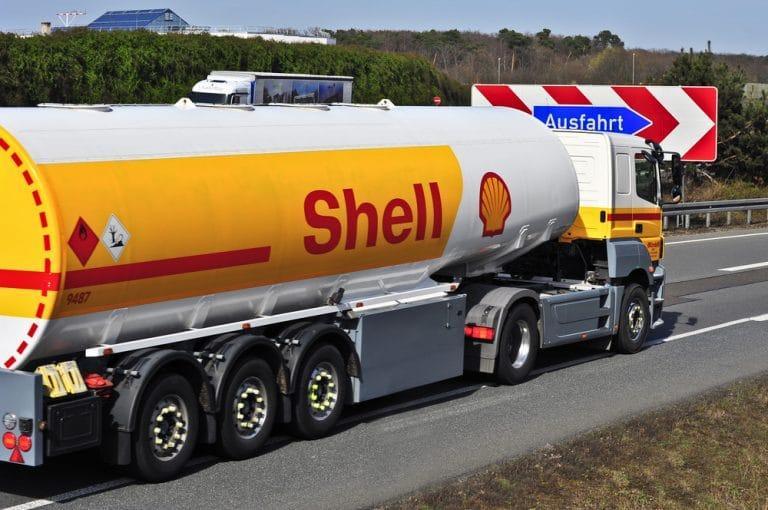
Shell must comply with the ruling immediately
A court in the Hague ordered Shell (LON:RDSB) to reduce its worldwide carbon emissions by 45% by the end of 2030.
The landmark ruling aimed at bringing the FTSE 100 company in line with the Paris Agreement, is the first of its kind in history.
“The court orders Royal Dutch Shell … to reduce its CO2 output and those of its suppliers and buyers by the end of 2030 by a net of 45% based on 2019 levels,” the court said. “Royal Dutch Shell has to implement this decision at once.”
Shell, the ninth biggest polluter in the world from 1988-2015, will have the right to appeal the judgement.
Donald Pols, director of Friends of the Earth Netherlands (FOE NL), the group that organised the case, described the ruling as a “monumental victory”.
“The judge has left no room for doubt: Shell is causing dangerous climate change and must stop its destructive behaviour now,” Pols said in a statement.
Shell said that it was disappointed and would appeal the decision, although it must comply with the ruling immediately.
The Shell share price has been moving sideways for the past two months now and appears unsure of its next move.

EasyJet boss not expecting ‘Indian strain’ of Covid-19 to ‘ruin’ summer travel

Lundgren warned against the impact of the UK government’s actions on the airline industry
The chief executive of EasyJet (LON:EZJ) said on Wednesday that he does not anticipate the ‘Indian strain’ of coronavirus to be the most significant obstacle for the coming European travel season.
Johan Lundgren added that another summer without travel would be disastrous for the UK’s airline industry.
The UK has until now placed strict restrictions on travel for most holiday destinations to the detriment of both airline and travel industries. This is in light of the discovery of the new variant, first found in India, and now spreading across the United Kingdom.
Across the continent, Germany has banned non-essential travel, while France has hinted at a similar policy.
Lundgren said the industry’s future could be on the line if a return to more normal modes of travel are not permitted in time for this summer.
“I don’t think that UK aviation as an industry can go through another lost summer without grave consequences,” he said at an online industry event on Wednesday.
Lundgren argues that the new variant would not be a major concern as vaccines would protect against it.
“I don’t think that the outlook…is that because of the Indian variant the summer is ruined,” he added.
Lundgren’s major worry is that the UK sticks to its current policy of having Portugal as the only major travel destination open to Brits.
The EasyJet share price is down by 0.3% to 982.40p as the end of the day approaches.
British Land and UK property with Alan Green

Alan Green joins the podcast for our weekly Podcast to discuss a number of equities including British Land (LON:BLND) following the release of their results.
The UK residential property market has defied calls for a collapse during the pandemic helped by government schemes such as reduction to Stamp Duty and a general reduction in supply. With the world now moving past the worst of the economic disruption, the UK property market is now entering a new chapter which could see housing activity rise to levels not seen since the financial crisis.
We discuss the key drivers behind the boom such as a ‘race to space’ and whether this can be sustained beyond the end of the year.
Naturally, we then move onto the commercial property sector and how cities such as London can realign their economies given the exodus of foreign born people, crucial to the hospitality sector associated with people working in offices.
There is detailed discussion of British Land (LON:BLND), Corcel (LON:CRCL) and Lexington Gold (LON:LEX).
Barratt Developments Share Price: strong run looks set to continue in 2021

Barratt Developments Share Price
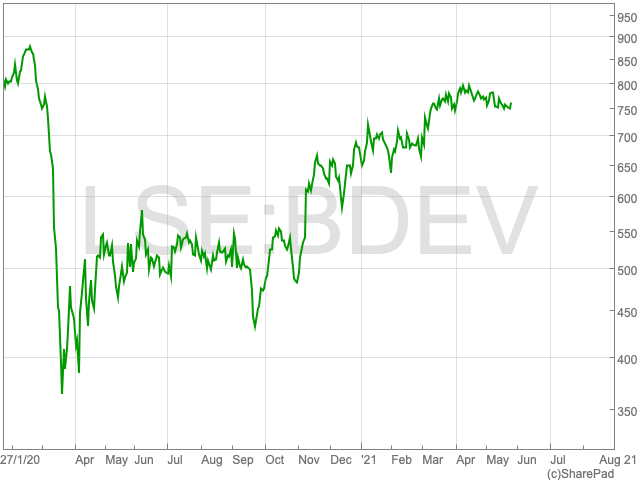
The Barratt Developments share price is up by 13.7% since the turn of the year to 761.5p per share. It remains some way off its pre-pandemic level of over 860p, however, if the housing market continues on its current trajectory, then it may do so by the end of 2021.
Housing Market
As house prices hit new highs, and look set to continue doing so, Barratt Developments seems a good bet. The total value of homes sold across the UK is forecast to reach £461bn in 2021, a rise of 46% from the year before.
This is according to analysis by Zoopla, the property platform, that expects the housing boom to continue. Zoopla also confirmed it believes home sales will reach 1.52m in 2021, an increase of 45% from the year before. Therefore the value of the homes sold this year would amount to £461bn.
However, it is important to consider that the performance of the Barratt Developments share price was on the back of highly supportive UK government housing policies. These measures will surely not remain in place forever.
Performance
Earlier this month Barratt Developments said it was in a “strong financial position” and could therefore afford to pay back £3.5m of business rates relief.
The payment is in addition to the £26m it paid back after the FTSE 100 company received the money through the furlough scheme.
Barrat also revealed that its construction activity is “progressing well”. The company built 321 homes on average per week between January and May. It forward sales book now stands at £3.69bn.
David Thomas, chief executive of Barratt, said: “We have seen strong demand for our high-quality, energy-efficient homes on well-designed developments, which means we now expect to increase wholly owned completions to between 16,000 and 16,250 homes this year, up from 15,700 in 2020, along with 650 joint venture home completions.”
The company’s current financial position and productivity, in addition to the positive outlook for the wider market, bode well for the Barratt Developments share price moving forward.
Shell share price: the ball is in the board’s court

Shell Share Price
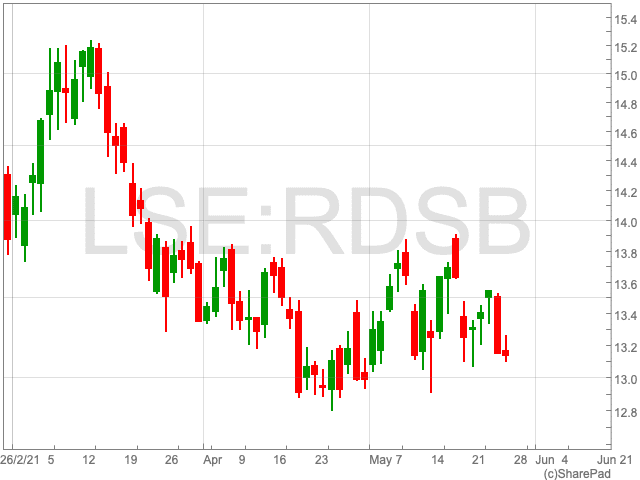
The Shell share price (LON:RDSB) has been moving sideways for the past two months now and appears unsure of its next move. Having reached 1,583.6p in early March, its highest point in over a year, it is now sitting at 1,375.4p per share. Investors appear to be awaiting news that could influence the FTSE 100 company’s value. Since the beginning of the year, the Shell share price is up by 4.3%. The energy company has performed well in line with the relatively strong performance of oil prices.
Transition to Clean Energy
The lack of speed over the company’s transition to clean energy remains a concern for Shell. If the company’s board does not handle the situation delicately then the Shell share price could be adversely affected in the coming months.
Just recently, UK Investor Magazine reported that Legal & General Investment Management (LGIM), one of the UK’s largest fund managers, has come out as being critical of Shell’s efforts to tackle climate change.
At the company’s AGM last week, LGIM voted against the FTSE 100 oil giant’s energy transition strategy. The fund manager told the Guardian that it was standing alongside activists as it does not buy the credibility of Shell’s plan.
Although LGIM did say that some progress was being made. “We remain concerned that the strength of interim targets (up to 2035) and disclosed plans for oil and gas production fall short of the level of ambition required for the company to credibly claim alignment with a 1.5C pathway,” the company said.
The result builds further pressure on Shell and now means the oil giant will be required to consult shareholders and report on their views within six months.
For now, the ball appears to be in Shell’s court. The company has time to go away and conjure a plan to appease its shareholders, as well as protecting its immediate-term interests. It serves as a warning to the company of the increasing power of activism by shareholders, especially when they pool their resources.
The oil giant could well come out and deliver an update to its strategy which could then push up the Shell share price. The consequences of not doing so could be a mass sell-off, as investors appear to be at the end of their tether.
Oil
For investors less concerned about the long-term, Shell could be viewed as a means to making a nearer-term profit, via oil.
Demand for oil is rising again as the world continues its emergence from lockdown. Both Brent and WTI are up by around a third since the beginning of the year.
“The euphoria is reflected in the general belief that the economic revival will be soon coupled with oil demand recovery,” Tamas Varga, an analyst at PVM oil brokerage told the Financial Times. Demand for oil is expected to peak around the next decade, which leaves the possibility for a period when consumption is growing while output slows, as many companies will redirect resources to other sources of energy.
The future of the Shell share price could therefore depend on the board’s ability to navigate both its transition to clean energy and the continued demand for oil.
Gold reaches four-month high amid fears of inflation

Gold composite has risen by 0.47% to $1907.25
Gold reached its highest point in four months on Wednesday, as the Fed continued to dismiss fears of inflation.
The gold composite has risen by 0.47% to $1907.25 at lunchtime in the UK, and is up by 7.3% over the past month.
Vice Chair of the Fed Richard Clarida said yesterday that pricing pressure will be shown to be “largely transitory”, as the central bank restated its dovish monetary policy stance.

Gold’s price surge also came in the aftermath of the crypto market crash, as the commodity is seen by many as a competing store of value with bitcoin.
Other precious metals, including silver, platinum and palladium, have advanced this month.
The Australian Government’s Department of Industry, Science, Energy and Resources (DISER) believes that gold production will increase by 5.5% in 2021 and by 3% in 2022. This is following a 3.9% decline during 2020.
DISER added that the vaccine roll-out across the world would minimise the disruption to gold mining after 2022.
The agency also expects Australia to overtake China as the largest producer of gold in the world in 2021, as miners adapt to increasing prices of the precious metal.
Housing boom set to continue as value of homes sold could rise by 46% this year

Zoopla anticipates busiest property market for 14 years
The total value of homes sold across the UK is forecast to reach £461bn in 2021, a rise of 46% from the year before.
This is according to analysis by Zoopla, the property platform, that expects the housing boom to continue.
It could be the busiest property market for 14 years, according to the report.
Just last week the Office for National Statistics said average UK house prices in March had risen by 10.2% in year. It was the fastest rate of yearly growth since before the financial crisis.
Zoopla also confirmed it expected home sales would reach 1.52m in 2021, an increase of 45% from the year before. Therefore the value of the homes sold this year would amount to £461bn.
Director of sales at specialist lender Together, Sundeep Patel, commented on the factors bringing about a stronger than expected growth rate:
“Demand for homeownership across all customer bases shows no signs of abating, with buyers jostling to make the most of the Stamp Duty extension ahead of it tapering off on the 1 July. Indeed, the total value of homes sold in the UK this year is predicted to reach £461bn, an increase of 46% on 2020,” Patel said.
“That said, while record low interest rates and government incentives have clearly boosted activity, there are severe supply and demand issues to be cautious of in the long-term. Indeed, while it’s difficult to forecast what the property market will look like as we recover from the pandemic, we’re confident flexibility will be a top priority for hopeful borrowers and their needs in the future, given the financial considerations caused by the pandemic.”
Research by Wayhome, the Gradual Homeownership provider, has revealed that 58% of renters in the UK consider buying a home a priority, despite the pandemic putting many people’s plans on hold.
Owning a home takes precedence over getting married or entering a civil partnership (49%), or entering an early retirement (30%).
Although lockdowns brought the housing market to a temporary halt for a significant portion of 2020, and house prices continued going up, 45% of 18-23 year olds remain steadfast in their desire to own a home.
Marks and Spencer to close 30 more stores following £201.2m loss
M&S’s partnership with Ocado proved to be a success as its food sales contributed
Marks and Spencer (LON:MKS) confirmed plans to shut down a further 30 stores over the next decade as part of a plan to turn around the businesses’ fortunes.
M&S has previously closed or relocated 59 key locations, in addition to slashing 7,000 jobs across the business.
The company was badly impacted by the pandemic last year as it reported significant losses.
M&S’s partnership with Ocado proved to be a success as its food sales contributed towards a “resilient performance” during a testing year.
The FTSE 250 company recorder a loss before tax of £201.2m during the year to 27 March, a swing from a £67.2m profit the year before.
M&S says it has 254 “full-line stores”, selling clothes, homewares and food. However, it says they are all in decline and future investment is unsustainable.
“Marks & Spencer’s full year results are easy to interpret. The retailer smashed it with food sales, but clothing was a flop as the working from home trend caused a slump in suit sales and the nation no doubt decided it didn’t need to buy any of its pastel-coloured jumpers,” says Russ Mould, investment director at AJ Bell.
“The company seems to be hoping that 2021 will be a turning point (just like each of the previous years and their turning points, given its eternal turnaround programme).”
“If this new push with clothes is unsuccessful, it will no doubt raise the question once again as to whether Marks & Spencer would be better off focusing purely on food. It wouldn’t be easy to sell the clothing and homewares arm because of the shared floor space with food in so many stores, plus there can’t be many businesses who would want to take on additional property. Therefore, it has to make the new clothing strategy work.”