Interim Results – EV Driving Growth

Nexus Infrastructure plc (AIM: NEXS) 175p (170-180p) Mkt Cap £80m reported interims to March showing that all its fundamental growth drivers were positive. NEXS, provides essential utility infrastructure to the UK housebuilding and commercial sectors and increasingly for eSmart Networks. The Group's £302m order book is ahead year-on-year and has grown over the past six months which is underpinned by electric vehicle charging and smart grid solutions and enforced by Government support for new housing and the 10 Point Plan for a Green Industrial Revolution.
Interim revenue fe...

FTSE 100 down as risks over Covid-19 in emerging markets remain a threat

0

Having opened up the day trading higher following inflation and bitcoin-inspired setbacks, the FTSE 100 has lost some ground in mid-morning trading on Thursday. Down by 0.25% it is trading at 6,933, someway of the 7,000 marker.

“While the markets don’t want central banks to start raising interest rates too soon, they’re also clearly worried about rising prices running away and creating a situation where policymakers have no choice but to act,” said Russ Mould, investment director at AJ Bell.

“Overnight minutes from the US Federal Reserve suggesting some members favour a tapering of asset purchases may actually reassure investors that the Fed can keep the economy bubbling away without letting it overheat.”

Mould also suggests it is too soon to say the FTSE 100 is clear of any risks associated with the ongoing Covid-19 situation.

“The risks associated with the pandemic haven’t gone away – while the developed world finally seems to be gaining some control over Covid-19 the situation is very different in emerging markets and this could be a threat to the commodity-focused firms on the FTSE 100, given a lot of demand comes from developing countries,” Mould said.

FTSE 100 Top Movers

Experian (2.85%), Associated British Foods (1.66%) and Auto Trader (1.55%) are the biggest risers on the FTSE 100 so far on Thursday.

While, at the bottom end, Fresnillo (-3.21%), Tesco (-2.99%) and Rolls-Royce (-2.91%) have lost the most ground.

Kingfisher

Kingfisher (LON:KGF), owner of B&Q and Screwfix, announced on Wednesday that its sales reached £3.4bn as lockdown restrictions encouraged people to take on the challenge of carrying out their own home renovations. The company’s total sales rose sharply by 61.9% during Q1 to the end of April.

Specifically, B&Q saw its sales jump by 82.7%, bringing in £121.2m, while Screwfix made £615m, as consumers made preparations ahead of the summer. Despite its strong sales, the FTSE 100 company said its supply chains were severely disrupted by the container blocking the Suez Canal back in March.

Trainline shares dive as government reveals new ticketing platform

0

It could take nine months for the Great British Railways app to become fully operational

Trainline shares (LON:TRN) plummeted on Thursday as the UK government outlined its plans to launch a rival ticketing platform.

Having fallen by almost a third, Trainline shares are down by 23.79% at the time of writing.

Under the new plan, commuters will be able to purchase tickets via a website called Great British Railways.

The FTSE 250 company listed in London two years ago grew in popularity with consumers who were able to buy and hold tickets on their devices in a matter of seconds.

Reports are suggesting that it could take in the region fo nine months for the Great British Railways app to become fully operational.

AJ Bell investment director Russ Mould commented on the news:

“When there are limited barriers to entry for a business there are always risks as rail ticket seller Trainline is discovering to its cost today, lending credence to financier George Soros’ decision to short the stock through his UK investment arm,” said Mould.

“When your potential competitor is the state the threat can be almost existential and the sweeping changes to the UK railway network which have been announced contain an important detail which is potentially devastating to Trainline’s business model.”

“The new Government-backed Great British Railways body is set to sell tickets in England and, while it won’t be set up for a couple of years, once it’s in place the plan is also to simplify the process of buying tickets,” Mould said.

“This has two implications for Trainline – potentially a lot of people will buy tickets from this new centralised body and if the previous labyrinthine ticket pricing system is made easier to navigate, the company will have less of a role in helping passengers find the best available price.

“Innovations like offering people predictive travel information and telling them how busy services are may make some difference at the margin in maintaining loyalty to Trainline’s site but it is hard to believe it will be enough.”

UK house prices grew in March at fastest rate since 2007

1

The cost of the average property rose by 10.2% to a high of £256,405

House prices increased at the quickest rate in 14 years during March as the chancellor extended the government’s stamp duty relief policy.

According to the Office for National Statistics, the cost of the average property rose by 10.2% to a high of £256,405 in the year up to March.

A surge in demand for detached houses saw their value grow by 11.7%.

London saw the lowest growth for the fourth consecutive month, at 3.7%, while the Yorkshire and Humber region saw a surge of 14%.

“UK average house prices increased by more than 10 per cent in the year to March 2021, the highest rate of annual growth since 2007 and the 11th consecutive monthly rise,” said Sam Beckett, head of economic statistics at the ONS. The figures come as Rishi Sunak extended the government’s stamp duty holiday, in addition to other measures aimed at propping up the UK housing market.

Despite a downturn in the wider UK economy, the property market remained resilient, as house prices reached record levels. One cause for this was a surge in demand, as people saved more during the pandemic, and then reassessed their living situations.

Some experts think that house prices could keep up their impressive form for the remainder of the year.

Mike Scott, chief analyst at the estate agency Yopa, told The Guardian: We believe that the lifting of Covid-19 restrictions – combined with people’s reassessed post-pandemic housing needs, the ‘accidental savings’ that many have made over the past year and the desire for a post-pandemic fresh start – will keep house prices high for at least for the rest of this year.”

“There may well be price decreases in some market sectors, such as inner-city flats, but these will be more than outweighed by price rises for property types that are in high demand for the post-pandemic lifestyle.”

Nationwide’s has suggested that high demand and limited supply could fuel a summer boom, with house prices possibly returning to double-digit annual growth rates by June.

Kingfisher raises guidance on lockdown DIY surge

0

Kingfisher’s total sales rose sharply by 61.9%

Kingfisher (LON:KGF), owner of B&Q and Screwfix, announced on Wednesday that its sales reached £3.4bn as lockdown restrictions encouraged people to take on the challenge of carrying out their own home renovations.

The company’s total sales rose sharply by 61.9% during Q1 to the end of April.

Specifically, B&Q saw its sales jump by 82.7%, bringing in £121.2m, while Screwfix made £615m, as consumers made preparations ahead of the summer.

Despite its strong sales, the FTSE 100 company said its supply chains were severely disrupted by the container blocking the Suez Canal back in March.

Kingfisher said that “reflecting continued strong demand” Q2 like-for-like sales were now forecast to be up by 8.2%, while it expected H1 sales growth to be in the “mid-to-high teens” – ahead of previous expectations of “low double-digit” growth.

Kingfisher also anticipates full-year 2021-22 adjusted profit before tax to be in the region of £580m-£600m, ahead of its previous forecasts.

Thierry Garnier, chief executive officer of Kingfisher, commented on the company’s results and its next steps.

“We continue to see high levels of demand from both new and existing customers, with clear progress made on our ‘Powered by Kingfisher’ strategic priorities, especially in four key areas,” said Garnier.

“Firstly, e-commerce continues to be our fastest-growing channel with two-year growth of over 250%, now accounting for 21% of Group sales. During the quarter we established a new agile operating model for our technology and digital teams, and further strengthened these teams with multiple new hires.”

“Secondly, we are excited to have launched Screwfix as a pure-play online retailer in France in late April. Thirdly, our new own exclusive brand kitchen range is now available in all key markets, with very positive results despite lockdown restrictions.”

“And finally we continue to develop, test and roll out multiple innovative propositions for our customers, with more compact store tests, a new mobile app for Screwfix, self-checkout terminals and our new tool for 3D kitchen and bathroom design. We have also started to roll out our NeedHelp services marketplace in B&Q and Poland.”

The Kingfisher share price is down by 1.33% at early morning trading to 371.30p per share.

EasyJet looks to busy June as airline posts £701m loss

0

EasyJet reported a sharp rise in bookings of 105,000 as government revealed “green-list”

EasyJet (LON:EZJ) said on Thursday that it anticipates a surge in demand for flights from June as the airline posted £701m loss for H1 of the current financial year.

The FTSE 250 company said its results could have been worse if not for its cost-saving programme which is expected to bring £500m in savings for the year to September, as the devastating impact of the coronavirus pandemic continues to damage the industry.

Around this time last year EasyJet made an underlying loss of £193m during H2, as flight schedules were beginning to slow down as the pandemic came to Europe.

The low-cost airline made a loss before tax of £645m.

EasyJet reported a sharp rise in bookings of 105,000 as the government put forward its “green-list” for destinations that require testing without a quarantine. It is also expecting to fly just 15% of its pre-crisis capacity during Q3.

Neil Shah, director of research at Edison Group says that no company will be awaiting the complete lifting of travel restrictions more than EasyJet as the company posted its half-year results.

“Financial results were unsurprisingly negative, as passenger numbers for the six months ending 31 March 2021 decreased by 89.4% to 4.1 million compared to the 38.6 million for the same period last year. Total revenue decreased by 90% to £240 million, with passenger revenue decreasing by 91% to £170 million. The company undertook major restructuring and cost reduction process alongside maintaining an investment-grade balance sheet, which meant that results came in on their expectations,” said Shah.

Commenting on the results, Johan Lundgren, EasyJet chief executive said:

“With leisure travel taking off in the UK again earlier this week where we are the largest operator to Green list countries and with so many European governments easing restrictions to open up travel again, we are ready to significantly ramp up our flying for the summer with a view to maximising the opportunities we see in Europe.  We have the ability to flex up quickly to operate 90% of our current fleet over the peak summer period to match demand,” said Lundgren.

“We know there is pent-up demand – we saw this again when Green list countries were released and added more than 105,000 seats – and so we look forward to being able to help many more people to travel this summer supported by our industry-leading flexible customer policies which means they can book with confidence.”

“Over the past six months, we have successfully undertaken a major restructuring and cost reduction process alongside maintaining an investment-grade balance sheet with significant liquidity and managing our cash burn better than expectations. This has delivered results in line with guidance. Our agility, trusted brand and famous value means we are well placed to bounce back in the recovery.”

New standard listing: Oxford Cannabinoid Technologies

Oxford Cannabinoid Technologies is a medicinal cannabis company focused on developing pain relief treatments using cannabinoids.
It has licenced one compound from a Japanese pharma firm and is developing other compounds. Phase 1 trials are expected later next year for the licenced compound and possibly another one. As the prospectus says, fewer than 10% of phase 1 clinical trial molecules end up as an approved drug.
Imperial Brands owns 10.87% of the company and has been a shareholder since January 2018. The University of Oxford has said that it will not enter into any other projects with the ...

5G progress at MTI Wireless

MTI Wireless Edge (LON: MWE) grew its first quarter revenues even though the comparative figures were for a relatively strong period only hampered by Covid-19 in the last few weeks. The company’s antennas and irrigation control businesses have good long-term growth prospects.
MTI has three divisions. The antennas division has been the core business of MTI Wireless and it has significant growth potential. 5G investment continues to build up and MTI’s customers supply international telecoms companies.
Water irrigation control and monitoring subsidiary Mottech provides Motorola-based technology t...

What does the bitcoin crash mean for the Argo Blockchain share price?

0

Argo Blockchain Share Price

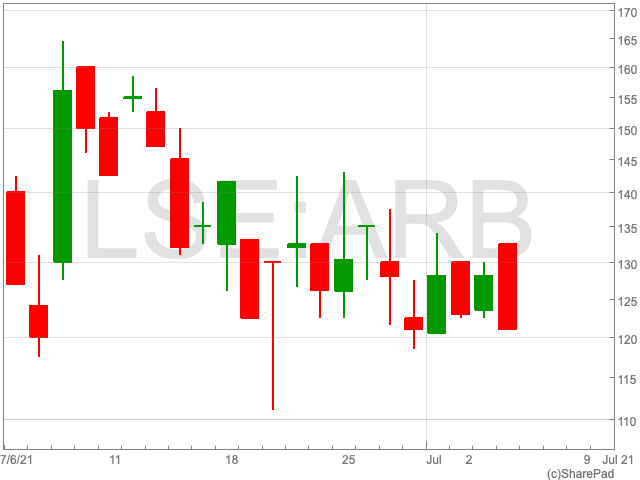
The Argo Blockchain share price (LON:ARB) has fallen by over 13% to 112.70p per share on Wednesday. Having closed at 149p per share last Friday, the bitcoin mining company is down by over 30%. As bitcoin continues to plummet, shareholders in Argo will be concerned about its immediate prospects.

Bitcoin Crash

As a bitcoin miner, the performance of the Argo Blockchain share price is closely correlated to the performance of bitcoin. If the price of bitcoin falls, then Argo’s share price is likely to do the same.

Having reported earlier today that bitcoin crashed to below £28,000, the cryptocurrency is now at £25,000. At one point today it got below £23,000 as its recent bull-run came to a devastating end. Wednesday’s decline means bitcoin’s loss over the past week now stands at over 40%.

Outlook

The question now is what does the dip mean for the future of bitcoin. According to Laith Khalaf, financial analyst at AJ Bell, today has highlighted the extreme risk in buying bitcoin.

The price of Bitcoin has tumbled by a third over the last month, which highlights the extreme risk inherent in cryptocurrency. Risk cuts both ways however, and Bitcoin is still trading above where it started the year, so many investors will remain in profit, albeit trimmed back by the recent fall.”

Khalaf also suggested that in recent weeks there have been significant developments which undermine bitcoin’s long term prospects.

“The tide has turned on Bitcoin because environmental concerns and regulatory risks have materialised, which have raised doubt over the long term adoption of cryptocurrency by businesses and consumers,” Khalaf said.

Consumers and investors may also start to shun cryptocurrency, particularly younger Bitcoin fans, who are also likely to be sensitive to climate issues.

“Bitcoin mining uses up a phenomenal amount of energy, and unlike traditional metal mining, doesn’t actually produce anything which is useful in the economy. Even celebrity endorsements may dry up as public figures become wary of being associated with an environmentally unfriendly product,” Khalaf says.

If nothing else, today’s crash will serve as a reminder of the risks of investing in cryptocurrencies and related companies. The future looks will be a testing time for both the Argo Blockchain share price and the world of crypto.

Anti-Glazer fan campaign could cost Manchester United sponsors ‘millions’

0

#NotAPennyMore movement started following failed European Super League project

Digital analysis of Manchester United fans’ #NotAPennyMore campaign suggests online targeting of sponsors’ Google Ads could cause millions of pounds worth of overspending.

New research by Mediaworks, a digital marketing agency based in the north of England, is showing that sponsors of Manchester United, including Adidas, Chevrolet and Tag Heuer, are being affected by the #NotAPennyMore campaign, a protest against Manchester United’s owners.

The movement was founded on the back of the Glazer family’s failed efforts to form a European Super League along with 11 other European football teams.

Organisers of the protest movement are appealing to fans to click multiple times on any of Manchester United’s listed sponsors’ Google Ads. This could serve to pile up high bills for the companies, which could potentially run into “millions of pounds”, Mediaworks says.

Mediaworks has been analysing the digital impact of the movement on the club’s commercial partners.

CEO and founder of Mediaworks, Brett Jacobson said: “When looking at the digital evidence, it’s very easy to see how this could very quickly start costing Manchester United’s sponsors a lot of money. This could easily run into sums comfortably into the millions.”

“We’ve already seen one major sponsor pull back from a new deal this week and this move by the fans to light the match on some digital dynamite as a means to remove the Glazer family as owners of the club has every possibility of having the desired effect. There could be some very awkward boardroom conversations between United and their sponsors if this plays out as the fans hope.”

Using freely available Google Ads data to calculate what that could mean to advertising costs for these brands, Mediaworks says the outlook is bleak for the marketing budgets of the targeted companies.

Brett Jacobson explained: “We’ve looked at the top end cost per click data for just those five brands, a price they could reasonably expect to be charged by Google for this type of fan activity. Generously assuming that only one quarter of those choosing to look up these sponsors in the last 48 hours decide to click just once on their Google Ads, that could be an eye-watering bill in excess of £1.2m they could be collectively facing this month alone. And that figure could easily skyrocket.”

“Manchester United has 50 listed key partners and sponsors that the #NotAPennyMore activists claim they’ll target. As Glazer’s Stateside accountants might be nervously whispering right now, ‘you do the math’.”

“With The Hut Group withdrawing from a rumoured £200m, ten year deal to join the list of sponsors for the club for fear of the negative associations, you do fear that this is just the tip of the iceberg for the Glazer’s fan troubles.”

The Manchester United share price (NYSE:MANU) is down by 0.35% on Wednesday to $15.88.