FTSE 100 flat again as Shell rises on strong energy trading

The FTSE 100 was largely flat again on Tuesday as investors held off making big bets, with the French political crisis continuing to rumble on and the US government shutdown extending into its second week.

It was a busy day for earnings and trading statements in London, but positive updates were finely balanced with negative, and London’s leading index was trading up just 9 points at 9,488 at the time of writing.

“The FTSE 100 held firm at the market open on Tuesday as strength in energy stocks was offset by weakness in miners and banks,” said Russ Mould, investment director at AJ Bell.

Shell was the standout corporate story on Tuesday after the oil giant said in its earnings teaser that strong energy trading helped offset weakness elsewhere in the group. Shell shares were 1.8% higher at the time of writing.

“A boost in activity at the trading division has helped Shell to weather the ongoing troubles in its chemicals division,” explained Chris Beauchamp, Chief Market Analyst at IG.

“But the bigger problem of a struggling oil price refuses to go away, and while OPEC+ might have balked at outsize production increases for now, the worries about weak demand will just not go away.”

Rentokil Initial was the FTSE 100’s top riser, continuing its recent rally with 2% gains.

Housebuilders were weaker after the latest house price data from Halifax showed average UK house price growth slowing to 1.3%. Halifax’s data for September paints a much gloomier picture of house price growth than Nationwide’s latest reading, raising questions about the state of the property market.

“Halifax’s latest data shows house price growth easing to 1.3% year-on-year in September, with a second monthly dip hinting at a market losing momentum,” said Matt Britzman, senior equity analyst, Hargreaves Lansdown.

“While lower mortgage rates and steady wages are helping to steady sentiment, affordability remains a headwind. Housebuilder shares have been under pressure all year, and underperformance looks set to continue with no obvious driving force as we move into the final quarter of 2025.”

Persimmon fell over 1% and Barratt Redrow lost 0.6%.

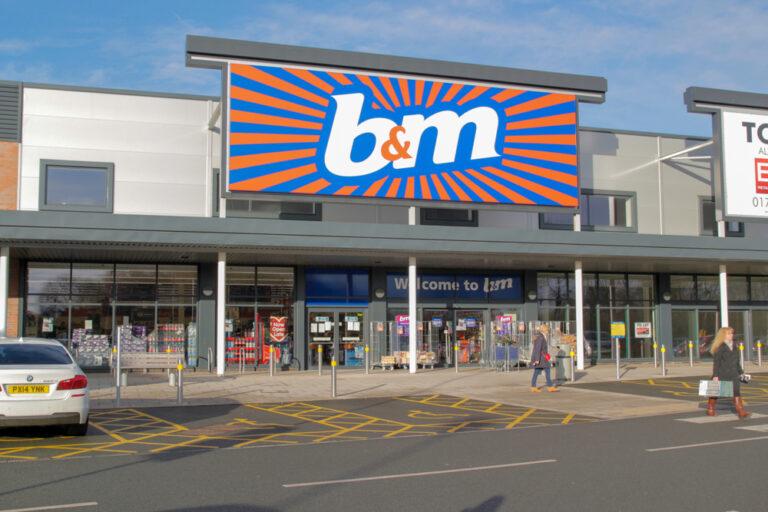
Retailers JD Sports, Kingfisher and Sainsbury’s fell in sympathy with a dire update from B&M European Value that showed slowing sales growth. Although B&M admitted internal failings, investors will be concerned about broader consumer weakness.

Supermarkets Tesco and Sainsbury’s were under heavy pressure after Asda announced a wave a price cuts that could threaten their market share.

JD Sports was the FTSE 100’s top faller with a loss of 1.5%.

Innovative Eyewear accelerates European growth plans

Tekcapital has announced that portfolio company Innovative Eyewear made significant strides in its European expansion at SILMO Paris 2025, the world-leading optics trade show held 26-29 September.

After recording 88% revenue growth in Q2 2025, Innovative Eyewear has set its sights on Europe for the next leg of its global expansion.

The smart eyewear manufacturer, which produces the Lucyd®, Lucyd Armour™, Reebok®, Eddie Bauer®, and Nautica® brands, secured initial orders from the UK, Romania, Greece, Spain, and France at the Paris event.

Innovative Eyewear noted that it was featured in SILMO’s inaugural Tech Village alongside Meta, Google, and Snapchat.

To support its European expansion, Innovative Eyewear has opened a warehouse in the Netherlands, enabling VAT-free purchasing across all 27 EU member states.

Encouragingly for investors, the Lucyd Armour® Collection, now certified to EN 166 European safety standards, attracted substantial interest from industrial distributors.

Innovative Eyewear is also in discussions with sales representatives to establish dedicated coverage across EU countries, positioning the company for broader continental penetration.

“SILMO Paris provided an exceptional platform to showcase our market-leading smart eyewear to European vendors and distributors. Being part of the first Tech Village alongside the world’s largest technology companies validated our position as a pioneer in AI-enabled eyewear,” said Harrison Gross, CEO of Innovative Eyewear.

The establishment of our Netherlands distribution hub represents a critical milestone in our international expansion strategy, enabling us to serve EU businesses more efficiently. With initial orders already secured from five European countries and active discussions with regional sales representatives, we’re building the infrastructure necessary to capture significant market share in Europe’s rapidly growing smart eyewear business.

“SILMO Paris attracted over 32,000 visitors from more than 130 countries, with 51% international attendance, making it one of the most important global gatherings for the optical industry. The Company’s participation aligns with its strategic focus on international expansion, particularly as smart eyewear adoption accelerates in markets outside the United States, where pedestrian and public transit usage create ideal use cases for open-ear audio and AI assistance.”

Imperial Brands delivers strong FY25 performance, £1.45bn Share Buyback announced

Imperial Brands shares rose on Tuesday after the group announced it is on track to meet its full-year guidance for FY25, driven by solid growth in both tobacco and next-generation products (NGP).

Shares were 2% higher after announcing results and a £1.45bn share buyback program for FY26.

The tobacco giant expects market share gains in the US, Germany, and Australia to broadly offset declines in Spain and the UK. This balanced performance across key markets demonstrates the company’s resilient global positioning.

Imperial Brands anticipates another year of double-digit Next Generation Product (NGP) net revenue growth, with the full-year figure expected around the mid-point of a 12-14% range.

Next-generation products, such as vapes and other tobacco alternatives, are clearly the future for Imperial Brands, and continued growth will likely encourage investors.

Group adjusted operating profit growth is projected at a similar rate to last year, aligning with previous guidance.

“Investors in tobacco giant Imperial Brands won’t need to inhale too deeply after digesting today’s full year trading update,” said Derren Nathan, head of equity research, Hargreaves Lansdown.

“The company behind the likes of Rizla, Golden Virginia and blu vapes is set to deliver results in line with guidance. That translates to low single-digit growth in underlying revenue and mid-single digit growth in underlying operating profit, implying a step up in margins over the second half of the year.”

FY25 marks the final year of Imperial Brands’ 2021 strategy, with the company positioning itself strongly for the next phase through 2030. The transformation focuses on becoming a more consumer-centric, focused, and agile challenger business.

Constant currency tobacco and NGP net revenue growth has been underpinned by strong combustible pricing and continued double-digit NGP business expansion. Volume declines have eased across most markets.

As part of its 2030 strategy to build a simpler, more efficient organisation, Imperial Brands has initiated consultation regarding its Langenhagen, Germany, factory. The process will result in either a third-party sale or closure of the facility.

Share buybacks are always welcomed by the market, and the announced £1.45bn FY26 share buyback will go a long way to offsetting concerns about falling combustible sales.

B&M shares sink as sales growth slows

B&M shares sank on Tuesday after the retailer said sales growth was slowing and revealed its ‘Back to B&M Basics’ plan to improve operations.

B&M shares fell 15% after the discount retailer B&M unveiled a comprehensive operational overhaul following the reporting of weaker-than-expected sales growth and a significant decline in profits during the first half of its financial year.

The company’s Group revenue grew 4.0% to £2.74 billion in H1 FY26, but this masked underlying challenges. B&M UK’s like-for-like sales managed only 0.1% growth in the first half, declining 1.1% in the second quarter alone.

Back to B&M Basics Initiative

Management has identified key operational weaknesses and launched the “Back to B&M Basics” programme to address them. The initiative focuses on four critical areas that have impacted recent performance.

The company has reduced prices on 35% of its Key Value Items, lowering the average prices by 1.8% to target customer price perception. B&M’s low-cost options will be all-important as UK job creation slows.

B&M is also rebooting its “Managers Specials” promotions, giving store managers more flexibility to select products that respond to local opportunities. The revamped approach launched with Back-to-School and Halloween ranges, both showing positive early results.

Operational challenges addressed

Product availability has emerged as a significant issue and B&M found that FMCG best seller availability across key stores stood at just 86%, well below the industry benchmark of 98%. This will be a concern for investors who rely on management to get low-cost products to customers in an orderly fashion.

Range simplification will also be looked at. B&M plans to reduce line counts and accelerate clearance of discontinued ranges, particularly in FMCG, home accessories and toys, following a material increase in product complexity in recent years.

Investors will hope that, over time, these measures pay off.

Financial Impact and Outlook

The operational challenges have taken a financial toll. Group adjusted EBITDA is expected to fall to approximately £198 million in H1 FY26, down from £274 million in the previous year.

Additional headwinds include £14 million in Extended Producer Responsibility tax costs, adverse foreign exchange movements of £3 million, and around £30 million in higher wage costs from minimum wage and National Insurance increases.

For the full year, B&M expects Group adjusted EBITDA of £510-560 million. The company’s leverage ratio will temporarily exceed its 1.0-1.5x target range due to lower earnings and seasonal working capital requirements.

B&M anticipates the full impact of its turnaround programme will take 12-18 months to materialise. With shares down 36% year-to-date, it can’t come soon enough.

IG offers new clients free shares worth up to £200

IG is offering new clients a free share bundle worth between £40 and £200 when they invest at least £50 into a general investment account, ISA or SIPP before 31st October 2025.

Open an IG account here.

The investment platform has offered new clients a number of incentives in recent months. October appears to be one of the more generous months for those who open an account, with up to £200 in free shares available when an account is opened.

The up to £200 in free shares will be a bundle comprising leading UK shares, such as AstraZeneca, Tesco, and Unilever.

IG has earned recognition as the 2024 Best Share Dealing Platform by Yourmoney.co.uk, alongside being named Best for Low-cost ISA by the Boring Money Best Buy Awards. IG has over 2 million accounts worldwide across 18 countries.

One of the most compelling reasons to open an IG investment account is the elimination of commission fees on shares and ETFs.

Some traditional brokers often charge substantial fees that can significantly impact your returns, particularly for smaller investments or frequent trading.

With commission-free investing on over 11,000 stocks and ETFs, using IG means every penny of your investment works for you rather than disappearing into fees.

IG offers three distinct account types, each designed for different investment goals and tax situations:

Individual Savings Account (ISA) allows you to invest up to £20,000 annually tax-free, making it ideal if you want to grow your money tax-efficiently and make the most of your annual ISA allowance.

General Investment Account (GIA) provides complete flexibility with no contribution limits, making it perfect for those who’ve already maximised their ISA allowances or want extra flexibility without limits on how much they can invest.

Self-Invested Personal Pension (SIPP) offers a tax-efficient way to build your retirement fund with tax relief on contributions, whilst maintaining control over your investment choices.

IG offers 4% AER variable interest on your cash balance, providing better returns than most traditional savings accounts whilst maintaining easy access to your money. This feature ensures your money works for you even when you’re not actively investing.

IG’s Welcome Bonus promotion runs until 31st October 2025. To be eligible, you must be a UK resident aged 18 or over and make your first investment of at least £50 into an ISA, GIA or SIPP account by the deadline. You must then remain invested until 30th November 2025 to receive your free share bundle.

You can open an IG investment account here.

UK Investor Magazine may receive a fee for each account that is opened by following the links on this page.

The UK property market and FTSE 100 housebuilders with Jeremy Naylor

We discuss the UK property market and explore what the future could hold for FTSE 100 housebuilders.

Conscious of being overly political, we analyse the key drivers of the UK property market, touching on government policy, supply and demand dynamics and the immediate outlook for the market.

We frame our conversation around the market opportunity for FTSE 100 housebuilders, examining current share prices and where they may be headed next.

AIM movers: HSS hire transformation and Quartix upgrade

1

HSS Hire (LON: HSS) has returned from suspension having published its accounts for the 15 months to Mach 2025 and its digital marketplace subsidiary ProService has agreed a five-year commercial hire and services supply deal with Speedy Hire (LON: SDY). ProService will be provide training for customers. The deal is estimated to be worth at least £50m/year in revenues for Speedy Hire and improve HSS revenues and margins. Three HSS service centres and other assets will be transferred to Speedy Hire, which is taking a 9.99% stake in HSS Hire. Speedy Hire is paying a total of £35m. HSS is selling HSS Service Group, which will continue to supply power access equipment to HSS to Project Mansell Newco for £1, although HSS will contribute £26m to facilitate the separation. This means that HSS will purely be a digital business. HSS reported a loss of £130.3m due to write-offs, although the underlying loss was £8.4m. Net debt was £97.6m at the end of March 2025. Net debt should fall below £30m after the transactions. The deal should be earnings enhancing in 2026-27. The share price rebounded 39% to 10.06p – the highest level for nearly eighteen months.

Clinical diagnostics for organ transplants developer VericiDx (LON: VRCI) says the commercial scale-up of acute post-transplant rejection test Tutivia has progressed in the third quarters. There was a 19% increase in ordering clinicians, and 30 transplant centres have been signed up. The orders were steady in the quarter with volumes expected to rise in the fourth quarter. Aubrey Powell has been appointed as a non-executive. The share price is 15.4% higher at 0.75p.

Didier Casimiro is now the ultimate beneficial owner of Compact WTL Tech, which owns 32.1% of syngas technology developer Eqtec (LON: EQT). Compact WTL Tech is in the process of taking ownership of the company’s debt. Didier Casimiro was sanctioned by the UK and US governments because he was employed by Rosneft until May 2022, but these have been removed. He is still sanctioned in some other countries. The share price improved 18.8% to 0.475p.

Cadence Minerals (LON: KDNC) says the WRAP retail offer at 3p/share was oversubscribed and the amount raised was increased from £200,000 to £300,000. This follows the placing that raised £2.34m. The cash will fund the restart of the Azteca plant in Brazil. This could produce 380,000 tpa of 65% Fe. The share price recovered 10.6% to 5.2p.

A nine-month trading update for telematics company Quartix (LON: QTX) revealed annualised recurring revenues of £36.1m and that trading is ahead of expectations. The fastest growth is outside of the UK. Zeus upgraded its 2025 pre-tax profit forecast from £7.1m to £7.3m. Next year’s forecast is raised from £8.7m to £9.4m. The share price roe 9.47% to 312p.

FALLERS

UK Oil and Gas (LON: UKOG) has raised a further £1m at 0.03p/share, which takes the total raised to £4.5m. The cash will provide funding for hydrogen projects, including concept and design studies for the recently announced collaboration with National Gas, as well as ongoing oil commitments. The share price slipped 9.09% to 0.03p.

Beeks Financial Cloud (LON: BKS) grew full year revenues 26% to £35.9m with the contribution from Proximity Cloud jumping from £1.6m to £7.8m. Annualised recurring revenues are £29.5m. Pre-tax profit improved from £3.9m to £5.5m. Beeks Financial believes that increasing cloud adoption, cybersecurity requirement, analytics and AI use in risk management mean that there are more opportunities. New contracts have been signed since the year end. The share price declined 9.09% to 200p.

Jubilee Metals Group (LON: JLP) has received the first tranche of $15m for the sale of South African chrome and platinum operations. Final completion of the sale depends on audit. The focus will be copper in Zambia. The share price dipped 8.13% to 3.05p.

On Friday evening, podcast platform Audioboom (LON: BOOM) confirmed that it is undertaking a strategic review. The process includes the possible sale of the company among the alternatives. There are discussions with potential commercial or strategic partners. Audioboom is the fifth largest podcast platform in the US. The share price fell 8.31% to 585p, following its jump on Friday.

FTSE 100 steady as French sell-off weighs on European stocks

The FTSE 100 was relatively steady on Monday as investors took the continued US government shutdown in their stride and looked to US earnings for the next source of optimism.

There was, however, a marginal negative tone to trade as French stocks sank amid the latest bout of political uncertainty. The French CAC was down around 1% at the time of writing.

Trading just beneath 9,500 at the time of writing, the FTSE 100 was within touching distance of record highs after recording an intrady record in early trade.

“The FTSE 100 briefly touched new highs on Monday but soon became sluggish as investors continue to weigh the risks posed by shutdown in Washington,” explained AJ Bell’s head of markets, Dan Coatsworth.

The steady session in London followed more encouraging signs from the US equity market on Friday, which also seemed pretty comfortable with the US government shutdown and the potential strength of economic data points that will eventually be released when the shutdown ends.

“US futures point higher after the S&P 500 capped Friday with fresh all-time highs in a whipsaw session,” said Matt Britzman, senior equity analyst, Hargreaves Lansdown.

“Investors are navigating a data drought as the government shutdown drags on, but Fed minutes and policy chatter later this week will be key for rate expectations. Hopes of further cuts, even as sticky inflation looms longer term, combined with optimism for earnings season is keeping momentum alive, with nearly 70% of the largest US companies seeing their profit forecasts raised over the past three months.”

The US earnings season is set to gather pace over the coming days, and equity bulls will hope that slowing US job creation and economic uncertainty aren’t evident in the earnings releases of major US firms.

In the UK, mining shares showed signs of positivity with Fresnillo making gains in early trade. The precious metals miner is 270% higher year-to-date in 2025 with gold trading near record highs.

Firmer oil prices helped BP and Shell higher after OPEC+ announced a production increase that was less than economists had feared. BP rose more than 1%.

Mondi was the FTSE 100’s top faller after the papermaker said ‘Volumes were impacted by subdued demand and paper selling prices declined during the quarter’. It wasn’t what investors wanted to hear, and the stock plummeted 15%.

Costain Group: after the recent sell-off, BlackRock SmallCap fund manager rates the shares, trading on 9.8 times earnings

A week ago, it was reported that fund manager Roland Arnold reckoned that the recent price fall in the shares of the Costain Group (LON:COST), my favourite infrastructure business, was ‘an overreaction’, having fallen from 166.80p on the day of its latest results, down to 124.40p three weeks later. 
Institutional Investor Comment 
Roland Arnold, boss of the £660m BlackRock Smaller Companies Fund (LON:BRSC), stated that: 
“The decline was attributable to a reduction in transportation as a result of expected road project completions and delays in some major infrastructure contract...

Shawbrook announces intention to list as London IPO activity shows early signs of momentum

Shawbrook has announced its intention to list on the London Stock Exchange, as London IPO activity shows signs of momentum following the listing of Beauty Tech Group last week and the announcement by Princes Group of its IPO plans.

We’re going to need a more sustained flow of IPOs to call the recent spate of activity anything more than a blip. That said, the uptick in companies signalling their intention to list or completing their IPO is encouraging.

Shawbrook’s IPO plans are particularly interesting because the company is one of the many highly successful UK Fintechs that have opted to stay private for longer. Should other Fintechs follow in Shawbrook’s footsteps, the London IPO market could really fire up.

Significant investment in technology capabilities since 2017 has transformed Shawbrook into a digitally enabled bank that serves individuals, property investors and businesses.

Shawbrook has grown its loan book from £1.4 billion to £17.0 billion, while achieving a compound annual growth rate of 30% in underlying profit before tax.

In an announcement made on Monday, Shawbrook outlined its “30 by 30 Target,” aiming to almost double the loan book to approximately £30 billion by December 2030.

Shawbrook operates through two main franchises. The Commercial franchise, representing 61% of the total loan book at £10.5bn, provides structured credit facilities for businesses alongside real estate financing for professional landlords and property investors. The Retail franchise accounts for the remaining 39% at £6.6bn.

The company has been remarkably inquisitive, completing 24 acquisitions, including the recent acquisition of ThinCats Group Limited, a leading UK FinTech specialist lender to SMEs, in September 2025.

“The strength of our platform has enabled us to deliver a long track record of sustainable, profitable growth through a wide variety of macro conditions,” explained Marcelino Castrillo, Chief Executive Officer.

“We have transformed the size of our loan book as we’ve won share, entered new markets and expanded our capabilities through strategic acquisitions; we have built a trusted and attractive savings proposition that provides us with a stable and scalable funding base; and the significant investment in our digital platform provides excellent risk management capabilities and strong operating leverage.

“Looking ahead, we are as excited as we have ever been. We have achieved real scale, and our current markets are large and growing, supported by attractive tailwinds. We also see a significant opportunity to bring Shawbrook’s offering to new types of customers. The entrepreneurial spirit that has driven our growth remains at the heart of how we operate and we have ambitious plans for the future. An IPO would mark an important milestone in our journey.”