


Backed by over £27 million in government funding and strategic investment from global industry leaders SQM and Marubeni, UK clean technology company Altilium is scaling its patented battery recycling technology to establish a sovereign supply chain for critical minerals essential to the UK’s national and economic security.
From EVs and renewable energy to advanced manufacturing and defence, the UK’s industrial future depends on securing reliable supplies of critical minerals, such as lithium, nickel and cobalt. The Government’s Critical Minerals Strategy sets ambitious targets to meet at least 10% of annul UK demand for critical minerals through domestic production and a further 20% through recycling by 2035.
Currently Britain remains reliant on overseas suppliers for these strategically important resources, with China dominating supply. As a recent report from the UK Parliament’s Business, Innovation, Science and Trade Committee warns, this dependence leaves key industries vulnerable to geopolitical tensions and supply chain disruption, prompting calls for greater investment in domestic processing and recycling capacity.
Transforming battery waste into a strategic resource
As the Critical Minerals report also notes, the UK possess significant quantities of minerals already in circulation. Every EV on Britain’s roads contains valuable materials, including lithium, nickel, cobalt and graphite, which can be recovered and reused once they reach the end of their useful lives. With more than two million EVs now on UK roads, that represents a growing strategic resource.
Meanwhile, major gigafactory developments, including Agratas in Somerset and AESC in Sunderland, are creating new demand for battery materials and generating manufacturing scrap that will also need recycling.
By 2030, the Advanced Propulsion Centre estimates that 28,000 tonnes of battery waste could be recycled from manufacturing scrap and end-of-life batteries in the UK.
Plymouth-based Altilium is at the forefront of efforts to unlock the value of this growing domestic resource, developing the technology and industrial infrastructure needed to recover and refine critical minerals from battery waste here in the UK, transforming materials that might otherwise be exported for processing overseas into valuable resources for British industry.
The company, which was recently nominated for the prestigious Earthshot Prize, has made significant progress towards commercialisation during 2026, securing £18.5 million through the UK Government’s DRIVE35 programme to support construction of its ACT3 facility in Plymouth, the UK’s first commercial-scale recycling and refining facility.
The investment represents a significant step towards establishing a sovereign UK supply chain for critical battery materials. Building on the success of Altilium’s existing pilot operations, ACT3 will have the capacity to process material equivalent to approximately 24,000 electric vehicle batteries annually, recovering lithium, nickel, cobalt and graphite for reuse in new batteries.
By developing domestic refining capacity alongside Britain’s emerging battery manufacturing industry, Altilium aims to retain more of the economic value of these materials in the UK, reduce reliance on imported supplies and create a more resilient, circular supply chain for British industry.
First-move advantage in a strategic growth market
Unlike companies focused primarily on dismantling and shredding batteries, Altilium is developing an integrated platform capable of recovering critical minerals and converting them into high-value materials for new battery production.
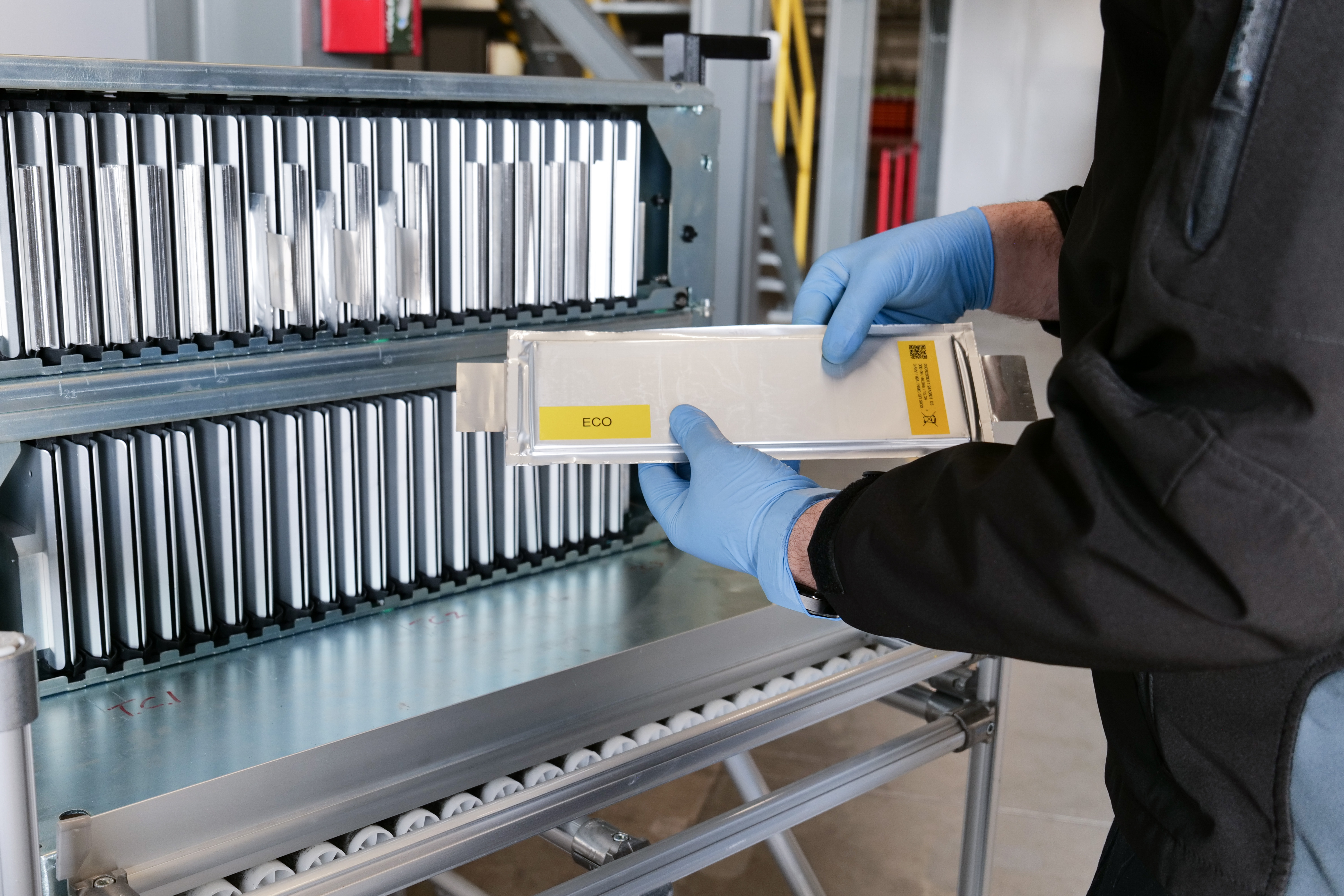
The company’s patented EcoCathode™ technology can recover over 95% of the cathode metals, including lithium, from end-of-life batteries, enabling the production of cathode active materials (CAM) that can be reused to manufacture new lithium-ion batteries, with up to 74% lower carbon emissions than mined materials.
This capability offers a potentially significant competitive advantage as cell manufacturers and OEMs seek secure, low-carbon sources of materials that meet increasingly demanding sustainability and recycled-content requirements.
Altilium has already demonstrated its technology through collaborative R&D projects with OEMs, including Nissan and JLR. These trials have shown that Altilium’s materials can deliver performance comparable to commercially available virgin materials, demonstrating that recycled battery materials can meet the demanding technical requirements of automotive manufacturers.
Scaling from innovation to industrial production
Beyond ACT3, Altilium continues to develop plans for its ACT4 industrial-scale facility, designed to be one of Europe’s largest battery materials recycling and refining operations, with capacity to recycle 150,000 batteries a year.
At full scale, ACT4 will have capacity to produce approximately 30,000 tonnes of CAM annually, establishing a significant domestic source of materials for Britain’s emerging battery manufacturing industry.
This phased approach, progressing from pilot validation to commercial demonstration and ultimately industrial-scale production, is designed to reduce technology risk while establishing the infrastructure and customer relationships needed for long-term growth.
Strategic investment supports the next phase
Alongside government support, Altilium has attracted backing from major international industry players, including SQM, one of the world’s leading lithium producers, and Japanese trading group Marubeni Corporation.
Both investors reaffirmed their commitment through follow-on investment in October 2026, providing further support for the company’s scale-up strategy.
In November, Altilium also launched a secondary share sale through Crowdcube, Europe’s leading private market investment platform, providing an opportunity for investors to acquire existing shares as the company enters its next stage of development.
The offering will enable eligible employees to realise some of the value they have helped create, while providing investors with an opportunity to acquire existing shares in a UK clean technology company at the forefront of securing critical materials essential for the UK’s national and economic security.
Christian Marston, Altilium COO, commented: “Our people have been instrumental in taking Altilium from an ambitious technology start-up to a business developing the infrastructure needed to build a new strategic industry for the UK. As we move towards commercial-scale operations, we want our employees to share in the success of the business and demonstrate that building innovative clean technology companies in the UK can create real financial value for the people behind them.”