Majedie Investments (MAJE) pursues a liquid endowment-style investment strategy. Its portfolio is managed by Marylebone Partners with the objective to deliver an annualised return of at least 4 per cent above UK CPI (consumer price inflation) over rolling five-year periods.
The approach is long-term and fundamentally driven. Like the leading US university endowments, it seeks to emulate, the strategy avoids market timing and instead emphasises patient capital allocation, drawing on a combination of actively managed equities and a select range of complementary asset classes. Unlike many endowment portfolios, however, Majedie avoids illiquid assets such as private equity, private credit, venture capital and real estate. All holdings are marked to market, preserving liquidity and transparency.
The portfolio is organised across three segments: specialist external managers (spanning equity and absolute-return strategies), direct investments, and special investments. The latter provides exposure to differentiated opportunities that are unlikely to feature in conventional portfolios.
From 1st March 2023, when Marylebone Partners assumed responsibility for the Company’s portfolio, to 30th June 2026, Majedie’s NAV total return exceeded its CPI plus 4 per cent objective for the period (Past performance is not a reliable indicator of future results).
Since 1st March 2023 (to the end of June 2026), the portfolio generated an NAV total return of 50.3 per cent and a share price total return of 66.3 per cent, compared with cumulative UK CPI inflation of 23.1 per cent. The Company employs no gearing. Dividends remain a core component of total return, with quarterly distributions targeted at 0.75 per cent of quarter-end NAV, equivalent to an annualised yield of 3 per cent.
Portfolio Commentary
Amid continuing fallout from events in the Middle East, a significant shift in interest-rate expectations and bouts of volatility in AI-related stocks, the portfolio delivered a positive return over the quarter. We attribute this outcome primarily to fundamental progress from Majedie’s underlying investments.
The portfolio continues to be positioned in a collection of distinctive bottom-up situations, each underwritten by a specific and well-researched thesis. We have directed capital to opportunities where expectations are reasonable and fundamentals have scope to improve or beat expectations. Although Artificial Intelligence will have implications for every sector, asset class and investment approach, we have sought to avoid taking sides in the ongoing debate about whether and how the phenomenon will be monetised. We consider other areas to offer a more favourable balance of potential return and risk.
Majedie’s performance over the quarter exceeded the run-rate implicit in its CPI+4% objective. Moreover, it was the result of investment-specific factors, not simply riding on the coat tails of momentum. Contributions came mostly from External Managers with an equity-centric profile, although the sources of return were varied. The strongest results came from a special-situations manager, a new investment in a Korean activist fund, a China specialist and a Biotech specialist. Absolute Return managers also contributed, led by emerging-markets distressed debt and convertible bonds.
Direct Investments fared well, with a mixture of earnings results and M&A behind gains in several “unappreciated change” situations. Computacenter reported first-quarter performance well above expectations, while DCC plc was the subject of a takeover approach. Copper stocks lost some ground, although the impact was limited because exposure had been reduced earlier in the year. Special Investments were a mixed bag, with some campaigns maturing towards positive conclusions and others showing mark-tomarket moves while fundamentals remained largely on track.
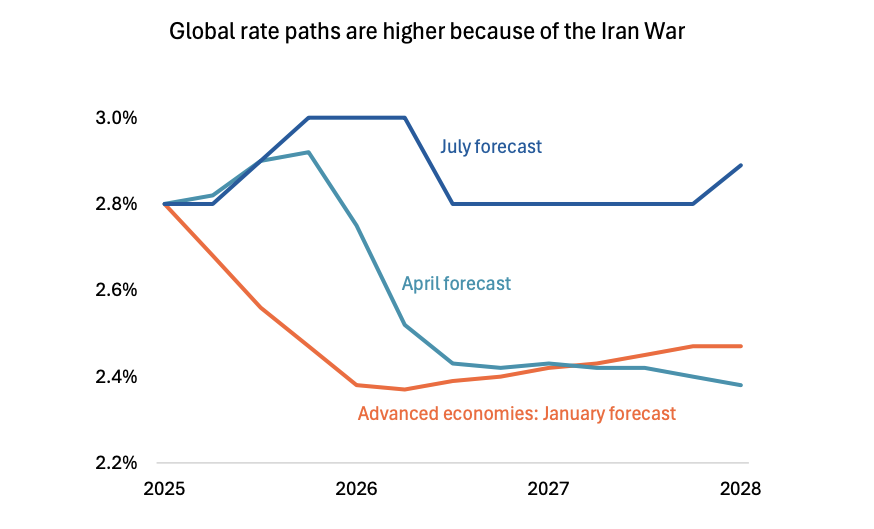
The past three months were shaped by geopolitics, a sharp repricing of interest-rate expectations and the next phase of the AI narrative. Oil initially remained contained despite the Iran War, before Brent rose above US$120 in May as the Strait remained closed and negotiations stalled. By late June, commercial shipping through Hormuz had resumed, Qatari LNG exports were flowing again, and the US had authorised a 60-day window for Iranian oil sales in dollars. Brent subsequently fell below US$80, easing inflation concerns. Since quarter end, hostilities have restarted and, at the time of writing, a settlement appears further away.
Source: Bloomberg Economics
Kevin Warsh’s arrival as Fed Chair reinforced the shift in interest-rate expectations. His first FOMC statement was brief and hawkish. Treasury yields moved higher, with the 30-year approaching 5%, while the curve shifted towards bear steepening as investors focused on term premium, fiscal risk, duration supply and uncertainty around the Fed’s reaction function.
Equity markets nevertheless finished the quarter strongly, led by a momentum surge in semiconductors. The quarter ended with animal spirits fully intact, despite the combination of geopolitical risk, tighter monetary policy and speculative exuberance.
Our central case remains an uneasy compromise in the Middle East, although it is far from assured. Energy is flowing again, but prices are unlikely to return to previous levels and may spike as strategic reserves dwindle. This is consistent with our long-held view that the postCOVID regime will be defined by elevated geopolitical risk, structurally higher interest rates, less leverage and, crucially, greater stock dispersion. That should favour fundamental investors who rely less on market beta and more on identifying idiosyncratic opportunities.
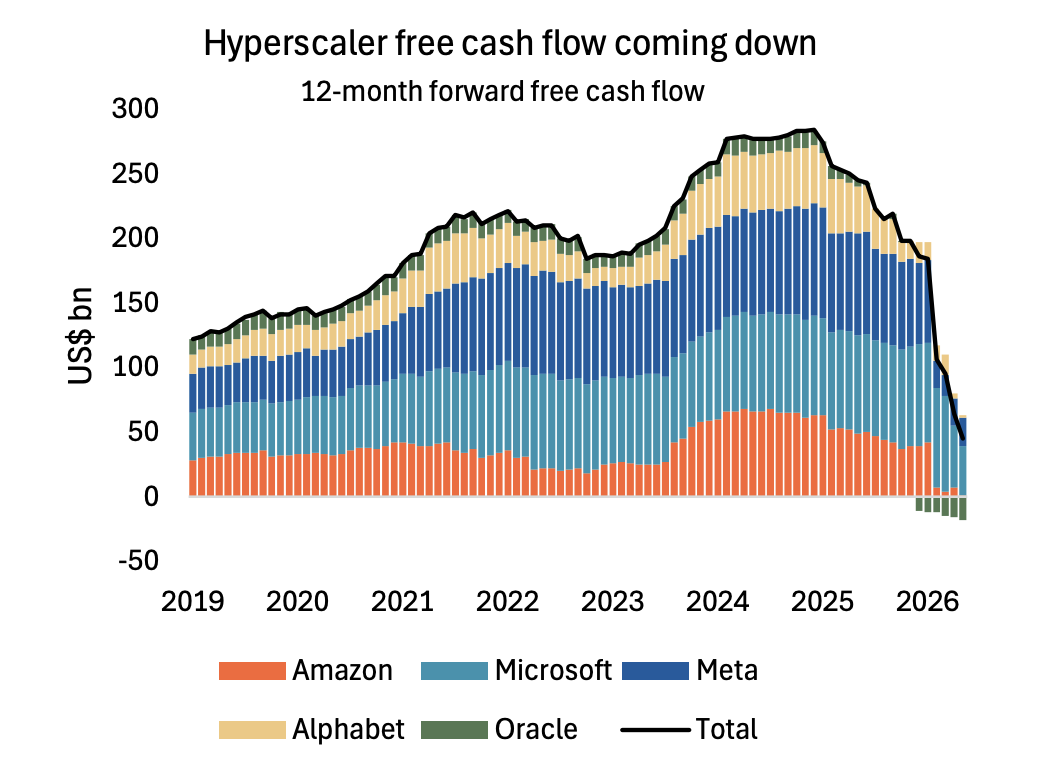
Most market participants remain absorbed by the AI narrative. We recognise that AI has profound implications for companies, markets, politics and humanity, but we and most of our chosen managers remain disciplined about deploying capital to the area. Equity markets are becoming less willing to finance open-ended hyperscaler investment without clearer evidence of the returns it will generate. Chinese open-source models are also gaining share faster than expected, while the latest frontier models have delivered more incremental improvements than previous generations. These developments raise questions about diminishing returns, capital intensity, revenue conversion and balancesheet strain.
Source: Bloomberg, Macrobond, Apollo Chief Economist
Within equities, we favour investments where expectations are reasonable and fundamentals have scope to improve. Several managers that participated in the semiconductor rally have since pared back exposure in recognition that speculative positioning had become extended.
Our discipline and desire to invest with a margin of safety has led us towards a varied collection of bottom-up opportunities, many outside the United States. In Japan and Korea, corporate reform and improving governance continue to create opportunities that we currently consider to be attractive on a risk-adjusted basis. In China, the dedicated manager continues to find upside in domestic equities exposed to policy change, AI, automation, digital infrastructure and industrial upgrading. In Europe, identifiable catalysts for value creation remain particularly important. In the United States, we continue to focus on Biotech, Industrials, Healthcare and selected Software businesses where concerns about AI disruption appear to have been applied too broadly.
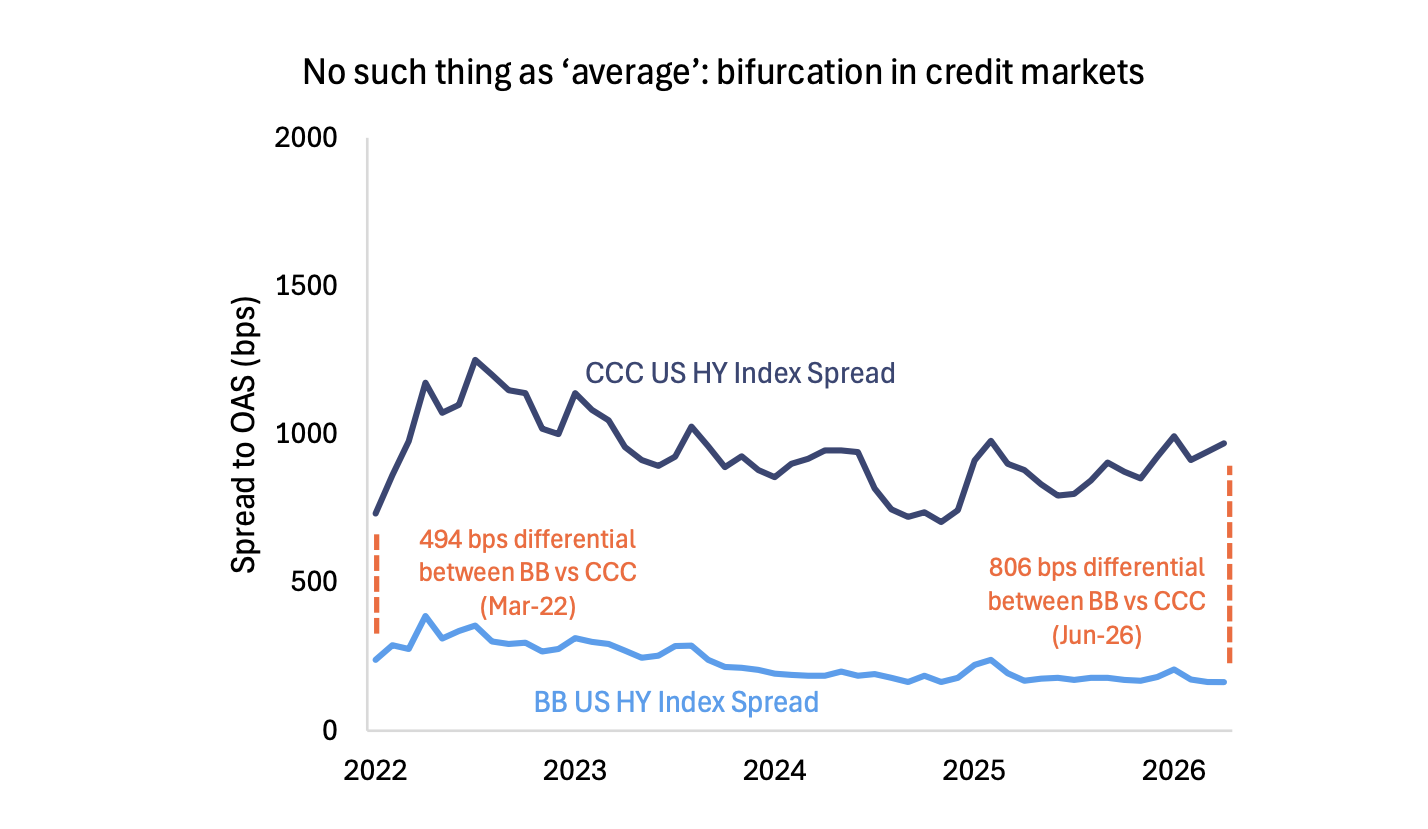
Differentiation is equally important within absolute-return strategies. High-yield spreads offer limited compensation for broad market exposure, but dispersion beneath the surface remains significant. CLO-related selling, liability-management exercises, AI disruption and company-specific challenges continue to create stressed and distressed opportunities.
Source: FRED via ICE Data Indices
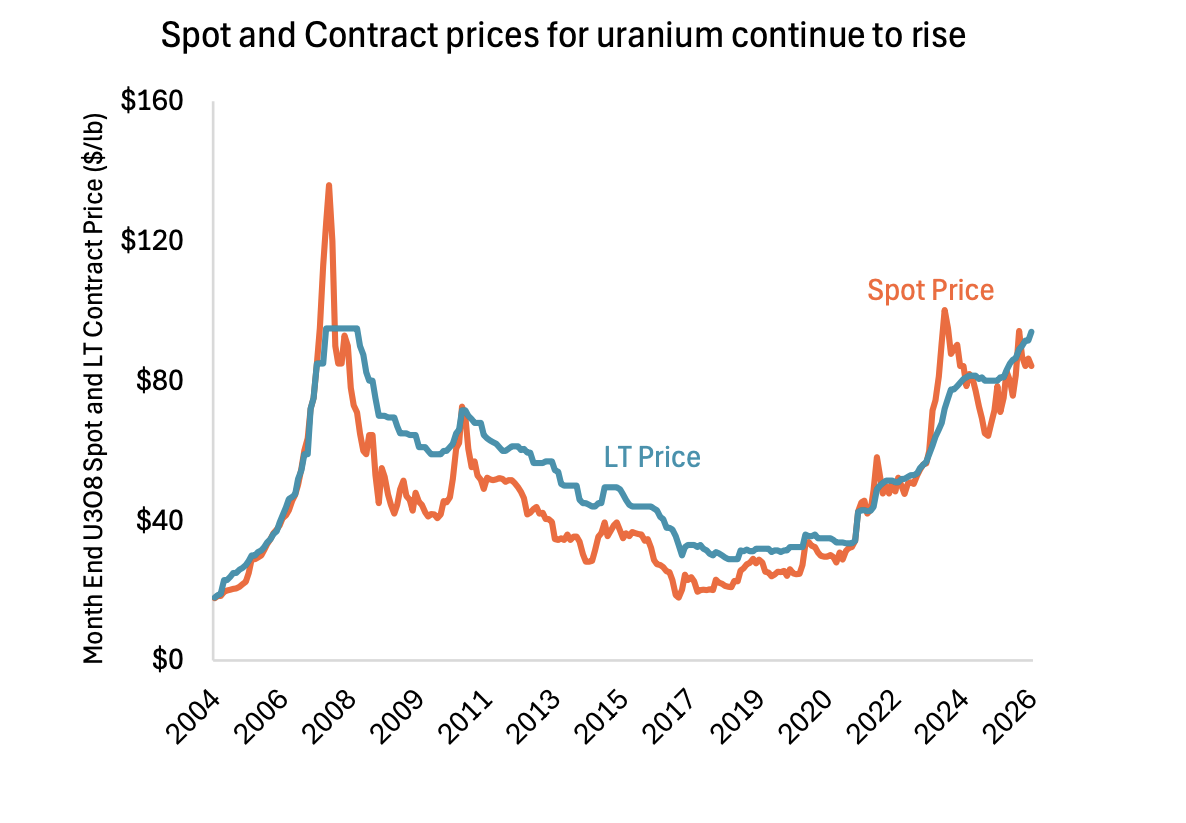
Several commodities also remain in the early stages of a structural bull market following years of under-investment. Electrification, AI, data centres, defence spending and grid expansion are driving sustained demand growth. Copper and uranium remain attractive, although positions have been managed actively where prices have run ahead of near-term fundamentals.
Source: UxC via Sachem Cove Partners
Overall, we expect geopolitical and policy uncertainty to remain elevated through the second half of the year, with monetary policy becoming an increasingly important driver of markets. We believe this environment will reward disciplined security selection, patience and a consistent focus on fundamentals supported by an adequate margin of safety
Disclaimer:
This publication is intended to be of general interest only and does not constitute legal, regulatory, tax, accounting, investment or other advice nor is it an offer to buy or sell shares in the Company (or any other investments mentioned herein).
Nothing in this publication should be construed as a personal recommendation to invest in the Company (or any other investment mentioned herein) and no assessment has been made as to the suitability of such investments for any investor. In deciding to invest prospective investors may not rely on the information in this document. Such information is subject to change and does not constitute all the necessary information to adequately evaluate the consequences of investing in the Company.
The shares in the Company are listed on the London Stock Exchange, and their price is affected by supply and demand and is therefore not necessarily the same as the value of the underlying assets. Changes in currency rates of exchange may have an adverse effect on the value of the Company’s shares (and any income derived from them). Any change in the tax status of the Company could affect the value of the Company’s shares or its ability to provide returns to its investors. Levels and bases of taxation are subject to change and will depend on your personal circumstances.
Past performance is not a reliable indicator of future returns. Any return estimates or indications of past performance cited in this document are for informational purposes only and can in no way be construed as a guarantee of future performance. No representation or warranty is given as to the performance of the Company’s shares and there is no guarantee that the Company will achieve its investment objective.
To provide the best experiences, we use technologies like cookies to store and/or access device information. Consenting to these technologies will allow us to process data such as browsing behaviour or unique IDs on this site. Not consenting or withdrawing consent, may adversely affect certain features and functions.
Functional
Always active
The technical storage or access is strictly necessary for the legitimate purpose of enabling the use of a specific service explicitly requested by the subscriber or user, or for the sole purpose of carrying out the transmission of a communication over an electronic communications network.
Preferences
The technical storage or access is necessary for the legitimate purpose of storing preferences that are not requested by the subscriber or user.
Statistics
The technical storage or access that is used exclusively for statistical purposes.The technical storage or access that is used exclusively for anonymous statistical purposes. Without a subpoena, voluntary compliance on the part of your Internet Service Provider, or additional records from a third party, information stored or retrieved for this purpose alone cannot usually be used to identify you.
Marketing
The technical storage or access is required to create user profiles to send advertising, or to track the user on a website or across several websites for similar marketing purposes.