What is driving a potential commodities supercycle?

The commodities supercycle is underway. That is, according to Goldman Sachs and S&P Global. Commodity prices have already swung up as the world economy recovered from the pandemic and more is yet to come.

There are three key factors driving the commodities bull-run now and into 2021.

China

China is the leading consumer of a number of commodities, and with its ever-growing economic power, its demand is increasing. This phenomenon is responsible for pushing the price of a range of commodities to record-breaking levels in recent times.

China’s impressive recovery from the coronavirus pandemic is set to continue into 2021. The World Bank has forecasted a 7.9% growth rate for the country this year which means more demand for commodities and a surge in price.

US dollar inflation

Inflationary fiscal and monetary policies at an unprecedented level could contribute to a long-term rise in commodity prices. Long-term bond yields reached their highest level in thirty years this month in a sign that investors are expecting oncoming inflation. In this case investors are drawn towards commodities, such as precious metals or oil, which they deem a safe haven for investments during inflationary periods. 

Furthermore, as the US dollar is the world’s benchmark currency, it is used to price many commodities. A weaker dollar means lower prices for commodities. “The only way to get commodities moving in an inflationary, buying power way is a weaker dollar,” said Doug King, head of RCMA’s Merchant Commodity Fund.

Transition to green energy

Governments across the world are increasingly committed to green policies as they seek a way forward from the coronavirus pandemic. Accordingly, investors are turning away from fossils fuels and looking towards clean energy solutions. This means higher demand for the commodities involved in producing these new technologies. An example is the use of copper in the manufacturing process of electric cars. 

Mark Lewis, chief sustainability strategist at BNP Paribas Asset Management, said: “I’ve been in financial markets for 30 years now and I have never seen anything like it. It feels like any market you look at, investors want to buy.

The next three decades are “likely to bring a supercycle in investments in clean energy infrastructure, clean transportation and everything else that is required to make the green transition possible”, he said.

Three funds set to benefit from a commodities supercycle

Goldman Sachs believes the economy is at “the beginning of a structural bull market for commodities”. The New York-based investment bank has even drawn comparisons to the 2000s copper boom when the price of copper quadrupled in line with increased demand in emerging markets, particularly China. 

With copper being one of the commodities tipped to lead the commodities supercycle, the selection of funds detailed provides a significant exposure to copper whilst ensuring a diversified approach in the natural resource sector.

There is also attention paid to recent comments from Shell that their own oil production has peaked which could see fossil fuel prices rise if other oil majors follow suit.

Below are three commodities funds which could stand to gain from a supercycle. There is a mix of passive and actively managed funds along with selections providing attractive yields.

JPM Natural Resources Fund

The JPM (JP Morgan) Natural Resources Fund’s holdings are well diversified across the commodities sector, as well as having a broad geographical distribution. 

The biggest exposure is in integrated oil and gas, with a weighting of 21.5%, which is actually 3.9% lower than the benchmark EMiX Global Mining and Energy Index. 

The fund is heavily overweight base metals compared to the benchmark with a weighting of 14.6%. This means the fund provides investors with a substantial holding in copper when compared to other diversified resource indices. 

Rio Tinto, is the top holding with a 6.3% weighting, while BHP, Chevron and Freeport-McMoRan make up 5.2%, 5% and 4.6% respectively. 

The fund’s dividend is paid annually and has a historic yield of 2.9%. The fund’s most recent and first dividend, of 19.14p, was paid on 30 April 2020.   

There is an ongoing charge for this fund of 0.82%. This includes the fund manager’s annual charge, as well as other expenses, but does not include transaction costs.

CQS Natural Resources Growth and Income (LON:CYN)

The CQS Natural Resources Growth and Income investment trust aims to provide capital growth and income from a portfolio of mining and resource equities, and fixed interest securities. 

A total of 18 sectors are represented by the trust, most of all gold and copper at 20.9% and 18.5% a piece. Shipping (9.6%) and fixed interest securities (7.8%) are third and fourth. Other sectors well represented by the investment trust are base metals, silver, uranium, and oil and gas.

The fund is equally well diversified by company, with 124 separate issues. First Quantum Minerals, which makes 80% of its revenue from copper, makes up 10.1% of the value of the fund. West Africa Holdings, Rea Holdings and Talon Metals make up the top four

The trust is trading at a discount to NAV of -11.72%, while its estimated NAV per share is at 152.93. Additionally, over the last 12 months the fund’s share price has risen by over 60p, an increase of 72.3%. 

The fund’s most recent dividend (1.26p) was an interim payment made on 30 November 2020. For the last seven years, annual dividend payments have remained fixed at 5.6p. The dividend is paid quarterly at a yield of 4.03%. 

The fund charges a 1.2% annual management fee.

Invesco Bloomberg Commodity UCITS ETF (LON:CMOP)

The Invesco Bloomberg Commodity UCITS ETF is a passive fund ETF which tracks the Bloomberg Commodity Index. Without targeting specific commodities through an actively managed approach, the fund will benefit from a rise of commodities universe.

The index dropped to 1008.25p per share in April 2020, but has recovered well, climbing up to 1285p per share in February 2021.

Due to its passive style of investing, the ETF has a management fee of 0.19%, which is considerably lower than the aforementioned funds.

FTSE 100 jumps before falling back in line

0

The FTSE 100 bounced up to over 6,550 in early morning trade on positive announcements from some of the index’s flagship companies today. Upbeat reports from AstraZeneca, Coca-Cola HBC and RELX each disclosed optimistic outlooks for the coming year. By mid-morning the index had retreated back down towards yesterday’s closing levels in a continuation of recent sideways movements. 

Russ Mould, investment director at AJ Bell, drew attention to some underlying dynamics keeping the FTSE 100 pinned back. 

“The FTSE 100 has now been treading water for more than a week as strong sterling weighs on the large number of index members which earn in different currencies. Markets across Europe and Asia were also static on Thursday with investors sitting on their hands, waiting for progress updates on the US stimulus plan and vaccination numbers,” Mould said.

“On the UK market, healthcare and industrials did their best to spur the FTSE 100 forward but the index was held back by investors not being convinced by Royal Dutch Shell’s strategy update. Weakness among banks also weighed on the index.”

FTSE 100 movers

At mid-morning trade, Intertek (3.4%), Coca-Cola (3.25%) and Just Eat (3.06%) were the biggest risers on the FTSE 100.

Down at the bottom of the FTSE 100, Natwest (-2.64%), International Consolidated Airlines (-2.42%) and Land Securities (-2.16%) are the day’s biggest fallers so far.

AstraZeneca

AstreZeneca’s share price jumped by nearly 2% to 7,386p at market opening following news that the pharmaceutical company surpassed its Q4 earnings expectations.

AstraZeneca also announced it would be speeding up its process of developing a vaccine adapted to the new variants of Covid-19.

Coca-Cola HBC

The soft drinks company posted a dip in profit levels for 2020 as sales were hit by lockdowns’ impact on bars and restaurants. 

Despite the drop, Coca-Cola HBC was one of the day’s top performers on the FTSE 100 based on its forecast of a strong recovery in 2021.

Glencore 2020 full year results preview

1

Glencore set to profit from hike in commodity prices

All eyes will be on Glencore on Tuesday as the mining company announces its full results. 

With hype swirling of an oncoming commodities supercycle, and questions over the company’s handling of the coronavirus pandemic, Glencore’s report will go some way to clearing things up. 

In the same way a drop off in demand for commodities harmed Glencore throughout the pandemic, a price recovery could have a positive impact on the company’s future prospects.

Over the course of 2021, and even the next decade, commodity prices look set to sky-rocket.

Goldman Sachs has likened “structural forces” to those which drove commodities prices up in the 2000s. 

While Will Ryder, equity analyst at Hargreaves and Lansdown, highlighted the dramatic differences between commodity prices in the first and second half of the period. 

“Glencore had a tough first half in 2020 as lower commodity prices led the group to write down the value of some assets and drove a $2.6bn loss. However, key commodity prices have since jumped, so we expect the group to have had a better second half,” said Ryder.

“While last year’s strong rebound in many commodity prices might be viewed as a “V-shaped vaccine recovery”, the bank contends it is just “the beginning of a much longer structural bull market for commodities”.

A question mark also remains over the prospect of a dividend payment or lack thereof ahead of Glencore’s full year results. 

The mining giant scrapped its previous shareholder payout on account of the damaging impact of the coronavirus on its balance sheet.  

Glencore last paid a dividend of 10 cents per share on 24 September 2019. 

Will Ryder feels the decision will depend on whether or not Glencore has been able to service its debts over the past two months. 

“Dividends have been shelved until the group sorts its balance sheet out, which means reducing net debt to below $16bn,” said Ryder. 

“Management thought they would sort it out by the end of 2020, suggesting dividends could return this year. However, nothing is guaranteed and it will be worth reading management’s comments with care.”

AstraZeneca share price rises as Q4 earnings surpass expectations

0

AstraZeneca profits double to $3.2bn

AstraZeneca, the British maker of one of the coronavirus vaccines, announced its profits doubled to $3.2bn on Thursday on account of strong sales of other medicines. 

Q4 earnings more than tripled following a robust performance by its cancer drugs, surpassing the company’s expectations. Drug sales rose by 11% to $7.41bn.

AstraZeneca’s share price jumped by nearly 2% to 7,386p in mid-morning trade on Thursday following news of the company’s end of year results. Astrazeneca had a closing low of 6,227p on 16 March 2020 following the sell-off due to coronavirus.

Sebastian Skeet, senior analyst at Thirdbridge, praised AstraZaneca’s performance throughout the pandemic. 

“The company is arguably the poster child for big pharma turnarounds, with CEO Pascal Soriot rebuilding the pipeline and establishing the necessary growth drivers. This is exemplified by AstraZeneca’s recent performance. which demonstrated double digit revenue growth, improved profitability and core EPS growth of 18% at constant exchange rates.”

AstraZeneca’s financial report does not include revenue generated by its Covid-19 vaccine which it has committed to supply on a not-for-profit basis throughout the pandemic. The company will be reporting its sales figures separately at the beginning of Q2.

AstraZeneca also announced it would be speeding up its process of developing a vaccine adapted to the new variants of Covid-19. 

Pascal Soriot, chief executive of Astrazeneca, outlined the various challenges faced by the company during the past year. 

“The performance last year marked a significant step forward for AstraZeneca. Despite the significant impact from the pandemic, we delivered double-digit revenue growth to leverage improved profitability and cash generation,” said Soirot. 

“The consistent achievements in the pipeline, the accelerating performance of our business and the progress of the COVID-19 vaccine demonstrated what we can achieve, while the proposed acquisition of Alexion is intended to accelerate our scientific and commercial evolution even further.” 

While the world’s eyes remain glued to updates on vaccines, Astrazeneca has been making strides in new geographical and healthcare markets. 

“Additional investment in new medicines continued to fuel our rapidly growing oncology and biopharmaceuticals therapy areas. Tagrisso‘s future was enhanced with its first regulatory approval in early, potentially-curable lung cancer and further national reimbursement in China in advanced disease,” said Pascal Soirot. 

“Farxiga again expanded its potential beyond diabetes, while tezepelumab promised real hope for patients suffering from severe asthma. Thanks to the focus on an industry-leading pipeline and consistent execution, I am confident that we will continue to deliver more progress for patients and sustained, compelling results.”

RELX raises dividend on positive outlook

0

Exhibition business struggles throughout pandemic

Relx Group announced on Thursday it will hike its dividend by 3% to 47p after a forecasted return to pre-pandemic profit levels. 

The news comes despite its exhibition business posting losses as a result of Covid-19. Exhibition, a leading global events business within RELX, saw its revenues fall sharply by 71% to £362m over the course of 2020, as people across the world were no longer able to congregate in large groups. 

The company’s other areas of focus, STM (Scientific, Technical and Medical), risk and legal saw small profit rises as they performed relatively well over 2020. 

As a whole, RELX posted £7.1bn revenue, a 10% fall compared to 2019. Its pre-tax profit also dropped by 13% to £1.9bn. 

RELX’s share price was up on early Thursday morning trade by 1.8% to 1,805p.

RELX chairman, Anthony Habgood, said the decision to raise the shareholder payout reflected an optimistic outlook moving forward. 

“Earnings per share is currently being impacted by Covid-19 related disruption to our exhibitions business, but we are proposing a 3% increase in the dividend to 47.0p reflecting our consistent track record and our confidence in the outlook for the company,” Habgood said.

Habgood also stated that the company is well positioned to allow for a smooth transition as he makes way for the incoming chairman, Paul Walker. 

“I believe that overall the company is well positioned managerially, financially and strategically as I prepare to hand over the Chair to Paul Walker in March,” Habgood said. 

“Paul’s strong record of value creation, deep understanding of corporate governance, and extensive international experience in sectors relevant to RELX’s business, make him ideally suited to the role of Chair, and I am confident that RELX will continue to prosper under his stewardship.”

Three London-listed shares set to benefit from rising copper prices

0

Copper prices surged towards the end of 2020 and into the new year, reaching $3.696 per pound, the commodity’s highest level since 2013. The recent gains built on a steady rally through 2020 as the price of copper recovered from a sharp fall below $2,000 upon lockdowns coming into effect worldwide.

As the global economy recovers from the pandemic, there are plenty of reasons to believe there is more to come for the industrious metal as analysts make favourable predictions.

One of the foremost drivers in copper’s dynamics is the transition from internal combustion engine vehicles to electric cars. The demand for copper is set to rise accordingly

Logically, the price looks set to follow suit. The Copper Alliance has projected a 50% increase in demand for copper over the next 20 years. Similarly, Morgan Stanley strategists have said copper is “ticking all the boxes for a bull run in 2021”, predicting a potential 30% upside to its value. 

This presents a wealth of opportunity for London-listed suppliers of copper. Three in particular are currently undervalued by the stock market.

Antofagasta (LON:ANTO)

The FTSE 100 Chile-based mining company focuses on copper and its by-products and has a market cap of over £15bn. Antofagasta’s revenue, according to its last released financial report in August 2020, was £2.14bn. 

Antofagasta is preparing for the oncoming surge in demand for the brown metal by expanding its supply capacity. As of January the expansion of the Los Pelambres project is 45% complete. Following restrictions due to Covid-19 the project initially was delayed.

However, it restarted in August with completion now expected in early 2022. Once in full operation, the expansion will add 60,000 tonnes of copper a year to overall production. Antofagasta expects its copper production levels to reach 730,000-760,000 tonnes in 2021 as operating efficiency at the company’s mines “remains high”.

Since the beginning of the year, Antofagasta’s share price has seen modest gains, up to 1,544p from 1,502p.

Central Asia Metals (LON:CAML)

Listed on the AIM, Central Asia Metals (CAML) is a diversified company that, in addition to its copper operations, runs zinc and lead mines. Smaller in size than Antofagasta, the company has a  £412m market capitalisation. 

Despite rebounding back from its March low of 114p, by over 100%, to 239.5p, CAML is still undervalued. According to research by VSA Capital, CAML continues to trade at a discounted price of 10% and 6% based on 2020 and 2021 end of year EV/EBITDA multiples.

VSA Capital has put forward a Buy recommendation and set its target price for the stock at 285p. This represents an 18% increase on the stock’s current value.

CAML’s 2021 production guidance for copper is between 12,500 and 13,500 tonnes.

BHP (LON:BHP)

BHP is the world’s largest miner with a market cap of £105.3bn. The company produces a variety of commodities, including iron ore, nickel and copper.

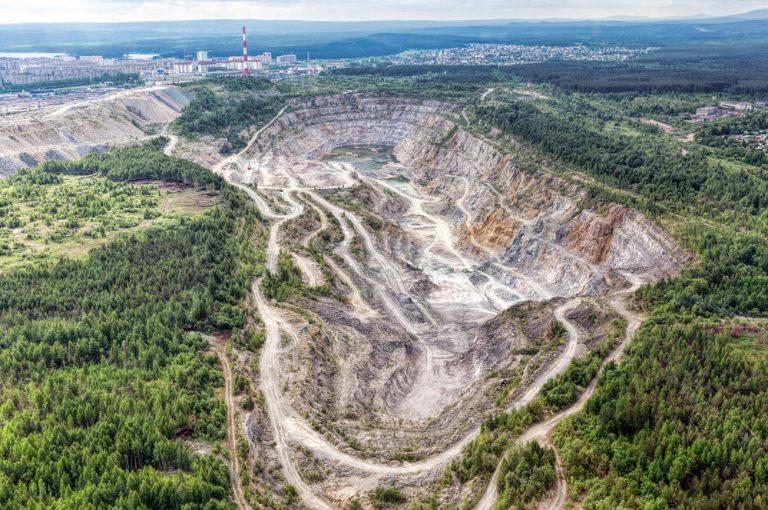
Around the beginning of 2021, BHP set the wheels in motion to further increase production levels. The company is moving ahead with the $2.5bn expansion of its Spencer copper mine in Chile after Covid-19 put the renovation on hold.

This will further its capacity into 2021 as demand levels pick up momentum. The miner’s copper production forecast for 2021 is between 1.5m and 1.65m tonnes.

BHP’s revenue over 2020 dipped slightly to $42.9bn from 2019 when it was at $44.3bn. BHP’s share price is up so far in 2021 to 2,117.5p from 2,035p.

JP Morgan hires Chuka Umunna to oversee ESG investing

0

Investment bank turns its focus towards ESG investing

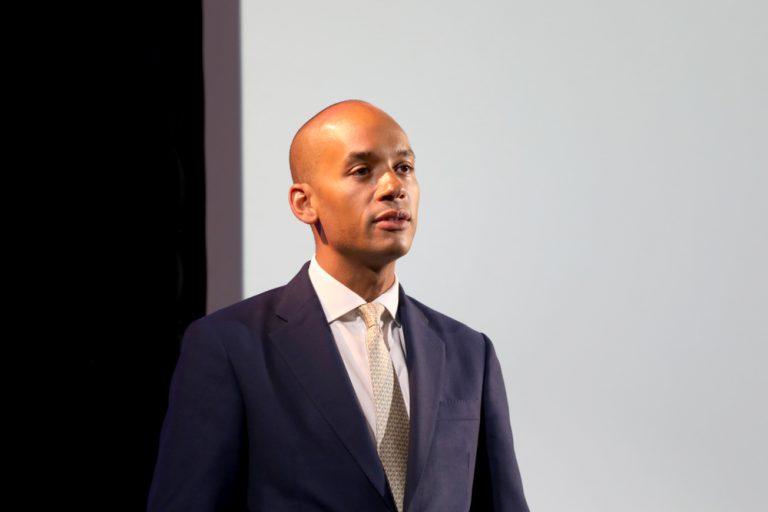
The former Labour leadership candidate has joined US investment bank JP Morgan to lead its European environmental, social and governance (ESG) mission.

Umunna, the former employment lawyer and MP for Streatham, will take up the newly created position, as reported by the Financial Times. 

Vis Raghavan, JP Morgan’s chief executive of EMEA (Europe, Middle East, and Africa), addressed employees at the US bank regarding the decision to hire Umunna, via a memo.

“He has more than 20 years of private and public sector experience in managing ESG issues at a senior level and was recently named one of the top five ESG influencers in the UK.

We welcome Chuka to the firm and look forward to supporting his efforts as we bolster our ESG commitment,” Raghavan wrote in the memo to JP Morgan staff. 

Umunna joins from Edelman, the global communications firm where the former MP jointly headed up the ESG consulting team.

The appointment comes as JP Morgan and its competitors step up efforts around ESG investing. 

After facing mounting pressure from its shareholders and environmental activists, JP Morgan set about abiding by emissions targets, as well as calling on its clients to do the same.  

ESG ETFs grew exponentially in 2020, up by 223%, with nearly 200 new listings. 

Anaelle Ubaldino, head of ETF research and investment advisory at TrackInsight, believes this is only the beginning.

“It’s clear that 2020 was a long-awaited turning point for ESG ETFs with huge growth in this sector. As competition for potentially trillions of dollars of new ESG assets heating up, we expect to see more issuers enter the ESG ETF market over 2021,″ Ubaldino said.

At one point tipped as the future leader of the Labour Party, Umunna was the MP for Streatham for nearly a decade. Although he never made it into a cabinet, Umunna served in various shadow cabinet positions. 

In September 2019 Umunna vacated his seat in the House of Commons, defecting from Labour to the Liberal Democrats. He contested the London and Westmister seat at the general election but lost to the Conservative candidate by fewer than 4,000 votes.

A commodities supercycle will lift the FTSE 100

The FTSE 100 has lagged the major indices in the US and we question the drivers behind this as Alan Green joins the UK Investor Magazine Podcast.

We pay particular attention to the weighting of natural resources of the FTSE 100 and AIM and how a supercycle in commodities could lift indices in the coming years.

We look specifically at EVs and how the increased demand for metals such as copper and lithium will benefit London markets.

We discuss Greatland Gold (LON:GGP), Power Metal Resources (LON:POW), Cadence Minerals (LON:KDNC), Logistics Development Group (LON:LDG) and Coinsilium (LON:COIN).

Sign up for the Mast Energy Developments IPO Presentation here.

FTSE 100 remains range bound as pound caps gains

0

The FTSE 100 has again been constrained by a strengthening in the value of the pound. It is the fifth day in a row the pound has risen against the dollar, following the Bank of England’s announcement that it will not introduce negative interest rates.

“While the currency got off to a tepid start, it doesn’t take a lot these days for the pound to hit fresh multi-year highs. A 0.2% rise against the dollar, for example, has pushed cable above $1.3835 for the first time since the very start of May 2018,” said Connor Campbell, financial analyst at Spreadex. 

The news does not bode well for the FTSE 100 companies selling goods abroad. Products and services will become more expensive to overseas buyers and the profits made outside of the UK are devalued when converted back into sterling. 

This is reflected by the continued flatlining of the FTSE 100 during Wednesday’s pre-lunchtime trading.

FTSE 100 movers

Smurfit Kappa (3.28%), Glencore (2.91%) and Anglo American (2.63%) have made the most ground so far today at the top of the FTSE 100. 

Ocado (-3%), along with two home builders, Barratt Homes (-2.5%, and Taylor Wimpey (-1.87) sit at the bottom of the index at mid-morning trading.

Smurf Kappa

Smurfit Kappa raised its final dividend on Wednesday as the company revealed it made a pre-tax profit during 2020.

A provider of sustainable packaging for goods, Smurfit Kappa has benefited from the increase in online shopping during the lockdowns.

Ashmore Group

The FTSE 250 asset management firm saw its pre-tax profits for the second half of 2020 climb by 14% to £150.6m.

The result was driven by a strong “investment performance”, with 97% of Ashmore Group’s assets under management (AuM) outperforming benchmark indices over the six month period.