Taylor Wimpey shares climb on trade update

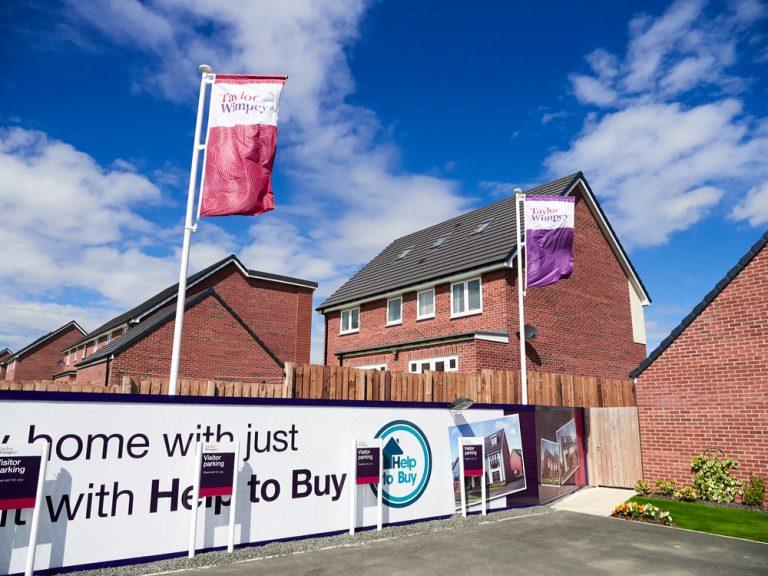
Shares at British homebuilding firm Taylor Wimpey (LON:TW) have climbed a modest 1% after the company released an optimistic trading update for the year ending 31 December 2020, citing a “healthy sales rate” and “strong demand” for its resilient performance during the Covid-19 pandemic.

Wimpey announced that it has started 2021 with an “excellent” order book following a strong recovery in sales and production in the second half of 2020 once initial lockdown measures were lifted to allow construction and relocating to resume. It ended 2020 with a total order book valued at £2.68bn or 10,685 homes, up 23% on the previous year-end.

Total UK home completions (including joint ventures) decreased by 39% to 9,609 however, due “primarily to the impact on production capacity during the second quarter shutdown”, and the company was only able to deliver 1,904 homes during the second quarter, down 3% year-on-year.

Its net private reservation rate for 2020 was 0.76 homes per outlet per week, compared to 0.96 in 2019, and cancellation rates for the full year were 5% above normal levels at 20% – although they normalised in the final quarter to 16%.

Average selling prices on private completions increased by 6% to £323k – compared to £305k in 2019 – with the overall average selling price increasing 7% to £288k.

Wimpey’s net cash at the year-end was £719m, with the homebuilder stating that it will restart dividends with a final 2020 payment, and will consider a “special dividend” for 2021. It expects to meet consensus operating profit expectation for 2020 of £293m, and reassured that it has not yet experienced any significant supply chain issues as a result of Brexit.

In a statement, the company said:

“Throughout 2020 we were encouraged by the continued resilience of the UK housing market, underpinned by low interest rates and strong customer demand, and despite the further lockdown in January 2021, interest levels remain good. We enter the year more than 50% forward sold for 2021 private completions.

“Whilst there remains some economic uncertainty given the COVID-19 pandemic and Brexit, the outlook for the UK housing market remains robust. We start 2021 in an excellent financial position, with a strong order book and a clear focus on cost and efficiency. We remain confident of achieving our medium term operating margin target of 21-22% and are well placed to deliver strong and reliable returns for our stakeholders”.

Shares at Taylor Wimpey rose 1.58% to 163.55p at GMT 10:39 on Thursday, extending recent gains of +35.81% in the past 3 months despite a sharp drop during the first UK lockdown when construction was suspended.
Whitbread shares up on “resilient” performance

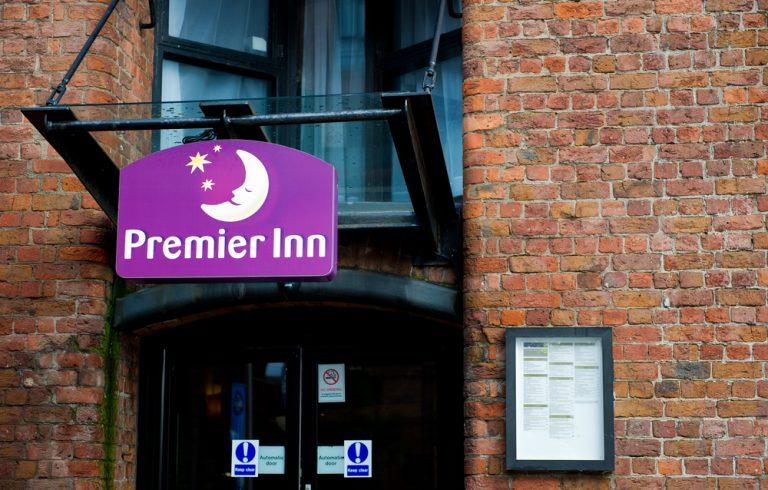
Shares at British hoteliers Whitbread plc (LON:WTB) have bounced more than 3% after the company released its Q3 FY2021 trading update, citing “resilient operational performance” despite sales down 66.4% and occupancy at a mere 31.1% for the 5 weeks leading up to 31 December 2020.

The company behind Premier Inn lamented the “very challenging hotel market conditions” as a result of the UK government’s lockdown restrictions – reimposed in November and late December as well as again at the beginning of January 2021 – which resulted in a steep fall in demand.

However, Whitbread noted an “improved demand” for business and some leisure travel which enabled the majority of its UK hotels to remain open during the first half of December, and noted that around two-thirds of its hotels are still currently open (although all its restaurants are closed according to lockdown restrictions).

Occupancy levels at Premier Inn sites reached 58% in September – driven by “relatively strong leisure demand in tourist locations and business demand recovering from a very low base” – but plummeted to just 35% in November on the announcement of a second national lockdown. Demand remained stronger in the regions throughout the quarter, however, with demand in metropolitan areas – and London in particular – remaining “weak”.

On average, 82% of Whitbread’s restaurants were open during the quarter, but total food and beverage sales were 53.9% lower year-on-year, as a result of both national lockdowns and tier restrictions forcing restaurants closures and limiting takeaway capacity.

The company went ahead with completing the restructure of its hotel and restaurant operations teams over Q3, which resulted in around 1,500 staff losing their jobs, although Whitbread notes that this is “less than the maximum number of redundancies previously indicated (6,000)”. However, targeted cost savings were still achieved as a result of “a greater proportion of colleagues accepting a reduction in maximum contracted hours”.

The Group’s balance sheet remains “strong” with a net cash position at 31 December 2020 of approximately £40m – compared to £196.4m at the end of H1 – while capital spend was £98.4m in the four months up to 31 December 2020. It also had cash on deposit of £814.9m and access to a £900m undrawn revolving credit facility, as well as up to £300m available as part of the government’s Covid Corporate Financing Facility (CCFF) scheme.

Total UK sales across its hotels are currently down -73.4%.

Commenting on Whitbread’s update, CEO Alison Brittain said:

“Since the start of the COVID crisis, we have responded quickly and robustly to the changing restrictions and have learnt to rapidly adapt our operations as required. This is testament to the efforts of our colleagues who continue to work tirelessly to maintain our very high operating standards, customer service and high levels of health and safety. This response has enabled us to continue to deliver strong market share gains in the UK, demonstrating the benefits of our strong brand, direct distribution, and our unique operating model. 

“We expect the current travel restrictions in the UK and Germany to remain until at the very least the end of our financial year. With the vaccination programme underway, we look forward to the potential gradual relaxation of restrictions from the Spring, business and leisure confidence returning, and our market recovering over the rest of the year.

“We continue to protect our liquidity through the careful management of our cash position, and to take actions to ensure that we exit the crisis as a leaner, stronger and more resilient business. Our strong balance sheet also provides the opportunity to take full advantage of the enhanced structural opportunities that we are already seeing in the market”.

Whitbread shares were up 3.89% to 3,179.00p at GMT 10:13 on Wednesday as shareholders likely expected the company’s results to emerge worse. The stock has slipped -24.38% over the past 12 months.

AB Foods warns £1bn loss if Primark stays shut

0

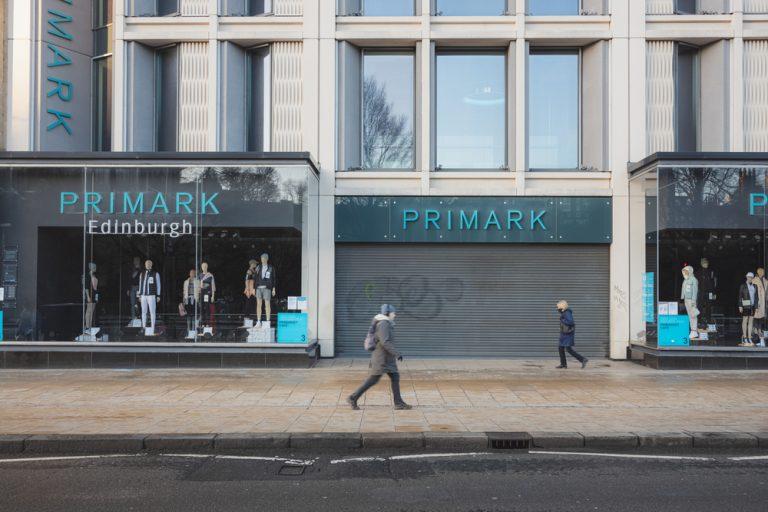
London-based retailers Associated British Foods (LON:ABF) has warned that it expects to lose £1.05bn if Primark stores are not allowed to reopen before the end of the financial half-year next month. Currently 305 stores are closed, representing 76% of ABF’s retail selling space.

On Thursday the company released a trading update for the 16 weeks up to 2 January 2021, estimating a 30% drop in total retail sales due to widespread store closures costing the brand around £540m, although ABF did state that “trading was strong given the circumstances”.

Primark’s performance was “materially impacted” by the reimplementation of lockdown restrictions put in place by UK and European governments and the subsequent loss of high street activity – particularly during November and late December – to limit the spread of COVID-19. Overall, sales were 30% lower than last year at constant currency and 28% lower at actual exchange rates.

As a result, ABF announced that its adjusted operating profit for Primark in the first half is forecast to broadly break-even – a stark turnaround compared to £441m for the same period last year – while the group’s net cash before lease liabilities is expected to come in around £500m.

The FTSE 100 company said that it will “partially mitigate” the loss of sales by obtaining savings of 25% of the operating costs of those stores that are currently closed, but warned that ongoing closures could cost a further loss of Primark sales amounting to £800m – with a consequent £300m slash to profits – taking overall costs to an eye-watering £1.05bn.

Shares at ABF dipped slightly on the company’s announcement, down 0.072% to 2,219.40p at GMT 09:44 on Thursday, following a turbulent year which has seen the stock tick down -13.75% over the past 12 months. Festive sales did boost shares +28.38% over the holiday period, but the January lockdown has understandably put a dampener on matters, sending the value down -2.76% once again.

AB Foods currently has a consensus rating on Marketbeat of “buy”, with an average rating score of 2.67 out of 5, based on 10 “buy” ratings, 5 “hold” ratings, and no “sell” ratings.

Halfords shares rise on cycling sales boom

0

Halfords has posted a 12% growth in sales over Q3, thanks to the boom in cycling over lockdown.

The firm saw a 35% growth in the cycling department, whilst the cycling business Tredz grew by 53%.

Due to tighter restrictions and people staying at home, the group’s motoring sales were down by 8.4%. Halfords, however, said this was a pleasing result given the current climate.

Chief executive Graham Stapleton said that Halfords was playing “an essential role in keeping the UK moving during the pandemic.”

“Throughout the crisis we are privileged to have been able to offer free checks and discounts to 239,000 NHS workers, teachers and Armed Forces staff to help them keep their vehicles safe and roadworthy,” he added in the trading update.

Since November 2019, the group has closed 33 sites and plans to shutter a further 47 stores before the end of the financial year.

The group has remained open as an essential retailer. It has not yet said whether it will return business rates relief but will reveal an update when the “Covid-19 situation becomes clearer”.

Nicholas Hyett, a Hargreaves Lansdown equity analyst, commented on the Halfords update: “The combination of essential retailer status, the roll-out of Halford Mobile Expert and an online offer that finally seems to have got its act together delivered a bumper Christmas for Halfords – the best it’s ever had.

“Looking ahead lockdown 3 is clearly a headwind, since if we’re all staying home fewer cars and bikes will need the kind of minor repairs Halfords specialises in. However we think supply disruption is probably a bigger issue going into the fourth quarter – there’s nothing more frustrating than a sold out sign and lack of product availability could shift customers back towards online competitors.”

Halfords shares (LON: HFD) are trading +4.61% at 290,30 (0946GMT).

Tesco posts 80% rise in online sales

0

Tesco has posted an 8.1% rise in sales for the 6 weeks to 9 January 2021.

As lockdown restrictions tightened over the festive period, the supermarket saw a surge in sales. Over the last nineteen weeks, online sales surged by 80%.

Ken Murphy, Tesco’s chief executive, said: “We delivered a record Christmas across all of our formats and channels. In response to unprecedented demand for online groceries, colleagues delivered over seven million orders containing more than 400 million individual items over the Christmas period.

“We’re now supporting 786,000 vulnerable customers with priority access to online slots and, as lockdown measures continue, we’ll keep doing everything we can to ensure everyone can safely get the food and essentials they need.”

Despite the growth in sales, the supermarket has also estimated a rise in Covid-19 costs from £725m in October to £810m.

Sales in the Tesco Finest range were up by 14%, whilst sales in vegetarian and vegan foods also jumping.

“We supported customers with timely promotions including our festive 5 vegetable offer, ‘3 for 2’ party food and 25% off 6+ bottles of wine. We catered for all diets with our largest ever festive range of free-from, vegan and vegetarian products,” said the supermarket.

“Sales of plant-based products increased strongly including growth of more than +90% in our Plant Chef range in the run up to Christmas. General merchandise sales grew by +4% driven by strong performance in toys, home and electrical items.”

Commenting on the latest Tesco results, Chris Daly, CEO at the Chartered Institute of Marketing, said:

“Tesco has followed its Big Six rivals with strong sales growth over the Christmas period. And while the short term profits from these increased sales will be held back by the costs associated with COVID-19, including establishing its online offer – doubling its delivery slots, and creating thousands of new jobs to meet increased demand – it is better placed to succeed long-term than its competition.

“Tesco has outpaced its rivals when it comes to building brand trust; it was one of the first brands to launch a campaign promoting its social-distancing measures at the start of the Covid pandemic, and pivoted quickly to refresh its popular ‘Food love stories’ towards lockdown inspired tales.

“Tesco’s marketers now have a huge opportunity to leverage their heritage status and the customer loyalty built up during the pandemic to navigate the changing landscape, and sustain a long-term relationship that holds value for customers and shareholders,” he added.

Tesco shares are trading -1.03% at 239,60 (0836GMT).

ASOS raises profit forecast on strong Christmas

0

On Wednesday, British online fashion retailer ASOS (LON:ASC) reported strong Christmas trading and raised its half-year profit forecast by £40m, which would take its full-year results to the top end of market forecasts, but has warned that post-Brexit tariffs could cost it £15m in the next financial year.

Analysts have forecast a pre-tax profit of between £115-170m, compared to a pre-tax profit of £142.1m in 2019-2020, and ASOS has said that it expects ongoing Covid-19 restrictions to keep online sales high in the first half of 2021. Overall sales grew by 24% to £1.36bn in the four months to 31 December and the company reported an additional 1.1 million new customers over the same period.

The performance was driven by a 36% jump in UK sales alone, which rose to £554.1m, with spending increasingly driven online as lockdown restrictions returned in November and again in the final weeks of the year.

ASOS has left its full-year sales forecast unchanged, but chief executive Nick Beighton explained:

“Looking forward, given the uncertainty associated with the virus and the impact on customers’ lives, our cautious outlook for the second half of the year remains unchanged. However, the strength of our performance gives us confidence in our continued progress towards capturing the global opportunity ahead”.

“We are really pleased with the strong performance we have delivered, which is testament to both the strength of our multi-brand model and the hard work of our people. We have continued to execute well and deliver for our customers, whilst investing into growing our business and driving further efficiency through a strong operational grip”.

Nevertheless, the impact of Brexit cannot be escaped entirely. ASOS has said that it expects to incur excess costs due to country of origin issues. Although the company has been able to continue selling products on its European websites since the UK left the EU – largely without incurring tariffs because most are shipped from its warehouse in Berlin – there have been some instances where products have not been able to be dispatched from the central Berlin warehouse.

“We’ve not been able to get every product to go direct to Berlin in every single circumstance,” Beighton told Reuters, explaining that ASOS deals with 800 third-party brands as well as its own-brand products.

“Some of the smaller brands have not been able to re-structure to go direct to Berlin rather than Barnsley so there’s still some re-balancing that needs to be done. Over the coming years as they grow we will work to mitigate that cost impact”.

Britain’s Brexit trade deal was billed as preserving its zero-tariff and zero-quota access to the bloc’s single market, but Beighton disagrees with how it has actually turned out: “It isn’t actually a no tariff deal”.

Shares at ASOS were up 3.46% to 5376.00p at GMT 14:58 on Wednesday, extending gains of over 56% in the past twelve months.

Touchstar shares rally on trading update

0

Touchstar shares soared 35% on Wednesday after the group posted a trading update for the year ended 31 December 2020.

Cash generation remained strong and the group ended 2020 with a net cash position of £1.6m with £1.9m of cash in the bank at the year-end. This is up from £850,000 in 2019.

Preliminary results for 2020 will be reported in late April 2021 and Touchstar has said that it expects a profitable outcome on both a pre-tax and after- tax basis.

Chairman, Ian Martin, commented: “I am delighted to confirm that for the year ended 31st December 2020 Touchstar traded profitably, was strongly cash generative, supported customers and most importantly looked after staff in a period of a global pandemic and the largest economic contraction in a generation.

“Enormous credit should go to the management team for having the foresight to realise early on the implications of COVID 19 on society and the economy. It is their timely actions that have enabled us to give a clear and consistent message throughout this crisis to all our employees, customers and shareholders, bringing a degree of calmness to an uncertain time.

“The cautious approach that has served us so well is retained. Our focus remains on supporting customers, cash and the wellbeing of our employees. We continue to not only keep to but exceed the goals in the roadmap we put in place to navigate the business through into 2022,” he added.

Touchstar shares are trading +35% at 67,50 (1438GMT). Shares have surged from lows this year of 19,50.

Global M&A activity soars 88% in H2 2020

0

Global mergers and acquisition (M&A) activity soared by 88% to $2.3 trillion in H2 2020, amounting to the strongest second half in history and overtaking the previous record held by the 46% increase in H2 1997. H2 2020 was also the strongest second half in history in terms of deal value.

According to the research data analysed and published by Sijoiturahastot, the total number of deals worth $10 billion and above was 21% below the 2019 figure, but the number of deals valued between $5 billion and $10 billion increased 38% year-on-year, and their value rose by 36%. The total number of so-called “mega deals” ($5 billion+) across 2020 was 116, up from 97 in 2019.

The strong second half nearly offset the “disaster” that was H1 2020, which saw global M&A deal value in the first six months of the year totalling $1.2 trillion – a 41% decline on 2019. It was also the lowest H1 figure since H1 2013, with the total number of deals closed sinking by 16%.

For two consecutive quarters in H2 2020, the M&A deal value surpassed $1 trillion, with deal value for Q3 and Q4 2020 totalling $2.3 trillion. However, the figures are somewhat misleading, as there was still a 4% decline in the total number of deals in 2020, marking a four-year low.

In the US, the global deal value for the year declined by 21% year-on-year from $2.2 trillion in 2019 to $1.4 trillion in 2020. At the peak of the pandemic, the US also had an 80% decline in M&A activity altogether. Meanwhile in Europe, there was a 34% uptick as the figure rose from $735 billion in 2019 to $988.6 billion last year. Asia Pacific similarly had a 15% increase as its total deal value went from $758 billion in 2019 to $871.5 billion.

Technology was the leading sector in 2020, posting a 49% uptick to reach $679.2 billion and accounting for a considerable 19% of total M&A in the year to date. Financials came in second with a total deal value at $489.6 billion, down 6% year-on-year, while energy & power were third making up 12% of deal activity, despite posting a 13% year-on-year decline.

The industrial sector followed with deals totalling $400.6 billion, a 10% decline on 2019, and accounting for 11% of total M&A. In contrast, the consumer sector was among the most exposed, falling 16% at $156 billion.

According to EY, the stronger than expected H2 rebound in global deal-making is set to continue into 2021, with one of the reasons cited being the “growing popularity” of Special Purpose Acquisition Companies (SPACs). It alleges that these new entities could bring “additional forms of capital to the market”, and adds that “alternative deal models such as joint ventures and alliances” could also fuel deal-making in the coming year.

Why your portfolio needs to improve it’s ESG exposure

ESG has been a growing theme over the past three years and the level of interest from investors was illustrated this week this as data on ESG ETF flows in 2020 found AUM in ESG ETFs grew by 220%.

Alan Green joins the UK Investor Magazine Podcast to discuss the current dynamics and what it could mean for UK Investors. We also explore three UK-listed companies that have strong ESG credentials.

There is consideration paid to oil majors listed in London and what the future holds for them given the launch of the Saudi Arabian NEOM sustainable city project that plans to build a city some 170km in length. NEOM will be careless and run entirely on renewable energy.

Companies discussed on the Podcast include Tesla (NASDAQ:TSLA), NIO (NYSE:NIO), British Honey (LON:BHC), Itaconix (LON:ITX) and Open Orphan (LON:ORPH)

The pandemic success stories ripe for investment

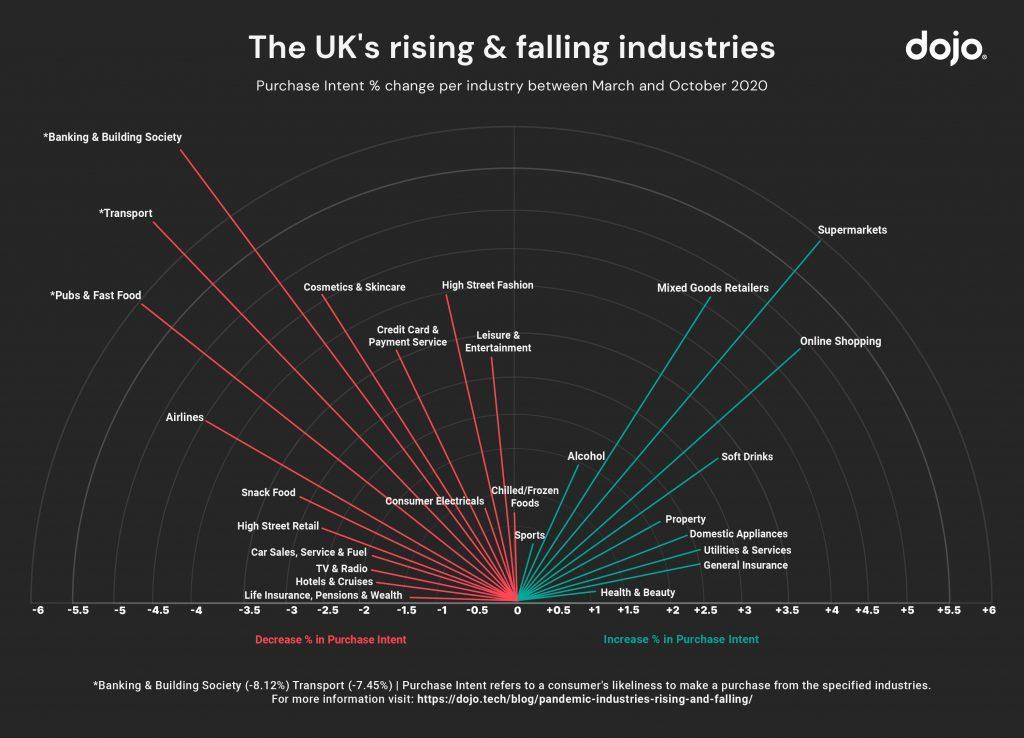
A new report by UK merchant payment provider Dojo has revealed how industries in the UK and beyond have been impacted by the Covid-19 pandemic.

The report, which used Yahoo Finance and public Purchase Intent data, analysed and ranked which industries benefited most and least from the “unforeseen changes” in their customers’ lifestyles during the pandemic, and highlighted which sectors are most ripe for post-Covid investment.

Despite widespread heartache across a slew of industries – hospitality and retail among others – there have been some lockdown success stories.

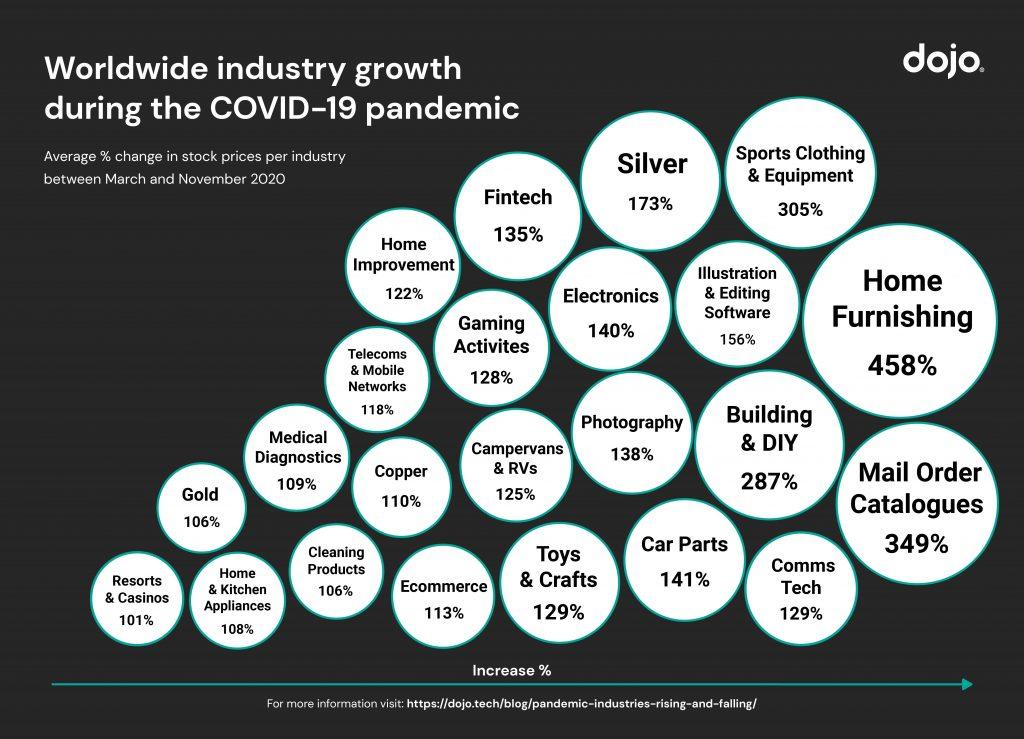
Many are fairly expected, with home furnishing and DIY industry growth soaring as isolated households looked to renovate their ‘work from home’ offices and make the most of their new base during lockdown. B&Q owners Kingfisher reported earlier this week that its full-year profits are set for the top end of expectations, after strong online trading boosted sales throughout 2020. The company performed so well that in December it announced its commitment to return £130m in business rates relief, and has seen its shares increase 35.27% over the past 12 months.

Cleaning products enjoyed a boom during the peak of the pandemic, as people increasingly sought to disinfect household surfaces for fear of contracting Covid-19. Unilever – the company behind Domestos and Cif – reported “better than expected” results in H1 2020, and while its Q4 results are yet to be released, the company logged a 4.4% underlying sales growth in the third quarter. Its share price may have been on the erratic side this year – swinging between an annual low of 3,583.50p and a high of 4,943.00p – but has seen overall growth up 0.38% in the past 12 months and, having tipped downwards in the past few weeks, looks ripe for investment before it ticks up again. The brand has been chasing an upward trajectory since 2016, with shares rising 52.82% in the last 5 years, and is likely to continue performing well in the cleaner post-pandemic environment.

Illustration & editing software (+156%) and photography (+138%) both saw huge growth over the course of 2020, as people around the world turned to new hobbies to pass the time locked indoors. Gaming activities – A.K.A. online gaming – also enjoyed a 129% boost in sales, and household favourites such as Electronic Arts – the company behind the Sims – and Take-Two Interactive Software – responsible for the wildly popular Grand Theft Auto and Red Dead Redemption series – have seen their shares gain throughout the year thanks to a surge in gaming during lockdown. Both have performed well in recent months and move into the New Year with plenty of potential as new consoles such as the Sony PlayStation 5 and Xbox Series X continue to drive sales up.

Capitalising on the surge in sports clothing and equipment sales was Nike, which reported a 9% increase in revenue in Q2 2020 and saw its diluted earnings per share up 11% in the same period. The company benefitted from a surge in online sales – with high street stores around the world closed intermittently throughout the year – with digital sales overall up 84%, triple-digit growth in North America and strong double-digit increases in EMEA, Greater China and APLA markets. With sporting events cancelled during the pandemic, Nike was able to cut expenses which would have otherwise been spent on promotions to lower product prices, which proved especially popular during online seasonal sales such as Black Friday. Nike’s shares have continued to rise over the past 12 months, breaching the New Year at more than double what they had been worth in March 2020 when the first lockdown took hold.

The top industries that saw upwards of 100% growth since March

RankIndustryAve. % change from March to Nov
1Home Furnishing458.3%
2Mail Order Catalogues349.2%
3Sports Clothing & Equipment305.8%
4Building & DIY287%
5Silver174%
6Illustration & Editing Software156%
7Car Parts141%
8Electronics141%
9Photography138%
10Fintech135%
11Toy & Crafts130%
12Comms Tech129%
13Gaming Activities129%
14Campervans & RVs126%
15Home Improvement123%
16Telecoms & Mobile Networks118%
17Ecommerce113%
18Copper110%
19Medical Diagnostics109%
20Home & Kitchen Appliances109%
21Cleaning Products107%
22Gold107%
23Resorts & Casinos101%
Data courtesy of Dojo.

Jon Knott, Head of Customer Insights at Dojo, commented on the report’s findings and how the consumer landscape has changed as a result of the pandemic:

“Last year saw changing fortunes in the economy, which have forced retailers to face some of the toughest challenges in generations. Circumstances beyond control have led to rapid consumer shifts, that were previously unheard of. A lot of retailers have pivoted in order to survive, with some understandably being unable to do so. 

“But we’ve also seen other businesses thrive during this time. Our findings confirm that whilst it may have been a tough year for everyone, many industries will come out of the otherside, with some maybe even stronger than ever in 2021”.