
QinetiQ shares rise on revenue growth

QinetiQ shares (LON: QQ) opened 10.86% higher on Thursday as the group released a trading statement for the for six months to 30 September 2020.
The group posted a 37% increase in orders and a 24% growth in revenue.
Thanks to a strong performance, the defence technology company reported a “strong” cash performance, with 134% underlying cash conversion.
Statutory operating profits fell 10% to £61.6m, which was due to a £13m property disposal gain the year previously.
QinetiQ has increased its full-year guidance and is now expecting a low double-digit revenue growth.
Steve Wadey, the chief executive, said: “We have delivered an excellent first-half performance despite a challenging environment. The resilience and determination of our people, who have continued to deliver for our customers in uncertain times has been outstanding and I would like to thank them for their contribution.
“We are entering the second half with confidence, with a significant order backlog, strong customer focus and an evolved strategy reflecting the increasing ambition of the Group and changing customer needs. We are increasing our full-year guidance whilst proactively managing the potential risks from further COVID-19 disruption.”
QinetiQ shares (LON: QQ) are trading +10.45% at 321,40 (1522GMT).
National Express posts growing revenue ahead of second lockdown
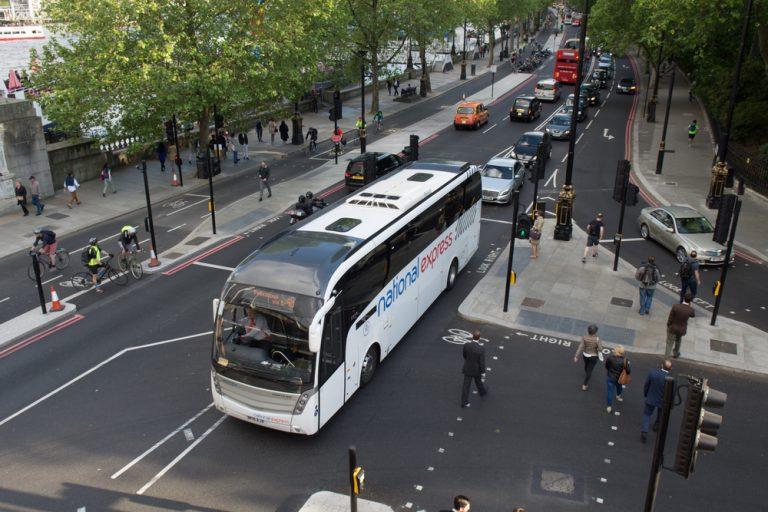
National Express (LON: NEX) has reported improving revenue between the first and second lockdown.
In its latest trading update, the FTSE 250 company said that October’s revenue was 60% higher than in April.
The group has been operating and roughly half of its services and in November amid the second lockdown is operating just 9% of last year’s services.
Group chief executive Ignacio Garat said: “In my first weeks in the group, I have been struck both by my colleagues’ professionalism, and by the resilience of our leading portfolio of businesses.
“The positive vaccine news of the last few days may signal a faster service recovery in the medium term than we had hitherto envisaged. Nonetheless, these remain difficult times for the public transport sector, at least in the short term.
“I am convinced, however, that National Express will continue to weather the challenges we face and has strong foundations in place to prosper once the pandemic is over.
“I am pleased by the strength of our relationships with customers and governments across the group. This is reflected in the amount of support we have and continue to receive.
“We will continue to proactively engage customers and relevant authorities to navigate the challenges the pandemic presents.
“Alongside this, we will continue to closely and carefully manage costs and remain very disciplined in the returns we seek on investment, as part of our broader focus on maintaining the group’s financial position.”
National Express has forecast full-year earnings to be in the range of £170m-£190m.
National Express shares (LON: NEX) have fallen from a year-to-date high of 485,00 and are currently 0.52% higher at 230,20 (1221GMT).
Vistry reinstates dividend on strong demand

Vistry (LON: VTY) has announced plans to continue shareholder payouts from next year.
Thanks to strong demand and sales, the housebuilder is on track to meet full-year profit at the top end of the £130m-£140m range.
The group has achieved a private sales rate of 0.67 per outlet per week, which is up from 0.58 a year ago.
Vistry chief executive Greg Fitzgerald said: ““Demand for our new homes has remained strong and we are on track to deliver profit for 2020 at the top end of our expectations.
“We are well positioned for 2021 with a record forward sales position and assuming stable market conditions, expect to see a step-up in completions delivering group profits of £310m.
“Our priority is reducing the group’s leverage while delivering on our medium-term targets.
“Cash generation has been strong, and we now expect our 2020 year-end net debt to be significantly lower than our previous expectations.
“Given this robust business performance and outlook, the board is pleased to confirm its intention to resume dividends in 2021 including an interim dividend next November, earlier than previously anticipated.”
Vistry shares (LON: VTY) are trading +4.77% at 796,22 (1136GMT).
In October, house prices jumped 7.5% according to data from Halifax. The average property now costs £250,457. House prices in the UK have increased at their fasted rate since 2016 amid the demand for more space and the stamp duty holiday.
The new vaccine chapter for value stocks and COVID-19 shares

The UK Investor Magazine Podcast is joined by Alan Green for a run down of the dramatic moves in markets this week and exploration of scenarios going into the end of 2020.
The Biden Presidential victory has been overshadowed by news from Pfizer had a breakthrough in the fight against COVID-19 with a vaccine demonstrating 90% effectiveness. We look at the sharp rally in markets and question the sustainability going forward.
We discuss Novacyt (NCYT), Synairgen (SNG), Avacta (AVCT), Blue Prism (PRSM) and Capita (CPI).
Burberry posts 62% fall in H1 profits

Burberry (LON: BRBY) has posted a 62% fall in pre-tax profits for the six months ending 26 September 2020.
The luxury retailer revealed a 31% decline in revenue and adjusted operating profit down 75%.
Sales were down 31% to £878m, whilst first-half pretax profits fell from £193m to £73m.
The retailer noted that despite the pandemic, it had seen strong strategic progress particularly in leather goods, growth on digital, and good brand traction.
Marco Gobbetti, the chief executive, said: “Though the momentum we had built was disrupted by COVID-19 at the start of the year, we were quick to adapt, while making further progress against our strategy. While the virus continues to impact sales in EMEIA, Japan and South Asia Pacific, we are encouraged by our overall recovery and the strong response to our brand and product, particularly among new and younger customers.
“In an environment which remains uncertain, we will continue to deliver exceptional product, localise plans and shift resources, while leveraging the strength of our digital platform to inspire customers.”
Looking forward, Burberry said in a statement: “We are encouraged by the recovery in Q2 FY2021 but remain conscious of the uncertain macro-economic environment caused by COVID-19. We currently have more than 10% of our stores closed globally following the recent lockdowns in EMEIA. With the brand resonating and attracting new and younger consumers, we have taken the decision to reduce markdowns and this will be a revenue headwind in H2 FY2021 with the main impact in Q3 FY2021 but will serve the long term interest of the brand. We are well positioned to continue to drive performance and deliver growth in the medium term.”
Burberry shares (LON: BRBY) opened 3.66% higher and are currently trading 2.65% higher at 1.670,11 (0952GMT).
B&M profits surge over lockdown
B&M (LON: BME) has reported a 95% rise in first-half core earnings for the six months to 26 September.
The high street discounter saw profits soar over the lockdown and posted a 25.3% increase in revenue to £2.24bn.
B&M has adjusted its earnings before interest, tax, depreciation, and amortisation to £295.6m.
The group has closed 10 stores this year, however, plans to open a further 40-50 in the UK.
Chief executive Simon Arora said: “Despite the wider economic uncertainty and ongoing restrictions related to Covid-19, we remain confident in our business model and future prospects.”
In France, the Babou business was “severely” hit by the lockdown.
The group said: “Unfortunately, whilst approximately half of stores in France remain open, they are currently restricted to selling essential goods only during the November lockdown.”
Shares (LON: BME) in the group are up 49% over this past year.
WH Smith scraps dividend as it swings to loss
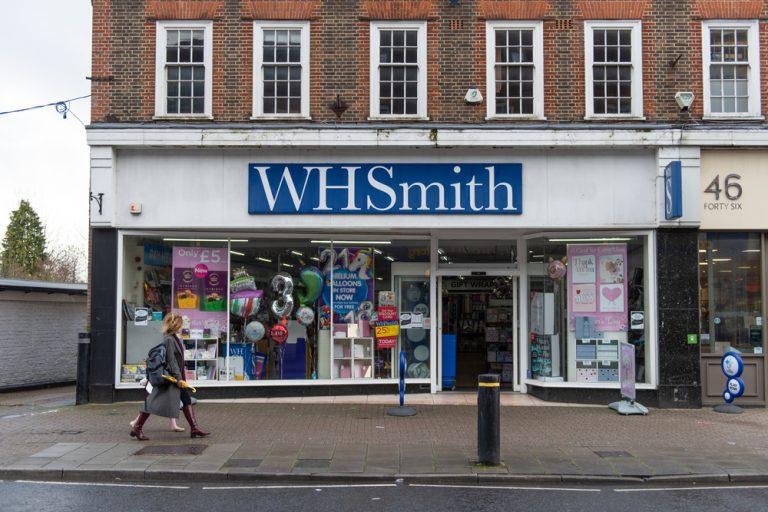
WH Smith (LON: SMWH) has posted a pre-tax loss of £280m and scrapped its dividend.
The retailer posted a 33% fall in revenue in the year to the end of August to £1bn.
WH Smith said on Thursday that it plans to close another 25 shops after the group swung to a loss from a £180m profit last year.
The group has been particularly affected by the closure of travel sites and a slump in passenger numbers at airports and train stations.
Revenue at travel sites fell 39% to £344m. During the first lockdown in April, revenue at travel sites was down by 90%.
Chief executive Carl Cowling said: “Since March, we have been heavily impacted by the pandemic.
“While passenger numbers continue to be significantly impacted in the UK, our North American business, where 85 per cent of passengers are domestic, is beginning to see some encouraging signs of recovery.
“We have a robust plan across all our businesses focusing on cost management and initiatives within our control which support us in the immediate term and position us well to emerge stronger as our markets recover.”
The retailer is seeing signs of recovery in North America thanks to new business.
WH Smith shares (LON: SMWH) are trading +2.14% at 1.481,00 (0855GMT).
GDP misses expectations, despite record Q3 growth
The UK’s GDP surged by 15.5% in the third quarter, hitting record-breaking Q3 growth.
According to the Office for National Statistics, the growth is the largest quarterly growth ever recorded.
Despite the record growth, the GDP has still missed expectations and continues to be 9.7% less than before the pandemic.
The surge in the economy comes following a huge 19.8% slump in the UK economy in June following the new restrictions.
The economy has grown for five months in a row, however, it is still has a way to go.
The ONS said: “September 2020 GDP is now 22.9% higher than its April 2020 low. However, it remains 8.2% below the levels seen in February 2020, before the full impact of the coronavirus (COVID-19) pandemic.”
In the period between July and September, the service sector grew by 14.2%, production output was up by 14.3%, and construction output surged by 41.7%.
Ben Dyer, CEO of Powered Now, comments on how British construction will fare in the winter:
“The economic recovery we have seen in this morning’s announcement is indeed welcome, but of course with much of Britain in a state of national lockdown over the month of November, this month and the subsequent winter season are of course going to present yet more challenges. That’s why it would prudent to look towards sectors that remain open, such as construction and the trades, to provide the kind of stability we need at the moment.
“The new restrictions have had a negligible impact on the construction sector so far, and overall activity around construction has to be welcomed. Given the bonanza that housebuilders are currently experiencing from the stamp duty reduction, it’s no surprise that they are the best performing sector of the construction industry. Whether this boom for the housing industry will be followed by a bust is unknown. At the moment, most firms are just grateful for the good business they are getting right now given how much other sectors are suffering,” he added.
Responding to the latest GDP figures, chancellor Rishi Sunak said:
“Today’s figures show that our economy was recovering over the Summer, but started to slow going into Autumn. The steps we’ve had to take since to halt the spread of the virus mean growth has likely slowed further since then. “But there are reasons to be cautiously optimistic on the health side – including promising news on tests and vaccines. My economic priority continues to be jobs – that’s why we extended furlough through to March and I welcome the news today that nearly 20,000 new roles for young people have been created through our Kickstart scheme. “There are still hard times ahead, but we will continue to support people through this and ensure nobody is left without hope or opportunity,” he added. The International Monetary Fund has predicted a 10.4% slump in UK GDP for 2020. They have predicted a growth of 5.7% for 2021. Labour’s shadow chancellor, Anneliese Dodds, shared concern over the figures. Speaking to Sky News, Dodds said there were fears that the GDP could be shrinking in the current quarter. She said: “There are concerns that we could be seeing a shift backwards because of the lockdown that it currently underway. “This really shows that the government has got to get a grip of those issues that are driving economic decline, particularly the public health crisis and get test, trace and isolate sorted out. “But make sure we have a longer-term horizon for economic support as well. That would really help to bring more confidence.”

Flutter Entertainment posts strong Q3 results, shares rise

Shares in Flutter Entertainment (LON: FLTR) were up over 5% on Wednesday after it posted strong Q3 results.
The group, which owns Betfair and Paddy Power, posted a 32% increase in sports betting revenues whilst gaming revenues rose 21%.
In Australia, revenue soared 76%.
Flutter Entertainment posted a better-than-forecast new customer acquisition of over 450,000 with a total of over 1.8 million active customers in the third quarter.
Peter Jackson, the group’s chief executive, said:
“Flutter’s performance in the third quarter exceeded our expectations in both sports and gaming. Our strong trading continued as we grew market share in key regions while retaining our commitment to safer gambling practices. During the quarter we continued to expand our recreational customer base while bringing our businesses together. This included the successful migration of the BetEasy customer base onto the Sportsbet platform in Australia.”
“[…] We are now a truly global business with significant scale. As such we are in a unique position to respond to the many opportunities we see across our growing markets. Looking ahead, whilst the outlook with respect to Covid-19 remains uncertain, we are confident that our business is well positioned to capture further growth in a sustainable and responsible way.”
Flutter Entertainment shares (LON: FLTR) are trading +5.12% at 13.445,00 (1621GMT).