Tekcapital has announced that its portfolio company, Guident, has entered the robotics market with a fresh contract win.
Guident has secured its first contract with the Boca Raton Innovation Campus (BRiC), the sprawling 1.7-million-square-foot office complex formerly housing IBM’s research and development operations.
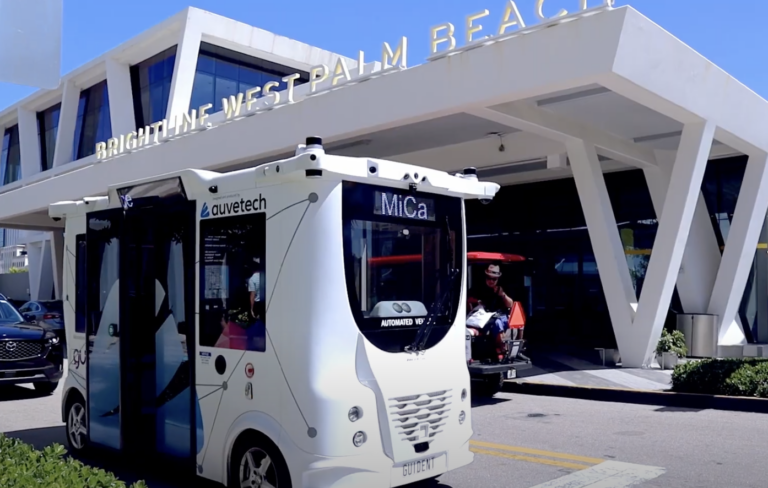
Today’s WatchBot contract win comes shortly after the launch of Guident’s autonomous shuttle in West Palm Beach, demonstrating the breadth of real-world applications for Guident’s AV technology.
The Boca Raton Innovation Campus partnership centres on deploying Guident’s WatchBot, an autonomous surveillance and inspection robot. Developed in partnership with Star Robotics, the WatchBot surveillance system delivers real-time monitoring capabilities, employs AI-powered analytics and handles automated security functions.
“We are proud to partner with BRiC to deliver cutting-edge autonomous solutions that redefine campus management,” said Harald Braun, Chairman & CEO of Guident.
“WatchBot demonstrates Guident’s commitment to innovation and safety, and we are thrilled to contribute to BRiC’s vision of creating a world-class environment for technology and life sciences tenants. Together, we are setting a new standard for operational efficiency and intelligent campus management.”
Autonomous vehicles have clocked millions of miles on public roads. Yet, even the most sophisticated software encounters difficulties when reality presents unexpected scenarios. Perhaps a construction sign toppled by wind, a traffic officer gesturing with their hands, or a dog dashing across four lanes of traffic.
Rather than grounding entire fleets until algorithms master every unusual situation, the autonomous vehicle industry is increasingly relying on remote human operators who monitor driverless cars from a distance and, when called into action, take temporary control within seconds. This practice, known as teleoperation, is rapidly becoming a strategic cornerstone for safer, more resilient and more publicly trusted autonomy.
Edge Cases Lay Bare Autonomy’s Limits
California’s 2024 disengagement data, the most closely watched measurement in the sector, reveals how frequently AVs still require assistance.
Waymo recorded one disengagement every 9,793 miles, whilst newer shuttle operators such as May Mobility needed an intervention approximately every 0.66 miles. These figures make two points unmistakably clear: edge cases remain abundant, and human backups are essential.
Number of miles driven per disengagement in California from December 2023 to November 2024
Teleoperation: A Real-Time Safety Valet
When an AV’s perception system hesitates, a remote operator can intervene—steering around an unmarked pothole or communicating with a traffic marshal—before returning control to the onboard computer.
This human-in-the-loop model significantly reduces the risk of a vehicle freezing or making a poor decision, reducing both collision risk and tariff disruption.
Moreover, a single operator can oversee dozens of vehicles because interventions are infrequent and brief. Such scalability means teleoperation adds minimal cost relative to the safety benefits, preserving the business case for autonomous ride-hailing and various AV service use cases.
Enhanced Safety Through Multi-Modal Communications
Contemporary teleoperation centres don’t simply maintain a video feed—they employ sophisticated communication systems that continuously monitor vehicle health, environmental conditions, and passenger status. These systems provide operators with comprehensive situational awareness through:
Real-time vehicle telemetry data including speed, acceleration, and component diagnostics
Multi-angle video feeds with depth perception and enhanced night vision capabilities
Spatial audio mapping that allows operators to “hear” the vehicle’s surroundings
AI-powered anomaly detection that pre-emptively flags potential issues before they escalate
The bidirectional nature of these communication systems enables immediate intervention during emergencies—operators can directly communicate with passengers, activate emergency protocols, or coordinate with first responders—all whilst maintaining positive control of the vehicle.
Redundant Communication Pathways: No Single Point of Failure
Leading AV companies now implement triple-redundant communication networks for teleoperation: a primary high-bandwidth 5G connection for normal operations, a secondary LTE/4G fallback network with optimised compression, and a tertiary satellite link for emergency connectivity in cellular dead zones.
This layered approach ensures that vehicles remain connected to operators even under challenging network conditions. When combined with advanced predictive buffering techniques that anticipate network problems, these systems remain operational with less than 0.001% communication downtime.
Confidence Builder for Regulators and Riders
Regulators view teleoperation as a tangible extra layer of safety insurance; several U.S. states now require or explicitly allow remote monitoring in commercial driverless deployments, especially when a safety driver is not present. Passengers, meanwhile, find comfort in knowing a trained human can step in if the robotic driver becomes confused. In consumer focus groups, willingness to ride increases markedly when teleoperation is mentioned as a safety net, a factor that may prove decisive in mainstream adoption.
The US is streets ahead of the UK in terms of AV deployment progress, although the UK is set to roll out self-driving vehicles in 2026.
Regulatory Frameworks Embracing Human Oversight
The regulatory landscape for teleoperation has matured significantly, with 21 states now incorporating specific teleoperation provisions in their AV legislation. The NHTSA’s 2025 AV Safety Framework explicitly endorses teleoperation as a key safety enhancement for Level 4 autonomous deployments, establishing minimum performance standards for:
Mandatory operator certification and ongoing training
These clear regulatory guidelines have accelerated commercial deployments whilst maintaining strong safety margins. Industry consensus suggests this regulatory certainty has shortened commercialisation timelines by approximately 18-24 months.
Glass-to-Glass Latency: Every Millisecond Counts
For teleoperation to work effectively, the video loop from the vehicle’s cameras to the operator’s screen must be nearly instantaneous.
Industry best practice is sub-100 millisecond “glass-to-glass” latency. Beyond approximately 250 ms, human steering accuracy declines materially and makes remote control useless.
A 2025 5G field trial averaged 202 ms end-to-end delay, a 2024 campus-network demonstration clocked 136 ms, and a controlled laboratory study achieved 88.9 ms. Older LTE experiments hovered well above 200 ms, highlighting why next-generation connectivity and aggressive video-pipeline tuning are mission-critical.
The Advanced Human Interface: Enhancing Operator Performance
Remote operation centres now utilise cutting-edge human factors research to maximise operator effectiveness whilst minimising fatigue and cognitive load.
Key innovations include AR-enhanced interfaces that overlay predictive path information and highlight potential hazards, feedback systems that provide operators with simulated road feel and vehicle dynamics, adaptive workload management that dynamically adjusts operator-to-vehicle ratios based on real-time complexity metrics, and physiological monitoring systems that detect early signs of fatigue or attention lapses.
These human-centred design approaches have reduced operator error rates by 67% whilst extending effective work sessions by up to 3 hours compared to earlier systems.
Passenger Experience: The Human Touch in Robotic Rides
Modern teleoperation systems prioritise passenger communication and comfort. When a vehicle requires remote assistance, passengers receive an immediate notification via in-vehicle screens and audio, whilst the remote operator can directly communicate through the vehicle’s audio system.
AI-driven emotion recognition can alert operators to passenger distress, and custom communication protocols address specific passenger needs, such as those of children, the elderly or disabled individuals.
This human connection transforms what could be an unsettling experience into a reassuring demonstration of the system’s safety architecture. Market research indicates that passengers who experience a smooth teleoperation handover report higher satisfaction scores than those whose journeys never required intervention, suggesting the visible safety net actually enhances the experience.
The Flywheel Effect: Faster Learning, Faster Deployment
Each remote intervention does more than resolve a single challenging moment; it generates a labelled data set that engineers can channel back into training. Over time, the fleet encounters fewer repetitions of the same edge case because the AI has learned from every human-assisted rescue. This virtuous cycle enables companies to scale services sooner, complete with human safety net, whilst systematically driving the disengagement rate ever closer to zero.
Catalyst, Not Crutch
For many in the industry, the long-term goal remains full self-reliant autonomy. Yet, if the industry waits for perfection, mass deployment could be derailed, and even if perfection were miraculously achieved, edge cases can easily transform from electro-mechanical errors to problems dealing with occupant health status or security. Teleoperation offers a pragmatic bridge: AVs can serve riders today under real-world conditions while a human guardian angel silently neutralises most of the rough edges. As WIRED recently quipped, remote driving may be the “sneaky shortcut” that finally enables robotaxis to scale.
In essence, teleoperation is the human safety net that allows autonomous vehicles to run before they can walk—and, paradoxically, may be the fastest path to teaching them to stride confidently on their own.
Catenai (LON: CTAI) investee company Alludium has launched its early access programme for its AI Agent builder at a conference in San Francisco. Catenai has an 8% stake. The Catenai share price jumped 44.1% to 0.49p.
Conroy Gold and Natural Resources (LON: CGNR) has raised €240,000 (£203,000) via convertible loan notes that convert at 10p/share. The cash will fund the development of the Clontibret deposit. The share price rose 30.2% to 3.45p.
DSW Capital (LON: DSW) had a strong second half with full year figures set to be ahead of expectations. The professional services provider increased network revenues by 61% to £25.8m, including an additional £3m of mergers and acquisitions business ahead of last year’s Budget. Business continued to be active post-Budget and has continued into the new financial year. Forecast 2024-25 pre-tax profit estimate has been changed from £1.43m to £1.7m, while the current year forecast is maintained at £2.5m, when there will be a full contribution from DR Solicitors. The share price rebounded 17.7% to 60p.
Synthetic binders developer Aptamer (LON: APTA) has gained two fee-for-service development contracts worth up to £231,000, plus licence heads of terms with a global provider of speciality enzymes. The licence agreement covers Optimer binders developed via two fee-for-service contacts. There will be milestone payments and a 10% royalty. New data for the Optimer therapeutic delivery vehicle for liver fibrosis developed in collaboration with AstraZeneca shows it effectively targets fibrosis in the liver as well as the kidney, skin, lung, and heart. The share price improved 2.94% to 0.35p.
FALLERS
Eco Buildings Group (LON: ECOB) has raised £670,000 at 4p/share, including £250,000 from one subscriber. Every two shares come with a warrant exercisable at 13p each. This will fund capital equipment purchases. The share price slumped 34.5% to 4.75p.
Shares in oil and gas producer Empyrean Energy (LON: EME) continue to decline after the Wilson River-1 drill stem test confirmed the recovery of formation water and the well has been plugged and abandoned. The share price dipped a further 11.8% to 0.0375p.
Alien Metals (LON: UFO) reports that its joint venture partner has recorded high-grade silver results from sampling at the Elizabeth Hill silver project. The Pinderi Hills project has been awarded a grant of up to A$250,000 by the Western Australian government. The share price slipped 5.46% to 0.09p.
Mosman Oil and Gas (LON: MSMN) says the Barclay-TH 295 106A well on the Billy Goat lease area flowed gas and the flow rate was 63mcf/day. Samples are being analysed to assess the composition of the gas. Mosman Oil and Gas has a 90% interest. The share price fell 5.65% to 0.0585p.
Ex-dividends
Epwin (LON: EPWN) is paying a final dividend of 3p/share and the share price declined 2p to 92p.
Fevertree Drinks (LON: FEVR) is paying a final dividend of 11.12p/share and the share price rose 8p to 860p.
FRP Advisory (LON: FRP) is paying a dividend of 0.95p/share and the share price decreased 3p to 126p.
Greencoat Renewables (LON: GRP) is paying a dividend of 1.7 cents/share and the share price is 1 cent lower at 74.8 cents.
hVIVO (LON: HVO) is paying a final dividend of 0.2p/share and the share price is unchanged at 17.75p.
Niox (LON: NIOX) is paying a final dividend of 1.25p/share and the share price declined 1.9p to 68.1p.
Pebble Group (LON: PEBB) is paying a final dividend of 1.85p/share and the share price dipped 1.5p to 34.5p.
Genflow Biosciences reports that its longevity-related patent application has progressed to the national examination phase at the Japanese Patent Office.
The application, entitled “Variants of SIRT6 for Use in Preventing and/or Treating Age-Related Diseases,” was initially submitted on 13 May 2022.
It is jointly owned by the University of Rochester, the Trustees of Columbia University in the City of New York, and Albert Einstein College of Medicine, with Genflow holding the exclusive license to this intellectual property.
The IP encompasses novel SIRT6 gene variants crucial to genomic stability, metabolic regulation, and healthy ageing. These variants form the foundation of Genflow’s core therapeutic platform and represent a significant component of its pipeline targeting age-related diseases.
“We are pleased to see continued momentum in the protection of our SIRT6 intellectual property,” said Dr. Eric Leire, CEO of Genflow Biosciences.
“Japan represents a strategically important jurisdiction for Genflow, and advancing this patent application strengthens our global positioning as a leader in longevity gene therapy.”
Today’s news follows the recently announced launch of a development programme to explore SIRT6 in eyecare and a partnership with Heureka Labs, a technology spin-off from Duke University, to utilise Heureka’s AI-powered platform to analyse genomic data.
The FTSE 100 was lower in early trade on Thursday before recovering as the recent rally in global stocks showed signs of consolidation after a surging recovery rally from Trump tariffs that has taken UK and US stocks into positive territory for the year.
Lower oil prices were the main detractor from improving investor sentiment as investors reacted to Trump’s comments on Iran and prepared for a number of risk events, including central bank speeches.
London’s leading index had just turned positive on the session at the time of writing after falling 60 points in the very early stage of trade on Thursday.
“A big pullback in oil prices weighed on markets across Europe,” says Russ Mould, investment director at AJ Bell.
“Traders focused on the prospect of a US/Iran nuclear deal which could see economic sanctions lifted on the latter and potentially lead to greater supplies of oil. That weighed on shares in BP and Shell which pulled down the FTSE 100. Commodities trader Glencore was also weak.”
Investors also digested stronger-than-expected UK GDP figures, which showed the economy successfully navigated a number of risks in Q1 to produce growth of 0.7% – the fastest pace of growth for a year.
However, analysis of the numbers reveals that the uptick in activity can be attributed to businesses preparing for the trade war as opposed to any meaningful improvement in demand.
“The better-than-expected growth snapshot also appears to have underwhelmed investors,” explained Susannah Streeter, head of money and markets, Hargreaves Lansdown.
“UK GDP data may have surprised on the upside, but the upswing in activity risks fizzling out given the uncertainty on the horizon. There was a surge in business investment during the quarter, after a fall at the end of last year. With the threat of tariffs hovering which looked set to push up prices, it looks like there was a spell of buying of machinery and IT.”
FTSE 100 movers
Aviva shares helped the FTSE 100 turn positive with a 2% gain after releasing a very respectable round-up of Q1 trading. General insurance premiums rose 9%, wealth flows boosted AUM, and retirement sales increased 4%.
“Aviva’s prowess as an insurance titan shone through in the first quarter with strong signals across the board. The benefits of recent acquisitions are starting to manifest with both new business and the Probitas deal driving General Insurance premiums up 12% to £2bn in the UK and Ireland,” said Derren Nathan, head of equity research, Hargreaves Lansdown.
“Meanwhile, last year’s acquisition of assets from AIG helped spur a 19% increase in Protection and Health Sales. And despite a major client loss, net flows into Wealth were positive at 5%.”
JD Sports was the FTSE 100’s top riser as investors bought into the sports retailer after Footlocker shares soared 60% in the US pre-market on a takeover approach from Dick’s Sporting Goods.
Natural resources shares BP, Glencore, and Antofagasta were among the fallers amid lower commodity prices. Recent gains for the sector have also created short-term profit-taking opportunities for traders.
3i was the top faller after the investment trust reported NAV growth that fell short of analyst estimates. 3i shares were down 7% despite NAV increasing 22% in the year to 31 March.
This morning’s Interim Results announcement from the Greencore Group (LON:GNC) were excellent.
The company, which is one of the UK’s leading convenience foods manufacturers, showed that the half-year to 28th March saw a 6.5% improvement in its revenues at £922.0m (£866.1m), while its adjusted pre-tax profits were up 105.9% at £34.8m (£16.9m), generating a massive 117.9% increase in its earnings to 6.1p (2.8p) per share.
The Business
Greencore which is headquartered in Dublin supplies all of the major supermarkets in the UK, also supply convenience and travel retail outlets, d...
With half their current funding target already met, and its co-founders committing an additional 30% new money over and above the raise target, GreenFox Energy is a differentiated renewable energy company in a hurry. Hosted on the CrowdCube platform, there’s just over a week left to get a share of this rapidly growing, and already consistently profitable business. Find it here
The UK is on the cusp of a renewable energy revolution—and GreenFox is ideally positioned to lead it.
GreenFox is an installer of domestic solar systems, batteries, and related technologies, offering customers a trusted, high-quality route to clean energy. The company combines expert installation with a branded care and maintenance plan that keeps systems efficient, productive, protected, and supported over the long term.
With a growing addressable market and customer appetite for clean energy and peace of mind, GreenFox is poised for scale.
A Premium & Differentiated Proposition
GreenFox selects top-tier components from trusted brands and manages installation and commissioning for domestic customers. Its model centers on:
Customer trust & transparency: Fixed pricing, reliable timelines, and responsive support
Best-in-class service – as evidenced by their status as a Which? 5-star trusted trader with full industry accreditations and an unblemished 5-star record of customer reviews
’Good/Better/Best’ brand and product offerings from trusted partner brands like Solis, Duracell & Tesla.
Lifetime value: An optional annual care plan offering performance checks, issue diagnosis, cleaning and expert support – including ‘on-tap’ tariff advice.
This combination of reliability and ongoing care positions GreenFox as a “safe pair of hands” with the reasurring feel of a premium consumer brand for homeowners joining the renewable energy transition.
Vixen Care Plan: Meeting an Overlooked Need
The company’s most powerful growth lever is its subscription-based care and maintenance plan. For a modest annual fee, customers receive diagnostics, system health checks, performance reports, and priority support.
While 55% of UK homeowners pay for annual boiler cover, fewer than 1% of solar owners have any structured maintenance—despite investing thousands in these systems.
GreenFox is already capitalising on this gap. It has a 35% attachment rate from installation to care plan subscription, reflecting strong customer demand. Additionally, 40% of service plan sales come from non-GreenFox installation customers, showing brand appeal beyond its install base. As yet, very few providers are seeking to offer this service giving GreenFox a valuable head-start.
The care plan offers not just homeowner reassurance—it builds a predictable, high-margin recurring revenue stream, compounding with each installation and pulling in third-party customers. Gross margins to date sit at 30% and are intended to ease off to 26% as the company seeks to acquire scale and customer volume rapidly over the next two years.
The Market: A Sleeping Giant
The domestic solar market in the UK is both large and underpenetrated:
70% of UK homes are suitable for solar, yet only 10% have made the switch, leaving 12 million homes untapped and a profit pool over £20 billion.
99% of installed systems lack care plans, despite concerns about long-term performance and savings.
GreenFox projects a 55% adoption rate for care plans among solar homes, suggesting an ARR opportunity of £125 million.
This dual opportunity—conversion and care—places GreenFox at the heart of the UK’s clean energy growth story.
A Clear Path to Exit
While installations deliver upfront income and open up a selling channel for subscriptions and future add-on sales, the Vixen care plan is the driver of long-term, recurring value and elevates this investment opportunity.
Crucially, GreenFox’s founders are pursuing a short sprint to growth and exit. Only one more raise is planned—in around 18 months—contingent on achieving FY25/26 and FY26/27 financial targets – none of which require the introduction of new service lines or propositions – just scaling across the UK through higher impact marketing and the acquisition of further technical delivery resources . Having achieved these milestones the company intends to pursue a strategic sale to a major utility or domestic services provider.
This exit strategy is aligned with market trends. Most large utility providers are currently delivering renewable services through fragmented, arms-length third-party arrangements, which often produce inconsistent customer outcomes and leave parts of the UK un or under-serviced. As pressure mounts on these companies to decarbonise homes and professionalise solar delivery, acquisition will become the logical path to scale.
GreenFox, with its national installer base, growing subscription footprint, and strong consumer brand, is an ideal platform for acquirers lacking direct customer relationships or service capability.
Timing and Tailwinds
GreenFox is entering the market at an ideal time:
Energy prices remain unstable, prompting consumers to seek self-sufficiency
Climate awareness is high, with policy and planning rules shifting in favour of solar
Homeowners want stability and energy independence
Market readiness, policy momentum, and consumer demand all support GreenFox’s model and growth potential.
A Scalable National Platform Ready for Exit
GreenFox is building a national platform for the installation and maintenance of domestic clean energy systems. By prioritising high quality products, honest & transparent advice, excellent customer service and care plans, we focus on what homeowners truly want: clarity, reliability, savings and a trusted partner to help them navigate renewables.
The opportunity is clear. Millions of homes remain unconverted. Millions more lack care. GreenFox is uniquely positioned to serve both markets—earning immediate revenue from installations and long-term ARR through subscriptions.
For investors, this is a chance to back a high-growth, time-limited value creation story, supported by strong fundamentals and a well-structured exit path.
GreenFox isn’t just participating in the clean energy transition—it’s building the consumer brand and service platform that others will aspire to.
ITV shares dipped on Thursday after the broadcaster and media group announced Q1 trading and an overall drop in total revenue as their advertising-focused media business experienced a slowdown.
The group’s total revenue fell 1% in the first quarter while the total external revenue rose 4%.
ITV Studios has long been ITV’s bright spot, demonstrated by the 1% increase in revenue during the first quarter, as streaming services boost their spending on ITV’s content.
“ITV put in a solid showing over the first quarter, with strong sales of content to the likes of Netflix and Amazon Prime Video helping to offset a tough comparable period for advertising revenue,” said Aarin Chiekrie, equity analyst, Hargreaves Lansdown.
“The Studios business returned to growth after shrugging off the after-effects of the US writers’ and actors’ strike, and it’s expecting to grow revenue ahead of the broader content market, with performance weighted to the second half.”
However, it’s ITV’s traditional advertising and media business that is dragging on performance. Despite online revenue surging 15% during the period, total advertising revenue declined 2%.
“The Media & Entertainment (M&E) side of the business saw revenues decline slightly, with comparable numbers set to get worse next quarter as last year’s figures benefited massively from the men’s Euro’s 2024,” Chiekrie explained.
“Compared to 2023, first-half total advertising revenues are expected to be broadly flat. Within M&E, ITVX continued its stellar run, with an uptick in monthly active users and total streaming hours growing at double-digit rates. With more eyeballs on ITV’s screens, advertising revenues are flowing in, and the group remains hopeful of delivering at least £750mn on digital revenue by 2026.”
ITV’s wariness about the outlook for its revenue and profit was underscored by its decision to include £30m cost savings in the financial highlights of the announcement made on Thursday.
ITV shares were down 2% at the time of writing. Probably a stock to buy on any weakness to trade the range.
Pawnbroker H&T (LON: HAT) is recommending a 650p/share cash bid from FirstCash and shareholders will also receive the previously announced 11p/share final dividend. This values H&T at £297m. FirstCash operates pawnbrokers in the US and Latin America and this deal will take it into the UK. The additional backing could accelerate expansion. H&T rejected the first approach and started talks after the fourth proposal. The share price jumped 40.2% to 642p.
Oil and gas company Corcel (LON: CRCL) is acquiring a 27% additional stake in KON-16 in Angola for $500,000 and a 5% overriding royalty on the first development area. Corcel is selling on a 5% stake to Sintana Energy for $2.5m and Sintana Energy will receive 2.5% net profit interest on Corcel’s share of KON-16 until it reaches $50m, when it reduces to 1.5%. Corcel will have a 71.5% net interest in KON-16, which is valued at $36m based on the Sintana Energy investment. That is double the valuation of Corcel. The share price increased 24.1% to 0.27p.
Metals One (LON: MET1) has agreed to acquire the exploration lease over the Swales gold property, which is within the Carlin gold trend in Nevada. There are 40 unpatented mining claims with others identified. This diversifies the company’s assets and provides exposure to a prolific mining area. The share price improved 12% to 41.15p.
Tertiary Minerals (LON: TYM) has highlighted is Mushima North project in Zambia and multiple targets have been identified. Initial drilling is promising. The main target is a polymetallic silver copper zinc prospect. The share price rose 5.56% to 0.0475p.
FALLERS
Oil and gas producer Empyrean Energy (LON: EME) says the Wilson River-1 drill stem test has been completed and confirms the recovery of formation water. The well has been plugged and abandoned. The share price slumped 59.5% to 0.0375p.
In content advertising technology develop Mirriad Advertising (LON: MIRI) has raised £1.5m at 0.01p/share and a WRAP retail offer could raise up to £200,000. The retail offer closes at 4.30pm on 15 May. There are non-binding heads of joint venture agreement with a US technology company, which will take on the exclusive right to market the technology to existing media partners. There will be a one-off payment of £200,000 and a revenues share. A potential Middle East deal could generate revenues of £400,000/year. Monthly cost savings of up to £295,000 could be achieved. Mirriad Advertising will focus on white label and licence offerings. Louis Wakefield is taking over as chief executive. There should be 12 months of cash available to the company. The share price slipped a further 34% to 0.0165p.
Advanced materials developer Versarien (LON: VRS) is raising £425,000 via a placing at 0.0275p/share. This will finance a mortar mixing plant to scale production of 3D construction printing mortars. The January placing was at 0.033p/share. The share price fell 26.3% to 0.0295p.
Arc Minerals (LON: ARCM) is assessing future targeting options for the Zambia copper project joint venture with Anglo America. The most recent three hole identified no significant intercepts. Arc Minerals is progressing towards the acquisition of the Chingola project. The share price is 16.4% lower at 1.15p.
Innovative Eyewear shares soared in the US pre-market after announcing unaudited financial results for the first quarter of 2025, highlighting substantial improvements in gross margin and continued revenue growth.
The company reported net revenue of $454,501 for the quarter ended 31 March 2025, representing a 19% increase from $383,471 in the corresponding period of 2024.
This growth was primarily driven by increased unit sales volume following the launch of Nautica and Eddie Bauer Powered by Lucyd collections and the Lucyd Armor safety smart glasses line during 2024.
Innovative Eyewear shares were 55% higher in the US premarket.
The recently launched Reebok line was released after the period, and investors will look forward to their contribution to sales in the company’s next quarterly update.
Most notably, Innovative Eyewear achieved a remarkable improvement in gross profit margin, which rose to 49% in Q1 2025 compared to just 2% in Q1 2024.
The bumper increase in margins was attributed to lower frame costs through greater economies of scale and improved product price/mix, along with reduced prescription lens fulfilment costs following strategic management actions.
To support the expansion of its Reebok and Lucyd Armor product lines, the company has strengthened its sales team with two new directors who bring substantial experience in optical and hardware sales.
“Our 2025 first quarter revenue reflects our continued investments in product lines, marketing and advertising initiatives, as well as increased public interest and growth in smart glasses,” said Harrison Gross, CEO of Innovative Eyewear Inc.
“We are also happy to see our efforts to improve gross margins bear effect. As we look ahead to the rest of 2025, we believe we are well positioned to build on our momentum and significantly grow total revenues and market share. I am particularly excited about the potential of our newly launched Reebok® product line, which expanded our portfolio to include smart glasses for active lifestyles, coupled with the continued significant traction of the Lucyd ArmorTM smart safety glasses. Both product lines address vast subsets of the eyewear market which were previously underserved by smart eyewear providers.”