The travel sector is calling on the government for support as it continues to be hit hard amid the pandemic.
The latest firm to fall victim is STA Travel, which over the weekend ceased trading after the business was brought to a “standstill”.
As the UK falls into the deepest recession on record and the travel sector is particularly hit, STA Travel wrote in a statement on its website:
“Over recent months, we have taken decisive measures to secure the business beyond COVID-19.”
“However, sales have not picked up as anticipated due to consumer uncertainties, further restrictions and renewed lockdown measures, which are expected to largely continue into 2021.”
Up to 500 jobs are estimated to be at risk on STA Travel’s closure.
The Association of British Travel Agents (Abta) has said that in total, 39,000 people in the sector have lost their jobs or been told their role was at risk since the pandemic.
The trade body has written to Rishi Sunak asking for support for jobs in the sector.
A spokesperson for Abta said the closure of STA Travel would: “send a shockwave through the industry, bringing to life the very real pressures that travel is under at the moment.”
“STA Travel will be a name that is familiar to most people who will have used them to travel or been aware of their name on the High Street, and this distressing news will sadly affect the livelihoods of hundreds of employees.”
Abta is calling for a wider coronavirus testing regime and regionalised quarantine and travel advice.
Online fashion retailer Sosandar (LON: SOS) doubled its revenues last year and it has adapted well to COVID-19 conditions.
Sosandar immediately sharply reduced its television advertising so that cash was preserved. It takes longer to turn the investment in television advertising into paying customers, so the company is still benefiting from the investment.
The company’s deal with Clipper Logistics means that it has the ability to be flexible with its warehousing requirements. Stock levels were also managed so levels did not get too high.
2019-20
In the year to March 2020, revenues jumped from ...
The FTSE 100 fell on Friday as news of a potential vaccine helped the sentiment but mixed economic data in the form of European PMIs curbed the enthusiasm.
London’s leading index touched lows of 5,947 in mid afternoon trading on Friday.
“News of a potential Q4 vaccine release from Pfizer is helping to boost stocks, although the strong GBP that comes with today’s impressive UK retail sales and PMI numbers is holding back FTSE 100 sentiment,” said Joshua Mahony, Senior Market Analyst at IG.
“European markets are treading water despite a set of largely disappointing PMI surveys from the eurozone, with UK economic outperformance doing little to help the FTSE as it underperforms once again.
“Market sentiment has received a welcome boost from the announcement that Pfizer could receive regulatory approval for their vaccine in October or November, allaying fears that we could be waiting until 2021.”
Pfizer’s latest vaccine testing results revealed a lower rate of side effects than in previous studies.
Pound weakness
Having seen strength early on Friday, Sterling weakened against the Dollar and Euro after mixed economic data and warnings from the EU’s Chief Brexit negotiator that a trade deal ‘seems unlikely’ by the deadline at the end of 2020.
“UK retail sales managed to surge back into pre-crisis levels last month, with the reintroduction of bricks-and-mortar business building on the online boom we have seen since the onset of this crisis.
“While markets have been fixated on whether we are set for a V shaped economic recovery, it appears such a phenomenon has been restricted to subsections such as retail sales and US stock-markets.
“With the UK currently in a technical recession, the surge in consumer spending does highlight the lack of spending elsewhere in the country, as travel and entertainment savings get redistributed.
“A raft of European PMI surveys have dominated sentiment in early trade today, with the UK economy outperforming after a disappointing set of readings throughout the eurozone,” Mahoney concluded.
The UK IHS Markit / CIPS Flash UK Composite PMI rose to the fastest rate since 2013 as the reading jumped to 60.3 from 57 in July but the report came with a warning on the UK jobs market.
“Private sector firms reported another sharp fall in employment numbers as scarring from the pandemic and lingering doubts about the sustainability of recovery resulted in a need to cut overheads.” said Tim Moore, Economics Director at IHS Markit.
“The rate of job shedding accelerated since July, with survey respondents frequently noting that redundancy programmes had been running in tandem with efforts to return some staff from furlough.”
Cadence Minerals (LON: KDNC) shares have fallen over 16% on Friday morning after the group raised capital via a placing.
The group announced that to pay off debt and bolster finances, it had placed shares at a discount and raised £1.25m.
Cadence Minerals has issued a price of 12 pence per share – roughly a 21.7% discount to the closing mid-price on 19 August 2020.
In mid morning trade on Friday shares were trading above the placing price at 13.65p.
The group said in a statement: “Cadence intends to use the net proceeds of the Placing for general working capital and to provide flexibility to the Company to repay loan notes from cash reserves rather than from its holdings in quoted investments. The outstanding balance on Cadence’s loan notes, which were announced on 15 June 2019 and 1 August 2019, is currently c. £1.7 million.”
Estée Lauder (NYSE: EL) shares have fallen after the group revealed plans to close stores and axe 2,000 jobs.
After a slump in profits and sales at the beauty company, Estée Lauder hopes to save $400m (£300m) a year.
Net profits fell by over 50% in the year to June, despite the group saving money on advertising and travel during the pandemic.
The jobs most likely to be affected by the cuts will be in store and support roles. In total, 3% of the global workforce will be affected. Of the group’s freestanding stalls, between 10 and 15% will be axed.
Sales of skincare have remained resilient during the pandemic, with sales up. However, makeup, haircare, and fragrance fell.
Since the lockdown, there has been a change to makeup sales. Emma Fishwick, Account Manager, NPD UK Beauty, explained: “The popularity of eye makeup can be attributed to increased experimentation at home and wearing make-up whilst socialising with family and friends virtually or during conference calls with colleagues.”
For Estée Lauder, record sales and earnings growth in the first half of the financial year, which were then hit by the pandemic.
Estée Lauder shares (NYSE: EL) are trading -6.83% at 198,27 (0824GMT).
The UK government’s public debt has surpassed £2tn for the first time.
According to figures from the Office for National Statistics (ONS), debt has jumped £228bn over the last year amid the coronavirus pandemic.
Borrowing between April – July was “the highest borrowing in any April to July period” since records began in 1993.
Debt is now 100.5% of GDP, a figure we haven’t seen since 1961.
“The coronavirus (COVID-19) pandemic continues to have a significant impact on the UK public sector finances,” said the ONS.
“These effects arise from both the introduction of public health measures and from new government policies to support businesses and individuals.”
The surge in debt compared to this time last year is £227.6bn.
The rise in debt has been contributed by the government’s furlough scheme, which is set to end in October.
Rishi Sunak said about furlough: “Furlough has been a lifeline for millions supporting people and businesses to protect jobs. But it cannot and should not go on forever. It gives people false hope that they would be able to return to the jobs they had before.”
The scheme is estimated to cost the government an estimated £80bn in total.
Schemes such as Eat Out to Help Out are also set to be costly. Running through the month of August, the scheme is expected to cot £500m.
“With at least 35 million meals served up in the first two weeks alone, that is equivalent to over half of the UK taking part and supporting local jobs in the hospitality sector,” said Sunak, two weeks into August.
“To build back better we must protect as many jobs as possible, that is why I am urging all registered businesses to make the most of this by claiming back today – it’s free, simple and pays out within five working days” he added.
Sponsored by Vietnam Holding
Two investment trends have taken centre stage during the season of COVID-19. The first one is Gold, an ancient asset whose appeal is set deep with the human psyche. The other is ESG, a three-letter acronym for Environmental and Social Governance, that has left the cloisters of project finance and become a mainstream ‘must-have’ for asset allocators in the Western World.
Gold is seen as a hedge against inflation, and a fear of many is that the primary monetary policy response to the COVID-19 pandemic has been money-printing in all but name, which should be inflationary in the mid-to-long term.
Many investors in the UK will have been looking at ways to invest more directly in Gold to meet, or perhaps protect, their personal investment objectives. In many Emerging Markets, including Vietnam, Gold is still a common store of wealth and a medium of exchange, especially when it comes to buying land or properties: sales of gold bars at one of our portfolio companies has increased 20 percent compared to last year. But not all that glitters is gold.
The other ‘glitter’ has been the growing importance investment funds have placed on combining investing for financial returns with being a more impactful and responsible corporate citizen.
This can be meaningful to existing investors (individuals or institutions) as well as helping attract interest from new investors, particularly those who are seeking to align their personal or corporate values with their portfolio objectives. The pressure on multinationals to reduce plastic waste, lower their reliance on fossil fuels, and be more inclusive in the workplace and society as a whole has increased steadily in the last 12-18 months. ESG is part of a broader approach of impact or responsible investing, and it is far from new.
For decades infrastructure projects have been subject to environmental impact assessments, and the related project finance instruments have been subject to key guidelines and principles, such as the Equator principles built on existing environmental and social policy frameworks established by the International Finance Corporation (part of the World Bank) and other multi-lateral agencies such as the Asian Development Bank. The trend to bring wider awareness of the issues relating to sustainability to retail investor portfolios is welcome.
The ‘E’ related ESG themes were marginal in the 1980s, despite an increasing awareness of the threat to the Ozone hole through green-house gases: back then, if we worried much, it was more about the release of chlorofluorocarbons (CFCs) rather than the levels of carbon di-oxide (C02). On the whole, few column inches were taken up with such broader ESG concerns, other than perhaps on the part of a small group of green-political thinkers. The 1990s saw more focus on recycling of paper and bottles, and concerns on deforestation, and the ‘G’ in ESG got increased attention when the Cadbury report on Corporate Governance was published, pushing for the separation of the roles of Chairman and CEO in UK listed companies.
Arguably, it wasn’t until Al Gore failed in the 2000 US presidential bid and then turned his attention to climate change, culminating in the 2006 release of ‘An Inconvenient Truth’, that awareness increased.
The film and its associated images of Polar Bears stranded on melting blocks of ice, nudged more mainstream thinkers, voters and influencers, to think long and hard about the world they wanted to leave behind for the grandkids.
Then came Blue Planet, and the shocking episode in its sequel, Blue Planet II, when the world saw the prevalence of plastic waste in the oceans through the eyes and soft, authoritative words of David Attenborough. ‘Woke’ was added to the dictionary in 2017, the same year that Blue Planet II was released.
Greta Thunberg finally tipped the balance in late 2018. By mid-2019, more investors and entrepreneurs alike were embracing ways to reduce plastic waste, embrace the circular economy, and re-orient their thinking and investing style to accommodate sustainability. The EU has now produced rules on reporting (reference to the EU Taxonomy on climate change mitigation will become mandatory in annual reports in 2021), and so investors can be sure the themes of ESG are front-and-centre at the mind of fund managers, institutional investors and allocators of capital.
Enter the Coronavirus
Although the emergence of the COVID-19 pandemic initially pushed concerns on plastic waste to one side in the early phase of the pandemic, as people needed throwaway items en masse, from wet-wipes, to takeaway food containers and lots more plastic bags, there is rightly, residual concern on the impact of billions of discarded surgical face-masks.
COVID-19 has also emphasised the importance of ESG investing in helping shape positive outcomes, not least within developing countries. In Vietnam’s case, it also has highlighted the role social responsibility has played in the country’s effective handling of the crisis compared to other nations around the world. Active investors, such as Vietnam Holding, can do their part. We are engaged with our portfolio companies in many ways, in respect of each of the dimensions of ESG and will continue to do our part in helping them navigate through the next norm whilst also exploring opportunities with other budding businesses that, in our view, are purpose-driven and well-positioned for sustainable growth.
Vietnam did a fantastic job in containing the outbreak of coronavirus initially up until the last week of July it had less than 500 cases, zero deaths and had gone 99 days without any new community-spread cases. Clearly, the recent emergence of new COVID-19 cases in Da Nang, a popular tourist destination in central Vietnam, surprised everyone. There have now been 20 deaths and a total of 905 cases as of 14th August.
Whilst these figures remain minimal compared to the rest of the world, the economic impact has been dramatic. Some of the cases were imported and of course quarantined upon arrival, but most were transmitted throughout the community, largely in Da Nang and Hoi An. Da Nang was immediately put under strict lockdown. After having enjoyed a comeback from the initial shutdown, Vietnam’s usual booming tourism business is now halted. Vietnam Airlines, the national flag carrier, plans to halve salaries for pilots and flight attendants, for example, and is looking to sell several planes amidst projections of US$650m in losses for the year.
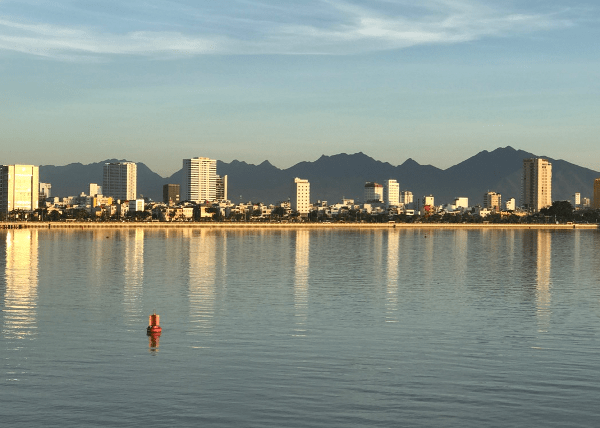
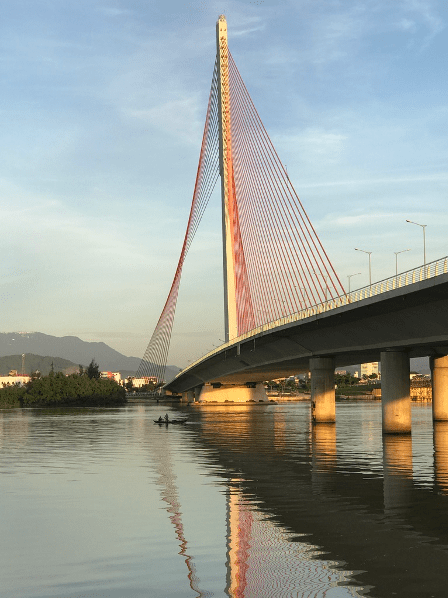
Vietnam’s tourism sector was hit by a second outbreak of Coronavirus on 24th July in Danang, above, but its stock market has rebounded 7% in August
However, despite some anxiety over further spread during the next few weeks, there are glimmers of positive news. Retail figures, particularly for online sales, show that consumer spending is increasingly optimistic. The stock market has risen by more than 6% in the first half of August, and Vietnam’s trade surplus has risen to US$6bn in the first half of the year, providing further strength to the foreign reserves and economy as a whole.
Let’s also not forget the country’s relatively quick recovery following the national shutdown in March. If the government’s handling can continue to ensure public confidence as it did before with closed borders, testing, tracking and tracing, hotspot isolating and caring for patients in the specialist National Hospital for Tropical Diseases, then tourism and domestic spending are likely to bounce back again. In the end, Vietnam’s battle against COVID-19 boils down to its people pulling together, taking ownership and making it their duty to follow the government’s guidelines and rally against the virus as a matter of national security. In the long run, we believe businesses with sustainable strategies will benefit from this type of spirit and domestic consumer behaviour.
So, although Gold may remain as an attractive investment opportunity for investors at this time, including the domestic investors among Vietnam’s 100 million population, the true gold may lie hidden in markets such as Vietnam. The country has decades of multi-generational growth ahead of it, and through active managers it is possible to search out investment opportunities that tread gently with respect to the environment, make sustainable compounding returns and contribute to society as a whole.
In the same way that Gold is a tool for diversification, so is selecting geographies to invest in that may not be so familiar. Although buying ETFs may, on the surface, appear to be an easy way to get quality diversification, or buying into a large global fund that might have some exposure to a market of interest, another more strategic way is to buy directly into a single country fund. Vietnam is a rapidly growing market and is gaining an increasing following amongst investors. Despite its own stock markets being less than two decades old, there are three country funds that are listed on the London Stock Exchange. Vietnam Holding (LSE: VNH) is perhaps the nimblest. It is a focussed portfolio of US$120 million in assets, with a strong pedigree in responsible investing.
Vietnam Holdings has been a signatory of the United Nation’s Principles for Responsible Investment (PRI) for over a decade now, and has always considered environmental, social and governance (ESG) as an integral part of its investment process, which is why we are so proud to reveal the latest PRI assessment of A, A* and A. These scores prove the Fund’s commitment to responsible investing, and the long-term outperformance against the indices and ETFs show that there is value in investing in an actively managed fund. Later this year Vietnam will become the largest constituent of the MSCI Frontier Market, and perhaps in a few years part of the MSCI Emerging Market Index. It may be a good time to explore the opportunity now, take the road less travelled, but do so with a purposeful aim of Investing Better.
The author, Craig Martin, is Chairman and Managing Director of Dynam Capital, a Guernsey regulated fund manager. Dynam is the manager for Vietnam Holding (LSE: VNH) a main board London listed closed-end fund focussed exclusively on investing in equities in Vietnam. Dynam has an experienced team of 12 people on the ground in Vietnam. VNH can be bought through your stock-broker, or wealth manager. See www.vietnamholding.com for more information.
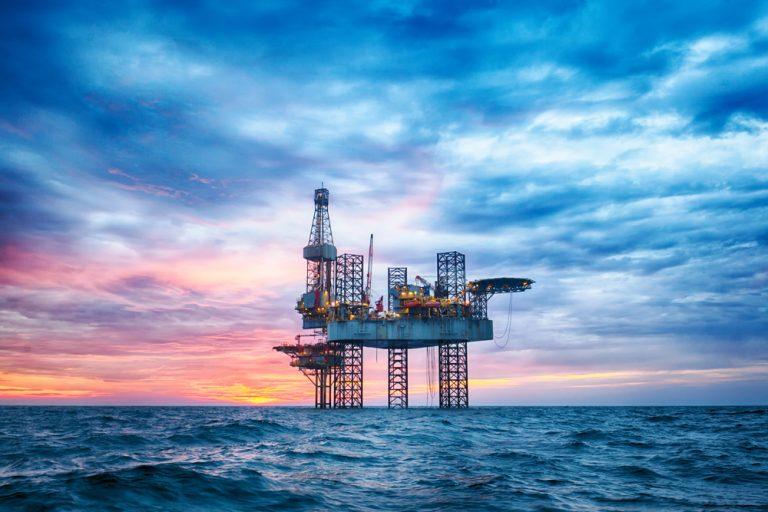
Shares in Premier Oil (LON: PMO) plummeted 25% after the group posted a $672m loss.
Due to weak oil prices, the oil company’s revenue fell from $883.1m in 2019 to $530.6m for the first half of 2020.
“With a strengthened balance sheet and strongly rising near-term production, Premier will be well placed to start reinvesting in some of its growth projects to deliver value for all of its stakeholders,” said Premier Oil in a statement.
When markets opened, shares in the group dropped over 24%.
The group has said that it plans to preserve cash over the second half of the year.
Chief executive Tony Durrant said: “We have taken decisive action to safeguard our people and our assets. “We have reduced our expenditure which, together with our hedging programme and the continued underlying performance of our assets, resulted in us generating free cash flow for the period, despite the collapse in commodity prices. ”
“The BP acquisitions and our proposed long-term refinancing will position Premier to benefit from materially rising near-term production, additional free cash flow generation and a strengthening balance sheet, against a backdrop of a recovering oil price,” he added.
Premier Oil (LON: PMO) shares are trading -23.18% at 26,11 (1358GMT).
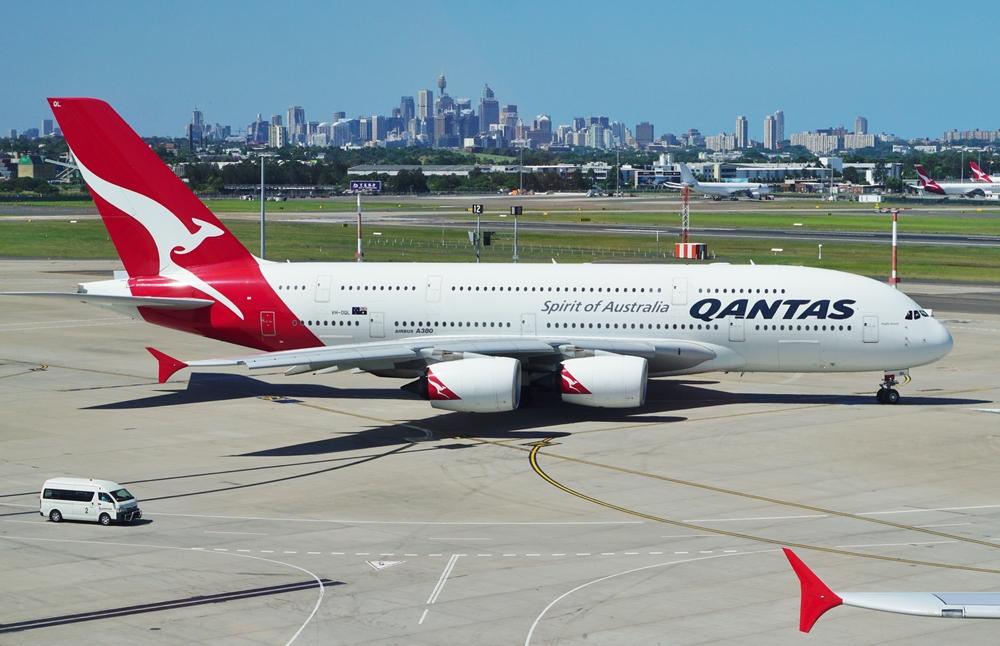
Qantas (ASX: QAN) airline has reported a record loss of almost A$2bn (£1bn) – the worst financial loss in over a century.
As travel restrictions have hit the global airline sector, the Australian airline also warned the loss to continue into the next year.
Alan Joyce, the chief executive, said in a statement: “The impact of Covid on all airlines is clear. It’s devastating and it will be a question of survival for many. Recovery will take time and it will be choppy.”
Earlier this year, Qantas Group announced plans to axe 6,000 jobs – a fifth of the airline’s workforce The first 4,000 of these job losses are expected to be finalised by the end of August.
Joyce attacked the Australian government for closing borders. Following the results, there have been renewed calls for a government rescue package for the sector.
Transport Workers Union’s national secretary, Michael Kaine, said: “The shocking Qantas losses are an indication of just how sick our industry is. It must surely be only a matter of time before Qantas follows Virgin in requesting help from the federal government to stay alive.”
Frasers Group (LON: FRAS), formerly Mike Ashley’s Sports Direct, has announced preliminary results today – revealing a 20% slide in profits.
Delayed by a week, the lockdown store closures has led to a hit in sales for the group where pre-tax profits fell down from £179.2m to £143.5m.
Despite the fall in profits, revenue grew from £3.7bn in 2019 to £3.96bn – a rise of 6.9%. The rise in revenue was due to opening of new stores and Frasers Group’s purchase of Sofa.com and Jack Wills.
“We continued to follow the further demise of Debenhams during the year with much frustration and disappointment as it entered administration for a second time,” said the company in a statement.
“We raised our concerns and gave numerous warnings about what we were seeing there, much of which has materialised. Our offers of help were repeatedly disregarded and it is scandalous that this business has now been in administration twice.”
Shares in Frasers Groups (LON: FRAS) are trading +2.42% at 313,20 (0821GMT).






 For decades infrastructure projects have been subject to environmental impact assessments, and the related project finance instruments have been subject to key guidelines and principles, such as the Equator principles built on existing environmental and social policy frameworks established by the International Finance Corporation (part of the World Bank) and other multi-lateral agencies such as the Asian Development Bank. The trend to bring wider awareness of the issues relating to sustainability to retail investor portfolios is welcome.
The ‘E’ related ESG themes were marginal in the 1980s, despite an increasing awareness of the threat to the Ozone hole through green-house gases: back then, if we worried much, it was more about the release of chlorofluorocarbons (CFCs) rather than the levels of carbon di-oxide (C02). On the whole, few column inches were taken up with such broader ESG concerns, other than perhaps on the part of a small group of green-political thinkers. The 1990s saw more focus on recycling of paper and bottles, and concerns on deforestation, and the ‘G’ in ESG got increased attention when the Cadbury report on Corporate Governance was published, pushing for the separation of the roles of Chairman and CEO in UK listed companies.
Arguably, it wasn’t until Al Gore failed in the 2000 US presidential bid and then turned his attention to climate change, culminating in the 2006 release of ‘An Inconvenient Truth’, that awareness increased.
The film and its associated images of Polar Bears stranded on melting blocks of ice, nudged more mainstream thinkers, voters and influencers, to think long and hard about the world they wanted to leave behind for the grandkids.
Then came Blue Planet, and the shocking episode in its sequel, Blue Planet II, when the world saw the prevalence of plastic waste in the oceans through the eyes and soft, authoritative words of David Attenborough. ‘Woke’ was added to the dictionary in 2017, the same year that Blue Planet II was released.
Greta Thunberg finally tipped the balance in late 2018. By mid-2019, more investors and entrepreneurs alike were embracing ways to reduce plastic waste, embrace the circular economy, and re-orient their thinking and investing style to accommodate sustainability. The EU has now produced rules on reporting (reference to the EU Taxonomy on climate change mitigation will become mandatory in annual reports in 2021), and so investors can be sure the themes of ESG are front-and-centre at the mind of fund managers, institutional investors and allocators of capital.
For decades infrastructure projects have been subject to environmental impact assessments, and the related project finance instruments have been subject to key guidelines and principles, such as the Equator principles built on existing environmental and social policy frameworks established by the International Finance Corporation (part of the World Bank) and other multi-lateral agencies such as the Asian Development Bank. The trend to bring wider awareness of the issues relating to sustainability to retail investor portfolios is welcome.
The ‘E’ related ESG themes were marginal in the 1980s, despite an increasing awareness of the threat to the Ozone hole through green-house gases: back then, if we worried much, it was more about the release of chlorofluorocarbons (CFCs) rather than the levels of carbon di-oxide (C02). On the whole, few column inches were taken up with such broader ESG concerns, other than perhaps on the part of a small group of green-political thinkers. The 1990s saw more focus on recycling of paper and bottles, and concerns on deforestation, and the ‘G’ in ESG got increased attention when the Cadbury report on Corporate Governance was published, pushing for the separation of the roles of Chairman and CEO in UK listed companies.
Arguably, it wasn’t until Al Gore failed in the 2000 US presidential bid and then turned his attention to climate change, culminating in the 2006 release of ‘An Inconvenient Truth’, that awareness increased.
The film and its associated images of Polar Bears stranded on melting blocks of ice, nudged more mainstream thinkers, voters and influencers, to think long and hard about the world they wanted to leave behind for the grandkids.
Then came Blue Planet, and the shocking episode in its sequel, Blue Planet II, when the world saw the prevalence of plastic waste in the oceans through the eyes and soft, authoritative words of David Attenborough. ‘Woke’ was added to the dictionary in 2017, the same year that Blue Planet II was released.
Greta Thunberg finally tipped the balance in late 2018. By mid-2019, more investors and entrepreneurs alike were embracing ways to reduce plastic waste, embrace the circular economy, and re-orient their thinking and investing style to accommodate sustainability. The EU has now produced rules on reporting (reference to the EU Taxonomy on climate change mitigation will become mandatory in annual reports in 2021), and so investors can be sure the themes of ESG are front-and-centre at the mind of fund managers, institutional investors and allocators of capital.
 For decades infrastructure projects have been subject to environmental impact assessments, and the related project finance instruments have been subject to key guidelines and principles, such as the Equator principles built on existing environmental and social policy frameworks established by the International Finance Corporation (part of the World Bank) and other multi-lateral agencies such as the Asian Development Bank. The trend to bring wider awareness of the issues relating to sustainability to retail investor portfolios is welcome.
The ‘E’ related ESG themes were marginal in the 1980s, despite an increasing awareness of the threat to the Ozone hole through green-house gases: back then, if we worried much, it was more about the release of chlorofluorocarbons (CFCs) rather than the levels of carbon di-oxide (C02). On the whole, few column inches were taken up with such broader ESG concerns, other than perhaps on the part of a small group of green-political thinkers. The 1990s saw more focus on recycling of paper and bottles, and concerns on deforestation, and the ‘G’ in ESG got increased attention when the Cadbury report on Corporate Governance was published, pushing for the separation of the roles of Chairman and CEO in UK listed companies.
Arguably, it wasn’t until Al Gore failed in the 2000 US presidential bid and then turned his attention to climate change, culminating in the 2006 release of ‘An Inconvenient Truth’, that awareness increased.
The film and its associated images of Polar Bears stranded on melting blocks of ice, nudged more mainstream thinkers, voters and influencers, to think long and hard about the world they wanted to leave behind for the grandkids.
Then came Blue Planet, and the shocking episode in its sequel, Blue Planet II, when the world saw the prevalence of plastic waste in the oceans through the eyes and soft, authoritative words of David Attenborough. ‘Woke’ was added to the dictionary in 2017, the same year that Blue Planet II was released.
Greta Thunberg finally tipped the balance in late 2018. By mid-2019, more investors and entrepreneurs alike were embracing ways to reduce plastic waste, embrace the circular economy, and re-orient their thinking and investing style to accommodate sustainability. The EU has now produced rules on reporting (reference to the EU Taxonomy on climate change mitigation will become mandatory in annual reports in 2021), and so investors can be sure the themes of ESG are front-and-centre at the mind of fund managers, institutional investors and allocators of capital.
For decades infrastructure projects have been subject to environmental impact assessments, and the related project finance instruments have been subject to key guidelines and principles, such as the Equator principles built on existing environmental and social policy frameworks established by the International Finance Corporation (part of the World Bank) and other multi-lateral agencies such as the Asian Development Bank. The trend to bring wider awareness of the issues relating to sustainability to retail investor portfolios is welcome.
The ‘E’ related ESG themes were marginal in the 1980s, despite an increasing awareness of the threat to the Ozone hole through green-house gases: back then, if we worried much, it was more about the release of chlorofluorocarbons (CFCs) rather than the levels of carbon di-oxide (C02). On the whole, few column inches were taken up with such broader ESG concerns, other than perhaps on the part of a small group of green-political thinkers. The 1990s saw more focus on recycling of paper and bottles, and concerns on deforestation, and the ‘G’ in ESG got increased attention when the Cadbury report on Corporate Governance was published, pushing for the separation of the roles of Chairman and CEO in UK listed companies.
Arguably, it wasn’t until Al Gore failed in the 2000 US presidential bid and then turned his attention to climate change, culminating in the 2006 release of ‘An Inconvenient Truth’, that awareness increased.
The film and its associated images of Polar Bears stranded on melting blocks of ice, nudged more mainstream thinkers, voters and influencers, to think long and hard about the world they wanted to leave behind for the grandkids.
Then came Blue Planet, and the shocking episode in its sequel, Blue Planet II, when the world saw the prevalence of plastic waste in the oceans through the eyes and soft, authoritative words of David Attenborough. ‘Woke’ was added to the dictionary in 2017, the same year that Blue Planet II was released.
Greta Thunberg finally tipped the balance in late 2018. By mid-2019, more investors and entrepreneurs alike were embracing ways to reduce plastic waste, embrace the circular economy, and re-orient their thinking and investing style to accommodate sustainability. The EU has now produced rules on reporting (reference to the EU Taxonomy on climate change mitigation will become mandatory in annual reports in 2021), and so investors can be sure the themes of ESG are front-and-centre at the mind of fund managers, institutional investors and allocators of capital.