
Bank of England: no-deal Brexit could lead to recession
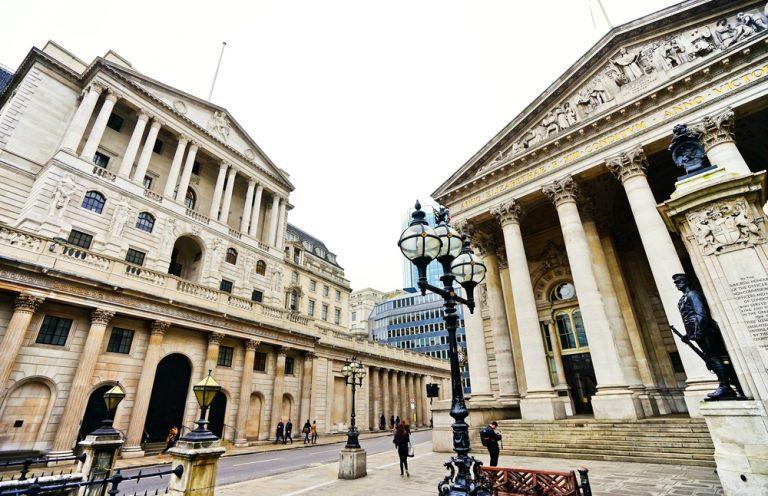
The Bank of England has warned that leaving the EU in a no-deal scenario could lead to a recession worse than the 2008 financial crisis.
In the bank’s Brexit analysis, it has found that a disorderly departure from the EU would send the pound plunging by a quarter and immediately shrink the economy by 8%.
The latest figures are not what the Bank of England necessarily expects but is the worst-case scenario if the UK crashes out without a deal.
The news comes after Philip Hammond’s Brexit analysis, where the Chancellor admitted that the UK would be worse off in all Brexit scenarios, however, Theresa May’s option is the best bet.
Following a no-deal Brexit, house prices are expected to crash 30%, inflation could rise to 6.5% and unemployment in the UK could increase from 4.1% to about 7.5%.
The bank has come under fire for creating hysteria but Carney insists that there is a difference between a forecast and scenario.
Bank of England governor Mark Carney said: “These are scenarios not forecasts. They illustrate what could happen not necessarily what is most likely to happen.”
“Taken together the scenarios highlight that the impact of Brexit will depend on the direction, magnitude and speed of the effect of reduced openness of the UK economy.”
The latest analysis has also been seen as a final attempt to scare MPs voting in support of the prime minister’s Brexit deal. May will no doubt welcome Carney’s worst-case scenario to garner support for her deal.
Andrew Sentance, who is a former BoE interest rate setter, challenged the bank over the analysis.
“Does anyone really believe any of this as a real-world scenario? The Bank of England is undermining its credibility and independence by giving such prominence to these extreme scenarios and forecasts,” he said.
As well as a disorderly departure from the EU, the bank also considered a “close” relationship between the UK and EU, and scenario of a “less close” relationship.
UK Banks
The Bank of England also conducted stress tests on 7 major UK lending institutions. The banks were put through a series of scenarios that were 2.5 times worse than the BoE’s most negative Brexit outcome. All banks passed including RBS, Barclays (LON: BARC) and HSBC (LON: HSBA).
Marc Kimsey, Equity Trader at Frederick & Oliver, said on the latest Brexit analysis: “The takeaway is somewhat bitter-sweet. The banking sector’s efforts to get Brexit-fit are admirable but the thought of it being tested so rigorously 10 years on from the last disaster draws a wince.”
FTSE 100 hangs in the red following Brexit analysis

The FTSE 100 has been largely in the red today, currently trading -10.87 points (1615GMT) .
Post-Brexit economy
Stocks opened up 0.29% to 7,037.2 in opening trade but the UK blue-chips fell in afternoon trade after government analysis found that that UK economy would be worse off in every Brexit scenario. Phillip Hammond revealed today that Theresa May’s suggested deal, which was supported by EU leaders over the weekend, will leave the UK economy “slightly smaller”. The Chancellor went on to say that the proposed deal was the least harmful of all scenarios. “If you look at this purely from an economic point of view, yes there will be a cost to leaving the European Union because there will be impediments to our trade,” he said. Following the news, the FTSE 100 lost nine points to 7,008. Rain Newton-Smith, the CBI chief economist, said: “Politicians of all parties should speak to businesses in their constituency to hear about the impact a bad Brexit will have on them and their workforce. And the longer a ‘no deal’ scenario remains possible, the more corrosive the impact on jobs and investment plans.”Telford Homes (LON: TEF)
Shares in housebuilder Telford Homes increased 3.2% to 309.00 in trading today after revealing positive interim results. The company reported first-half profits to increase to £10.1 million, an increase of 16%. Total revenue grew by 31% to £129.6 million. Jon Di-Stefano, the chief executive, said: “Telford Homes made pleasing progress during the first half of the financial year, despite an increasingly uncertain economic and political backdrop.” “Our strategic shift towards purpose-built rental homes sold to institutional investors continues to be beneficial to our risk profile and growth potential whilst also being well timed in terms of the changing requirements of our typical customers in London.”Amedeo Resources (LON: AMED)
Amedeo Resources was the biggest faller of the day, with shares crashing 77.78% to 2.62p on Wednesday. Shares plunged after firm proposed cancelling its shares. “The Directors consider the Cancellation to be in the best interest of Shareholders, after considering, amongst other things, the costs of maintaining trading in the Ordinary Shares on AIM and the limited liquidity in the Ordinary Shares,” said Amedeo in a statement.Brexit: Nestle struggles to stockpile as warehouses “almost full”
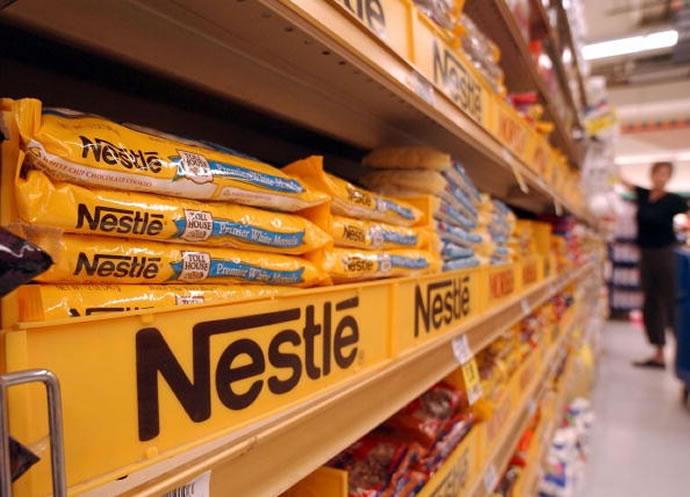
Nestle (SWX: NESN) has warned that the consequences of a no-deal Brexit will be “very severe”.
The owner of brands including Nescafe revealed that whilst it was stockpiling ingredients in the event of a no-deal scenario, warehouses for frozen and chilled food are almost full.
According to Ian Wright, the chief executive of the Food and Drink Federation, warehouses for storing ingredients were “for all practical purposes booked out at the moment”.
“We don’t know if there are products in those places or people have booked the space to be careful or for production,” he said to theBusiness, Energy and Industrial Strategy Committee on Wednesday.
“Some innovative providers are doing the Airbnb of warehousing which is very interesting, but for big and medium-sized businesses, that just won’t work.”
The news comes as new analysis has revealed that the UK will be worse off in every Brexit-related scenario. The worst outcome, however, will be a no-deal.
It is for this reason that Wright is in favour of Theresa May’s agreement, which has been declared by Philip Hammond as the best option.
“The political declaration is excellent, but it is a list of new year’s resolutions. We don’t know if what we see now will remain intact.”
“We like what we have now. No deal is infinitely worse than anything we could imagine, therefore the deal on the table is better than no deal, but is not as good as the status quo,” he added.
“If you look at this purely from an economic point of view, yes there will be a cost to leaving the European Union because there will be impediments to our trade,” said Hammond on Wednesday.
The deal that will be put to the vote in December will “absolutely minimise those costs,” he added.
To persuade MPs and the public to support the Brexit deal, May has travelled to Scotland.
Oil prices fall amid OPEC output cut uncertainty
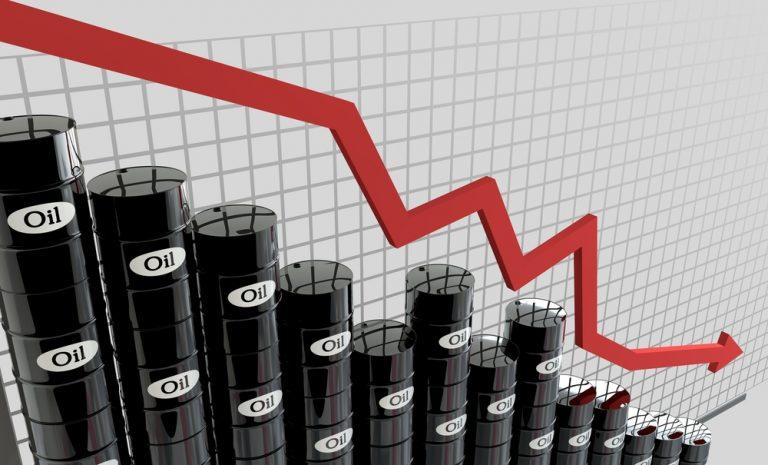
Oil prices fell to around $60 a barrel on Wednesday, on the back of an increase in U.S inventories and concern over whether OPEC will agree on further production cuts.
The Organisation of the Petroleum Exporting Countries (OPEC) is set to meet next week to agree upon potential output cuts.
The 15-nation organisation includes countries such as Iraq, Saudi Arabia, Nigeria, Kuwait and Venezuela.
It has been estimated that the OPEC constituent nations account for 44% of global oil production.
Thus far, Saudi Arabia has cast doubts over the likelihood of a cut after it said it would not act alone in cutting production. Notably, Saudi Arabia is the world’s leading oil exporter.
Last week, oil prices rebounded after Saudi Arabia pledged to limit production by 500,000 barrels per day in December.
However, latest comments from Saudi Arabian officials cast doubts on whether an output cut will be agreed upon.
Ultimately, the outcome of the upcoming OPEC meeting “remains clouded by uncertainty,” remarked Stephen Brennock of oil broker PVM. “Elsewhere, a glut of stored oil in the U.S. shows no sign of waning.”
Last week U.S President Donald Trump took to twitter to thank Saudi Arabia for helping to prompt a reduction in oil prices ahead of thanksgiving.
Trump tweeted the following:
https://platform.twitter.com/widgets.jsAll eyes will be on OPEC next week, with the organisation set to convene in Vienna on December 6th.Oil prices getting lower. Great! Like a big Tax Cut for America and the World. Enjoy! $54, was just $82. Thank you to Saudi Arabia, but let’s go lower!
— Donald J. Trump (@realDonaldTrump) November 21, 2018
What to expect from the FTSE reshuffle
Next week will see the final reshuffle of the FTSE for 2018, where all eyes will be on which big names leave or join the blue-chip index.
FTSE 100
For the FTSE 100, the most likely to drop off the list is the Royal Mail (LON: RMG). The postal group has struggled this past quarter after a shock profit warning in October and drop in market value. Expected profit dropped from £694 million to £500-550 million. Whilst the share price has slightly recovered, it will need to increase another 12% in the next week in order to avoid being dropped from the FTSE 100. Connor Campbell from Spreadex told UK Investor Magazine: “It’s been quite the year for Royal Mail. Having struck its highest levels since the start of 2014 back in May, it is now looking like it is going to crash out of the FTSE 100, the British institution’s out-dated letters division seeing its struggles only increase in a post-GDPR world.” “Just from a common-sense perspective, it makes sense; regardless of the online-shopping led growth in parcel volumes, the letters side of things is only going to exponentially shrink in the next decade or so.” Dubbed to replace the Royal Mail is insurance company Hiscox (LON: HSX), whose share price has more than doubled in the past five years.FTSE 250
Funding Circle (LON: FCIF) and Aston Martin (LON: AML) are likely to join the FTSE 250 index following a disappointing debut onto the stock market. Despite Aston Martin shares falling below IPO price, the group remains positive for the future. “We’ve taken 105 years to get to an IPO [initial public offering]. I don’t think we’ll worry about what the shares are doing initially. We’ll always look over the longer term,” said the group’s chief executive. Groups that face getting bumped from the FTSE 250 include Thomas Cook, On the Beach, Premier Oil, Spire Healthcare, Civitas Social Housing and Keller Group. Thomas Cook (LON: TCG) issued a second profit warning in two months this week, sending shares down 30%. “Our final result is expected to be around £30 million lower than previously guided, due to a number of legacy and non-recurring charges to underlying EBIT. Within this, profit in our tour operating business fell £88 million as the sustained heatwave restricted our ability to achieve the planned margins in the last quarter,” said the group’s chief executive, Peter Fankhauser.Restaurant Group shareholders agree on £559m Wagamama takeover
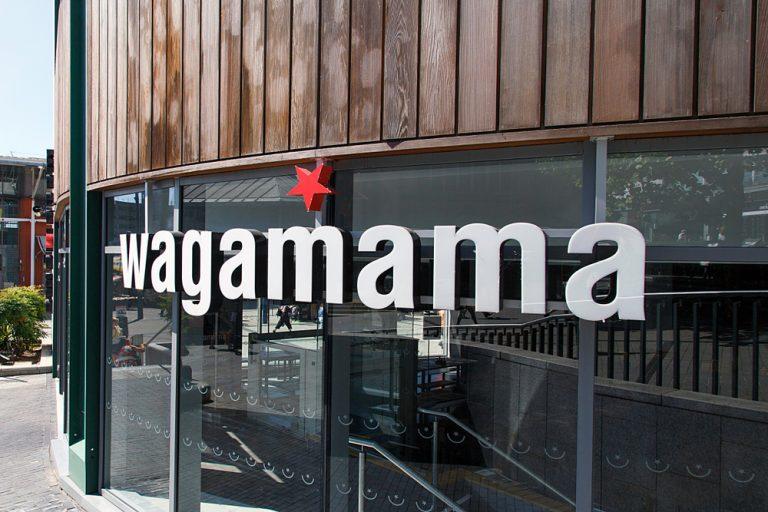
Restaurant Group (LON:RTN) shareholders approved plans to acquire Wagamama, as part of a £559 million takeover.
Restaurant Group already owns culinary chains such as Franke & Benny’s and Garfunkels.
Some shareholders had held reservations over the deal, namely the price and the impact on debt levels for the group.
The deal is set to be financed in part through a £315 million cash call on group shareholders.
Despite some initial opposition, shareholders approved the deal noting Wagamama’s comparatively strong performance in an increasingly difficult trading climate for restaurants.
Well-known restaurant chains such as Prezzo and Jamie’s Italian have closed various underperforming sites in recent months, in a bid to streamline costs.
Wagamama has 196 restaurants, 133 of which are in the UK. Other locations include The Middle East, New Zealand and Croatia.
Back in October, when the deal was announced, Restaurant Group Chief Executive Andy McCue said:
“Wagamama is a fantastic brand, with a market leading pan-Asian proposition, which has consistently outperformed the casual dining market in recent years,”
“This transaction is an exciting and transformative opportunity to create a business which can pursue a truly multi-pronged growth strategy and create substantial value for our shareholders.”
Shares in Restaurant Group are currently down -11.40% as of 11:30AM (GMT).
Bezant Resources announces new mining study, shares rise

Bezant Resources shares (LON:BZT) rose on Wednesday after the mining company announced a new study.
The firm announced it had commissioned a mining study by Mining Plus to evaluate its mining options in high grade areas at its Mankayan copper-gold project.
Laurence Read, Chief Executive of Bezant Resources, commented on the study:
“As CEO, I am pleased that we shall be progressing the Mankayan copper gold project following the results of extensive in-house geological and engineering work over the course of the last year.
“Our understanding of Mankayan has grown significantly and the potential for exploiting high grade resource areas needs to be independently examined. While the current, 20 Mtpa economic scenario for Mankayan is highly robust and comparable to a series of successful, currently operating, third party projects we believe that there may well be a viable alternate mining system that can be implemented within the Lift 1 area of the existing model.
“Mankayan is a significant potential source of long-term copper gold-supply and the results of the new Mining Study may allow Bezant to pursue new avenues for the project if production scenarios, with reduced upfront capital expenditure, can be determined.
“Mining Plus is a major, internationally recognised mining services provider who have successfully worked with a host of mining companies to deliver projects into first production and I look forward to working with them.”
Bezant Resources was founded back in 1994. The company is listed on the junior AIM-market of the London Stock Exchange.
Its assets include the Mankayan project as well as the Eureka Project, both located in the Philippines.
Shares rose on the back of the announcement.
Shares in Bezant Resources are currently +9.52% as of 11:08 (GMT), as investors react to the news.
De la Rue feels loss of British passport deal as profits fall 36%
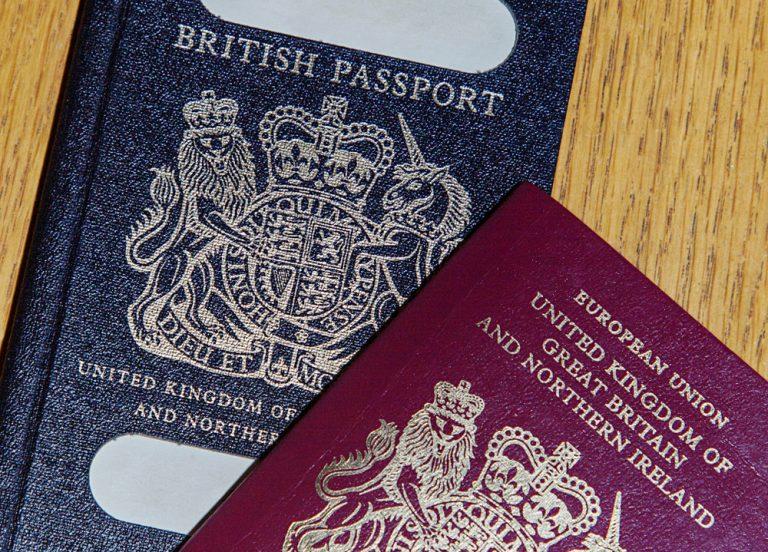
Adjusted profits at De La Rue fell 36% in the six months to 29 September compared to the same period a year earlier.
In the first results since losing the contract to make British passports, the company said it has had to strategically review its operations.
Revenues increased by 5% to £257.6 million.
The group’s contract for British passports, which it has had since 2008 and is worth £400 million, will end in 2019. Replacing the company will be the Franco-Dutch group Gemalto.
Martin Sutherland, the group’s chief executive, said: “Over the last six months we have conducted a thorough review of our strategy and market positions. In the light of the UK passport decision, we have concluded that we will refocus our identity business on the supply of higher margin security features and components.”
“We maintain a strong order book and pipeline which provides good visibility for the second half of this year and into next year. With good revenue coverage from the group’s 12-month order book of £365 million and based on the orders planned for production and shipment in the second half, we are confident that we will meet our expectations for the full year.”
The decision to end De La Rue’s contract was a controversial one. The group employs 600 people at the printing plant in Gateshead.
“We have a very skilled, proud workforce in Gateshead and I am going to have to face those workers, look at them in the whites of the eyes and try to explain to them why the British government thinks it’s a sensible decision to buy French passports not British passports,” said Sutherland when the decision was announced earlier this year.
“I would like to invite Theresa May or Amber Rudd to come to my factory and explain to my dedicated workforce why they think this is a sensible decision to offshore the manufacture of a British icon,” he added.
Shares in De La Rue are trading +5.74% (1058GMT).
Hammond: All Brexit scenarios will leave UK worse off
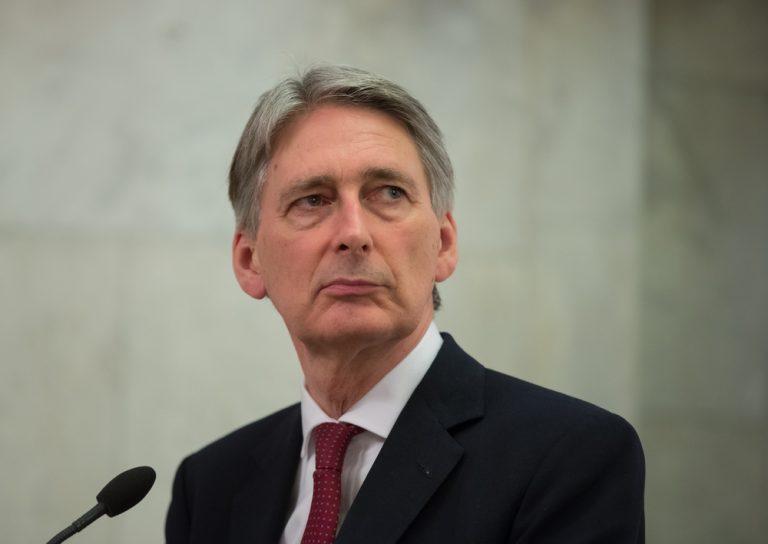
Philip Hammond has said that whilst all possible Brexit scenarios will leave the UK worse off economically, the prime minister’s deal is the best option.
The Chancellor told BBC Radio 4’s Today programme on Wednesday that after analysing the effects of the proposed Brexit deal, the UK economy will be “slightly smaller”.
“If you look at this purely from an economic point of view, yes there will be a cost to leaving the European Union because there will be impediments to our trade,” he said.
The deal that will be put to the vote in December will “absolutely minimise those costs.”
“The economy will be slightly smaller in the prime minister’s preferred version,” he added.
The vote will take place in Parliament on 11 December, where many MPs have said they plan on rejecting the deal. Hammond said that if Theresa May’s deal is voted down, the UK will be in “uncharted political territory”.
“We will then have to sit down as a cabinet and a government and decide where to go on the basis of the vote, what we’ve seen in the vote and who has voted in which way because clearly we live in a democracy, parliament is sovereign,” he said.
“If parliament makes a decision to reject the prime minister’s proposal, we will have to consider very carefully how to proceed.”
“All of the other options have disadvantages and we have to look not only at the economy but also the need to heal a fractured nation. We will not be successful if we remain fundamentally divided and fractured on this issue.”
Until the vote, the prime minister will travel to different areas within the UK to persuade MPs and the general public to vote for the deal.
She will say during her visit to Glasgow: “We will be free to strike our own trade deals around the world, providing even greater opportunity to Scottish exporters.”
N4 Pharma shares rally after research update
N4 Pharma shares (LON:N4P) rallied on Wednesday after the firm updated investors on its research findings.
The pharmaceutical company said that it had conducted further research regarding its Nuvec delivery system.
Adding to previous findings, the company said that upon further analysis of its pDNA OVA results, this revealed demonstrated the immune response observed was “sufficient to have produced strong levels of antibodies specific for OVA.”
Last month, N4 Pharma confirmed that findings from its Nuvec product research had revealed a ‘clear adjuvent effect’ to deliver an immune response to mRNA and pDNA OVA antigens.
Nigel Theobald, CEO of N4 Pharma commented:
“These results are once again another positive step forward for our Nuvec(R) delivery platform. The data now shows Nuvec(R) is capable of producing specific and relevant strong levels of antibodies required for the development of vaccines and cancer treatments.
“We will continue to provide updates as we add to our already encouraging data package to aid our commercial collaboaration discussions. The production of a robust data package using the test antigen Ovalbumin provides compelling evidence of the potential for Nuvec(R) to be an effective delivery system for a potential partner’s specific DNA or RNA antigen. ”
N4 Pharma is a specialist pharmaceutical firm that develops delivery systems for vaccines and cancer treatment.
Shares in the company are currently +28.95% as of 10:23AM (GMT).