
Uber fined by UK and Dutch data regulators

Uber has been fined £385,000 by the Information Commissioner’s Office.
The car-sharing service was fined after hackers were able to steal the data of 2.7 million UK customers in 2016.
The ICO has said that the data breach, which allowed hackers to steal customers full names, addresses and phone numbers, were “avoidable data security flaws”.
Steve Eckersley, who is the director of investigations at the ICO, said: “This was not only a serious failure of data security on Uber’s part but a complete disregard for the customers and drivers whose personal information was stolen.”
The ICO said: “Uber US did not follow the normal operation of its bug bounty programme. In this incident Uber US paid outside attackers who were fundamentally different from legitimate bug bounty recipients: instead of merely identifying a vulnerability and disclosing it responsibly, they maliciously exploited the vulnerability and intentionally acquired personal information relating to Uber users.”
The group was also fined by data regulators in Holland after the same hack affected customers in The Netherlands. Uber had been fined €600,000 (£532,000) by Holland authorities.
In the US, Uber paid a fine of $148 million.
Uber had paid the hackers $100,000 (£78,400) to destroy the data that was stolen.
The company said in a statement: “We’re pleased to close this chapter on the data incident from 2016. As we shared with European authorities during their investigations, we’ve made a number of technical improvements to the security of our systems both in the immediate wake of the incident as well as in the years since.”
“We’ve also made significant changes in leadership to ensure proper transparency with regulators and customers moving forward. Earlier this year we hired our first chief privacy officer, data protection officer, and a new chief trust and security officer. We learn from our mistakes and continue our commitment to earn the trust of our users every day.”
AJ Bell reveals IPO valuation of £675m
AJ Bell has revealed that its upcoming stock market flotation could value the stockbroker at £675 million.
Previous estimates of £500 million have been increased as the new price range has been introduced at between £1.54 and £1.66 per share.
Shares in AJ Bell will be up for sale in December when the group floats on the London Stock Exchange.
“There has been significant interest in our IPO which reflects the potential for expansion in our market, the strength of our business model and our track record of sustainable growth,” said chief executive, Andy Bell.
“The application period for the IPO is due to open later today and our customers will be able to apply for shares via our investment platform where they will find the prospectus to help inform their decision.”
Last year, AJ Bell reported a 19% increase in revenues to £89.7 million. Pre-tax profit before tax was up 31% to £28.4 million.
“Our intention to float the business on the London Stock Exchange reflects both our historic achievements and our belief in how much more we can achieve,” said Bell.
“A listing offers us further reputational and commercial benefits that will support our growth plans.”
The firm said it will publish a prospectus later today. AJ Bell’s IPO advisor is Numis Securities.
London has had several disappointing London listings this year including Aston Martin and Funding Circle amid market volatility and Brexit fears, however, AJ Bell remains undettered and says now is an “appropriate time to bring the group to the public market”.
A banker who did not want to be named said of the Aston Martin and Funding Circle debuts: “This is brutal. The IPO market stinks for growth stocks which do not have an earnings track record.”
Pets at Home first-half profits crash 81%

Pets at Home announced on Tuesday morning that first-half profits have plunged by 81%. Despite this, the pet-product retailer and veterinary group has said the UK pet care market remains “resilient”.
Pre-tax profit for the six months through October dropped to £8 million, despite revenue growing 5.3% to £499.3 million. This figure is an 81% drop compared to the £40.8 million last year.
Following a review of its veterinary business, the company said that it recognised costs had been putting pressure on practices. Pets at Home has said it will offer a buy back and consolidate up to 55 of its 471 practices from joint venture partners. These joint venture partners are typically vets. 25 of these will be operated as company-managed practices and the rest may face closure.
The company’s interim dividend remains at 2.5p per share. For the full year, underlying pre-tax profit is predicted to be at least £80-85 million. Moreover, final dividend will be maintained at 7.5p per share.
Pets at Home will follow a new strategy to become a complete pet care company.
The company’s CEO, Peter Pritchard, has commented on the results: “Since becoming the Group CEO in May, I have had the opportunity to take stock of the wider group and shape my view of our future. What I have found fills me with confidence. Pets at Home is a healthy business and customers are loving what we do; responding to our price repositioning, investment in digital and the amazing service delivered by our vet partners. We have the ability to offer almost everything a pet owner needs, giving us opportunities our competitors simply don’t have. Which is why my vision is to develop a complete pet care company, uniting our retail and vet businesses.” “Reviewing our Vet Group has been a priority. I recognise we have grown at pace and more recently, have seen the pressure that rising costs and our fees are placing on this young business. We will need to recalibrate the business to deliver more measured growth, whilst maintaining our plan to generate significant cash profits.” “We are focused on maximising our unique assets and delivering a plan for sustainable cashflow and profit growth. Given the success of the changes we have made in Retail, I’m confident we can do this.” Earlier in May, Pets at Home reported a 17% drop in pre-tax profits in its full-year results. Clear this drop was exacerbated as the company entered the first half of the following year. Tuesday’s stock market headlines also include Thomas Cook shares plunging on a profit warning. At 09:35 GMT today, shares in Pets at Home Group plc (LON:PETS) were trading at -0.61%.Thomas Cook shares plunge 30% on profit warning
Thomas Cook has issued a second profit warning in two months.
The package holiday provider has said that profits are expected to be £30 million lower than expected.
The heatwave had an impact over summer, where people put off booking holidays to stay in the UK. The mild winter is having the same effect for winter holiday bookings, which are down by 2% over Christmas.
The group’s airline business performed well and recorded profit growth of £35 million.
Earnings to the end of September will be £250 million.
On the profit warning, shares in Thomas Cook (LON: TCG) fell 30%.
“2018 was a disappointing year for Thomas Cook, despite achieving some important milestones in our strategy for transforming the business,” said the group’s chief executive Peter Fankhauser.
“After a good start to the year, we experienced a larger-than-anticipated decline in gross margin following the prolonged period of hot weather in our key summer trading period,” he added.
“Our final result is expected to be around £30 million lower than previously guided, due to a number of legacy and non-recurring charges to underlying EBIT. Within this, profit in our tour operating business fell £88 million as the sustained heatwave restricted our ability to achieve the planned margins in the last quarter.”
“The UK was particularly hard hit with very high levels of promotional activity coming on top of an already competitive market for holidays to Spain.”
“Despite the impact of the hot summer, our northern European tour operator achieved anear-record performance, albeit lower than that expected at the end of May. Meanwhile, our Group Airline delivered strong growth in customers and profit, benefiting from increasing capacity in a turbulent European aviation sec,” he added.
Shares in the group are currently trading -25.71% (0907GMT).
Greggs posts positive outlook, shares jump 14%
Greggs, the UK’s leading bakery retailer, released a trading update on Tuesday morning. With over 1,900 retail outlets across the country, the company has strengthened its performance over the past two months. As a result, shares have soared up this morning, currently trading at +14.21%.
In the eight weeks to 24 November 2018, total sales grew by 9.0%. Additionally, company-managed shop like-for-like sales increased by 4.5% over the period. This like-for-like performance is above expectations and good cost control. As a result, the company has predicted that 2018 full-year profit before tax will be at least £86 million.
Shares in Greggs have jumped by over 14%.
The improved trading in the company’s third quarter has been strengthened by October and November trading. Compared to the same period last year, total sales are 0.8% higher (8.2% in 2017). Likewise, like-for-like sales in company-managed shops increased by 4.5% compared to the same period last year, which saw the figure itself at 4.5%. In the year-to-date, total sales have grown by 6.6% and like-for-like sales are 2.5% higher. Greggs considers the figures particularly encouraging because it further supports the strong sales from the same period last year. Equally, the company said that operational costs remain well controlled. The final few weeks of 2018 could have a significant impact on the results. Despite this, Greggs remains confident that full-year underlying profit before tax will be £86 million at the very least. Greggs, along with other food retailers, saw its sales increase over summer. During the summer heatwave, sales increased by 7.3%. It seems that the UK’s scorching summer of hot weather and World Cup success saw an increase in food sales. However, food sales did drop by 0.8% in the summer’s aftermath. The second half of 2018 has seen a general rise in sales for the company, as they had slowed down in February due to “challenging” economic conditions. At 08:51 GMT today, shares in Greggs plc (LON:GRG) were trading at +14.23%.Smallbone of Devizes faces collapse

The parent company of Smallbone of Devizes is on the brink of collapse.
Canburg, which owns the high-end kitchen maker, has filed a notice of intention to appoint accountancy firm Grant Thornton as the administrator.
The company makes high-end kitchens including for customers such as Dustin Hoffman, Liz Hurley and Oprah Winfrey.
If Canburg does fall into administration, it would be a blow to the Business Growth Fund, which was set up by high street lenders following the financial crisis.
The Business Growth Fund invested £8 million in Canburg in 2014 in return for a 20% stake.
The difficult trading environment has seen the collapse of multiple retailers over the past year.
Maplin and Toys R Us have both fallen into administration, whilst retailers including Marks & Spencer (LON: MKS) and Debenhams (LON: DEB) have closed multiple stores as part of a Company Voluntary Arrangements.
Aberdeen property market shows signs of recovery

A property law firm has found signs of recovery in the Aberdeen property market.
Aberdein Considine has said that an improving economy may have led to a strengthening housing market, where house prices have increased for the first time in two years.
The property law firm said that the city’s sales have risen by a “substantial” amount in Aberdeen compared to the same period in 2017. Property sales have increased by 7.9%.
The average price of a home in the Scottish city will cost you £199,834, compared to the £267,035 it will set you back in Edinburgh.
“The upturn in Aberdeen is great news after a prolonged difficult period, and is hopefully an indicator that we are beginning to see the northeast emerge from one of its most testing downturns,” said Jacqueline Law, the managing partner at Aberdein Considine.
“There’s still a huge amount of work to do to try and get back to where we were but news of the longer term investment plans for the area, and the oil price having hit 80 dollars this year, hopefully, provides the necessary level of optimism to help maintain the momentum.”
“Critically, the positive effects of a return to sustainable growth in the energy sector should filter through to the rest of the country, providing benefits for businesses across the supply chain.”
“The property market across Scotland is in reasonably rude health, and the fact that three areas have all breached the £250,000 price barrier demonstrates that there remains significant pent-up demand.”
“However, despite the current feel-good factor, we can’t ignore the ongoing turbulence in relation to Brexit, as well as the corresponding uncertainty this is causing to both businesses and homeowners.”
“That said, the energy industry is international in nature and the return of a stable and prosperous oil and gas industry should hopefully provide some insulation against the challenges the country might face over the next few months and years,” she added.
In October, it was predicted that the city would face a boom in the housing market thanks to new jobs in the oil industry.
CMA warns on PayPal-iZettle merger following investigation
The Competition and Markets Authority (CMA) has warned that a merger between PayPal (NASDAQ: PYPL) and iZettle could lead to a lower quality in service and drive up prices for customers.
The UK watchdog has been investigating the merger of PayPal and the Swedish startup and has concluded that the merger, which was completed in September, has taken away sufficient competition in the UK.
“Payment services markets are evolving so it’s particularly important to look to the future when we assess competition and the effects of mergers on customers,” said the CMA Executive Director, Andrea Gomes da Silva.
“While iZettle is a relatively recent entrant to payment services, it has already established a market-leading position in mobile point of sale devices and was well-placed to compete against PayPal in other emerging markets. That’s why we are concerned that PayPal’s takeover could lead to higher prices or reduce the quality of the services available to customers,” he added.
If the two groups are unable to address the results of the investigation, the CMA will carry out a second phase.
A PayPal spokesperson said: “PayPal continues to work cooperatively with the CMA as it conducts its review of the acquisition of iZettle. We are now working to address the CMA’s concerns and demonstrate to the CMA that the market will remain competitive, so we can move forward with integrating iZettle into our global platform.”
Whilst iZettle, which provides payment services for start-ups, announced plans to launch an IPO in Sweden, PayPal proposed plans to merge just three weeks later.
Northern Ireland businesses “cannot cope” with no-deal scenario
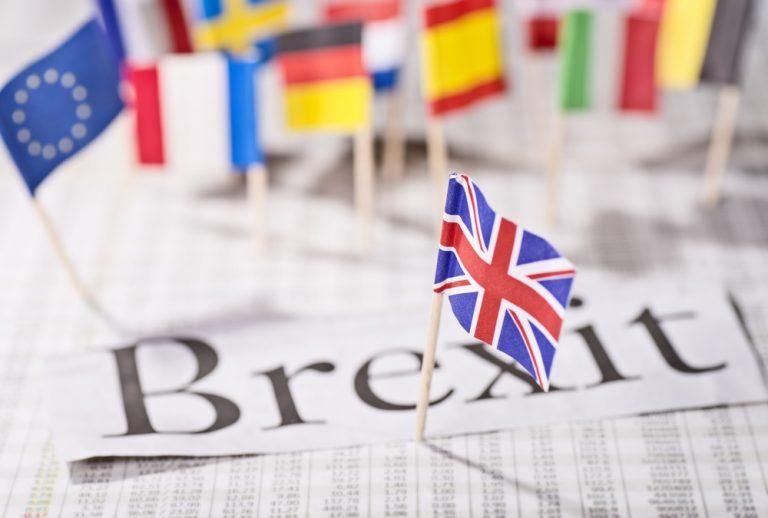
The director of the Confederation of Business Industry (CBI) has said that businesses in Northern Ireland will not be able to cope with a no-deal Brexit.
Angela McGowan said on Monday that leaving the EU without a deal is not an option for the state’s business sector and “no country in the world will want to invest in Northern Ireland if it is thrown out of Europe.”
McGowan plans to meet with Northern Ireland business leaders and the DUP this week.
The DUP has called Theresa May’s agreement “worse than no deal” and said that their 10 MPs will vote against the proposed EU deal in Parliament next month.
“The DUP has been very clear all along – we have core beliefs and principles and we’re sticking by those,” said DUP deputy leader Nigel Dodds.
McGowan hopes to persuade DUP MPs to vote in favour of the proposed deal.
The CBI director said on the possibility of a no-deal Brexit: “All I can do is do my best to put the honest evidence on the table that companies simply cannot cope with no deal.”
“We’re talking about people; neighbours; your relatives being put out of jobs – companies cannot cope with this uncertainty.”
“There is no country in the world [that] will want to invest in Northern Ireland if it is thrown out of Europe, has no access to markets and is in a state of chaos.”
“Nobody would wish that on their own region, so today we will simply be talking about what the business community needs, we hope the politicians listen, she said.
Business leaders in the City of London have also rallied behind the prime minister’s deal, saying a no-deal Brexit would be the worse option and would harm the UK economy.
Stephen Martin, the director general of The Institute of Directors said: “The deal the EU approved today provokes a wide range of reactions across the political spectrum, and indeed among business leaders, but the steer from our members is that avoiding no deal must be the main priority.”
May will warn MPs on Monday that rejecting the Brexit deal will lead to “division and uncertainty”.
Russia – Ukraine tensions intensify with naval incident

Tensions between Russia and Ukraine have been amplified with news that Russia had intercepted and seized three Ukrainian naval vessels on Sunday.
The incident occurred as the two Ukrainian gunboats and one tug were intercepted – with the tug being rammed by a Russian boat – in the Kerch Strait, off to coast of Crimea (which Russia annexed in 2014).
Accounts vary between the two sides, one stating that six sailors had been injured in the incident while the other states three. Ukrainian officials have branded the incident an “act of aggression”.
While the Kremlin has responded, declaring that the passage of Ukrainian vessels through Russian territorial waters was a “pre-planned provocation,” officials in Kiev retorted by saying that they had informed Russia of its plans to move vessels through the Sea of Azov to Mariupol.
There is conflict over the agreed legal precedent, with the current 2003 treaty accepted by most of the international community outlining the right of vessels from either nation to navigate in these waters. However, the 2014 referendum – ratified only by Moscow officials – states that this region and its surrounding waters are sovereign Russian territory.