
Pret A Manger faces lawsuit after ‘natural’ products contain pesticides
Pret a Manger has been sued in the US after the sandwich chain labelled bread as “natural” when they contained pesticides.
A lab test has found traces of glyphosate, an item used in weedkiller, in items including cookies, salads and bread from the chain.
The latest lawsuit comes following a teenager who was allergic to sesame died in 2016 after eating a sandwich from Pret that contained sesame but was not labelled.
Natasha Ednan-Laperouse was to France from the UK when she bought the sandwich from a Pret store at Heathrow Airport.
The Organic Consumers Association (OCA) is a plaintiff in the court case.
The OCA’s international director, Ronnie Cummins, said: “Companies like Pret a Manger know this.”
“By describing their products or brands as ‘natural’, they are knowingly deceiving consumers in order to sell more product, and charge higher prices. We believe consumers should know the truth about this advertising tactic, and about what is actually in the food they are buying.”
Kim Richman, a partner in the Richman law firm that is prosecuting the suits, said: “Our clients believe that companies will need to start using the phrase ‘natural’ more responsibly in the future, taking legitimate precautions to avoid contamination by glyphosate or other synthetic biocides.”
“While glyphosate is indeed ubiquitous, it doesn’t need to be – and the campaign to put food producers and restaurants on notice about the issue is an important step in getting them to take glyphosate reduction seriously.”
Pret has not commented on the lawsuit.
Ryanair to cancel 190 flights amid strikes
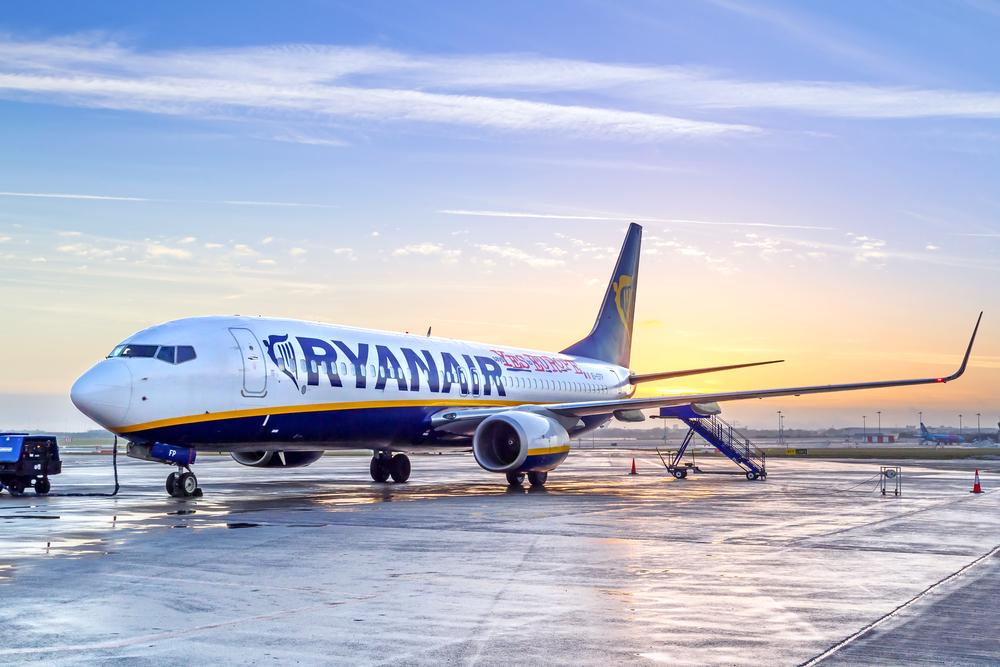
Ryanair has cancelled 190 flights on Friday, blaming the latest cabin crew strikes.
Strikes will be taking place by cabin crew based in Spain, Belgium, the Netherlands, Portugal, Italy and Germany.
30,000 passengers will be affected and have received a text and email about the cancellations.
The Irish airline has said that it “sincerely regrets these unnecessary customer disruptions, which have been called by unions at the behest of competitor airline employees.”
The airline was forced to cancel 400 flights in August as well as a similar number in July.
Kenny Jacobs from Ryanair said: “These repeated unnecessary strikes are damaging Ryanair’s business and our customer confidence at a time when oil prices are rising strongly, and if they continue, it is inevitable that we will have to look again at our capacity growth this winter and in summer 2019. We hope these unions will see common sense.”
Rory Boland, the travel editor from Which?, said the group must save its customers holidays.
“The airline must now immediately arrange alternative flights or provide a full refund and pay out compensation to those affected – including the many people still waiting for the money they’re owed from its shambolic summer of cancellations,” he said.
Ryanair has agreed to a deal with staff based in Ireland. The group employs over 4,000 pilots, with around 350 of them based in Ireland. Ryanair said that negotiations in the country proved among the most difficult.
Shares in the group (LON: RYA) are trading down 0.73 percent at 12,92 (0912GMT).
Corbyn to attack “greed-is-good” capitalism
Jeremy Corbyn will attack the “greed-is-good” approach to capitalism on Wednesday.
Speaking at the Labour party conference, the party’s leader will also declare a “green jobs revolution” that will create up to 400,000 new positions.
“Ten years ago this month, the whole edifice of greed-is-good, deregulated financial capitalism, lauded for a generation as the only way to run a modern economy, came crashing to earth, with devastating consequences,” Corbyn will say on Wednesday.
”But instead of making essential changes to a broken economic system, the political and corporate establishment strained every sinew to bail out and prop up the system that led to the crash in the first place.”
“People in this country know – they showed that in June last year – that the old way of running things isn’t working any more. That’s why Labour is offering a radical plan to rebuild and transform Britain.”
The party leader will pledge to pump billions of pounds of public money into green industries including expansions in wind power, solar panels on every roof and a drive to insulate all UK homes.
A report published on Wednesday will also hint towards expansion in tidal power, hydrogen and nuclear in order to meet the climate change targets.
“There is no bigger threat facing humanity than climate change. We must lead by example. Our energy plans would make Britain the only developed country outside Scandinavia to be on track to meet our climate change obligations,” Corbyn will say.
“Our programme of investment and transformation to achieve a 60 percent reduction in emissions by 2030 will create over 400,000 skilled jobs, based here and on union rates, bringing skills and security to communities held back for too long.”
The party has set aside £12.8 billion in its National Transformation Fund to cover the insulation programme in its first term, with other costs being covered by the private sector.
Carillion collapse to cost taxpayers £150m
UK taxpayers are due to pay £150 million following the collapse of Carillion earlier this year.
It was revealed after the Unite union requested the information that redundancy payments for the group’s former employees is expected to reach £65 million.
With the redundancy payment at £65 million combined with the cost of lawyers and accountants expected to hit £70 million and other costs reaching £20 million, the total costs will hit £150 million.
Earlier this year, a report by the National Audit Office (NAO) expected costs to reach £148 million.
“Doing a thorough job of protecting the public interest means that government needs to understand the financial health and sustainability of its major suppliers, and avoid creating relationships with those which are already weakened,” said Sir Amyas Morse, head of the NAO at the time. “Government has further to go in developing in this direction.”
The construction group collapsed in January after shares fell 90 percent on the news that the group had debts of about £1 billion.
Ministers have been accused of realising too late that the company was struggling and offered false investor hope but offering the group new contracts.
Whilst many of the contracts have been passed on, projects including the Royal Liverpool hospital will be completed using tax money.
The Redundancy Payments Office has said: “The total amount we may pay out is approximately £65 million, of which £50 million has been paid so far based on actual claims received.”
A Cabinet Office spokesperson said: “Since Carillion’s insolvency, our approach has ensured the smooth continuation of public services and safeguarded over 13,000 jobs.”
“This government is committed to getting the new Royal Liverpool hospital built as quickly as possible for the benefit of patients across Merseyside and we expect to have an update on the next steps shortly.”
Brexit: ‘nobody ruling out remain’, says Starmer
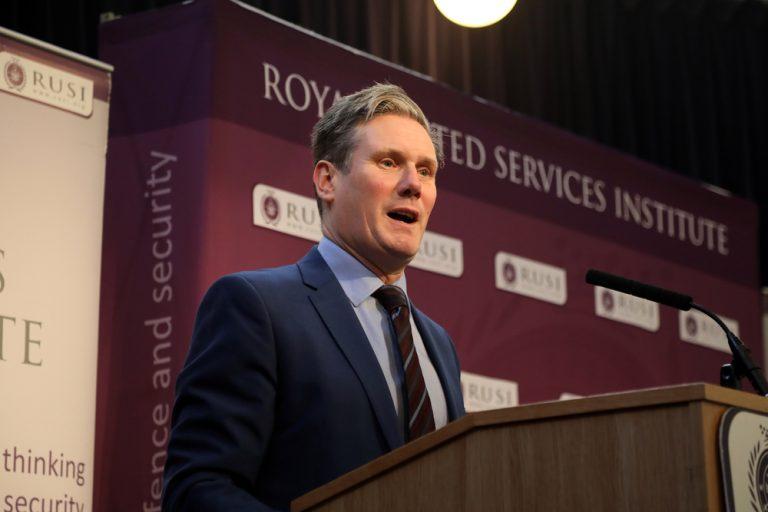
The shadow Brexit Secretary has said that Labour are not necessarily ruling out a remain option, should a second referendum go ahead.
The Former QC and current MP for Holborn and St Pancras, Sir Kier Starmer, made the comments during his speech at the annual party conference in Liverpool.
Specifically, Sir Starmer took the opportunity to dispel suggestions that a remain option would not be reconsidered in the event of a secondary vote.
In the speech, he stated:
“If [a general election] is not possible, we must have other options. And, conference, that must include campaigning for a public vote. Conference, it’s right that parliament has the first say. But if we need to break the impasse, our options must include campaigning for a public vote and nobody is ruling out remain as an option.”
Sir Starmer’s comments prove to be in direct opposition to remarks made earlier in the week by shadow chancellor and close ally of leader Jeremy Corbyn, John McDonnell.
Notably, McDonnell said that should a second referendum indeed go ahead, the vote should crucially respect the result of the June 2016 vote and thus not include an option for ‘remain’.
“If we are going to respect the last referendum, it will be about the deal, it will a negotiation on the deal,” he stated on Monday.
He added: “Parliament will determine the nature of the question that will be put, but the first stage of that is to see if we can get a deal that is acceptable and brings the country together again. And I’ve always thought we could.”
Sir Starmer’s recent interjection will no doubt add to confusion over Labour’s Brexit stance, as the March 2019 deadline fast approaches.
Whilst the annual party conference is often seen as way to outline a cohesive party strategy, it still remains unclear precisely what Labour’s official policy regarding Brexit actually is.
However, it seems that a lack of clarity over Brexit is, curiously, a cross-party problem.
Equally, the Conservatives continue to be in disarray with respect to how best to proceed with negotiations.
In particular, Tory Brexiteers continue to differ on whether or not to back Theresa May’s proposed plan.
Former cabinet foreign secretary Boris Johnson has remained among one of the most prominent critics of the proposals, articulating his opposition in his respective column in The Telegraph.
Moreover, prominent Hard Brexit supporter, Jacob Rees Mogg, has said that the Prime Minister should recognise that her Chequer’s plan will have limited support.
It seems that the controversial vote to leave back in 2016 has done nothing to quell debates within the conservative party over the Europe issue.
Nevertheless, a spokesperson for Number 10 remained adamant that the cabinet itself remain united behind the plan.
However, with the most recent rejection of the proposed chequers deal from EU officials, it remains to be seen whether Theresa May’s own party will also cooperate.
According to party sources, Labour also remains unconvinced.
Ahead of his aforementioned speech in Liverpool, Sir Starmer told BBC’s Radio 4 Today Programme that the party looks likely to vote down the deal.
Party differences aside, it seems there is one thing both the Conservative and Labour can agree upon – derailing Theresa May’s Brexit proposals.
Michael Kors confirms Versace takeover
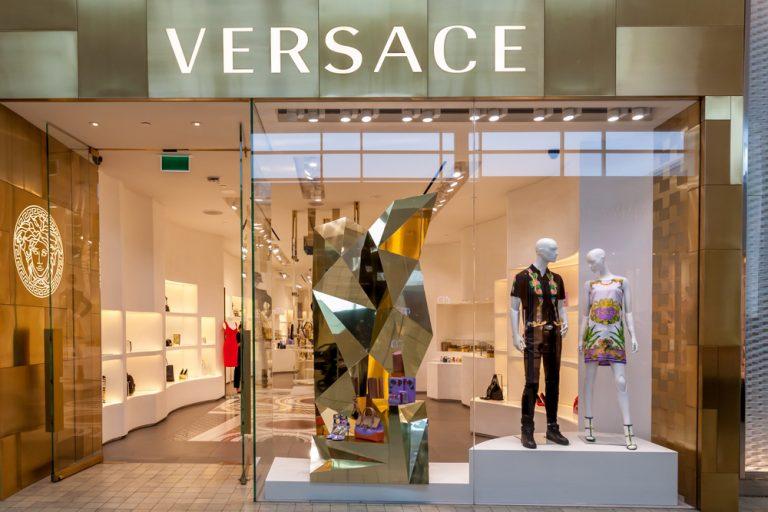
Michael Kors has confirmed plans to buy Versace in a $2.1 billion deal.
The US company confirmed the takeover after fans called on Versace to stop the sale.
John D. Idol, the chairman and chief executive officer of Michael Kors, said the deal was “an important milestone for our group”.
“For over 40 years, Versace has represented the epitome of Italian fashion luxury, a testament to the brand’s timeless heritage,” he said in a statement.
“We are excited to have Versace as part of our family of luxury brands, and we are committed to investing in its growth. With the full resources of our group, we believe that Versace will grow to over $2 billion in revenues.”
“We believe that the strength of the Michael Kors and Jimmy Choo brands, and the acquisition of Versace, position us to deliver multiple years of revenue and earnings growth,” he added.
Donatella Versace, who is the creative director of Versace, said sale the sale was a “very exciting moment” and will “allow Versace to reach its full potential”.
Michael Kors plans to increase the number of Versace outlets from 200 to 300 and double the group’s turnover to $2 billion.
Last year the US luxury fashion brand bought Jimmy Choo for almost £900 million.
The deal was first reported on Monday by Italian newspaper Corriere della Sera.
Reuters later reported the news after a source revealed: “They gradually persuaded the family to look into a possible sale and introduced them to a series of buyers, including Michael Kors.”
“Blackstone wasn’t going to put any more money into it. They needed a buyer who could make heavy investments.”
Shares in Michael Kors (NYSE: KORS) are down 8.21 percent at 66,71 (1324GMT).
Novartis to shed thousands of jobs, shares rise

Pharmaceutical giant Novartis has announced that it plans to axe thousands of jobs worldwide.
The group currently employs around 1,500 people in the UK, with plans to cut 400 of these roles. As well as the UK, Novartis will also cut over 2,000 roles in Switzerland.
The group has said the decision to phase out roles is not relevant to Brexit.
“Novartis has been a part of the Grimsby community for many years so this has been a very difficult decision,” said the UK country president, Haseeb Ahmad.
“The Grimsby site is an effective, well-running operation that is testament to the hard-working and dedicated employees. We will treat every employee with the utmost respect, sensitivity and fairness during this difficult time.”
“This decision has been made alongside broader changes to our business globally, and as a result of the changes in our product portfolio which now focuses on more specialised medicines, reflective of today’s changing healthcare needs.”
“Novartis remains committed to the UK and believes that the UK is a world-leader in life sciences. Today’s announcement is part of a global review of our manufacturing operations and is not linked to the decision of the UK to leave the European Union,” he added.
Novartis currently employs around 124,000 people worldwide, with plans to cut this number to below 100,000 by 2022.
Unions criticised the decision and said the company will be worse off.
Shares in the group (SWX: NOVN) were up about 0.8 percent at 0900 GMT.
Scammers steal £500m from bank customers in first 6 months of 2018
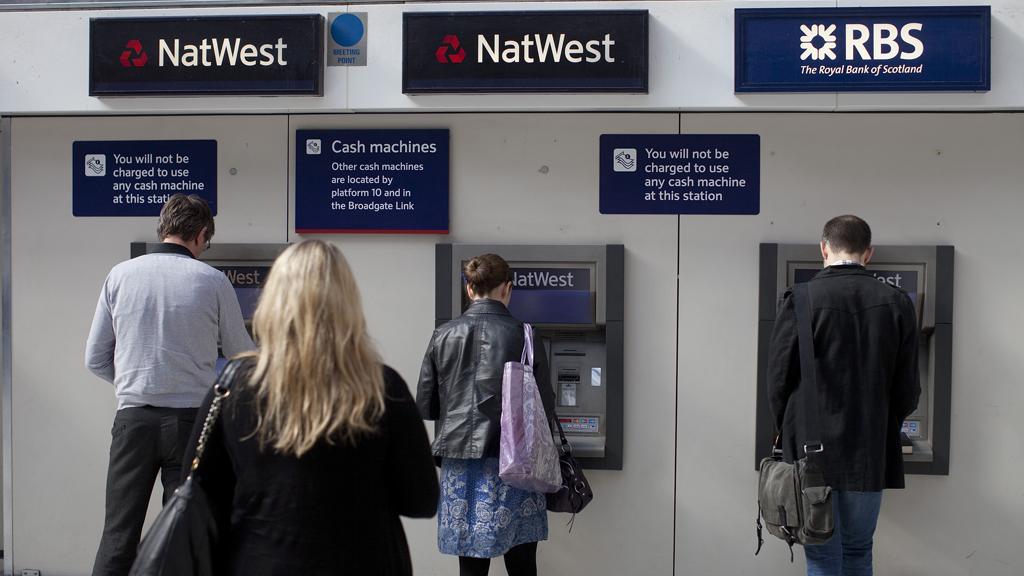
New figures have found that scammers have stolen £500 million from UK bank customers in the first half of 2018.
The trade body UK Finance found that the total figure was lost through authorised push payment (APP) scams and unauthorised fraud.
The trade body said that only £30.9 million of the £145 million that was lost through APP scams was returned to customers.
The current legislation means that the customers that are liable for the losses incurred if they authorise a payment themselves.
The managing director of economic crime at UK Finance, Katy Worobec, said: “The criminals behind it target their victims indiscriminately and the proceeds go on to fund terrorism, people smuggling and drug trafficking, whether or not the individual is refunded.”
Through major investment in security systems and cyber-defences, the industry has managed to prevent two-thirds of unauthorised fraud for the first half of the year.
Gareth Shaw, a money expert at the consumer group Which?, has said that the efforts made by banks has been “woefully insufficient”.
“It’s now two years since our super-complaint highlighted the lack of protection for victims of bank transfer scams, but these shocking figures show just how widespread the problem still is,” he said.
“Banks … have not done enough to protect their customers, who continue to lose life-changing sums of money to ever-more sophisticated crooks.”
“The Payment Systems Regulator has rightly committed to introducing a reimbursement scheme for victims. It’s about time that banks step up and properly compensate customers who have lost money through no fault of their own.”
The first six months of 2018 has seen an increase in money lost to scammers. The same period last year totalled £101 million for losses by APP, compared to this year’s £145 million.
The UK Finance said this year’s increase is partly down to banks reporting more data.
Tesco Bank hit by record penalty from FCA
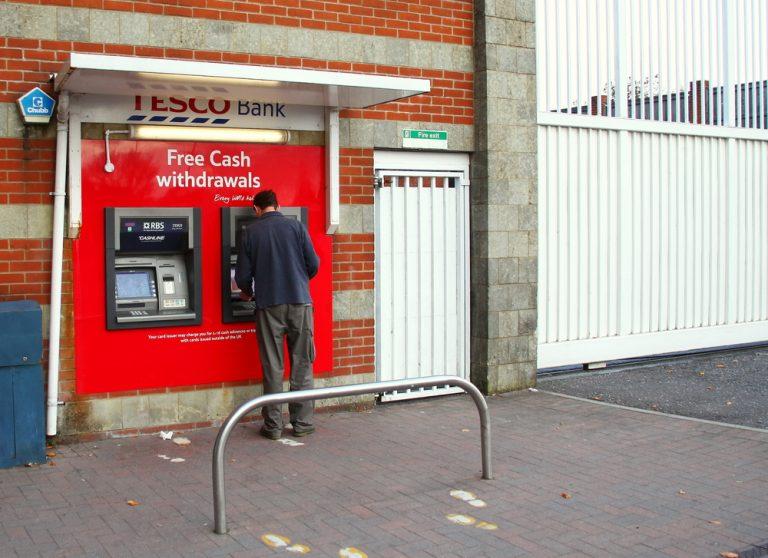
Tesco Bank has been fined a record penalty of more than £30 million over a cyberattack back in 2016.
The fine, which has been imposed by the Financial Conduct Authority (FCA), was a result of an incident dating back to November of 2016.
As a result of the cyber attack, Tesco’s banking division said at the time that £2.5 million had been stolen from 9,000 customers.
The decision comes amid recent research which indicated that UK bank customers have lost a total of £500 million in the first half of 2018 as a result of such scams, according to trade body, UK finance.
Specifically, £145 million was lost due to authorised push payment (APP) related scams, where customers were conned into making payments to different accounts.
Moreover, £358 million was also lost from unauthorised fraud from third parties, UK finance said.
Whilst banks will refund customers who have been victims of fraud, there are limited protections in place to protect those affected by APP schemes.
UK finance said that only £30.9 million of the £145 million lost through APP scams this year had been returned to victims.
Katy Worobec, managing director of economic crime at UK Finance, warned that the figures revealed that cyber crime continues to be a significant threat.
“The criminals behind it target their victims indiscriminately and the proceeds go on to fund terrorism, people smuggling and drug trafficking, whether or not the individual is refunded,” she commented.
Tesco’s banking arm is still in negotiations with the FCA regarding the penalty, indicating that a lower figure could be agreed upon in the coming weeks.
Nevertheless, the record fine will no doubt be a warning signal to larger banks, as the FCA continues to crackdown on cyberattacks in the banking industry.
Shares in Tesco (LON:TSCO) are currently trading +0.38 percent as of 11.05AM (GMT).
Learning Technologies raise full-year profit guidance, shares rise

Shares in Learning Technologies surged 14.7 percent in early trading.
The company revealed its full-year outcome to be significantly ahead of expectations following its acquisition of PeopleFluent in May.
Learning Technologies acquired PeopleFluent in April for $150 million. The deal was partly funded through a share placing that raised £85 million.
The first half of 2018 saw revenue rise 60 percent from £21.1 million the year before to £33.8 million.
The board of the company are now expecting the earnings before interest and tax to increase by at least 25 percent in 2019.
Jonathan Satchell, the chief executive officer of Learning Technologies, said: “The first half of 2018 has been pivotal for LTG with the PeopleFluent acquisition confirming our shift towards recurring software revenues, and significantly increasing our US presence. Together with NetDimensions, PeopleFluent demonstrates our ability to successfully integrate businesses and drive growth and margin progression through operating model improvements.”
“Alongside our track record of delivering organic growth and substantial margin improvements, LTG has a strong balance sheet and acquisition pipeline and is well placed to continue its strategy of consolidating the high growth corporate e-learning market. A robust performance from our core business and the successful integration of PeopleFluent underpins our confidence that full-year profit will be significantly ahead of the board’s expectations,” he added.
Shares (LON: LTG) increased 14.7 percent at 144.5p.