
BP increase stake in Clair field, sell business to ConocoPhillips
Oil giant BP (LON:BP) announced that it would be increasing its stake in the Clair field on Wednesday, alongside the sale of a pipeline business to ConocoPhillips.
BP will be increasing its stake in the field by 16.5 percent, bringing their total share to 45.1 percent, just in time for the second stage of development which will increase production capacity to 120,000 barrels of oil equivalent a day.
The oil group are also selling a 39.2 percent stake in the Kuparuk oil field in Alaska, plus a related pipeline business, to ConocoPhillips.
“This is a further step in focusing our portfolio around core assets and developments which have the potential for significant growth,” said BP Upstream chief executive Bernard Looney.
“Clair is a key advantaged oilfield for our North Sea business, a giant resource whose second phase is about to begin production and which holds great potential for future developments.”
The transactions, which have to be approved by the regulators of several countries, are anticipated to complete in 2018.
Shares in BP (LON:BP) have had a volatile morning, and are currently trading down 0.19 percent at 580.30 (1011GMT).
Mattioli Woods shares rally as revenue grows ahead of targets

Wealth management firm Mattioli Woods plc (LON:MTW) has seen its organic revenue grow 15 percent for the year through May, as assets under management have swelled to just over £2.3 billion.
The company’s market share has risen 0.47 percent or 3.75p and they are slightly ahead of their 20 percent growth target for the year, as revenue growth has translated into strong growth in Ebitda.
This news comes in the wake of Mattioli Woods announcing plans to remove themselves from the DB transfer market due to rising costs and increased regulations.
A spokesperson has said, “Following consideration of the increasing costs of professional indemnity insurance, additional regulatory controls and the resources we would have to dedicate to a relatively small part of our business we have decided to withdraw from this market and look to vary our permissions with the FCA accordingly.”
However, chief executive Ian Mattioli was quick to add, “We continue to review a diverse pipeline of potential acquisition opportunities and believe further consolidation within our core markets remains likely.”
“Our strong balance sheet gives us the flexibility to make further value-enhancing acquisitions.”
Revenues in its discretionary portfolio management service have grown from £1.1 billion to £1.3 billion, total client assets under management, administration and advice increased by 10 percent to over £8.7 billion. Analysts from Shore Capital have reiterated their ‘hold’ stance on Mattioli Woods stock.
PMI figures record service sector expansion in UK and Eurozone

The UK service sector recorded a flurry of activity in June, according to the latest survey of purchasing managers from Markit/CIPS.
The services business activity figure hit 55.1 last month, up from 54.0 in May. Any figure above 50 indicates growth.
Duncan Brock, group director at CIPS, said: “Exceeding expectations the sector ended on a positive note at the end of the second quarter, buoyed up by the fastest rise in new orders in over a year and the strongest overall performance since last October.”
“However the downside of this achievement came in the form of relentless capacity difficulties as business backlogs rose to an acute degree, not seen for around three years. Not even the minor uplift in hiring could alleviate the problem as salary pressures and the struggle to find skilled hires caused firms to hesitate to increase staff numbers further.”
The upward trajectory was the same in the Eurozone, with the IHS Markit’s Final Composite Purchasing Managers’ Index hitting 54.9 in June. The figure is a good overall indicator of eurozone growth, rising 0.3 points from a figure of 54.1 in May.
SIG shares down as revenues in UK & Ireland fall
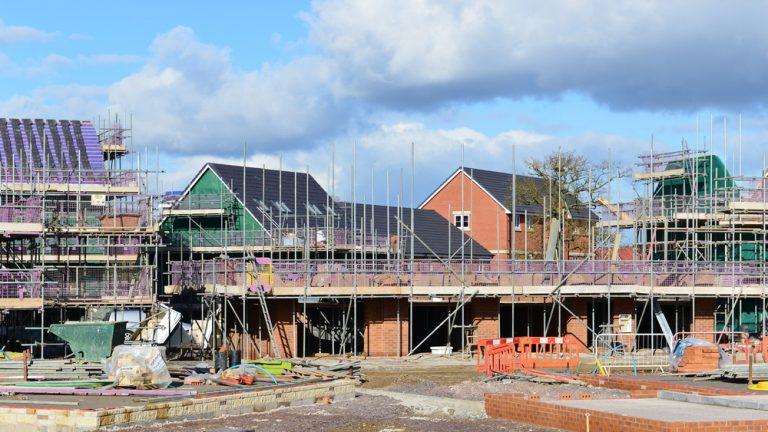
Building supplier SIG (LON:SIG) reported a 0.6 percent rise in first-half revenue, despite like-for-like revenues falling in the UK and Ireland.
For the entire group revenues were flat on-year on a like-for-like basis, which the company attributed to fewer working days, with
like-for-like revenues dropping by 3.1 percent in the UK and Ireland.
In a statement, the group said it had delivered a “significant improvement” in operational and underlying financial performance.
“Our transformational plans are expected to deliver meaningful cost benefits in the second half of the year, mitigating the adverse impact of weather on sales and profit in the UK businesses in the early part of the year,” SIG said.
“Coupled with the group’s normal seasonality, this should enable us to deliver a significantly stronger second half to the year.
“Providing there is no further deterioration in UK market conditions, our expectations for underlying profitability for the full year remain unchanged.”
The group announced yesterday that it had hired EY as its auditor, the only Big Four firm eligible to apply for the contract due to conflicts of interest. Investors voted to sack the previous auditor, Deloitte, after the accounting watchdog began an investigation into the group’s audit of SIG.
Distil marketing push sends revenues up 27%

Shares in premium drinks brands owner Distil (LON:DIS) soared over 3 percent on Wednesday, after reporting a ‘strong’ first quarter performance.
The group, who produce premium spirits including Blackwood’s Vintage Gin and Diva Vodka, said momentum in the gin and rum markets was strong and first-quarter performance was in line with expectations.
Over the April to June quarter revenues increased by 27 percent, with volumes soaring by 21 percent compared to the same period a year ago.
Over the six mont period, year-on-year revenues increased by 28 percent and volumes increased 27 percent.
“Growth momentum of our key brands continues at a healthy pace, supported by marketing and promotional activities at the point of sale. The gin and rum markets remain buoyant. Our brand performance within these categories is strong and in line with our expectations,” Don Goulding, Executive Chairman of Distil.
The figures would suggest that Distil’s recent marketing push had paid off, adding that in the coming year it would continue to prioritise product development and build its brand portfolio.
Shares in Distil (LON:DIS) are currently trading up 3.25 percent at 2.22 (0911MGT).
Topps Tiles shares down as sales fall in Q3

Topps Tiles (LON:TPT) shares fell over 2 percent on Wednesday morning, after like-for-like sales in its fiscal third quarter fell by 2.3 percent.
The group attributed the fall in sales to a “weak consumer environment”, but said that it was still outperforming the overall tile market.
“Against this background, we believe that we continue to outperform the overall tile market and we are maintaining our focus on tight cost control and strong underlying cash generation,” the company said.
The group said it was Topps Tiles said it was making strides with its core strategy, which includes gaining retail market share through a store investment program. The group is now trading from 375 stores, with 140 sites now decked out with the latest merchandise and a raft of promotional activity.
The group said it also completed a refinancing of its loan facility, putting in place a new three-year committed facility with existing lenders on similar commercial terms.
Shares in Topps Tiles are currently trading down 1.98 percent at 61.75 (0856GMT).
Sainsbury’s sales up again, despite slowing growth
Supermarket chain J Sainsbury posted another quarter of growth on Wednesday, with sales in the three months to June rising by 0.8 percent.
On a like-for-like basis, sales in the three months through June rose 0.2 percent, with the group confirming that price cuts had attracted more customers to the store.
However, the growth was slower than in the previous quarter, which came in at 0.9 percent in the fourth quarter and 1.1 percent in the three months before.
Sales of general merchandise lent the biggest boost to the company’s figures, up 1.7 percent and outperforming the market. Grocery sales grew by 0.5 percent, with CEO Mike Coupe saying he was “pleased” with the progress over the quarter.
“The headline numbers reflect the level of price reductions we have made in key areas like fresh meat, fruit and vegetables since March,” Coupe said. “Our price position has improved and customers have responded well, resulting in a continuation of the improved volume trend we saw in the second half of last financial year.” The group are hoping that their merger with Asda will boost their ability to offer cheap prices, with the combined group set to overtake Tesco as the UK’s biggest by market share. Both supermarkets have said that a combination would allow them to lower prices “by around 10 percent on many of the products customers buy regularly”.Glencore share price plummets following subpoena
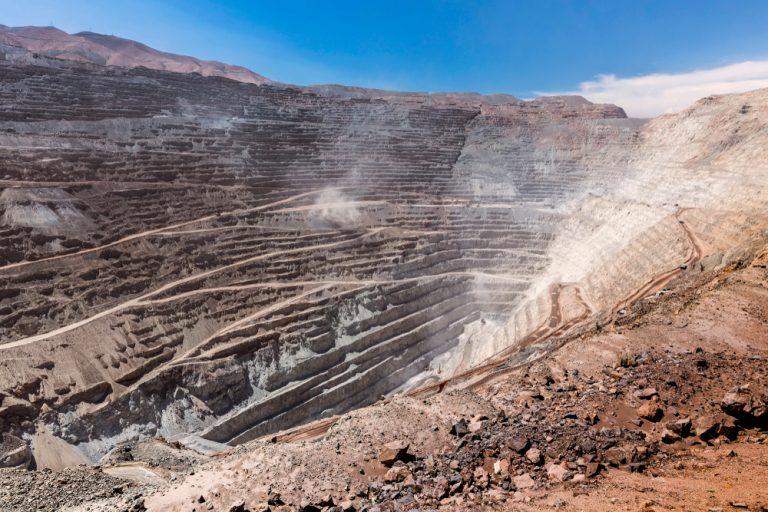
Glencore plc’s (LON:GLEN) share price dipped sharply after the company received a subpoena from the US Department of Justice, in an ongoing investigation into money laundering.
The firm’s value dropped by £5 billion within an hour of markets opening, their share price dropping over 12 percent to lows of 304p.
The subpoena issued to Glencore demands presentation of documents dating as far back as 2007, and has the aim of ascertaining whether its affairs in Nigeria, Venezuela and the Democratic Republic of Congo, are in compliance with US Foreign Corrupt Practices Act.
“Glencore Ltd, a subsidiary of Glencore plc, has received a subpoena dated 2 July, 2018 from the US Department of Justice to produce documents and other records with respect to compliance with the Foreign Corrupt Practices Act [FCPA] and United States money laundering statutes.” said a Glencore representative.
“Glencore is reviewing the subpoena and will provide further information in due course as appropriate”.
Despite the ominous mood of an ongoing investigation, analysts from RBC Capital Markets have reiterated their bullish ‘Outperform’ stance on Glencore stock.
While analysts admit that the subpoena is “another reason for investors to proceed with caution”, they also warn that the markets react in a sensationalist manner.
“Much like the Rio Tinto SFO investigation, this is likely to feel less acute in due course than today’s initial share price reaction, but we concede this might take some time to occur with what has been a wave of challenges facing the company”, said an RBC spokesperson.
The subpoena is not the first controversy surrounding Glencore’s financial misconduct. The firm have faced pressure in the past from the UK Serious Fraud Investigation, over allegations of bribery during their partnership with diamond-mining billionaire Dan Gertler.
“Gertler has used his close friendship with DRC President Joseph Kabila to act as a middleman for mining asset sales in the DRC, requiring some multinational companies to go through Gertler to do business with the Congolese state,“ the US Treasury said.
Gertler was sanctioned by the US government last December, and thus, when Glencore paid Gentler’s company – Ventora Development Sasu – $3 billion in royalties, they did so in euros, through a non-US financial institution. After circumnavigating US sanctions, Glencore said the payments were necessary to protect their mines in the DRC.
RBC say an FCPA violation could lead to sanctions, imprisonment and penalties up to £25 million, or twice the gain or loss caused by the violation. Regardless, the firm are willing to take such risks to protect and extend their lucrative copper and cobalt mines in the region.
Smurfit Kappa shares rally with acquisition of Raparenco
Packaging company Smurfit Kappa Group plc (LON:SKG) has seen a positive start to July trading, as its €460 million acquisition of Dutch paper and recycling firm Raparenco prompted its share price to rise.
The transaction is designed to be earnings accretive, with the addition of Raparenco expected to lead to savings of over €30 million.
“Raparenco’s strong strategic fit with Smurfit Kappa’s existing European businesses is expected to deliver synergies of in excess of €30 million”, said Smurfit Kappa chief executive, Saverio Mayer.
“Reparenco represents early delivery of a central element of our medium term plan – to increase our European recycled containerboard capacity. It is ideally situated in our core European operating region where we continue to see strong demand driven by growth in e-commerce and increased substitution of plastic with paper-based packaging”.
Including an Ebitda of €72 million, Raparenco’s Ebitda and synergies equate to a transaction multiple of less than 4.5.
Since markets opened, Smurfit’s share price has rallied over 1 percent, or 44p. Analysts from Jefferies International have reiterated their ‘buy’ stance on Smurfit Kappa stock.
Trump on WTO: “They have been treating us very badly”
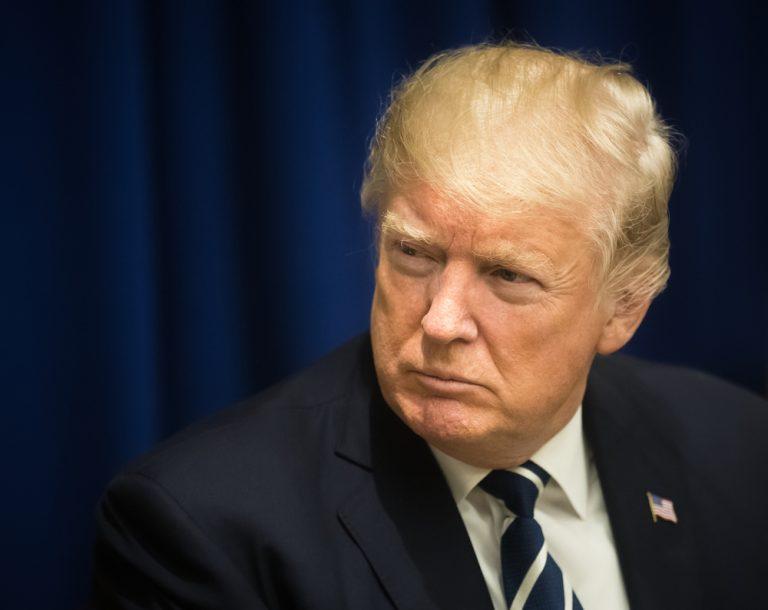
Donald Trump has warned the World Trade Organisation over its mistreatment of the US.
In a meeting with the prime minister from the Netherlands, Trump defended his controversial position on tariffs and trade.
“I hope they change their ways. They have been treating us very badly for many, many years and that’s why we were at a big disadvantage with the WTO,” he said at the White House.
“We’re not planning anything now, but if they don’t treat us properly we will be doing something,” the US President added.
Trump has threatened to impose a 20 percent tariff on all EU-assembled cars, which the European Commission has said is a mistake.
“We’ll spare no effort, be it at the technical or political level, to prevent this from happening,” a spokesman for the commission said.
The American Automotive Policy Council was said that increasing trade tariffs will increase taxes to $90 billion annually when combined with the steel and aluminium tariffs.
Matt Blunt, president of the trade group, said: “Imposing tariffs will increase costs for consumers, lessen consumer choice, lower consumer demand, reduce car and light truck production and sales, lower investment levels, and lead to job losses in the U.S. auto sector.”
At the meeting held in the White House on Monday, the US President added that the US was very close to finalising new trade deals.
Trump said he was “very close to making some very good trade deals – fair trade deals, I don’t want to say good, I want to say fair – fair trade deals for our taxpayers, and for our workers and for our farmers.”
The European Union has sent an 11-page letter to the US warning the President of tariffs on US products if he moves forward with the tariffs on foreign auto vehicles.
“Protective measures would undermine US growth, negatively impact job creation, and not improve the trade balance,” read the letter.