
John Laing maintain full year outlook, shares rise

Infrastructure investment manager John Laing (LON:JLG) maintained its full-year outlook on investment commitments on Friday, sending shares up over 2 percent in early trading.
The group said their commitments would be weighted toward the second half of the year, but that it continued to expect them to total £250 million for the full-year 2018.
Total investment commitments of £40 million had been received in 2018 to date.
Earlier this year, the group has sold its remaining 15 percent shareholding in Phase 1 of IEP, the initiative to replace tired trains on the UK’s East Coast Main Line and Great Western Main Line, for £232 million.
“Following our rights issue in March and the sale of our interest in IEP (Phase 1), we have the financial flexibility to take advantage of our strong pipeline of opportunities,” said Olivier Brousse, John Laing’s Chief Executive Officer.
“Our focus is to continue to grow in a managed way by ensuring we select the projects with the best risk-adjusted returns and that we work with the best partners,” he said.
Shares in John Laing Group are currently trading up 0.98 percent at 266.80 (0828GMT).
Fastjet shares up 112pc on full year results
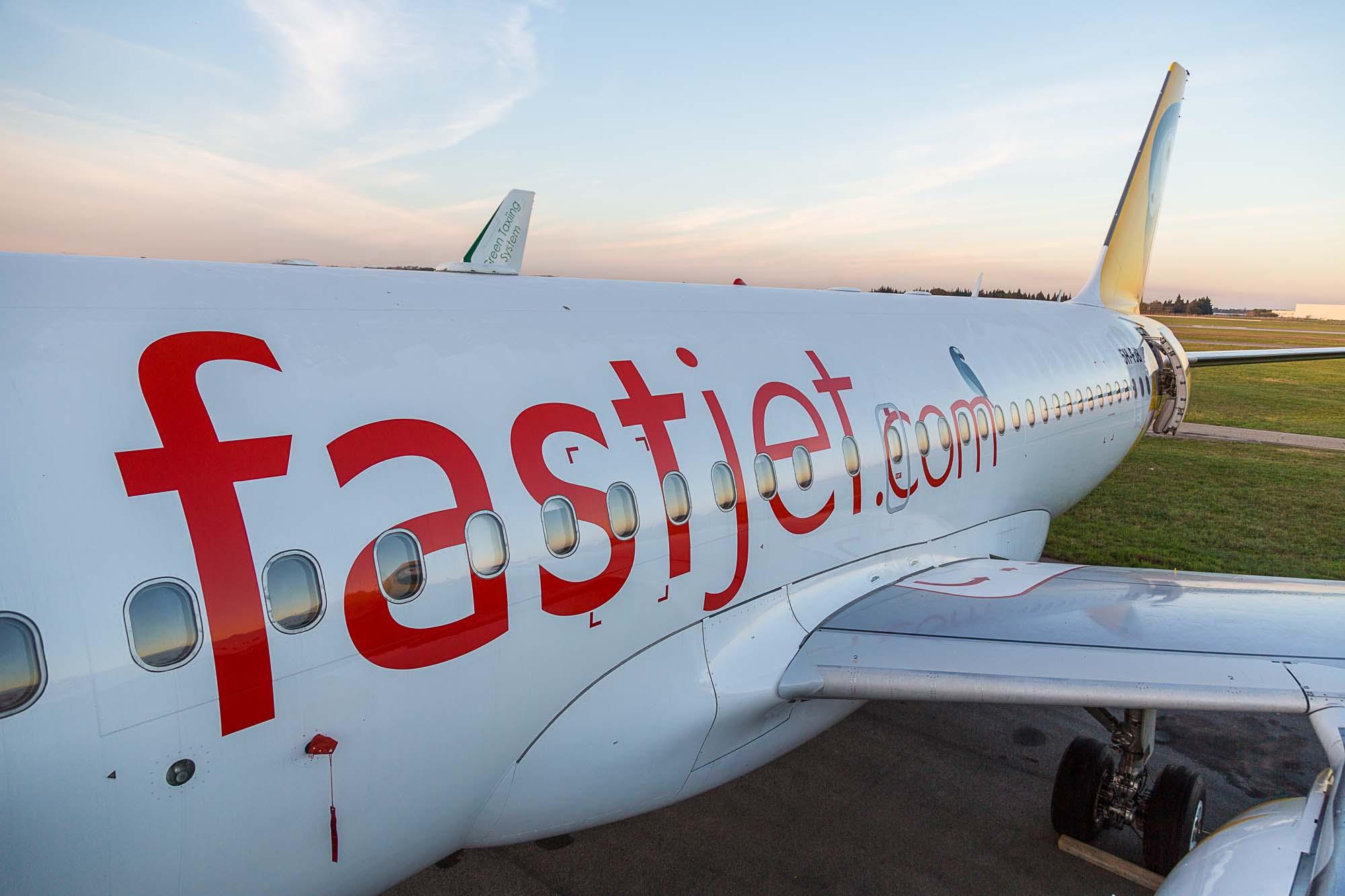
Troubled budget airline Fastjet (LON:FJET) reported a slump in revenue on Friday, after a significant fall in passenger numbers.
The group’s losses narrowed in the year to December, but revenue fell by 32.6 percent to hit $46.2 million. Operating losses were 61 percent lower at $25.3 million, compared with $65.6 million the previous year.
Revenue per seat rose 30 percent to $60.9 from $46.9, but the airline blamed the fall in total revenue on weaker passenger numbers, which fell 31 percent for the year compared to the previous year.
The weak results will come as a disappointment to investors, who are already on edge after an announcement earlier this week that said that without an injection of funds, the airline could go under.
“In 2017, the successful implementation of our Stabilisation Plan saw us realign our network, withdraw from loss making routes, reconfigure our fleet, migrate the Group’s headquarters to Africa, and significantly reduce our cost base. These actions have resulted in a substantially reduced loss for 2017,”said Nico Bezuidenhout, fastjet Chief Executive Officer.
“As part of our targeted network expansion strategy, the first fastjet branded flight in Mozambique took off last November and over the next 18 months we have a programme of further measured expansion of services in Mozambique and, subject to appropriate fleet expansion, new services in South Africa.”
Shares in Fastjet are currently trading up 112 percent on the news, at 6.90 (0823GMT).
BHP Billiton agree to pay $211 million to fund supporting Samarco dam victims
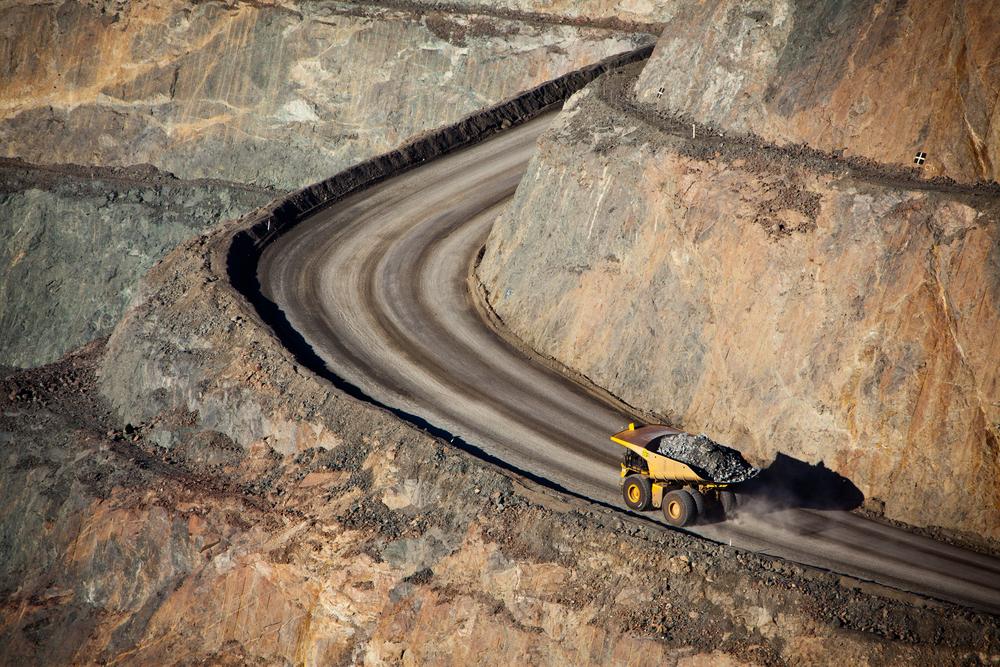
Mining giant BHP Billiton (LON:BLT) have agreed to pay $211m to a fund supporting victims of the Samarco dam disaster, after years of negotiation.
On Friday the group announced it had agreed to fund the support until the end of the year, paying a total of $158 million to the Renova Foundation. This will go towards helping the victims of the disaster, which took place when BHP Billiton’s Samarco dam collapsed in 2015.
The other $53m wull be made available to Samarco to carry out ongoing repair works, maintain Samarco’s facilities and support restart planning, BHP said.
The announcement comes just after Samarco and parent companies Vale SA and BHP Billiton Ltd signed a deal with Brazilian authorities that settles a 20 billion reais lawsuit related to the incident.
The dam burst when it was found that a structural change in its engineering was the cause of the failure that killed 19 people. Since the disaster, BHP Billiton said it had reviewed 10 of its biggest tailings dams and found they were stable, but was taking steps to improve risk management.
Shares in BHP Billiton are up 2.90 percent on the news, trading at 1,737.00 (0814GMT).
Serco expect boost to underlying profit, despite revenue fall

Security services group Serco (LON:SRP) said it expected a rise in underlying profit for the full year, despite “less than ideal” market conditions.
Underlying trading profit for the first half is expected to rise by about 20 percent on-year, and for the full year rise to £80 million, up from £69.3 million a year earlier.
Revenue is forecast to fall, however, down by £2.95 billion to hit £2.7 – £2.8 billion. The results for the first half of 2018 would include adverse currency impacts of around £60 million for revenue and £3-4 million for trading profit.
“As expected, the revenue reduction is driven largely by contracts that ended in 2017, whereas the profit increase is driven by transformation savings,” Serco said.
“We therefore do not anticipate any material change to analyst consensus for underlying trading profit for 2018, although, as we have previously stated, there remains a wide range of potential outcomes reflecting the sensitivity of our profits to even small changes in revenues and costs, as well as further movements in currency during the second half of the financial year.”
Serco said order intake continued to be ‘strong’ and reach over £1.5 billion in the first half, with the group expected to take responsibility for facilities management services at six major NHS hospital sites previously contracted to failed company Carillion.
Deliveroo to pay out to couriers in latest gig economy case
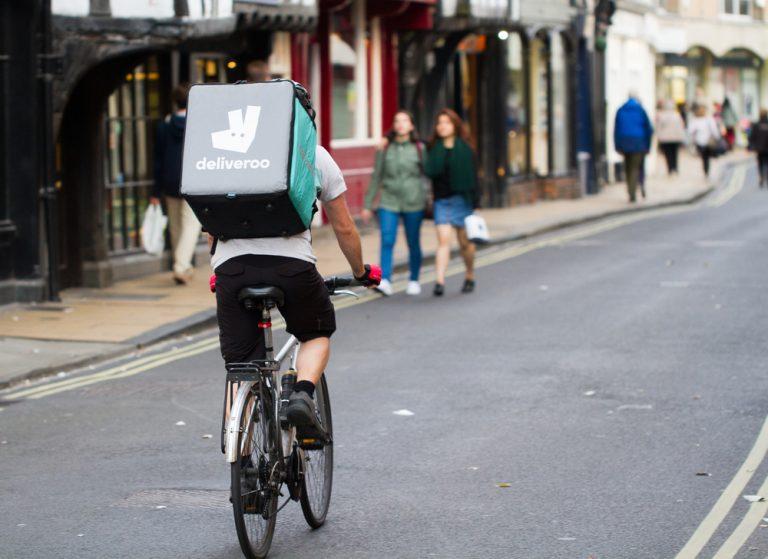
Deliveroo will pay a six-figure sum to 50 couriers after losing an employment rights claim.
The couriers took the takeaway delivery firm to court after claiming they had been unlawfully denied holiday pay and minimum wage.
The workers were represented by the law firm Leigh Day. Solicitor Annie Powell from the law firm said: “Deliveroo has paid out a material sum to settle these claims. In our view, this shows that Deliveroo knew that they were very likely to lose at the employment tribunal.”
“This settlement will make a real difference to our clients’ lives. Some of the riders we represented were on the breadline, earning hundreds and in some cases thousands of pounds below the national minimum wage over the time that they worked for Deliveroo,” she added.
A spokesperson for the group said: “This settlement has no impact on Deliveroo riders or our model; and allows us to continue to focus on creating the well-paid, flexible work that our riders value. Courts have repeatedly considered Deliveroo’s model and judged that riders working with us are self-employed.”
The foot delivery app is currently valued at over £1.5 billion. Bankers have suggested that the firm’s public offering will not occur for at least another 18 months.
The group’s rivals including UberEats and Just Eat (LON: JE) have seen their London-listed shares perform strongly.
This case is the latest success in a string of legal cases for gig economy workers. Earlier this month, the Supreme Court ruled that workers at Pimlico Plumbers were entitled to benefits including holiday pay.
Charlie Mullins, the group’s boss, called the judges’ decision “terrible”.
Ergomed shares dip on contract delays

Pharmaceuticals developer Ergomed Plc (LON:ERGO) have seen their shares dip in the wake of a disappointing first half.
The company’s status was downgraded from ‘buy’ to ‘hold’ by analysts at Numis, as shares dipped 27 percent today, down to 173.25p. Looking to the rest of the year, the firm has warned its shareholders that delayed contracts and reduction in scope of some contracts will lead to profits staggering 5 percent behind the market consensus.
Because of this, the company expects 2018 profits post tax, depreciation and amortisation to amount to little more than the adjusted profits of 2.8 million for 2017. A spokesperson for the firm said the AIM-listed company’s profits were “below management’s expectations”, as there is now a backlog of contracts worth just over 100 million GBP.
“This year, we anticipated exceeding market expectations for revenue, allowing us to more than cover the cost of the additional investment required to deliver our strategic goals for 2020. It is unfortunate that delays and reductions in scope of a limited number of contracts has resulted in us investing ahead of the curve. The business overall is in robust health, as demonstrated by a backlog approaching GBP100 million, and we are confident 2018 will provide a solid foundation for future growth”, said chief executive, Stephen Stamp.
Analysts from Numis then noted that Ergomed, “is constantly hiring ahead of anticipated revenue growth”, thus a delay in anticipated revenue, alongside a resource surplus, was bound to drive margins lower.
Both the firm and the broker analysing them were equivocal in response to the delays, and the company’s next course of action. They certainly appear less proactive than their larger counterparts.
IAG launches new airline on 19 days’ notice
IAG (LON:IAG), parent company of British Airways, is set to launch its new budget airline with less than three weeks’ notice.
The name of the new airline will be Anisec Lufthart for logistical reasons – as the firm has an operating certificate in that name – but to all intents and purposes the airline will be branded ‘Level’, after their low cost transatlantic service. The new airline will operate from Austria, with the first flight between London Gatwick and Vienna scheduled for July 17th. This steps directly on the toes of Laudamotion, which also operates out of Austria and is 75 percent owned by Ryanair.
IAG’s chief executive, Willie Walsh, said, “We are launching this new short-haul subsidiary to provide Austrian consumers with more flight choices across Europe”.
Following the success of their Barcelona-based short haul service, Vueling, it was only a matter of time before the firm weighed in on the Austria market.
While the decision to launch the airline on such short notice is an unusual one, an IAG spokesperson said that they are, “[…] so confident that the new operation will be a success, that tickets will fly off the shelves like hot cakes.”
One can only imagine the move is an attempt to capture the market of summer holiday-makers. While the firm’s share price is fairly steady, they have seen one of their sharpest dips this year with prices dropping from 723.6-669.4p this week. Today, they have dropped 11.2p or 1.67 percent, which isn’t positive, but certainly less severe than the collapse of their African counterparts, Fastjet.
BP leads the way for electric vehicles
BP (LON:BP) has just bought Chargemaster Plc for 130 million GBP, in an effort to diversify its operations and accommodate the increasing demand for electric vehicles.
The deal comes in the wake of BP announcing a five year contract with analysis engineering firm AS Mosley, and after President Trump eased tensions by calling off the next round of tariffs yesterday.
BP will take over Chargemaster’s 6500 existing charge points in the UK, and hopes to build new, fast charge points at its petrol stations around the UK.
The decision to buy Chargemaster came after BP released projections, stating that the number of electric cars in the UK would grow from 135,000 to 12 million by 2040. Indeed, the world’s largest car maunfacturer – Volkswagen (LON:VLKAY) – has said it will release an electric version of every one of its 300 models by 2030.
“Bringing together the UK’s leading fuel retailer and its largest charging company, BP Chargemaster will deliver a truly differentiated offer for the country’s growing number of electric vehicle owners”, said Tufan Erginbilgic, Chief Executive of BP downstream.
The move is a natural step, not only are they tapping into a growing market, but a market that threatens the profitability of their existing products. Shell had a similar idea last year, buying charging company NewMotion (LON:NWMO). As such, BP’s move to buy the UK’s largest car charging firm, is a step in the right direction to becoming the leading provider of energy to low-carbon vehicles.
BP spokesperson David Nicols, added, “Chargemaster is a leader in the UK market. We want to learn from them, and eventually, yes, grow the business worldwide.”
The company are ambitious and investing in their future, following a successful start to 2018. Irrespective of the turmoil in the rest of the FTSE 100, BP’s share price has seen modest growth form 560.7 GBX last Friday, to 581.7 GBX today.
London ‘most dynamic city in Europe’, according to new research

London is the most dynamic city in Europe, according to new research from Savills IM, boosted by its new Elizabeth Line and ability to adapt to economic changes.
The UK capital has taken the top spot for the second year running, closely followed by Cambridge, Paris, Amsterdam and Berlin in second, third, fourth and fifth place respectively.
Real estate investment manager Savills IM surveyed 130 European cities as part of the research, across six categories of innovation, inspiration, inclusion, interconnection, investment and infrastructure.
Irfan Younus, head of research in Europe for Savills IM, commented on the report:
“While London’s continued dominance as Europe’s leading ‘supercity’ will reassure those investors concerned by Brexit, new developments such as Crossrail, which opens later this year, and the Greenwich Peninsula – a formerly underdeveloped area that is fast becoming a vibrant community for living, working and recreation – underlines the scale of its ability for self-improvement.”
Jules Pipe, the deputy mayor of London for planning, regeneration and skills, said its excellent transport links were a major player in its high ranking, with Crossrail and the Elizabeth line opening London up for investment and regeneration.
Just Eat shares dip following cautious projections
Following a realistic meeting with its investors about the costs of investment, Just Eat’s (LON:JE) share price dipped 7.1 percent to 755 GBX by the end of trading yesterday.
This drop saw the company become the FTSE’s ‘biggest faller’ on Wednesday, and although its share price has rallied to 775 GBX within the first 3 hours of trading today, it still hasn’t recovered to the levels it saw of over 820 GBX before the investor meeting.
The meeting came as Just Eat reminded investors not only of the importance of infrastructural investment to improve the business, but also of the steep costs that such expenditure would incur. For instance, the firm made a pre-tax loss of 76 million GBP in 2017, following investment in doing its own deliveries.
While analysts such as Liberum expected “a positive message” at yesterday’s Capital Markets Day, such investment is necessary to allow Just eat to keep up with its rivals. Indeed, Deliveroo poses a threat, having caused Just Eat’s share price to dip 7 percent last Wednesday, following the release of its new ‘Marketplace+’ feature.
Going forwards, Just Eat have already been proactive with their investment, having struck a deal to coordinate a delivery service with food outlet Subway.
“We’re excited to welcome Subway to Just Eat, as part of our continued efforts to offer customers more of their favourite food brands at the tap of the app.” said Graham Corfield, UK Managing Director.
This deal could mean that Just Eat adds to its collection of market-leading food outlets including KFC and Burger King – with its total number of 28,000 outlets dwarfing Deliveroo’s 10,000.