Jamie Oliver’s business to post £20m loss

0
Jamie Oliver’s restaurant business is to post a loss of almost £20 million last year. After a difficult year, Oliver had to close a dozen outlets in February as well as inject £13 million into the restaurants to keep them afloat. The company said it had suffered from the “ongoing challenges of the casual dining sector,” which have led to closures in chains such as Carluccio’s and Byron. Paul Hunt, the chief executive of Jamie Oliver Group, said: “The success of our media business, driven by the stellar performance of 5 Ingredients, Quick & Easy Food, was fundamental to our ability to support the restaurant business and ensure its continuity.” “With a reshaped restaurant estate, a new management team, and a focused investment plan backed by HSBC, we are making steady headway in a challenging market.” The chef recently announced plans to become the face of Tesco in a partnership that is aimed at promoting healthier options for shoppers. This is seven years after his deal with Sainsbury’s came to an end.

Alessandra Bellini, chief customer officer for Tesco, said: “Jamie’s passion and skill to inspire a nation to cook, coupled with our experience and reach in providing millions of customers and colleagues with healthy, quality, affordable ingredients will be a great combination to help people take simple steps to leading healthier lives. This is a natural step in our ongoing work to make healthier eating a little easier.

“Tesco will have its third health event in store this month and we are excited to have Jamie fronting up the helpful little swaps encouraging customers to buy products lower in fat, salt and sugar, as well as tasty, healthy recipes to try.”

Oliver recently admitted to having lost £90 million of his wealth since 2014.

SEC sues Tesla and Musk following “funding secured” tweet

0
The Securities and Exchange Commission (SEC) has sued Elon Musk and Tesla for fraud. The SEC and the justice department have been investigating Tesla after Musk announced plans to take the group private before admitting no funding had been secured. “This statement was false and misleading. Over the next three hours, Musk made a series of additional materially false and misleading statements via Twitter,” said the SEC. Shares in Tesla soared 11 percent after Musk tweeted that he had “funding secured”. Musk only had preliminary talks and no funding had been secured, causing shares to fall again. “According to Musk, he calculated the $420 price per share based on a 20 percent premium over that day’s closing share price because he thought 20 percent was a ‘standard premium’ in going-private transaction,” said the SEC. “This calculation resulted in a price of $419, and Musk stated that he rounded the price up to $420 because he had recently learned about the number’s significance in marijuana culture and thought his girlfriend ‘would find it funny, which admittedly is not a great reason to pick a price.’” “Musk’s false and misleading public statements and omissions caused significant confusion and disruption in the market for Tesla’s stock and resulting harm to investors. By engaging in the conduct alleged in this complaint, Musk violated, and unless restrained and enjoined will violate again, Section 10(b) of the Securities Exchange Act of 1934 (‘Exchange Act’)… and Rule 10b-5 [17 C.F.R. § 240.10b-5] thereunder.” Elon Musk said in a statement: “This unjustified action by the SEC leaves me deeply saddened and disappointed. I have always taken action in the best interests of truth, transparency and investors. Integrity is the most important value in my life and the facts will show I never compromised this in any way.” Shares in Tesla (NASDAQ: TSLA) fell four percent on the news.

Rothesay Life purchases £860 million mortgage portfolio

0
The UK Government has sold the £860 million mortgage portfolio owned by the collapsed lenders Bradford & Bingley and Northern Rock. The specialist life insurer, Rothesay Life, has bought the equity release loans. Last week, Rothesay Life was in the lead to buy the equity release mortgages from UK Asset Resolution. The UK Asset Resolution has said: “Following a highly competitive auction, these mortgages will be sold to Rothesay Life, a Financial Conduct Authority and Prudential Regulation Authority regulated firm,” “There will be no changes to the terms and conditions of the mortgages sold. Borrowers do not need to take any action.” Moreover, it added that Britain’s national debt will be paid down by the proceeds from the sale. Chancellor Philip Hammond has said:

“We’re continuing to recover the money the taxpayer committed during the financial crash, and the sale of these loans moves us one step closer.”

The UK Asset Resolution is a state firm that manages assets of firms which have fallen victim to the financial crisis. Following the sale, it owns £13 billion worth of assets. Indeed, this figure is down from the £21 billion in September 2017 and £116 billion in 2010. In fact, the UK Asset Resolution aims to be non-existent by 2021, hoping to have sold all of its assets. Established in 2007, Rothesay Life is a life insurer that specialises in bulk annuities and other de-risking solutions. Defined benefit pension schemes and insurance companies are offered these solutions. Moreover, it currently has £37 billion worth of assets under management and more than 750,000 end customers. Commenting on the sale, the company said: “It is intended that the mortgages will continue to be administered by the same company (Computershare Loan Services), providing continuity of service.” Furthermore, it said: “Equity release mortgage customers do not need to take any action and will be contacted in due course to confirm the change of ownership.”

H&M shares surge on strong sales

0
Shares in H&M jumped 32 percent after reporting strong sales growth. The fashion retailer, which owns Cos and Monki, reported a third-quarter rise in sales of 11 percent. Despite the rise in sales, profits in the group were down 19 percent to 3.1 billion krona ($350 million; £267 million). H&M has said that the fall in profits was caused by “problems that arose during the implementation of new logistics systems in the US, France, Italy and Belgium during the spring (that) led to extraordinary costs”, which have “largely” been resolved. Chief executive Karl-Johan Persson said: “The rapid changes in the fashion industry are continuing and the H&M group is in an exciting transitional period.” “Our transformation work has contributed to a gradual improvement in sales development with increased market share in most markets during the third quarter, particularly in Germany, Sweden, Eastern Europe, Russia and China.” The group has 4,700 stores across the world and employs 171,000 people. It has stores in 69 countries, with the US, Germany and the UK accounting for its top three markets. H&M’s online rival Boohoo reported a surge in profits and sales increase by 50 percent to £395 million in the six months to 31 August. As retailers shift to online shopping, H&M has kept up with the trend by investing £530 million – 45 percent of its total investments – in its online business last year. Shares in the group (CPH: HM-B) are currently trading up 10.98 percent at 164,78 (1601GMT).

Marcus: Goldman Sachs launches online saver

0
Goldman Sachs (NYSE: GS) has launched its very own online savings account. Named Marcus by Goldman Sachs, after the bank’s owner Marcus Goldman, it will offer customers 1.5 percent a year, which is currently the best rate on the market. Having previously trialled the new bank with members of staff, the bank was officially opened to the public on Thursday. Des McDaid, Marcus’s managing director, said: “Over the last decade savers have been on the wrong end of low-interest rates.” “We’ve spoken in depth to people across the country and there is a real disillusionment about savings – while most UK adults are diligently trying to save every month, some do not even have a savings account, with low interest rates and complexity being put to blame.” “We want to reverse the trend – literally putting the interest back into savings and make saving worthwhile again.” Experts predict the opening of the bank will force competitors to also offer better return rates. Next best on the market is the Yorkshire Building Society, offering 1.41 percent. Charlotte Nelson of Moneyfacts said: “I definitely think that it will mean other providers will think about upping their rates, but only time will tell.” “With them launching at such a high rate it’s likely to make the challenger banks sit up and take notice.” Anna Bowes, co-founder of Savings Champion, said: “Savers who fail to move their money from the shockingly low-paying easy access accounts on the high street are allowing themselves to be robbed.” “By moving from some of the lowest paying accounts with the likes of HSBC, to a top-paying account such as the new account from Marcus, you can get up to 10 times more interest in a year.” For the launch of Marcus, Goldman Sachs hired an extra 150 staff in London.  

Sainsbury’s & Asda may have to axe 463 stores for merger

0
Sainsbury’s (LON: SBRY) and Asda may have to axe over 450 stores in order to complete the merger. The Competition and Markets Authority (CMA) have said the merging of the supermarkets could damage the competition in 463 UK places. “At a local level, the parties’ stores overlap in several hundred local areas across the UK,” said the CMA. The findings come following the first phase of the investigation into the proposed £12 billion merger, where the CMA released a 21-page ruling published on Thursday revealing the results. The watchdog announced last week of plans to carry out a more in-depth “phase two” investigation. A spokesperson for Sainsbury’s and Asda said: “We welcome the start of the phase two process. The grocery market has changed significantly in the last decade and is more competitive than ever, with the rise of discount formats, online grocery and food delivery businesses.” “We look forward to working with the CMA on the phase two inquiry, where we expect it to conduct a full review of the market and take these changed market dynamics into consideration.” “Customers will be the big winners from this combination. By bringing the two businesses together, we will be able to invest further in more convenient ways of shopping while lowering prices and reducing the cost of living for millions of UK households.” The first phase of the investigation for the Sainsbury’s and Asda merger only looked at the effect on the two chains’ medium-sized and largest stores and those of their four traditional rivals. Discount supermarkets Aldi and Lidl were not considered. If the deal is agreed upon it will create a chain with revenues of £51 billion and there would be a network of 2,800 Sainsbury’s, Asda and Argos stores across the UK.
 

Boohoo reports 50pc rise in sales and surge in profits

0
Boohoo (LON: BOO) has reported a surge in profits thanks to the continued shift to internet shopping. The online fashion retailer saw profits increase by 22 percent in the past six months following strong sales of cycling shorts and playsuits. PrettyLittleThing and Nastygal owner saw sales increase by 50 percent to £395 million in the six months to 31 August. “All our brands are taking market share,” said Neil Catto, Boohoo’s chief financial officer. “The signs are that the market is tough generally but we are in the right place.” The group has said it now expects full-year sales to rise by up to 43 percent – three percent more than previously expected. Sales for PrettyLittleThing also rose by 132 percent to £168.6 million, while NastyGal grew by 111 percent in £17.7 million. It was announced last week that Primark’s chief operating officer John Lyttle would be Boohoo’s new chief executive. Current executives Mahmud Kamani and Carol Kane will take on new roles and have said they will work closely with Lyttle. “Our group results for the first half year show yet another strong performance, delivering record sales and profits. All of our brands performed extremely well across all territories as we continue to gain market share,” said Kamani and Kane in a statement. Boohoo boasts a popular presence on social media. The retailer has 6.3 million followers on Instagram, which is a 200 percent rise in the last 12 months. The group also has a series of celebrity ambassadors including body positivity model Ashley Graham. “It was a really good fit for us,” said Kane. “This performance has been the strongest in the group’s history, I’m very proud to say this.” Shares jumped nine percent on the news.

UK Oil & Gas continues rebound following acquisition

Shares in UK Oil & Gas plc (LON:UKOG) continued their rebound on Thursday morning following the confirmation of the company’s acquistion of a further interest in Horsehill. UK Oil & Gas confirmed on Wednesday they had secured a further 22% stake in Horse Hill Developments Ltd for a total consideration of £6.6m. Horse Hill Developments Ltd has the largest working interest in the Horse Hill block, home to one of the UK’s largest onshore oil finds in years, know as the ‘Gatwick Gusher’. UK Oil & Gas now has a 71.9% stake in Horse Hill Developments equaling a 46.7% working interest in the licence to explore the prospect. The remaining working interest is owned Magellan Petroleum after a consolidation of stakes held by a consortium of oil companies and investment vehicles including Solo Oil and Regency Mines. As part of the deal between Solo Oil and UKOG, Solo Oil obtained a 4.2% stake in UKOG. Following the completion of the deal, UKOG shares have rebounded back above 2p having suffered a 25% retreat in the share price from recent highs. UKOG now awaits further results from ongoing flow tests to judge the viability of the prospect. The Horse Hill discovery is one of few recent oil discoveries that are dispelling the notion that the British oil and gas industry was in its twilight years. One such project is the West of Shetland Block operated by Hurricane Energy who are exploring a prospect in the North Sea thought to hold as much as 5,274 million barrels of oil equivalent.

Bonmarche issues profit warning, shares plunge 16pc

0
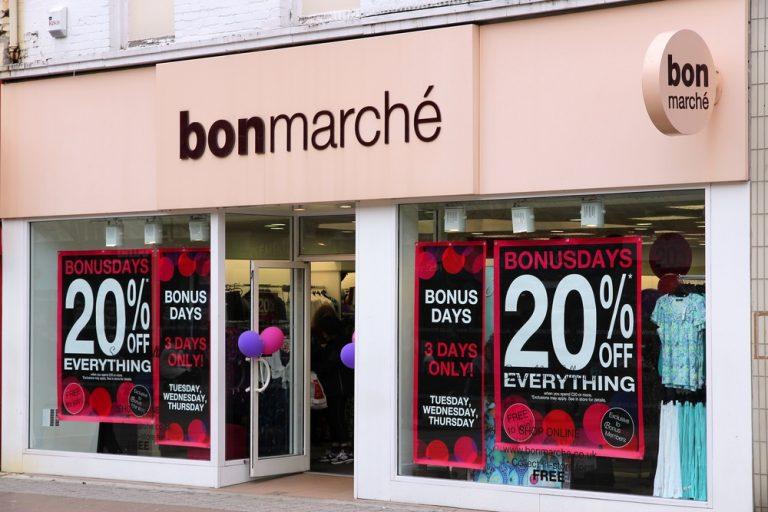
Retailer Bonmarche (LON: BON) has issued a profit warning, blaming the difficult high street conditions. The group now expects pre-tax profit to reach £5.5 million compared to a previous £8 million. Bonmarche said that whilst high street stores were experiencing a tougher time, online stores continued to perform well. Online sales grew by 34.5 percent whilst instore sales fell 4.5 percent. After a strong first quarter, the retailer said a lower footfall and the warmer summer had led to a decrease in sales. “The continuation of warm weather for an extended period may have delayed demand for early autumn stock, but we believe that the more dominant factor is that underlying consumer demand for the UK high street is weaker which is impacting footfall,” it said. The high street has faced a tough year with names including House of Fraser, Maplins and Toys R Us to collapse. House of Fraser was rescued by Sports Direct’s (LON: SPD) Mike Ashley in a £90 million deal. Bonmarche chief executive, Helen Connolly, said: “These are undoubtedly challenging times in the retail industry and, in common with many other businesses, Bonmarche’s store trading has been impacted by weaker consumer sentiment and footfall.” “We have continued to improve our proposition, particularly our digital capabilities, reflected in the strong online sales.” “We remain focussed on exploiting the opportunity afforded by the increasing demand for online shopping, whilst modernising the store offer and customer experience.” “Whilst it is disappointing that FY19’s (full year 2019’s) result is expected to be lower than originally planned, despite the challenging market, the health of the business remains strong.” Shares in the group have plunged over 16 percent on the news.  

Average salary required for first time buyers increases 18pc

0
The average salary required for a first-time buyer has risen by 18 percent in the past three years. Figures from the research company Hometrack have shown that only three out of 20 major cities have become more affordable since 2015. Home ownership is becoming a distant dream for many young people, where a first-time buyer needs to earn £58,826 a year to afford the average property in Bristol. With higher salaries required to buy homes, millennials are likely to live in and raise families in rented homes. Research from the Resolution Foundation thinktank suggested that one in three millennials are unlikely to own their own home. According to the Hometrack figures, the average salary required to buy a house across all 20 cities included in the study is more than double the median annual wage, £28,677, for a full-time employee in the country. Whilst affordability has slightly improved in London, the income required to buy an average property is £84,250. The average wage needed to buy a home has also fallen in Cambridge, Oxford and Aberdeen as wages have increased and house prices stagnated or dropped. The average salary to buy an average home in Manchester has jumped by over £6,500 to £34,770. Cities with the highest salaries required to buy properties are London, Cambridge, Oxford, Bournemouth, Bristol, Portsmouth and Bristol. Richard Donnell, Hometrack’s insight director, said that higher interest rates from the Bank of England could also make it harder for more people to buy a home. “Higher prices and a further drift upwards in mortgage rates means that these affordability pressures will continue to steadily build,” he said.