
Aldi sales surpass £10bn in UK & Ireland
Sales at Aldi have exceeded £10 billion across the UK and Ireland for the first time.
The German chain has reported a rise in sales by 29 percent to £265 million in 2017, which was pushed by the opening of many new stores.
Aldi is the fifth biggest supermarket in the UK, as it overtook the Co-op last year. The chain has 775 stores in the UK and Ireland and plans to open 130 new stores in the UK over the next two years.
Giles Hurley, the chief executive, said: “The revolution in British grocery shows no sign of slowing.”
“In 2020, Aldi will have been serving British shoppers for 30 years. In that time, we’ve become part of the fabric of British life. We’re proud to be reaffirming our commitment today.”
“Our fundamental purpose remains – to bring outstanding quality groceries at the lowest prices for our customers, creating jobs and supporting British farming and manufacturing.”
“While other grocers introduced more complexity into their businesses in their struggle to win back customers, we stuck to our guns and focused on doing what Aldi does best – buying smart, staying lean, improving quality and keeping prices low,” Hurley added.
Aldi hopes to create 5,000 jobs in the UK over the next two years.
In response to Aldi and Lidl’s growing popularity, Tesco (LON: TSCO) has opened its new discount supermarket, Jack’s. The first store opened last week.
Tesco, Sainsbury’s (LON: SBRY), Asda and Morrisons (LON: MRW) have had to approach Aldi and Lidl’s success by cutting costs and improving their cheapest own-label ranges.
Tesco’s chief executive, Dave Lewis, said of the new chain: “We will be the cheapest in town. There are full-range, full-service supermarkets, and clearly people want that, but there is a gap in terms of people wanting smaller, simpler, quicker shops and local produce.”
Musk & Tesla given $40m fine to settle SEC case

Following a deal with the US financial regulator, Elon Musk is to step down as the group’s chair and pay a fine.
Following the misleading tweets that Musk wrote about taking the firm private, he will step down as chair within the next 45 days as well as pay a combined fine of $40 million (£30.6 million) fine.
Musk will continue with his role as chief executive.
In a tweet sent in August, Musk said he was considering taking Tesla (NASDAQ: TSLA) private and had the “funding secured”, which would value Tesla at $420 a share.
The plan was abandoned just two weeks later, causing havoc to shares and investors accusing the chief executive of having no basis to the tweets.
Last Friday the share price in the car company was down close to 14 percent as investors lost yet further confidence.
The group’s boss is well known for his erratic behaviour. In the past few months he has smoked marijuana while appearing on a podcast and attacked a British cave expert involved in the rescue of a Thai football team by accusing him of being a paedophile.
Stephanie Avakian, who is the SEC’s co-director of enforcement, said in a statement: “The total package of remedies and relief announced today are specifically designed to address the misconduct at issue by strengthening Tesla’s corporate governance and oversight in order to protect investors.”
$20 million of the fine will be paid by Musk, whilst the remaining $20 million will be paid by Tesla. The group is worth over $20 billion and will not struggle in paying the fine.
Following the boss’s departure from the board, the group will appoint two new independent board directors to check on Musk’s control over the business.
Tesla and Musk have not yet commented on the fine.
Italy’s budget causes EU backlash, euro falls
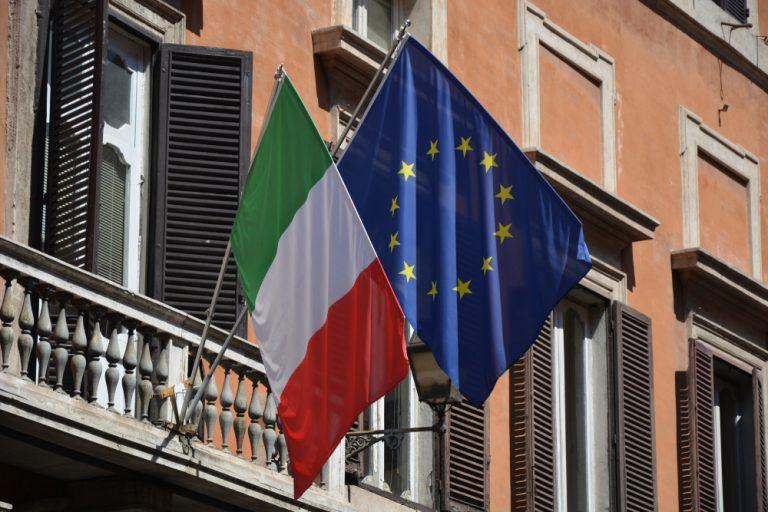
Italy’s budget has stirred backlash from the EU and investors. In fact, it could result in the country’s finance minister’s exit. In addition to the euro, Italian shares and government bonds have also dropped. This is following the Italian government’s agreement of a budget that will increase borrowing by more than expected.
The budget has agitated the financial market for several reasons. First, the Italian economy is the third largest in the Eurozone following Germany and France. Next, its banking system is facing deep fragility after two decades of poor economic growth. Finally, the country’s new populist government has a controversial agenda involving raising pensions and a basic income.
The government insists this will have “abolished poverty”.
Italy’s coalition government was formed earlier in June. It unites the anti-establishment Five Star Movement and the hard-right League. Moreover, the coalition government made an overnight agreement to set forth a budget deficit next year equalling 2.4% of Italian GDP. But, the country’s finance minister, Giovanni Tria, had been promoting a 1.6%. Mr Tria remains unaffiliated to either party in the coalition.Italian media have reported that the finance minister was persuaded by the president not to resign following Italy’s budget.
Following the news, the yield on 10-year government bonds rose above 3%. Moreover, the Milan stock exchange dropped by over 2% earlier today. Indeed, a handful of banks saw a decline of at least 5%. Despite being under the EU’s deficit limit of 3% of GDP, the news has caused controversy. Italy is indeed the third-largest economy in the Eurozone but debt currently stands at 131% of national output. This makes Italy’s government debt second to Greece. Italy’s populist government rose to power through the promise of tax cuts, new social welfare policies and improved pensions. In fact, a minimum basic unemployment income is predicted to cost €10 billion alone. All these programmes have a very high price. Luigi Di Maio, deputy prime minister and leader of the Five Star party, insists that: “We, in a decisive manner, with this budget law, will have abolished poverty”.Unilever bosses’ jobs at risk as shareholders oppose HQ move
Top Unilever jobs are at risk of influential investor revolts at next year’s annual general meeting. This is due to their handling of plans to scrap the company’s UK headquarters. The company’s chairman and other board members are among the few who investors may target.
A variety of influential institutional shareholders are planning to oppose the re-election of chairman Marjin Dekkers. In addition, investors plan on opposing the company’s senior independent director, Professor Youngme Moon.
One of Unilever’s top investors also added that it was highly likely they would vote against Graeme Pitkethly. This is as a result of the chief financial officer’s ‘aggressive’ attempted justification of the move.
Unilever is an Anglo-Dutch consumer giant most well-known for its manufacturing of Marmite and Dove soap.
The company has a dual-HQ in London and the Dutch city Rotterdam. In March, it announced the move of its HQ to Rotterdam. The company insisted it was not as a result of Brexit. The move has stirred up controversy among UK shareholders. This is due to the fact that the move would eject the company from the FTSE 100 index. We reported Unilever’s shareholder backlash earlier this month. However, today it has become apparent that investors will target specific high profile jobs among the company’s management team.One of the company’s biggest shareholders, Legal & General Investment Management, has publically advocated its opposition to the move.
LGIM is the company’s sixth-largest shareholder and holds a stake of roughly 2.2%. LGIM has decided to publicise this decision as a result of the “significant client enquiries about our position”. The director of corporate governance at LGIM, Sacha Sadan, commented: “As a supportive shareholder in Unilever PLC for more than 25 years, we have engaged with the company on a number of issues including its decision to unify its corporate structure.” “We asked the company to ensure that any approach they take safeguards the ability of our clients to maintain their investment and benefit from Unilever’s continued success.” According to Mr Sadan, the company had not “made a compelling case for many PLC shareholders to support the recommendation in favour of Dutch incorporation”. Additionally, a Unilever spokesman has said: “We have held around 200 meetings with shareholders over the last six months and believe the overall benefits of simplification have been widely understood.” “We are aware that a certain group of shareholders have expressed concern about our proposals.” Furthermore, the company “will continue to engage with shareholders to discuss our plans”. At 11:35 GMT -4 today, shares in Unilever (NYSE:UN) were trading at -0.27%.Real Good Food posts 20pc increase in revenues

Real Good Food PLC (LON: RGD) has reported a 20 percent rise in revenue for the year.
The group has said that the acquisition with the healthy snack maker Brighter Foods has helped to increase revenue from £107.7 million from £129.8 million.
Real Good Food bought an 84.3 percent stake in Brighter Foods last year, which added £16.1 million to the total revenue.
“Last year was one which we will look back on with little pride or satisfaction,” said Hugh Cawley, the group’s chief executive who was appointed in January and replaced Christopher Thomas.
“However, since the start of 2018, we have begun to take many of the remedial actions to turn around performance, continuing these steps beyond the financial year end.”
“Moreover, we can now see the benefits of these actions in terms of having eliminated term bank debt, much reduced costs and a greater focus on our continuing businesses, all of which provide cause for optimism for the future,” Cawley added.
Earlier this month, the cake and bakery group sold its Haydens Bakery business to Bakkavor Group PLC (LON: BAKK) in a deal worth £12 million. The group has been slimming down mode as part of a restructuring plan.
Real Good Foods has said that trading is in line with expectations for the full year.
Shares in the firm (LON: RGD) are trading up 2.35 percent at 8,70 (1444GMT).
John Lewis introduce personal stylists to combat slumping sales
In an attempt to remain relevant, John Lewis has announced plans to introduce personal stylists to the department store.
Boss of the department store, Paula Nickolds, has said the store needs to focus on selling “experiences” to combat the slump in clothing sales.
“There is still a bit of a stigma [around personal styling] from back in the day when Trinny and Susannah and Gok Wan would strip you off and make you stand in front a mirror in your bra and knickers,” a new stylist working for John Lewis. “It’s not like that,” she added.
“Your client needs to trust you in the first 30 seconds,” says Knight. “If you don’t build that trust straight away it’s going to become a difficult appointment.”
The introduction of personal stylists comes amid the difficult trading conditions faced by UK department stores.
Major price cutting by House of Fraser in the run-up its administration and purchase by Sports Direct (LON: SPD) has made things difficult for John Lewis and Debenhams (LON: DEB), whose share price has declined significantly.
The John Lewis Partnership was in the red for the six months of 2018, despite an increase in sales for clothing.
The group experienced a 99 percent fall in first-half profits at the retailer.
Sir Charlie Mayfield, chairman of the partnership, blamed heavy discounting at rival stores.
“These are challenging times in retail … gross margin has been squeezed in what has been the most promotional market we’ve seen in almost a decade,” he said.
The group also said that the “level of uncertainty facing consumers and the economy, in part due to ongoing Brexit negotiations” made it difficult to forecast trading.
Johnson intervenes with ‘SuperCanada’ proposals for Brexit
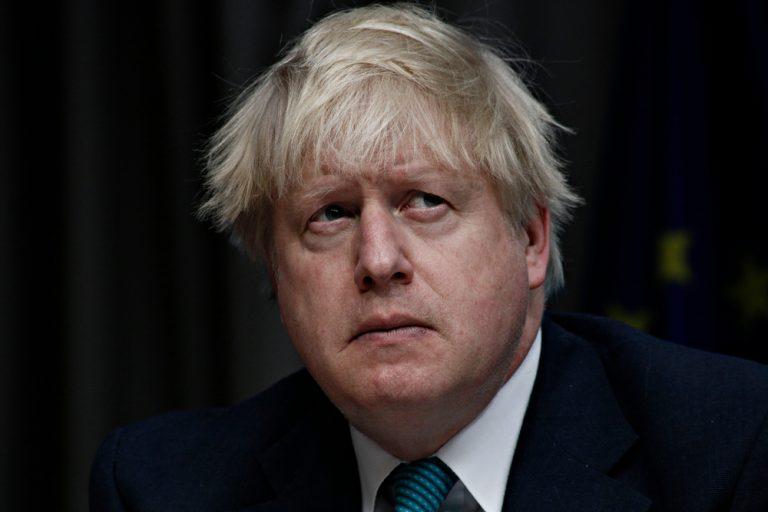
Boris Johnson proposed a ‘SuperCanada’ free trade deal with the European Union last night, sharply criticising the government’s handling of Brexit negotiations.
Writing in his The Daily Telegraph column, Mr Johnson described Theresa May’s Chequers deal as ‘disastrous’, urging the Prime Minister to drop her plans for a ‘common rulebook’ with the EU within a specialised customs agreement.
The 4,000-word censure of Mrs May’s Brexit plans, which were rejected last week at a negotiations summit in Salzburg by EU leaders, described Johnson’s own plan based on the EU’s deal with Canada.
‘SuperCanada’ proposal detailed
Mr Johnson detailed zero tariffs and zero quotas on all imports and exports between the EU and UK and the drawing up of Mutual Recognition Agreements covering EU and UK goods regulations. He also rubbished government claims that the Irish border question would hinder his proposals. Mr Johnson wrote: “The single greatest failing has been the government’s appalling and inexplicable delay in setting out a vision for what Brexit is.” Justifying his ‘SuperCanada’ proposal, the former foreign secretary said: “Britain should seek the same freedoms and opportunities in its relations with the EU as any other independent and democratic country.”May challenged over humiliation at Salzburg
In a frustrated speech last Friday, the Prime Minister attacked EU leaders’ outright rejection of her proposals in Salzburg, and reasserted that a Canada-style trade agreement would endanger the prevention of a hard border in Northern Ireland. After Mrs May’s speech, the pound dropped from 1% to 1.5% lower against the dollar to $1.3068. Meanwhile, Jacob Rees-Mogg, chairman of the Eurosceptic European Research Group, challenged the government’s treatment of negotiations on BBC’s Question Time. Mr Rees-Mogg declared: “I think we have let the European Union make the running in negotiations, we agreed to their establishment of the terms of negotiations and the timetable of the negotiations.” Despite internal divisions around Brexit negotiations, the Conservative Party will go into their conference in Birmingham next week with a 6-point lead over Labour.Conservative Party Conference 2018: What to expect
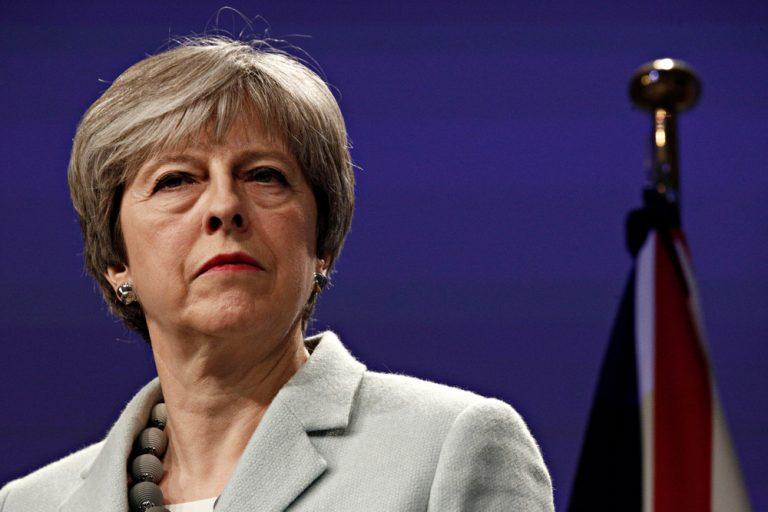
The Conservative Party conference will take place in Birmingham this weekend.
The event will run through from 10 am on Sunday 30 September and 12.30 pm on Wednesday 3 October with an estimated 11,000 delegates present.
All eyes will be on Theresa May’s keynote speech as she faces criticism from EU leaders and members of her own party including the former foreign secretary Boris Johnson.
Johnson recently launched a fresh attack on the prime minister’s Brexit policy and described the prime minister’s proposals as “a moral and intellectual humiliation for this country” that will “cheat the electorate” if implemented.
The conference will kick off with “Welcome to Conference” speech on Sunday afternoon by party chairman Brandon Lewis. This will be followed by addresses from international trade secretary Liam Fox, the international development secretary Penny Mordaunt, defence secretary Gavin Williamson and the foreign secretary Jeremy Hunt.
Work and pensions secretary Esther McVey, Brexit secretary Dominic Raab and the transport secretary Chris Grayling will address audiences on Monday along with Philip Hammond.
Former minister Robert Halfon wrote on the website Conservative Home before the conference that Jeremy Corbyn’s messages “resonates with millions of people”, as the Labour leader discussed failing railways, overpaid bosses and infrastructure at the Labour conference.
“We are stuck in the political rhetoric of the past, rather than providing a proper Tory vision for the future,” he wrote.
“It’s why even with ‘the most left-wing leader in the history of mankind etc’, Corbyn’s Labour remains pretty high in the polls.”
“They are speaking to the problems faced by many. We too often speak only for the few.”
TSB & HSBC report IT glitch, banking apps crash
TSB and HSBC (LON: HSBA) are the latest banks to experience an IT glitch, leaving customers locked out of online banking.
HSBC said about 50 percent of mobile users were having trouble connecting. It is the second time this month TSB users have experienced difficulty.
“We’re aware of an issue affecting some of our customers when they are using our mobile app and Internet Banking this morning. We are working hard to fix these issues and will update again as soon as we can. Customers are still able to use their cards as normal,” said a TSB spokesperson.
After the most recent round of technical problems, TSB chief executive Paul Pester stepped down.
TSB chairman Richard Meddings is taking on the role of executive chairman until a new chief executive is appointed.
Meddings said: “Although there is more to do to achieve full stability for customers, the bank’s IT systems and services are much improved since the IT migration. Paul and the Board have therefore agreed that this is the right time to appoint a new CEO for TSB.”
Last week, RBS (LON: RBS), NatWest and Ulster Bank also reported problems with the banking apps, leaving customers locked out of accounts for five hours.
An HSBC UK spokesman said of the glitch: “Services are recovering and the majority of our customers are able to log-on now, but we are continuing to monitor the issue.”
“If a customer continues to experience problems they should continue to retry or our online banking services are available via browser. We apologise for any inconvenience caused.”
EasyJet expects strong profits as Ryanair faces strikes
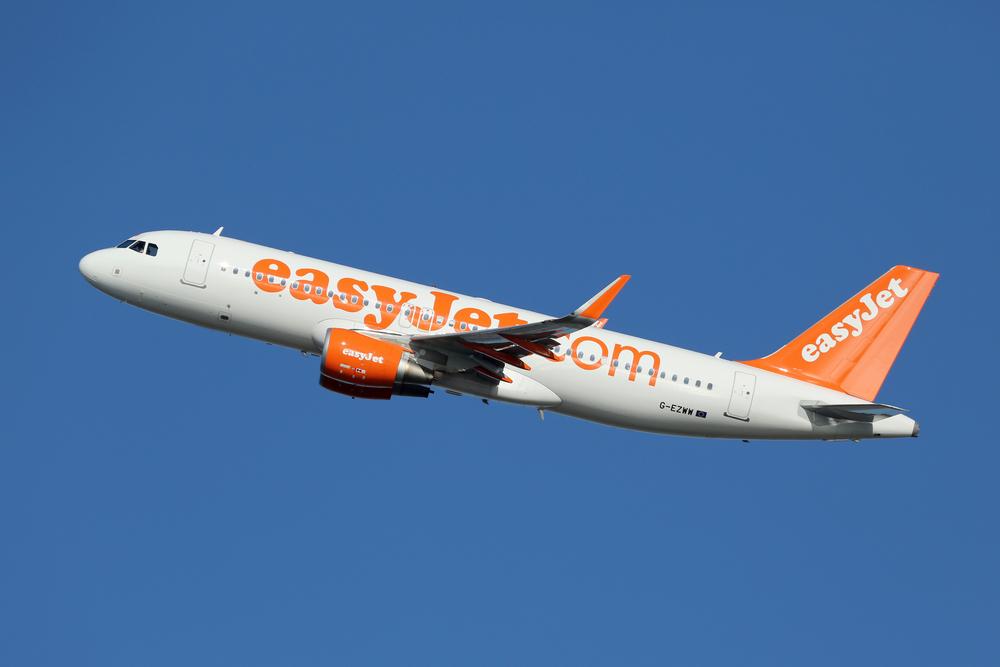
EasyJet (LON: EZJ) is expecting full-year profits to come at the upper end of expectations.
The low-cost airline said it is confident for annual and fourth quarter results following better than expected growth in passenger revenue.
“We now expect our headline profits for the year to be between £570 million and £580 million, at the top half our guidance range. This has been achieved despite higher costs caused by disruption due to third party industrial action and severe weather,” said Easyjet’s chief executive Johan Lundgren.
EasyJet is expecting its capacity to rise by 10 percent to 105 seats and flat headline cost per seat and foreign exchange rates to have a £10 million negative impact of pre-tax profit for the year of 2019.
The airline’s confidence comes as rival Ryanair (LON: RYA) prepares for strikes across six countries that will lead to flight cancellations disrupting 40,000 of its customers.
Kathleen Brooks, the research director at Capital Index, said the strikes at Ryanair are likely to cause problems for the airline later on down the line.
“The Ryanair success story has largely been built on good cash cushion and low costs – both of those things are likely to be eroded because of the labour issues and the future higher labour costs.”
“Brexit is expected to hit Ryanair’s cash flow later on down the line especially if we leave the EU without a deal. Also, we’ve got to remember logistical problems could impact a passenger backlash down the line.”
EasyJet has also said that its results were supported by the bankruptcies of Monarch and Air Berlin.
Ryanair’s share price has fallen 23 percent in a year compared to EasyJet’s eight percent rise.