
Canada to buy Kinder Morgan pipeline in C$4.5bn deal

The Canadian government will buy the Kinder Morgan (NYSE: KMI) Canada Ltd’s Trans Mountain oil pipeline in a C$4.5 billion (US$3.5 billion) deal.
The country does not plan to be the long-term owner of the pipeline but will offer federal loan guarantees to ensure the construction throughout 2018.
Bill Morneau, the finance minister, said: “The federal government has reached an agreement with Kinder Morgan to purchase the existing Trans Mountain pipeline, and infrastructure related to the Trans Mountain expansion project.”
“So our message today is simple: when we are faced with an exceptional situation that puts jobs at risk, that puts our international reputation on the line, our government is prepared to take action,” he added.
The project has faced environmental opposition, with over 14,000 people signing the organisation’s pledge to halt the project due to the widespread concerns over environmental risks and the fight against climate change.
“Prime minister Trudeau has picked a fight with British Columbians by approving Kinder Morgan – and it starts now. The Kinder Morgan pipeline will not be built. Not on our watch,” said Caitlyn Vernon from the Sierra Club of British Columbia.
Justin Trudeau has defended the controversial project and said: “This is a decision based on rigorous debate, on science and evidence. We have not been and will not be swayed by political argument, be they local, or regional or national,” he said. “We have made this decision because we are convinced it is safe for BC, and it is the right one for Canada.”
The Canadian government has not made long-term plans clear but may sell the pipeline after completion, according to Canadian press.
Bloomberg has reported that the deal could be announced on Tuesday.
Smiths Group shares edge up on potential merger deal
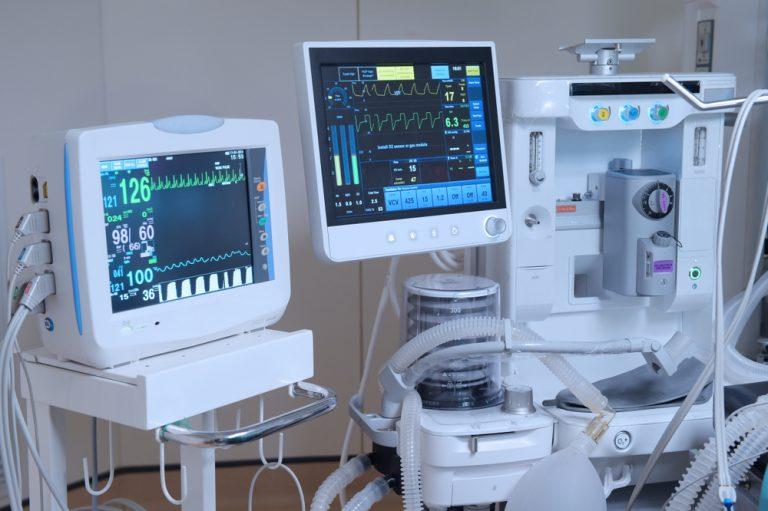
Engineering firm Smiths Group (LON:SMIN) saw shares rise 2 percent on Tuesday morning, after it confirmed it was in merger talks with US company ICU Medical.
Smiths Group have said it was in “very early discussions” over the sale of its medical arm, adding there was “no certainty” a deal would be concluded.
ICU make devices used in infusion therapy and oncology, and have a proven track record of takeovers. Last year the firm purchased Pfizer’s Hospira Infusion Systems arm for $900 million.
There is very little known about the merger at present, but it is likely to be more of a joint venture than a takeover by ICU.
Responding to takeover speculation over the last couple of days, Smiths said that it “routinely reviewed all options for its businesses to maximise value for shareholders.”
“Any actual deal is probably still months away,” they added.
Revenue for the half-year to January was down 5 percent to £451 million, but Smiths said they were making “significant progress” on this. The group is likely to be valued at over £2 billion.
Shares in Smiths Group are currently trading up 2.66 percent at 1,765.83 (1125GMT).
George Soros spooks markets with Europe financial crisis warning
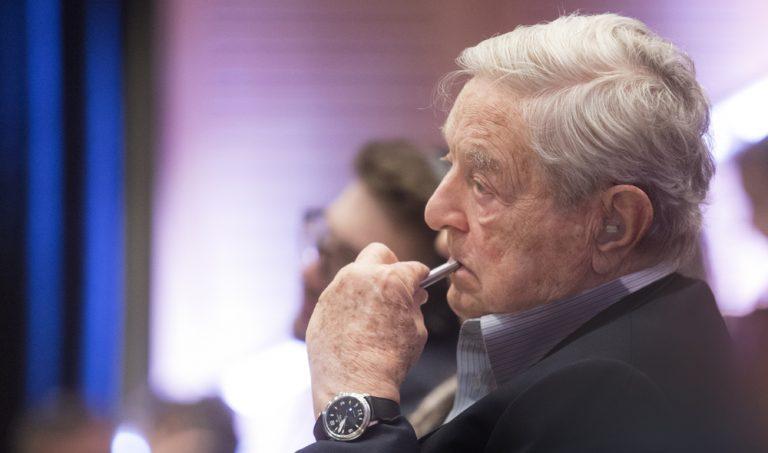
Billionaire investor George Soros warned that the EU may be heading towards another major financial crisis, spooking the markets on Tuesday morning.
Giving the keynote address at a meeting organised by think-tank the European Council on Foreign Relations in Paris, Soros criticised Brexit, warned on the European Union’s future and highlighted the key problems facing the EU.
Soros, whose pro-European Open Society Foundation donated £400 million to the Remain campaign, said the EU was in the midst of an “existential crisis” and said Brexit was likely to be “immensely damaging”.
Soros said the EU’s three key problems were the refugee crisis, territorial disintegration exemplified by Brexit and an austerity policy that has “hindered Europe’s economic development”.
He added that “everything that could go wrong in Europe, has gone wrong”.
He also warned that the strength in the dollar is taking focus away from emerging market currencies, which alongside the collapse of the Iran deal, is set to create trouble for Europe.
“We may be heading for another major financial crisis,” he said.
The FTSE 100, which was already trading down this morning due to worries over Italy and Spain, fell further on Soros’s speech, currently down 1.32 percent at 7,627.90 (1024GMT).
Idox shares down 16pc after earnings fall

Software solutions supplier Idox (LON:IDOX) saw shares sink over 15 percent at market open, after a trading update slashed full year earnings expectations.
The groups expected EBITDA for the full year is now likely to be in the range of between £13 – £15 million, down from previous market expectations of around £22.8 million. Underlying performance excluding the discontinued Digital division is expected to be in the range of £18- £20 million. Group net debt at the half year stands at £25.5 million.
However, an improved performance in the second half of the year is expected by the board, boosted by stronger May and June trading.
Laurence Vaughan, Chairman of Idox, commented:
“The major review and actions taken reflect our commitment to deal decisively with the issues faced by the Group during the last year. Despite the impact on our financial performance this year, this necessary programme of change has positioned the group to deliver an improved performance in future financial years.
“I believe that the Group has good growth opportunities through its continued focus on digital transformation and high quality governance solutions for the public sector. With new leadership in place we can look forward to the future with renewed confidence.”
The group also confirmed the appointment of David Meaden as Chief Executive, who will join Idox on 1st June.
Shares in Idox (LON:IDOX) are currently down 16.22 percent at 32.80 (1000GMT).
Rolls-Royce unveils new range of business jet engines
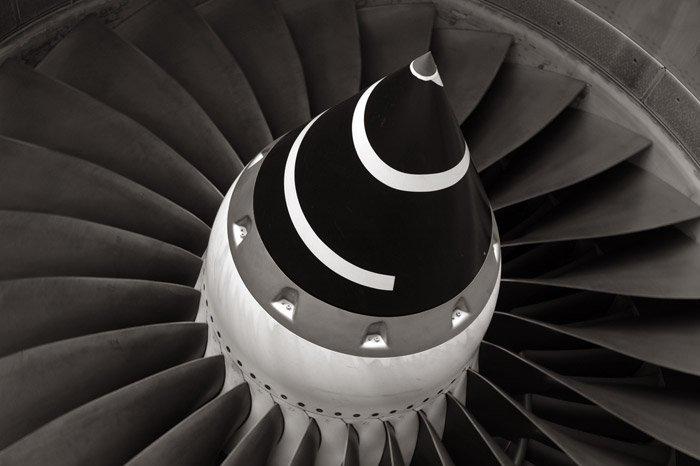
Rolls-Royce (LON:RR) surprised markets with the announcement of a new engine family for its business aviation unit, designed to push the troubled company back to the forefront of the market.
The Pearl engine has been purpose-built and will be the sole engine for Bombardier’s latest business jets, the Global 5500 aircraft and the Global 6500 aircraft.
Rolls-Royce have issued several profit warnings over the last five years, after its leadership in the industry began to be overtaken by rival companies including Pratt & Whitney and Snecma. However, it maintains a 42 percent share of the market, a percentage designed to be expanded upon by the surprise new range of engines.
Chris Cholerton, Civil Aerospace President at Rolls-Royce, said:
“Our teams have worked hard behind the scenes to develop this new engine and we are proud, once again, to lead the way in business aviation. The Pearl engine is a pioneering product, bringing together the most eco-friendly and efficient technologies available today.”
Shares in Rolls-Royce are trading down on the news however, down 2.44 percent at 822.,80 (0935GMT).
Paddy Power Betfair shares steady as share buyback begins
Paddy Power Betfair (LON:PPB) began the first part of their planned £500 million share buy back on Tuesday, in a move designed to reduce the company’s share capital.
The decision was announced by the gambling company earlier this month, with Paddy Power Betfair confirming on Tuesday that its agreement with broker Goldman Sachs to purchase up to £200 million shares on its behalf would begin today. It will continue for the next three months.
The share buyback comes just a week after the betting company agreed a merger with US fantasy sports betting site Fan Duel.
The group is hoping to make bigger moves into the US market, after US laws on sports betting were relaxed earlier this month.
As part of the agreement, Paddy Power Betfair will take a 61 percent stake in the combined business, with existing Fan Duel investors continuing to own 39 percent.
The Dublin-based company will control the business, which will become a subsidiary.
Shares in Paddy Power Betfair are currently trading up 0.44 percent at 9,120.00 (0925GMT).
European markets fall on worries over both Spain and Italy

European markets opened lower on Tuesday morning, as potential crises in both Italy and Spain spook investors.
The FTSE 100 is currently down 0.93 percent at 7658, with Germany’s Dax sinking 1.52 percent. The CAC40 index in France has also been affected, trading down 1.69 percent by 0904GMT.
Italy, one of the countries in the spotlight over the bank holiday weekend due to a political crisis currently unfolding, has seen its stock market tumble 1.9 percent to its lowest level since August last year. Spain, the other country under investors’ watchful eyes, saw its Ibex35 fall 2.44 percent.
Italy’s likelihood of leaving the Euro tripled over the weekend from 3.6 percent to 11.6 percent, after its President used its veto against the new proposed finance minister. This is likely to dissolve government talks and reinforce populist sentiment.
Spain is also facing its fair share of uncertainty, with Prime Minister Mariano Rajoy set to face a vote of no confidence later this week.
Japan Display shares sink as Apple swap to OLED screens

Japan Display shares fell on Tuesday morning, after a report that Apple will not be using their screens in their next generation of iPhones.
A new report has suggested that Apple will adopt organic light-emitting diode (OLED) screens for all of its iPhones from 2019, instead of the liquid crystal display screens Japan Display currently supplies them with.
Whilst Japan Display do make a small number of OLED screens, their production capability is well behind that of their competitors. The OLED screens for the iPhone X, which already utilises the technology, are currently supplied by Samsung Electronics.
A report in the South Korean Electronic Times suggested that Apple will replace the old screens with OLED panels made by LG.
Share in Japan Display (TOY:6740) sunk 10 percent on the news, and are currently trading down 7.97 percent at 127JPY (0852GMT).
Renold shares up 11pc on surprise growth in organic revenue

Renold (LON:RNO) shares rose 11 percent at market open on Tuesday, after reporting a growth in organic revenue for the first time in several years.
The revenue growth failed to translate to a profit however, with pre-tax profit for the year through March falling to £1.4 million from £6.7 million the year previously.
Adjusted operating profit also fell to £14.2 million, despite recording a slight improvement in the second half on the back of beneficial movements in raw material costs and improved factory performance.
Chief executive Robert Purcell was positive about the results, saying:
“Through a combination of strategic action and improving market conditions, we have delivered organic revenue growth for the first time in a number of years.
“Order intake continues to remain strong with order books meaningfully ahead year-on-year.”
Growth is expected to continue in the coming year, with improving macroeconomic conditions set to strengthen order intake.
“Those same macroeconomic conditions are resulting in inflationary pressures on raw material costs and labour rates, which have also been impacted by legislative changes in some territories,” he said.
“Despite this, we expect growth, recovery of material price increases and continued efficiencies to overcome cost pressures and deliver improved adjusted operating profit margins.”
Shares in Renold (LON:RNO) are currently up 11.40 percent at 25.40 (0834GMT).
Pret A Manger to be sold to JAB Holdings in £1.5 billion deal

UK-based takeaway sandwich chain Pret A Manger is set to be sold to private equity firm JAB Holdings for a cool £1.5 billion.
The chain confirmed the sale on Tuesday morning, on the back of an exclusive report by the Financial Times on Monday. JAB Holdings, who have been rapidly buying up companies in the coffee market, will acquire Pret after the chain chose a sale over a public listing.
Bridgepoint, the company’s current owners, will make a tidy profit on the business, which they bought for £364 million including debt ten years ago.
William Jackson, chairman of Pret and managing partner of Bridgepoint, said:
“We’re proud of what we’ve achieved over the last 10 years with Pret and its management team.”
Clive Schlee, chief executive at Pret, confirmed the sale and said his company achieved the ninth consecutive year of like-for-like sales growth in 2017.
Olivier Goudet, JAB Partner and chief executive, said management had a “proven track record” that was crucial for the business and that they would continue to invest in new products as consumer taste evolves.
Pret owns 530 stores worldwide, including the UK, Asia and France, and generates group revenues of £879 million. Its sale is expected to be completed this summer.