
Pets At Home report fall in profits, shares fall

Pets At Home (LON: PETS) has reported a 17 percent fall in pre-tax profits in full-year results.
Chief executive Peter Pritchard remained positive despite the fall in profits, saying there is “a bright future” for the pet shop.
The group has said the next financial year will be the second of its three-year “financial transition” as it aims for sustainable profit growth.
Margins fell to 51.7 percent from 54.2 percent in the same period last year. Like-for-like revenue rose by 5.5 percent.
“The veterinary services market is a very attractive space in which we can grow. We have a profitable business delivering strong returns, achieved largely through our preference to work in partnership with vets who share in the success of their practice,” said Pritchard.
“The shortage of qualified vets in the UK remains an industry wide problem, so we have chosen to slow our practice rollout to be sure we open practices in quality locations for the best vet partners.”
Pets At Home are hoping to open five superstores, 20-25 vet practices, and 10-20 grooming salons in the next year.
“Our plans to reposition retail are working, more customers are coming back to shop with us, and we are committed to returning the business to profit growth. But it hasn’t been easy. We took decisive action, threw passion and energy into it, and delivered targeted pricing changes to give customers the products that mattered most to them, with the service and value they expect from us,” said Pritchard.
In Tuesday’s early morning trading, Pets at Home shares were down 3.9 percent at 151.8p.
Mortgage lending sends Nationwide profits down
Nationwide Building Society (LON:NBS) profits fell for the second year in a row, after a slump in mortgage lending.
The group cited “intense competition” as a reason for the weaker profits, with demand for savings and mortgage lending falling.
Nationwide reported a 7.3 percent drop in bottom line profits to £977 million, with net mortgage lending falling to £5.8 billion from £8.8 billion the previous year.
However, Nationwide said the figures were in line with its financial performance framework. The building society also said that it had given an extra £560 million in benefits to members.
Joe Garner, chief executive of Nationwide, said the building society was providing “outstanding sevice and great value, backed by record capital strength”.
He said: “As a mutual, without shareholders to reward, we were able to deliver £560 million in extra value to members during the year, as a result of the better rates, fees and incentives we can offer compared to the market average.”
Topps Tiles shares up despite pre-tax profit dropping by a third

Topps Tiles (LON:TPT) shares rose over 4 percent on Tuesday morning, despite pre-tax profit dropping by over 30 percent in the first half.
Severe weather across February and March kept customers away from stores, and combined with rising input and marketing costs, pre-tax profit fell by 33 percent over the period.
However, revenue increased 3.7 percent to £110.5 million, and like-for-like sales grew by 0.6 percent. Growth in the first quarter was strong with sales up 3.4 percent, but it was offset by a 2.2 percent fall in the second quarter.
Its dividend remained steady at 1.1p per share.
“While we are retaining a cautious view of market conditions for the remainder of the year, we remain confident in our ability to continue to extend our market leading position,” Topps Tiles said.
Shares in Topps Tiles rose 4.35 percent at 72.00 (0932GMT).
Entertainment One boosted by Peppa Pig again
Entertainment company Entertainment One (LON:ETO) saw strong growth across all geographic areas, driven largely by its popular Peppa Pig brand.
Full-year revenue from its family and brands division, including the popular cartoon pig, rose by 56 percent to £138.6 million. Group adjusted profit before tax is up 11 percent to £144 million, with adjusted diluted earnings per share up by 10 percent.
Chief executive Darren Throop said it had been “a strong year for the Group”, combining “Film and Television operations into the Film, Television and Digital Division for FY19, completed the acquisition of the remaining stake in The Mark Gordon Company and continued the reshaping of our Film business.”
“All of these initiatives sharpen our operational focus and facilitate success in today’s evolving entertainment market.”
Peppa Pig’s popularity has grown across China and the US, where is continues to be a key market due to its appearance on the Nickelodeon channel.
Entertainment One said it expects Toys R Us store closures in the US and UK may have “some impact for its brands in the short term” but “this impact is not anticipated to be significant”.
Shares in Entertainment One are broadly flat, up 0.17 percent at 289.50 (0924GMT).
Halfords shares sink 10pc after reporting flat profits
Halfords (LON:HFD) shares plunged over 10 percent on Tuesday morning, after the group announced profit would be flat for the full year.
The group posted figures in line with full year numbers, with total group revenue up 3.7 percent and 2 percent on a like-for-like basis.
Underlying pre-tax profit came in at £71.6 million, down £3.8 million year-on-year. The group had to absorb around £25 million of additional cost of sales as a result of the weaker pound.
Halfords also announced the appointment of former British Airways boss Keith Williams to replace Dennis Millard, who is retiring after nine years in the role of chairman.
“We anticipate the motoring market will remain robust and continue to see good growth prospects for the cycling market although we do not expect prices to rise in cycling this year as in the previous year,” the group said.
“Given this, the phasing of our remaining FX mitigation actions and decisions to accelerate investment in services and customer capabilities, we currently anticipate FY19 Underlying Profit Before Tax to be broadly in line with FY18.”
Shares in Halfords are currently down 10.28 percent at 348.10 (0910GMT).
Fuel prices hit three year highs
The price of fuel has climbed to its highest level in over three years, increasing pressure on consumers.
Despite a decrease in the disparity between wage growth and inflation, rising oil prices still represent a squeeze on incomes. An increase in oil prices has meant the average price of petrol has risen to 127.22 pence a litre, with diesel up to 129.96 pence a litre. Fuel prices are now at their highest level since December 2014, driven by the US’s withdrawal from the Iran deal as well as renewed tensions in the Middle East. “Things have started to look better for the UK consumer recently, with inflationary pressures easing and real wage growth finally started picking up,” said George Salmon, equity analyst at Hargreaves Lansdown, told the BBC. “Filling up the tank is a pretty essential expense for most of us, so the average consumer could find there’s a few pounds less in the jar at the end of each month.”Galliford Try hit by delays at Aberdeen project
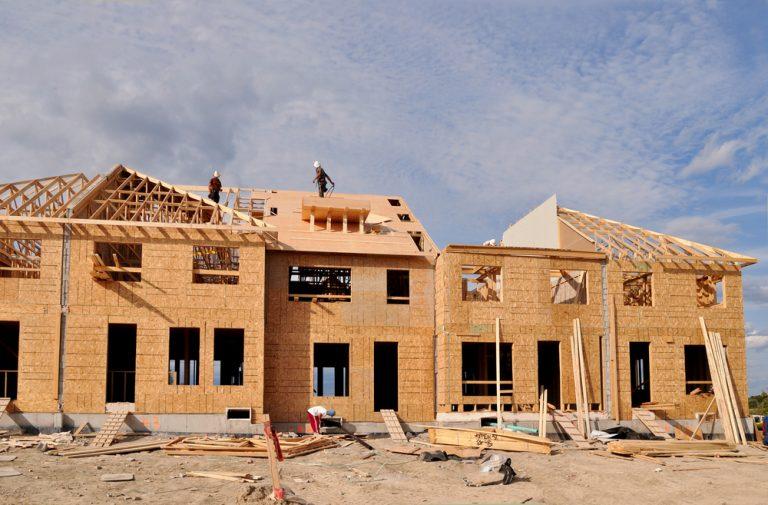
Homebuilder Galliford Try (LON:GFRD) said full year results would still be in line with expectations, despite delays on one of its major projects that is likely to result in increased cost pressure on the company.
The group warned that costs had gone up on its Aberdeen Western Peripheral Route project, as a result of delays from bad weather. It is now likely to increase the exceptional charge in the current year.
“The amount will depend upon progress recovered through the summer, and is expected to be lower than the charge (£25m) taken in the first half. We are continuing to discuss several significant claims. Practical completion of the project is anticipated this summer,” the group said.
The group were also hit by falling sales at its Linden project, which recorded £1.18 billion of sales reserved, contracted or completed, of which £904m was for the current financial year through June. This compares to comparative figures in the previous financial year of £1.17 billion and £915 million respectively.
Full-year pre-tax profits are still likely to be within the range of analysts’ forecasts however, between £138 million and £146 million.
“The Group continues to deliver a strong operational and financial performance and is making good progress against its growth plans to 2021,” CEO Peter Truscott said.
“Following the successful completion of the recent rights issue the Group is well capitalised with a strengthened balance sheet to support our planned growth.”
Shares in Galliford Try are currently down 0.80 percent at 964.75 (0845GMT).
Cranswick shares up on buoyant demand for sausages

Shares in meat supplier Cranswick (LON:CWK) rose 9 percent on Tuesday, after posting a 14 percent rise in profit over the year.
Pre-tax profit rose £88 million, with revenue up 18 percent to £1.46 billion. Pre-tax profit also also shot up 22 percent to £92.4 million, with the group reporting a full-year dividend of 53.7 pence, up 22 percent.
The meat supplier was boosted by strong demand for sausages and bacon, with good revenue streams and falling pig prices boosting margins.
Cranswick confirmed that trading for the current financial year will continue in line with management expectations, with the figures weighted towards the second half.
“The business has continued to make commercial and strategic progress over the past year and the board believes there is a solid platform in place from which to progress further within the pork, poultry and associated categories of the food sector,” the company said.
“The strengths of the company include its long-standing customer relationships, breadth and quality of products, growing export channels and well invested asset infrastructure.”
Shares in Cranswick are currently trading up 8.72 percent at 3,440.00 (0829GMT).
Homeserve shares sink despite increase in profits and revenues

Emergency home repairs group Homeserve (LON:HSV) reported a 25 percent rise in profit on Tuesday, after strong growth in North America, Spain and France.
Pre-tax profit hit £123.3 million, with revenue rising 15 percent to £899.7 million. In North America, operating profit doubled to $64.4 million, with customer numbers up 20 percent. Total customers for the group rose 7 percent to 8.4 million.
“This has been another great year for HomeServe, with record profit growth and another step change in our growth in North America,” founder and chief executive Richard Harpin said.
“In particular, continued strong organic growth is expected in North America, with acquisitions providing opportunities to further accelerate business development across the group,” it said.
The company also reported an increase in its full-year dividend, up 25 percent on-year.
Despite the strong figures, Homeserve shares are currently trading down 3.80 percent at 810.00 (0811GMT).
Greatland Gold shares soar after Black Hills update

Shares in Greatland Gold (LON:GGP) soared on Monday, after the company announced plans to commence exploration efforts at its Black Hills project.
The company confirmed it intends to start exploration at its Black Hills Project in Western Australia after identifying four distinct gold mineralisation zones.
Gervaise Heddle, Chief Executive Officer, commented:
“Our first exploration programme at Black Hills marks another important step for Greatland. Sitting near the 27 million ounce Telfer gold deposit and hosting an equivalent style of mineralisation, Black Hills represents a compelling and high priority exploration opportunity for the Company.
He continued:
“The Black Hills project epitomises our strategy of targeting under-explored areas with great potential. We believe it represents an excellent opportunity for Greatland and we are excited to get started with the exploration programme.”
Back in April, the company also announced plans to commence exploration at a new site in Tansmania at The Australian Firetower Project.
Greatland Gold was founded back in 2005, and has been listed on the junior AIM-market of the London Stock Exchange since 2006.
The company’s current projects include Paterson, Ernest Giles, Bromus, Warrentinna, Firetower and Panorama, focusing primarily upon regions in Australia.Shares in Greatland Gold are trading up 7.27 percent as of 13.52PM (GMT), as the market reacts to the news.