
Shire reject Takeda bid as Allergan backs away

The bidding war for pharmaceutical company Shire (LON:SHP) took another unexpected turn last night, with Dublin-based Allergan U-turning on its interest in the company.
Shire rejected an earlier £43 billion offer from Japanese company Takeda on Thursday morning, making it the third offer from Takeda that Shire had rejected. Later that day Allergan confirmed its interest in the group, before released a statement in the evening backtracking on their earlier statement.
Reuters said Allergan’s investors were worried that the group was overstretching its resources in considering a deal. Allergan’s initial statement said its interest in Shire was part of the company “evaluating a full range of potential strategic actions” to create value for shareholders.
Shire are now left without any bidders, despite stating that it would be willing to consider another offer from Takeda after their last rejection.
“At the board’s request Shire’s advisers entered into a dialogue with Takeda’s advisers to discuss whether a further, more attractive, proposal may be forthcoming and to understand the basis on which such a proposal would be made.
“The board and management of Shire remain committed to enhancing shareholder value and are focused on fully evaluating internal and external opportunities to maximise value for shareholders, including any further proposals from Takeda”, the company said in a statement.
Shares in Shire are currently trading down 3.96 percent at 1,817.50 (0904GMT).
Royal Mail CEO Moya Greene to step down
Royal Mail (LON:RMG) has announced that its chief executive officer, Moya Greene, will retire in September, to be replaced by the boss of the group’s general logistics systems business.
Rico Back will replace Greene as chief executive from the 1st June, with Greene stepping down from the board on 19th July.
Greene has led Royal Mail for the past eight years, with Royal Mail saying in a statement that she is leaving to “pursue a range of other interests, including developing her portfolio career”.
Greene is also a non-executive at easyJet, a trustee of Tate and is set to become a non-executive director of Rio Tinto in the second half of 2018.
At the same time, Royal Mail announced the appointment of COO Sue Whalley to the position of chief executive of post and parcels.
Royal Mail shares are largely unchanged on the news, currently trading up 0.11 percent at 563.60 (0839GMT).
Bonmarche shares plunge as results warn on High Street crisis
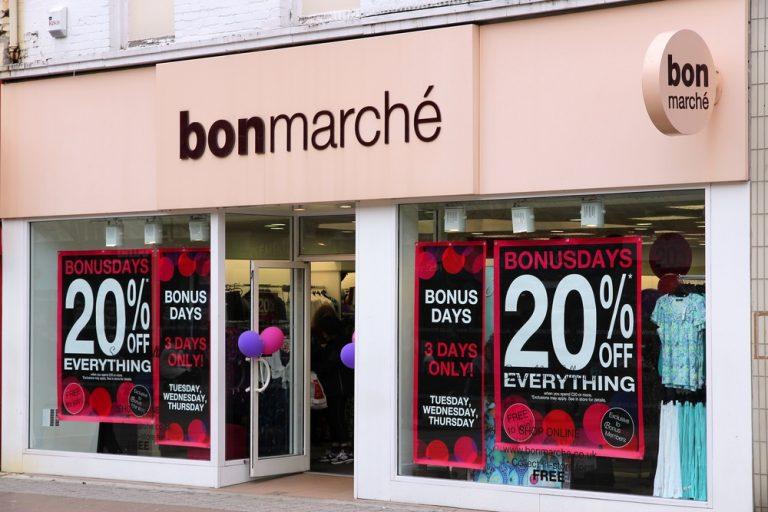
Bonmarche (LON:BON) has become the latest retailer to blame weak results on the High Street crisis, reporting an 11 percent drop in sales for the three months to March.
Like-for-like store sales dropped 11.1 per cent, bringing its full year average to a decline of 4.5 per cent.
Online sales saw a significant boost, however, rising 34.5 per cent over the year, but the weight of poor high street sales meant overall comparable sales were down 1.5 per cent.
“As anticipated, trading conditions in the final quarter of our financial year remained challenging and, against this backdrop, I am pleased that we have delivered an increase in the FY18 profit before tax compared to last year,” said Helen Connolly, Chief Executive Officer of Bonmarche.
However, the group confirmed that its full year expectations remained in line with expectations.
Shares in Bonmarche are currently trading down 6.08 percent at 85.00 (0828GMT).
Reckitt Benckiser shares tumble despite sales growth

Reckitt Benckiser (LON:RB) shares sunk nearly 5 percent at market open, after reporting solid sales and revenue growth in the first quarter.
Sales in the first three months of the financial year rose 23 percent, assisted by currency fluctuations and acquisitions.
Acquisitions included Mead Johnson Nutrition, an infant formula business bought by the company last year, which reported revenue growth of 3 percent.
Sales at Reckitt Benckiser rose to £3.11 million, increasing by 2 percent on a like-for-like basis.
The company confirmed annual guidance for a 13-14 percent rise in sales, representing like-for-like growth of 2-3 percent.
“A solid start overall in the first quarter, operating under our new organisational structure,” chief executive Rakesh Kapoor said.
“Our priority remains organic growth under our new focussed organisation structure. The integration of MJN is going well.”
Earlier this week Reckitt Benckiser shares fell after analysts warned that the consumer goods giant has tried to compensate for its stalling sales growth by upping prices faster than the competition.
Shares in Reckitt Benckiser are currently trading down 4.93 percent at 5,501.00 (0813GMT).
Telecom Plus shares up on full-year profit rise

Multi-utility supplier Telecom Plus reported a modest increase in full-year profits on Thursday, sending shares up nearly 2 percent.
The group, which trades as Utility Warehouse, grew saw adjusted pre-tax profits from continuing operations rise to £54 million in the year ending 31 March 2018, up from £53.3 million the previous year.
The group’s performance was boosted by record levels of customers switching suppliers, with around 20 percent of domestic customers changing to a new supplier over the last 12 months. Telecom Plus’s customer and service numbers rose over the course of the year to 610,739 and 2,340,719 respectively.
Figures also took into account the recent acquisition of a 75 percent shareholding in fast growing supplier/installer of domestic gas boilers Glow Green, for a total initial cash investment of £2 million.
The company has reported a total dividend per share of 50 pence, a 4.2 percent increase on the previous year. The final dividend of 26p is expected to be paid on 3 August 2018, subject to shareholder approval at the AGM which will be held on 26 July 2018.
Adjusted profits before tax for full year 2019 are expected to be between £55 million and £60 million.
Shares in Telecom Plus (LON:TEP) are currently trading up 1.65 percent at 1,106.00 (0843GMT).
Debenhams report plunging profits in the wake of bad weather
Debenhams (LON:DEB) trading figures plunged in the six weeks to March, after being hit by poor weather and forced store closures.
Underlying profit before tax fell 51.9 percent to £42.2 million during the period, with like-for-like sales declining 2.2 percent. The group attributed the fall to 100 forced store closures due to extreme weather in the last week of trading, as well as a tough High Street climate.
The department store chain cut its dividend and warned that profits for the full year will be towards the lower end of broker forecasts, currently standing at between £50 and £61 million.
The group also reported that its Chief Financial Officer, Matt Smith, had stepped down from his position to join Selfridges.
Sergio Bucher, group CEO, said it had “not been an easy” first half, adding:
“We approach the remainder of the year mindful of the very challenging market conditions, but with confidence that we have a strong team and the right plan to navigate them and return Debenhams to profitable growth.”
Debenhams (LON:DEB) shares sunk around 10 percent at market open, and are now trading down 8.67 percent at 21.30 (0840GMT).
Sky shares edge up as group reports “excellent” third quarter

Sky (LON:SKY) posted a 14 percent rise in core earnings in the first nine months of the year, applauding an “excellent” performance in a competitive market.
Like-for-like revenue grew by 5 percent, or £441 million, to £10,144 million in the nine months to 31 March, with content revenue up 17 percent to £617 million and advertising revenue growth up 9 percent.
Geographically, revenues increased by 4 percent in the UK, 6 percent in Germany and Austria and 5 percent in Italy. Customer numbers rose by 38,000 in the third quarter, including a 70,000 rise in the UK but a decline of 30,000 in Germany and Austria. Over the last year, customer numbers have risen by 480,000 to 22.9 million.
Jeremy Darroch, group chief executive, said:”It’s been a good quarter for Sky. We’ve delivered excellent financial results.”
“Today’s results not only demonstrate continued strong execution but also extend our position as Europe’s leading direct-to-consumer media business.”
He added: “Looking ahead, we have the right strategy and abilities in place to provide customers with the best content, products and service. Whilst we expect the consumer environment to remain challenging, the business is in good shape and we remain on track for the full year.”
Shares in Sky are currently trading up 0.68 percent at 1,317.34 (0824GMT).
Unilever reports dividend hike and 6bn share buyback
Unilever (LON:ULVR) announced a hefty dividend hike on Thursday alongside a 6 billion euro share buyback, as disagreements between management and shareholders continue.
The group confirmed it had seen “broad-based growth” throughout the quarter, raising its quarterly payout to shareholders by 8 per cent to €0.3872. Management has faced serious shareholder opposition to its decision to move its headquarters to Rotterdam, with investors worried about the likely exclusion of the company from the FTSE 100 on the back of the move.
Unilever also announced plans to start buying back 6 billion worth of shares starting next month, using funds from the sale of its spreads division.
Household goods maker Unilever reported underlying sales growth, excluding spreads, of 3.7 percent in the first quarter, totalling 12.6 billion euros. Volume growth stood at 3.6 percent and price growth at 0.1 percent.
Paul Polman, the group’s chief executive officer, commented: “The first quarter demonstrates another good volume-driven performance across all three divisions. The broad-based growth, including over 4 percent volume growth in emerging markets, shows that the ‘Connected 4 Growth’ programme is working and enhancing our long-term compounding growth model.
“We are further improving the quality and speed of our global and local innovation as a result of a more agile, consumer-facing organisation. At the same time, we are maintaining strong delivery from our savings programmes and expecting to complete the exit from spreads in the middle of the year.”
For the full year, the company expects underlying sales growth in the 3 percent to 5 percent range.
Shares in Unilever are currently trading down 0.23 percent at 3,937.50 (0811GMT).
UK inflation falls to one-year low

UK inflation unexpectedly fell to 2.5 percent in March, marking the lowest in level in a year.
UK inflation fell from 2.7 percent record in February to 2.5, according to the latest figures from the Office of National Statistics (ONS), casting doubts on an interest rate hike from the Bank of England in May.
The ONS cited prices for clothing and footwear rising by less than a year ago, predominately across women’s clothing.
In addition, price changes for alcoholic drinks and tobacco also contributed to the downward change. This was attributed to budget changes, such as tax changes for tobacco being announced in November as opposed to March.
Mike Hardie, head of inflation at the ONS, said:
“Inflation fell to its lowest rate in a year, with women’s clothing prices rising slower than usual for this time of year.
“Alcohol and tobacco also helped ease inflation pressures, with tobacco duty rises linked to the Budget not appearing this March, thanks to its new autumn billing.”
This marks the first time since the Brexit vote that wages are outpacing inflation, with an 2.8 percent increase in wage growth record back in February. The figures caused the pound to fall sharply to $1.4210 on Wednesday morning, down 0.5 per cent on the day. The ease in inflation has prompted investors to re-asses whether the Bank of England will raise rates in May as initially expected. A majority of economists polled by Reuters said the central bank will have lifted rates to 1.0 percent or higher by the end of the first quarter of the following year.Commenting on today’s inflation figures, ONS Head of Inflation Mike Hardie said: https://t.co/g48fqGNXFF pic.twitter.com/5uKbmRAT14
— ONS (@ONS) April 18, 2018
Telford Homes expects record profits on London housing shortage
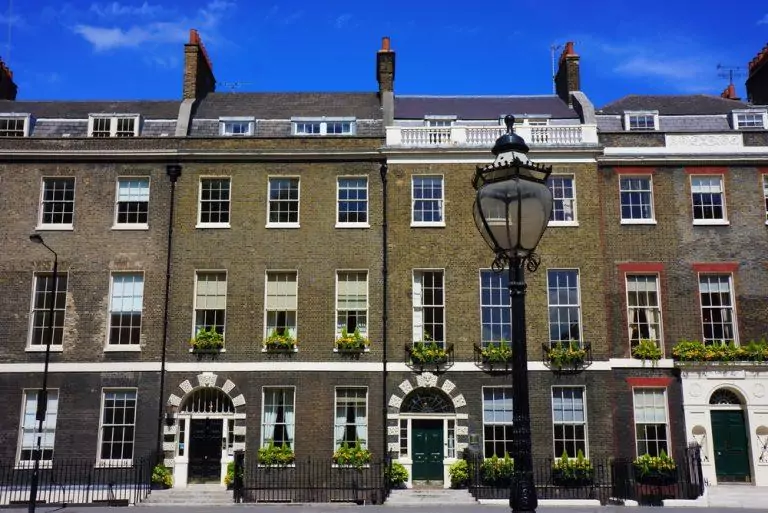
Telford Homes (LON:TEF) said it expects to deliver record profits for the year in part due to the shortage of housing in London.
The housing builder said it anticipates pre-tax profits to be up by almost a third for the year to March-end, despite a general downturn trend in the housing market across the capital.
Nevertheless, Telford said that the undersupplied London housing market ‘remained robust’ across the period, offsetting concerns.
So far, it has sold over 100 homes in the second phase of the New Garden Quarter in Stratford, with initial interest in the project surpassing expectations.
The company attributed the strong performance to ‘robust market for our homes in London assisted by broad mix of sales between build to rent, individual investors, owner-occupiers and housing associations’
Jon Di-Stefano, Chief Executive of Telford Homes, commented:
“Telford Homes continues to perform well and I expect to once again report record revenue and profit for the year to 31 March 2018. ”
“As we increase the scale of the business, our growth is underpinned by the lack of supply of new homes in London and demand for our product at more affordable price points remains strong.”
“Build to rent is the most exciting part of our business in the near term and I believe our increased focus on this sector will drive the next phase of our growth and bring even greater success”, he added.
The group said it now has just over 2,900 homes under construction, with the view to ‘significantly increase’ this number in the future.
Telford’s optimistic results contrasts the generally subdued figures for the London housing market, with demand falling for the eleventh month in the row, according to the latest UK residential survey by RICS.
Moreover, The capital continues to be affected by economic uncertainty and higher Stamp Duty rates, with prices falling more than 15 per cent in the last 12 months.
Shares in Telford Homes are currently trading +1.65 as of 09.31AM (GMT).