
Joules beats high street gloom with strong results
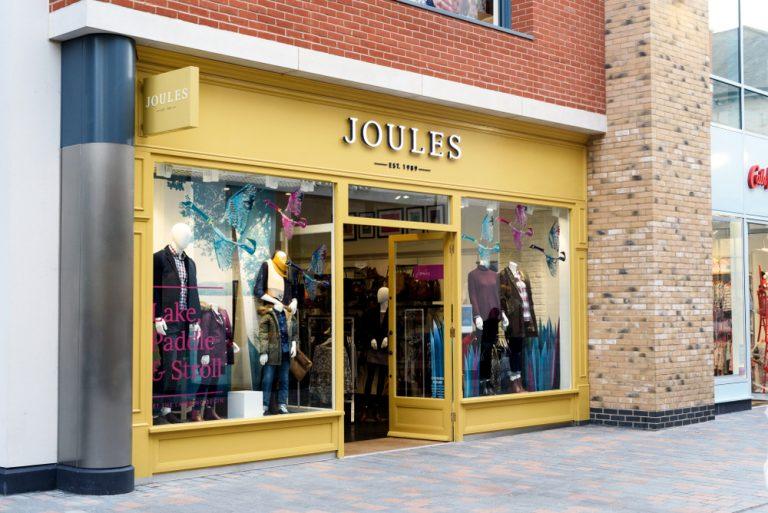
Country clothing brand Joules (LON:JOUL) defied the high street’s doom and gloom with its full year results on Thursday, doing “marginally” better than expected.
Revenues increased by 18.4 percent in the 52-week period to the 27th May, with performance starting strong and continuing on into the Christmas period.
Retail revenue increased by approximately 15.9 percent on the year before, with the group opening 15 new stores in the UK and Republic of Ireland and e-commerce sales flourished.
“Our multichannel approach and ‘buy now, wear now’ product proposition has enabled the Group to deliver a performance ahead of our initial expectations, despite the widely reported challenges in the sector,” said Colin Porter, Chief Executive Officer.
The group, famous for its colourfully printed country clothing, said pre-tax profit was likely to be “marginally” ahead of the prior year of analyst expectations of £12.6 million.
“This performance is testament to the strength and appeal of the Joules brand and our distinctive products,” Porter said.
Shares in Joules are currently up 4.79 percent at 344.75 (0921GMT).
House of Fraser set to close 31 stores
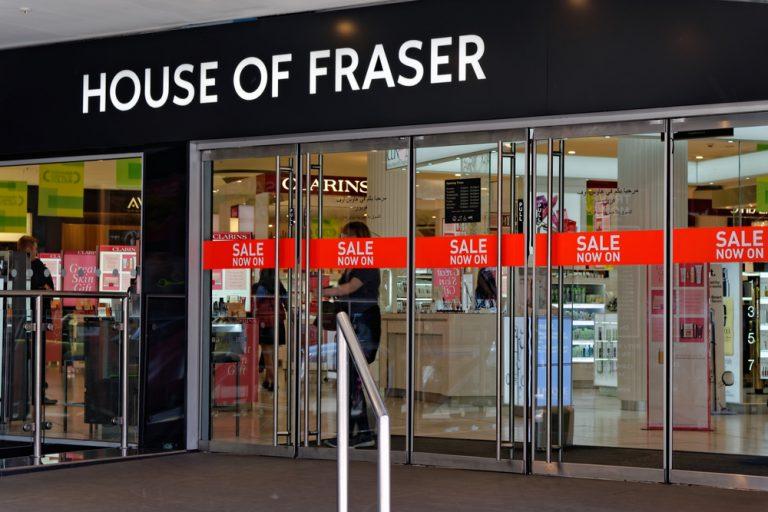
House of Fraser shocked investors and consumers on Thursday by announcing the closure of 31 stores, including its flagship Oxford Street store in London, putting 6,000 jobs at risk.
Frank Slevin, Chairman of House of Fraser said: “Our legacy store estate has created an unsustainable cost base, which without restructuring, presents an existential threat to the business.
“So whilst closing stores is a very difficult decision, especially given the length of relationship House of Fraser has with all its locations, there should be no doubt that it is absolutely necessary if we are to continue to trade and be competitive.”
The company also wants a 25 percent cut in rent at ten stores, with the 31 stores closing set to pay a rent at 30 percent of the current level for seven months.
House of Fraser identified the stores set for closure in a CVA proposal as:
Altrincham, Aylesbury, Birkenhead, Birmingham, Bournemouth, Camberley, Cardiff, Carlisle, Chichester, Cirencester, Cwmbran, Darlington, Doncaster, Edinburgh Frasers, Epsom, Grimsby, High Wycombe, Hull, Leamington Spa, Lincoln, London Oxford Street, London King William Street, Middlesbrough, Milton Keynes, Plymouth, Shrewsbury, Skipton, Swindon, Telford, Wolverhampton, Worcester.
The CVA proposal is still subject to approval.
House of Fraser have been struggling for several months, reporting Q1 results that sounded warning bells for investors. It stands alongside many other high street retailers having a tough time at the moment, including Marks and Spencer and Carpetright.
Auto Trader reports 10pc boost to pre-tax profit

Online car sales site Auto Trader (LON:AUTO) reported a 10 percent rise in pre-tax profit on Thursday, boosted by rising car prices and increased interest in financing deals.
Revenues rose 7 percent in the year to the end of March, hitting £330.1 million. Net external debt fell to £338.7 million from £355 million over the previous period.
The strong performance was boosted largely by increased in used car prices, as well as interest from car retailers in using Auto Trader’s new Deal Finance Product.
‘We took big step in to improve car buying in the UK by launching the Dealer Finance product, allowing consumers to find their next car by monthly payment and retailers to advertise finance on their cars earlier in the buying journey,’ the company said.
“We expect average retailer forecourts to decline at a similar rate to last year” the company added.
Home Trader revenue declined 4 percent to £11.4 million from £12 million. However, the group said it would pay a final dividend of 4p per share, taking the total for the year to 5.9p per share from 5.2p in 2017.
OnTheMarket reports strong start to 2018

Property sales portal OnTheMarket (LON:OTMP) reported an increase in adjusted operating profit for the year to January, alongside a promising performance since the start of 2018.
Adjusted operating profit rose to £3.9 million, up from £2.3 million the previous year, despite sales falling from £17.8 million to £16 million. Operating losses also rose sharply, from £1.2 million last year to £10.8 million during this period.
However, 2018 has been a strong year thus far for OnTheMarket, beginning trading on the AIM market in February and raising £30 milion of capital to support the launch of its growth strategy.
As of 25 May 2018, OTM had signed listing agreements with UK estate and letting agents with more than 8,500 offices, an increase of over 54 percent since admission to AIM.
CEO Ian Springett commented: “We are in the midst of a transformational year for OnTheMarket.
“After listing on AIM in February, we are continuing on our journey to create a genuine alternative to the leading incumbent portals.
“We are strongly encouraged by the growing agent and customer support and feedback to our proposition, and I look forward to carrying this momentum forward in our first financial year as a listed company.”
Shares in OnTheMarket are largely flat on the news, trading up 0.54 percent at 162.88 (0812GMT).
Real Good Food shares fall following open offer announcement

Real Good Food (LON:RGD) announced its intention to launch an Open Offer to raise up to £1 million in capital.
The Liverpool-based company revealed in a statement its intention to launch an Open Offer on Wednesday.
As a result, qualifying shareholders will be able to subscribe for new ordinary shares of 2p each in the capital of the Company at a price of 5p per Ordinary Share.
The food company, which markets cake decoration and baking goods, acquired Brighter Foods as part of a £9 million deal last year.
However, the company has undergone a series of capital raising exercises in the past year, as it continues to struggle to generate cash.
Back in January shares plummeted 40 per cent after the cake decoration company missed previous forecasts.
Real Good Food confirmed the finalisation of £8.2m in new financing arrangements with its three major shareholders back in May of this year.
As part of the agreement, NB and Omnicane will each contribute £3.3 million, with certain funds of Downing providing a minimum of £1.6 million. A further £500,000 may be forwarded at the discretion of Downing prior to September this year.
Hugh Cawley, Chief Executive of Real Good Food said of the latest decision:
“Having recently completed our new financing arrangements with the Company’s three major shareholders, the Board recognised the importance of enabling all shareholders to participate in the refinancing of the Company and is therefore intending to launch the Open Offer accordingly.”
Shares in Real Good Food trading -3.95 percent, as the market reacts to the latest company announcement.
Poundworld rescue deal hangs in the balance as buyer pulls out
Negotiations between Poundworld owners and a potential buyer have broken down, calling into doubt the future of the struggling retailer.
The prospective buyer, Alteri Investors, had been involved in advanced talks with Poundworld’s owner TPG, before later pulling out.
Amid continued difficulties, about 100 of Poundworld’s 355 locations across the UK were already at risk of closure.
Currently, the company employs around 5,300 staff, of whom many may be under threat if the retailer fails to find a resolution to its mounting woes.
Poundworld is the latest in a series of UK retailers feeling the impact of an increasingly challenging trading environment.
After news of the collapse of Toys R Us and Maplins, a number of high street giants have announced a string of store closures in recent weeks.
Carpetright issued its second profit warning for the year in March, as it continues to consider ways to increase its cash flow.
On Wednesday, Carpetright announced it had secured £60 million equity raise, pending shareholder approval, relieving pressure on the retailer.
Similarly, Marks & Spencer recently revealed plans to accelerate the closure of around 100 stores, in a bid to mitigate substantial losses from its struggling home and clothing divisions.
Moreover, earlier this week department store giant House of Fraser was forced to deny speculation of an imminent collapse, after reports said that rescue talks had broken down over the course of the weekend.
The difficulties facing so many well-known retailers over the course of the year has prompted concerns of an impending death of the high street.
Conversely, WH Smith revealed a strong performance offsetting the general decline across the high street.
This was largely attributed to the dominance of its travel division, with WH Smith maintaining a strong presence in the nations airports.
Nevertheless, a general downturn in footfall figures alongside a shift in consumer spending habits has contributed to an increasingly volatile trading climate for some of the nation’s biggest retailers.
Kin Group invest in Bidstack as part of reverse takeover

Kin Group are set to invest in software company Bidstack, as part of a reverse takeover bid.
If successful, the £400,000 investment, which is expected to be completed by August, will see the company return to trading on the AIM market on the London Stock Exchange.
James Draper, Chief Executive of Bidstack, commented: “This is an exciting moment for me and the team. We are looking forward to the completion of the RTO so that we can drive the business forwards to the next stage of our growth.
By obtaining a quotation on the AIM market we believe the RTO will be a great result for our current shareholders, who have supported us over the last three years and will provide us with a firm foundation for continued growth and winning more commercial contracts with the leading publishers and advertising agencies. ”
He added: “We are excited to be kicking off our platform just in time for the FIFA World Cup and looking forward to the prospect of delivering on our ambitious business plans.”
Bidstack is a software firm that has developed technology to place advertising campaigns directly into video games, such as Sega’s popular Football Manager.
The technology facilitates targeted in-game advertising, allowing two gamers playing the same game to experience different advertisements based upon the criteria determined by different brands and campaigns.
The company currently holds the exclusive rights to place direct digital advertising into six games, such as Cricket Captain and Sociable Soccer.
Bidstack launched a successful crowdfunding campaign with Crowdcube back in December of 2015.
The company surpassed its initial target of £100,000, eventually raising a total of £137,590.
According to Crowdcube, the reverse takeover will give 66 of the respective investors in Bidstack to access to all of the trading opportunities that accompany an AIM listing.
Government makes £2bn loss on RBS sale, shares fall
The government has made a £2.1 billion loss on its sale of Royal Bank of Scotland (LON: RBS) shares.
The shares were sold at almost half of the price paid in the government’s bailout of the bank ten years ago during the financial crisis.
“There is no economic justification for this sell-off of RBS shares,” said the shadow chancellor John McDonnell.
“There should be no sales of shares, full-stop. But because of this government’s obsession with privatisation, the taxpayers who bailed out the bank will now incur an enormous loss.”
“Taxpayers are paying the price for the Tories’ mismanagement of RBS over the past eight years,” he added.
After the sale, taxpayers will have a 62.4 percent stake in the bank, which was 70.1 percent before the sale.
Shares were initially bought for 502p each and sold at 271p each.
“The RBS share price has bounced back from its slump after the EU referendum, but the taxpayer’s still going to be significantly out of pocket as the government sells down its stake,” said Laith Khalaf, senior analyst at Hargreaves Lansdown.
“Few argue the RBS bailout was necessary to maintain financial stability, but the cost of that intervention is now starting to emerge.”
According to Khalaf, the share sale is “good news for private investors in RBS because it is a step towards becoming a normal bank again, though government sales may put downward pressure on the share price in the near term”.
Shares in the lender fell four percent in early trading.
The group saw a positive start to 2018, reporting their first profit in ten years.
Retail spending up 4.1pc in May

New reports from the British Retail Consortium and KPMG have shown growth in high street spending throughout May.
The warmer weather and the royal wedding led to a strong month for retailers with the total sales up by 4.1 percent.
While spending was up, the BRC chief executive Helen Dickinson warned of the tough climate. Almost 6,000 shops closed in 2017 while many more are planning closures this year.
“Retail sales in May saw their highest growth since January 2014 as better weather and the bank holiday effect led shoppers to buy from garden furniture and summer fashion ranges; recovering some of the ground lost in April,” said Dickinson.
“Food sales also stood out, with the best single month’s performance since July 2013.”
“Despite this more positive set of sales results, the retail environment remains extremely challenging, with trend growth still very low by historical standards.”
The warmer weather saw consumers buy in-store rather than online.
“Two bank holiday weekends, a royal wedding and of course sunnier spells will have been the main drivers behind the apparent rebound, with both online and high street sales thankfully up overall,” said Paul Martin, KPMG’s UK head of retail.
Spending was down 1.2 percent in the previous three months and was affected by “beast from the east”.
Spending is expected to remain strong over the summer months.
Mothercare rescue plan disrupted, risking further 300 jobs
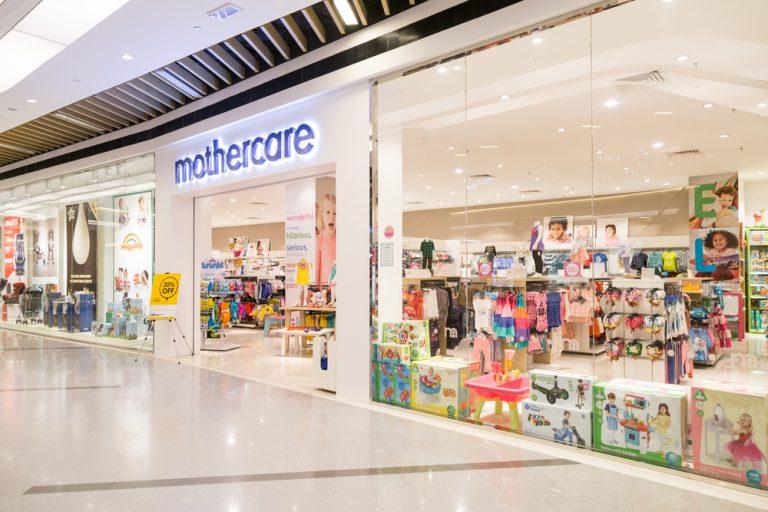
Mothercare’s (LON: MTC) restructuring plan was rejected by creditors, leaving a further 300 jobs at risk.
The struggling group said on Monday that reduction proposals for 21 stores had been turned down by landlords and creditors.
Shares in the group were down over four percent on Monday afternoon following the news.
The retailer said on Friday that it had won the backing of creditors and landlords to commence with the CVA, however, plans for Children’s World were rejected by 73.3 percent of those who voted – 75 percent of the vote was required.
“KPMG have confirmed the votes relating to Mothercare UK and Early Learning Centre CVAs passed by a clear majority, however it is now clear that the CVA of Children’s World was not carried by creditors by a narrow margin,” said Clive Whiley, Mothercare’s executive chair.
“This will neither unsettle the UK restructuring and refinancing nor jeopardise our future transformation plans, which are already under way. As a board, we are now considering our next steps with respect to Children’s World.”
News of the closures came a few days following permission for the group to close 50 underperforming stores, risking 800 jobs.
Clive Whiley, the interim executive chairman, said the deal was a “crucial step forward to achieve the renewed and stable financial structure for the business that will drive an acceleration of Mothercare’s transformation”.
The group has been in turmoil following £72.8 million loss in its most recent financial year.
CVAs are becoming increasingly common on the high street as retailers are struggling to make a profit.
In 2018, Maplins and Toys R Us both fell into administration. Retailers Carpetright and New Look have entered into CVAs and announced store closures.