
Paddy Power Betfair shares steady as share buyback begins
Paddy Power Betfair (LON:PPB) began the first part of their planned £500 million share buy back on Tuesday, in a move designed to reduce the company’s share capital.
The decision was announced by the gambling company earlier this month, with Paddy Power Betfair confirming on Tuesday that its agreement with broker Goldman Sachs to purchase up to £200 million shares on its behalf would begin today. It will continue for the next three months.
The share buyback comes just a week after the betting company agreed a merger with US fantasy sports betting site Fan Duel.
The group is hoping to make bigger moves into the US market, after US laws on sports betting were relaxed earlier this month.
As part of the agreement, Paddy Power Betfair will take a 61 percent stake in the combined business, with existing Fan Duel investors continuing to own 39 percent.
The Dublin-based company will control the business, which will become a subsidiary.
Shares in Paddy Power Betfair are currently trading up 0.44 percent at 9,120.00 (0925GMT).
European markets fall on worries over both Spain and Italy

European markets opened lower on Tuesday morning, as potential crises in both Italy and Spain spook investors.
The FTSE 100 is currently down 0.93 percent at 7658, with Germany’s Dax sinking 1.52 percent. The CAC40 index in France has also been affected, trading down 1.69 percent by 0904GMT.
Italy, one of the countries in the spotlight over the bank holiday weekend due to a political crisis currently unfolding, has seen its stock market tumble 1.9 percent to its lowest level since August last year. Spain, the other country under investors’ watchful eyes, saw its Ibex35 fall 2.44 percent.
Italy’s likelihood of leaving the Euro tripled over the weekend from 3.6 percent to 11.6 percent, after its President used its veto against the new proposed finance minister. This is likely to dissolve government talks and reinforce populist sentiment.
Spain is also facing its fair share of uncertainty, with Prime Minister Mariano Rajoy set to face a vote of no confidence later this week.
Japan Display shares sink as Apple swap to OLED screens

Japan Display shares fell on Tuesday morning, after a report that Apple will not be using their screens in their next generation of iPhones.
A new report has suggested that Apple will adopt organic light-emitting diode (OLED) screens for all of its iPhones from 2019, instead of the liquid crystal display screens Japan Display currently supplies them with.
Whilst Japan Display do make a small number of OLED screens, their production capability is well behind that of their competitors. The OLED screens for the iPhone X, which already utilises the technology, are currently supplied by Samsung Electronics.
A report in the South Korean Electronic Times suggested that Apple will replace the old screens with OLED panels made by LG.
Share in Japan Display (TOY:6740) sunk 10 percent on the news, and are currently trading down 7.97 percent at 127JPY (0852GMT).
Renold shares up 11pc on surprise growth in organic revenue

Renold (LON:RNO) shares rose 11 percent at market open on Tuesday, after reporting a growth in organic revenue for the first time in several years.
The revenue growth failed to translate to a profit however, with pre-tax profit for the year through March falling to £1.4 million from £6.7 million the year previously.
Adjusted operating profit also fell to £14.2 million, despite recording a slight improvement in the second half on the back of beneficial movements in raw material costs and improved factory performance.
Chief executive Robert Purcell was positive about the results, saying:
“Through a combination of strategic action and improving market conditions, we have delivered organic revenue growth for the first time in a number of years.
“Order intake continues to remain strong with order books meaningfully ahead year-on-year.”
Growth is expected to continue in the coming year, with improving macroeconomic conditions set to strengthen order intake.
“Those same macroeconomic conditions are resulting in inflationary pressures on raw material costs and labour rates, which have also been impacted by legislative changes in some territories,” he said.
“Despite this, we expect growth, recovery of material price increases and continued efficiencies to overcome cost pressures and deliver improved adjusted operating profit margins.”
Shares in Renold (LON:RNO) are currently up 11.40 percent at 25.40 (0834GMT).
Pret A Manger to be sold to JAB Holdings in £1.5 billion deal

UK-based takeaway sandwich chain Pret A Manger is set to be sold to private equity firm JAB Holdings for a cool £1.5 billion.
The chain confirmed the sale on Tuesday morning, on the back of an exclusive report by the Financial Times on Monday. JAB Holdings, who have been rapidly buying up companies in the coffee market, will acquire Pret after the chain chose a sale over a public listing.
Bridgepoint, the company’s current owners, will make a tidy profit on the business, which they bought for £364 million including debt ten years ago.
William Jackson, chairman of Pret and managing partner of Bridgepoint, said:
“We’re proud of what we’ve achieved over the last 10 years with Pret and its management team.”
Clive Schlee, chief executive at Pret, confirmed the sale and said his company achieved the ninth consecutive year of like-for-like sales growth in 2017.
Olivier Goudet, JAB Partner and chief executive, said management had a “proven track record” that was crucial for the business and that they would continue to invest in new products as consumer taste evolves.
Pret owns 530 stores worldwide, including the UK, Asia and France, and generates group revenues of £879 million. Its sale is expected to be completed this summer.
Dixons Carphone shares plunge on weak UK performance
Shares in Dixons Carphone (LON:DC) sunk over 20 percent at market open on Tuesday, after reporting a weak performance in the UK for both the electrical and mobile division.
The company warned that full-year profit would fall by 21 percent, expecting pre-tax profits of £382 million for 2017-18, down from £501 million last year.
The company’s UK & Ireland business saw revenue fall 1 percent, despite rising 2 percent on a like-for-like for basis. The group warned that the weakness in the UK was due to a “challenging UK mobile market and current contractual constraints”.
Looking at the company as a whole, revenues rose by 3 percent for the full year, while like-for-like revenues rose 4 percent supported by strong international performance. The UK’s weak performance was offset by a strong performance in the Nordics and Greece, which reported revenues of 10 percent and 18 percent respectively.
“With a softer computing market, our category mix during the year shifted towards consumer electronics and white goods, and online sales saw another year of double digit growth, ahead of the market,” Alex Baldock, Group Chief Executive, said.
“Right now, with our international business in good shape, we’re focusing early action on the UK. In electricals, we’re focused on gross margin recovery. In mobile, we’re stabilising our performance through improvements to our proposition and network agreements”.
For the 2018-2019 financial year, the group expects headline profit before tax to come in at around £300 million.
Shares in Dixons Carphone (LON:DC) are currently trading down 23.74 percent at 178.00 (0810GMT).
GVC faces backlash from shareholders over £67m paid to two bosses
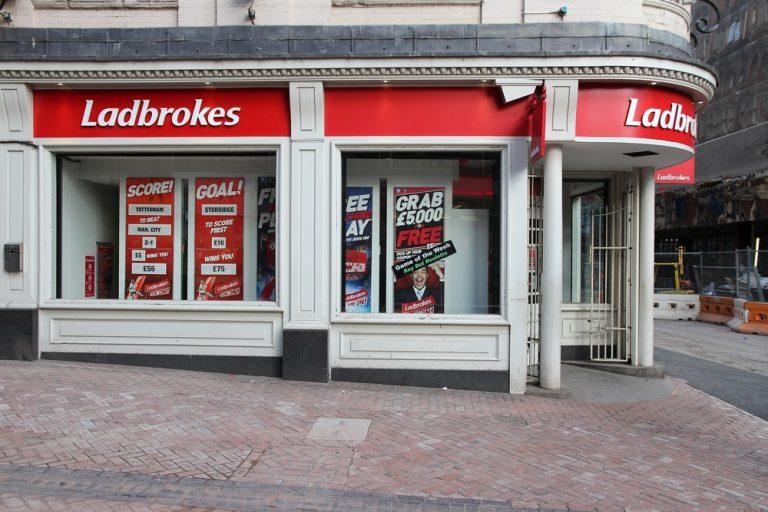
Gambling company GVC (LON: GVC) is facing a shareholder rebellion following the £67 million paid to its two bosses.
The owner of Foxy Bingo and Ladbrokes Coral has awarded its chief executive £45 million in share option since 2016. The chairman has gained £22.5 million.
Pirc and Glass Lewis, shareholder bodies, are advising shareholders to vote against the “excessively disproportionate” pay to bosses Kenny Alexander and Larry Feldman.
“Clearly they’ve completely disregarded the strong vote against last year and are continuing with a similar approach to pay. You’d hope that there will be an even stronger vote against this year,” said Luke Hildyard, a director of the remuneration thinktank the High Pay Centre.
“This case demonstrates that even when shareholders do oppose egregious awards, which doesn’t happen often enough, the company doesn’t have to do anything about it.”
The high payments in share options paid to Alexander and Feldman is about 550 times that paid to average employees.
Shares in GVC reached a record high of £10.15 last week.
Similar huge pay deals to company bosses have sparked anger this past year. The chief executive of housebuilder Persimmon, Jeff Fairburn, returned over £25 million of his £100 million-plus bonus after anger and protest.
UK GDP has worst quarter since 2012

New figures have shown the UK’s economy to grow at the slowest rate since 2012.
The Office for National Statistics revealed GDP growth to increase by just 0.1 percent in the first quarter of the year.
“Overall, the economy performed poorly in the first quarter, with manufacturing growth slowing and weak consumer-facing services,” said Rob Kent-Smith from the ONS.
The ONS has maintained the view that the Beast from the East had little impact on the economy with figures showing increased online sales and energy production during the colder period.
“While the bad weather had some impact on the economy, particularly in construction and some areas of retail, its overall effect was limited, with partially offsetting impacts in energy supply and online sales,” the ONS said.
John Hawksworth, the chief economist at PwC, remains more hopeful for the second quarter.
“We expect some recovery in the second quarter, with GDP growth of around 1.3 percent for 2018 as a whole,” he said.
The figures are likely to raise concerns for the British economy as it prepares to leave the EU.
“The Bank of England has been keen to stress that the weakness in the first quarter was temporary, while also pointing out that it has historically been prone to upwards revisions,” said David Cheetham, the chief market analyst at brokerage group XTB.
“Unfortunately for [governor Mark] Carney and his fellow Monetary Policy Committee members, there has been no such upwards revision today and while there’s still the final reading to come, it is unlikely we see much improvement there.”
The Bank of England has been hesitant raising interest rates this month following the weak first GDP estimate. Threadneedle Street said the effects of the cold weather snap were limited and the ONS said it had seen a longer-term pattern of slowing growth.
Netflix briefly overtakes Disney after shares rise 2pc

Thursday briefly saw Netflix (NASDAQ: NFLX) overtake Disney as the most valuable media company.
The streaming giant’s shares were up 1.8 percent taking the market value above $153 billion (£114 billion).
Netflix shares fell back and closed 1.3 percent up at $349.29.
The share price in Netflix has soared 80 percent in the past year. The firm has announced billions in investment into original shows and movies.
The group has 125 million memberships in over 190 countries, with viewers watching for more than 140 million hours every day.
This month, Netflix announced plans to team up with Michelle and Barack Obama in a “multi-year agreement” to produce films and TV shows for the firm.
“One of the simple joys of our time in public service was getting to meet so many fascinating people from all walks of life, and to help them share their experiences with a wider audience,” said Barack Obama.
“That’s why Michelle and I are so excited to partner with Netflix – we hope to cultivate and curate the talented, inspiring, creative voices who are able to promote greater empathy and understanding between peoples, and help them share their stories with the entire world.”
Shares in Disney and Comcast (NASDAQ: CMCSA) fell about 0.8 percent on Thursday and pushed their market values to $152 billion and $143 billion respectively.
Bunnings exits UK after Homebase disaster, shares rise
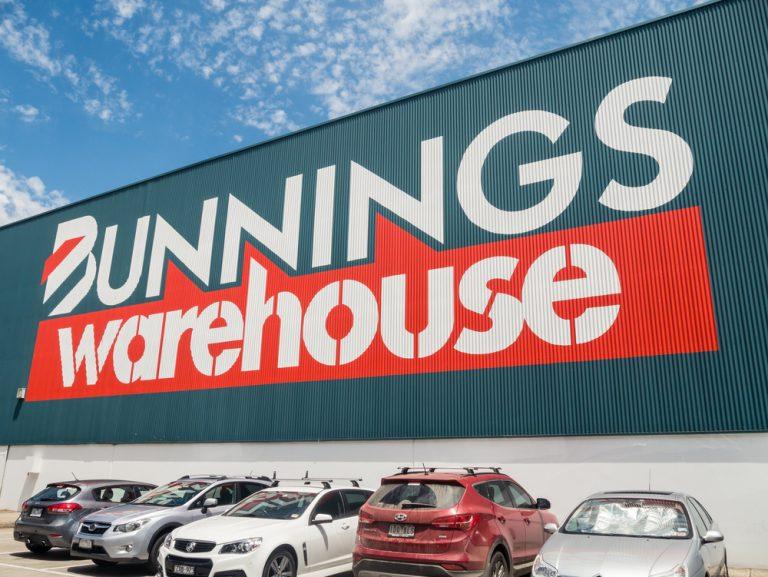
Bunnings has exited the UK as the group calls an end to the disastrous $1.4 billion acquisition.
The Australian hardware chain said on Friday that it plans to offload the chain of former Homebase stores for just one pound.
“The investment has been disappointing, with the problems arising from poor execution post-acquisition being compounded by a deterioration in the macro environment and retail sector in the UK,” said Rob Scott, the managing director of Wesfarmers.
“While it is important that we learn from this experience, this should not discourage our team from being bold and diligent in pursuing opportunities to create shareholder value.”
The parent company, Wesfarmers (ASX: WES), announced plans to sell the 240 Homebase stores and 24 pilot Bunnings outlets to the restructuring firm Hilco Capital.
Despite the $1.4 billion cost, investors have applauded the decision to leave and shares in the group rose 0.85 percent after the exit was announced.
The Perth-based group will record a loss of an estimated £200 million to £230 million in its full-year results from the exit.
“Overall it’s a pretty good result for Wesfarmers – albeit the end to a very poor acquisition,” said Hugh Dive, of Atlas Fund Management in Sydney.
“As sad though it seems, getting out for a ‘nominal amount’, ie one pound, is a good result. If they had simply shut it down the lease liabilities alone were in the range of $1.8 billion, though this would be offset by the sale of inventory.”
All of the UK Bunnings outlets based in the UK will be converted back to the Homebase stores under the new Hilco’s ownership.