
Airbus warn of 3,700 losses amid falling production

Airbus warned on Wednesday of up to 3,700 job losses amid falling production levels.
The European plane manufacturer warned of job losses across operations in the UK, France, Germany and Spain.
Its UK arm assured that this would not affect jobs at its Broughton plant in Wales.
“Airbus is committed to managing any implications for its workforce in a responsible manner – as already successfully demonstrated on various occasions in the past,” it said in a statement.
“The company is confident that it will be able to propose opportunities to most of the affected employees through programmes which are ramping up.”
Airbus also announced it would be producing six A380 superjumbo jets annually, which is currently the world’s largest passenger plane, starting from 2020.
In addition, it plans to manufacture eight A400Ms a year, a decrease from a previously anticipated 15 in 2018 and 11 in 2019.
Airbus have come under pressure in recent years amid falling demand for its A380 in particular.
Back in April of last year, the planemaker saw shares sink after engine problems impacted profits.
Problem with its engines in the new A320 passenger plane hit trading, with adjusted operating profit falling to €240 million.
Moreover, the development of the company’s state of the art Airbus A400M military aircraft has faced a series of setbacks.
Back in February, the company admitted that nonetheless the military plane “remains a concern”, with persistent problems relating to its engines.
New Look to cut 1,000 jobs in cost-saving drive

New Look has announced the impending closure of 60 of its UK stores, putting 1,000 jobs at risk.
In light of a persistently challenging retail environment, the high-street giant is proposing a Company Voluntary Agreement (CVA) to creditors.
This would in turn help bring down its rent costs, as well as allow for the revision of terms on current leases.
Should creditors agree to the proposal, New Look will close 60 of its 593 shops in the UK, alongside six sub-let sites which are sub-let. Rent will also be cut in an additional 393 locations.
Creditors are set to vote on the proposal on 21 March.
In the meantime, New Look has affirmed that all of its locations will remain open.
Alistair McGeorge, Executive Chairman of New Look, said: “Given our challenged trading performance and over-rented UK store estate, we are having to take tough but necessary actions to reduce our fixed cost base and restore long-term profitability.
“We have held constructive discussions with our key landlords and strategic partners and will now seek creditor approval on our CVA proposal. A priority for us is to keep all potentially affected colleagues informed during this difficult time.”
Retailers such as New Look are increasingly struggling to adapt to changing consumer patterns, with customers looking towards the ease of online platforms of competitors such as Boohoo and Misguided.
This in turn has led to sharp fall in footfall in recent years putting greater pressure on the high street, as reflected by the latest ONS retail figures.
What’s more, shoppers have also proved more cautious in light of rising inflation levels, which continues to outpace wage growth.
Daniel Butters, partner at Deloitte, commented: “The retail trading environment in the UK remains extremely challenging, driven by weaker consumer confidence, the implications of Brexit and competition from online channels.
“It is important to stress that no stores will close on day one, and employees, suppliers and business rates will continue to be paid on time and in full.”
New Look’s announcement follows the collapse of two other UK high-street retailers last week.
Toys R Us and Maplins both announced falling into administration, as both companies failed to find a prospective buyer in time.
Donald Trump falls more than 200 places on the Forbes billionaires list

Donald Trump has fallen more than 200 places on the Forbes annual billionaires list.
The US President, who made his name as a real-estate and reality tv mogul, has seen a dramatic fall in the rankings since the launch of his presidential campaign.
Trump was ranked as No. 776 out of 2,208 on this year’s list, with a net worth of $3.1 billion.
This marks a considerable drop from his position on the 2017 list, coming in at No. 544 on the ranking, with a net worth of $3.5 billion.
At the top-end of the list, Amazon (NASDAQ:AMZN) founder Jeff Bezos took the number one spot with $112 billion, followed by Microsoft founder Bill Gates, who came in at second place with $90 billion.
Forbes explained Trump’s fall as partly due to a downturn in the retail real estate market in New York City, alongside “the president’s polarizing personality is costing him business as well.”
Despite having taken office just over a year ago, Trump’s presidency has thus far been shrouded in controversy.
Notably, the Trump administration continues to be under investigation with regards to alleged Russian interference in the US election.
Most recently, The President’s top economic advisor Gary Cohn resigned due his strong opposition to the imposition of tariffs on steel and aluminium imports.
Mr Cohn is one of many of a series of high-profile exits from the Trump administration in recent months.
He follows the departure of Hope Hicks as communications director, who quit last week.
Other senior figures who left their role include former chief of staff, Reince Priebus, and the President’s former chief strategist, Steve Bannon.
Co-op trials ‘scan-and-go’ smartphone checkout system

The Co-op supermarket is in the process of launching a ‘scan-and-go’ checkout process, enabling users to scan products using their smartphone camera and have the total deducted from their card at the end of the shop.
The initiative will be trialled at the Co-op’s store at its support centre in Manchester, followed by a further trial at the Co-op’s store located in the UK headquarters of Microsoft. It may then be rolled out across the UK over the summer.
The idea is the latest initiative designed to help Co-op stay ahead in the competitive grocery market, with Matthew Speight, director of retail support at the Co-op, saying: “It is a challenging market place for retailers, and the Co-op is responding positively.”
“Our ambition is to harness technology to deliver the shopping experience that our diverse customer-base requires – when, where and how they need it,” he said.
Co-op is one of several stores to trial a cashless payment system, responding to millennials’ demand for easier and quicker payments. Sainsbury’s revealed it was testing a similar initiative back in September 2017, and Amazon hit the headlines last week with its first automated, cashierless store.
Elliott Goldenberg, head of digital payments at Mastercard UK, added: “With the Co-op we are bringing our online and mobile capability – Masterpass – into the physical store, and offering consumers who want a fast and frictionless buying experience, a secure and reliable way to pay.
“By scanning products using Co-op’s mobile app, shoppers can checkout using payment card details securely stored within Masterpass, and leave the store, with both the Co-op and them knowing they have paid.”
Nature Group shares plummet amid disappointing update

Shares in Nature Group (LON:NGR) plummeted on Wednesday morning after the company issued a disappointing trading update.
The port reception facility and waste treatment solutions provider updated the market on the financial progress for 2017, after a challenging first six months to the year.
The group provides these services for oil, marine and process industries. Specifically with regards to its Oil & Gas division, the company noted that it has four units currently deployed with eight operators, which continue to encounter “difficult trading conditions”.
In response to the difficult year, the company said it intends to prioritise its Maritime division, following its business-wide strategic review conducted by the Board last year.
The group is looking to address the group’s immediate cash flow issues, to facilitate the moving ahead in discussions regarding a proposed sale.
Accordingly, Nature Group announced that the Board had secured a verbal waiver from lender, DNB, permitting the deferral of the repayment of lease and debt financing facilities totalling £1 million. The deferral is conditional upon the proposed sale.
Berend van Straten, Chairman of Nature Group, commented:
“2017 was another difficult year for Nature Group and we continue to face significant headwinds, particularly in our Oil & Gas division.
However, we are encouraged that steps taken by the Board during the period to identify the operational and structural issues problems and to define and begin to implement a new strategy are beginning to yield positive results.
There is much more work to do to ensure Nature Group has a viable future, and the proposed sale of the Oil & Gas division is a vital step in achieving that and to addressing the Group’s urgent, short-term cash requirements.”
Shares in Nature Group are currently trading down as much as 49.65 percent as of 10.35AM (GMT).
Esure shares tick up as profits soar in 2017

Insurance company Esure (LON:ESUR) reported soaring profits over the course of 2017, causing its shares to edge up in early morning trading.
Pre-tax profits rose 5.6 percent to £98.6 million in the year to the end of December, driven by a 25.2 percent rise in written premiums and a 9.2 percent rise in in-force premiums.
Profit after tax from continuing operations increased 35.1 percent to £80.4 million, with the combined operating ratio improving by 2.1 percentage points to 96.7 percent compared with 98.8 percent the year before.
Interim chief executive Darren Ogden commented: “2017 has been a year of significant delivery and I look forward to 2018 with great confidence”
“In 2018, we are targeting a similar combined operating ratio to 2017, assuming normal weather, as we look to deliver a positive contribution and grow the business.
“We continue to deliver profitable growth and remain on track for our three million in-force policy target by 2020.”
Esure’s chief executive, Stuart Vann, left the company in January, meaning the hunt continues for a new CEO to fill his position. Group chairman Peter Wood said that Esure will be seeking a replacement with digital experience.
Esure shares are currently trading up 1.52 percent at 227.80 (1029GMT).
Paddy Power Betfair shares drop despite better-than-expected earnings
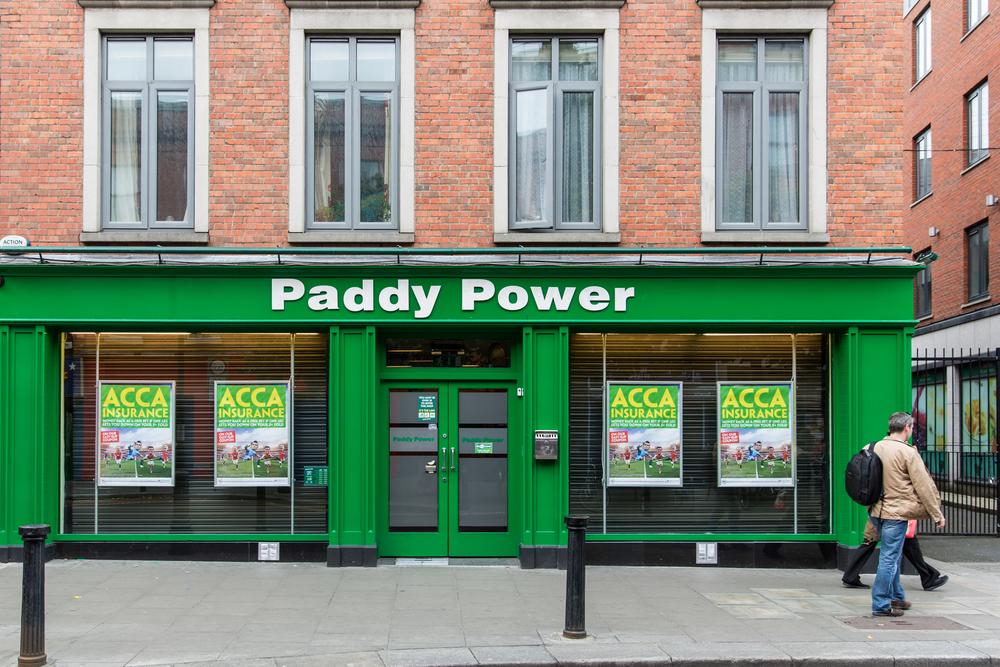
Shares in gambling company Paddy Power Betfair (LON:PPB) sunk nearly 5 percent in early trading, despite posting a better-than-expected rise in annual earnings for the 2017 financial year.
The group’s earning were boosted by favourable sporting results and further investment in its online platforms. Underlying Ebtida rose 18 percent to £473 million, well above the company’s previous guidance of between £450 million and £465 million.
Underlying operating profit increased by 19 percent to £392 million, with revenue up 13 percent to £1.75 billion. The company declared a final dividend of 135p per share.
Chief executive Peter Jackson said: “The new financial year has started as 2017 ended, with sporting results favouring bookmakers.”
“This sustained period of bookmaker friendly results has, however, significantly affected customer activity, including reduced re-cycling of customer winnings.
“We are focused on building a business that can sustainably generate profits over the long-term.
“The group’s strong balance sheet allows us to make substantial investment in the customer proposition and marketing, whilst maintaining flexibility for strategic investments and delivering increasing returns for shareholders.”
The figures come just one day after chief financial officer Alex Gersh announced his decision to leave the company. Gersh joined in 2012 and has been a significant part of the group’s transformation. His announcement comes just a month after the high-profile resignation of CEO Breon Corcoran, was replaced by Peter Jackson.
Shares in Paddy Power Betfair are currently trading down 4.14 percent on the news at 7,880.00 (0854GMT).
Rolls Royce shares surge 11% on expectation-beating figures

Rolls Royce (LON:RR) shares rocketed 11 percent at market open on Wednesday morning, after posting a 25 percent profit rise well ahead of their own expectations.
Pre-tax profit rose to £1.07 billion, a huge jump from the £813 million posted in 2016, with revenue increasing by 6 percent to £15.09 billion.
The company held its dividend steady however, declaring a figure 11.7p per share for the full year.
Chief executive Warren East said Rolls Royce had made “good progress” in 2017, saying that it had “achieved a number of important operational and technological milestones, but were impacted by the increasing cost and challenge of managing significant in-service engine issues.”
The group are expecting operating profit in 2018 to grow to £400 million, give or take a £100 million, well up from £321 million in 2017.
“2018 will be one of significant operational progress,” East continued.
“In Civil Aerospace we will continue to grow our installed widebody fleet and further reduce cash deficits on engine sales.
“At the same time over the next few years we will be continuing to implement solutions for our airline customers to address the in-service engine issues we are currently experiencing, the estimated costs of which are significant but are included in our cash flow, revenue and earnings guidance for 2018 and beyond.
“While Defence faces some challenges due to timing changes on export activity and in contract mix, we continue to have attractive longer term export opportunities.”
The figures are likely to be taken as evidence that the company has got itself back on right track, after issuing a series of profit warnings in the course of 2015.
Legal & General boosted by 32pc profit rise in 2017

Shares in asset manager Legal & General (LON:LGEN) edged up on Wednesday, after reported profit before tax rose 32 percent over the course of 2017.
Profit rose to £2.1 billion in 2017, up from £1.6 billion the year before, after a “strong performance” across the board led to a boost to the group’s retirement institutional and retail divisions.
The company pleased investors with a full year dividend of 15.35 pence per share, an increase of 7 percent on the previous 12 months, with the group setting out a goal to keep the same level of performance achieved between 2011 and 2015, where there was EPS growth of 10 percent per annum, until 2020.
Nigel Wilson, Legal & General’s Chief Executive, said:
“Legal & General’s strategic focus, alignment to global growth drivers and excellent execution, allowed us to deliver a record £2.1 billion operating profit in 2017.
“Our shareholders are enjoying terrific EPS and RoE growth, while our ‘inclusive capitalism’ model ensures customers and society also benefit.
“We remain confident that our unique business model, strong management team, collaborative culture, and strategic focus can deliver further growth in 2018 and beyond.”
Shares in Legal & General (LON:LGEN) are currently up 0.84 percent at 259.98 (0822GMT).
Grocery market sees growth for 12th month in a row
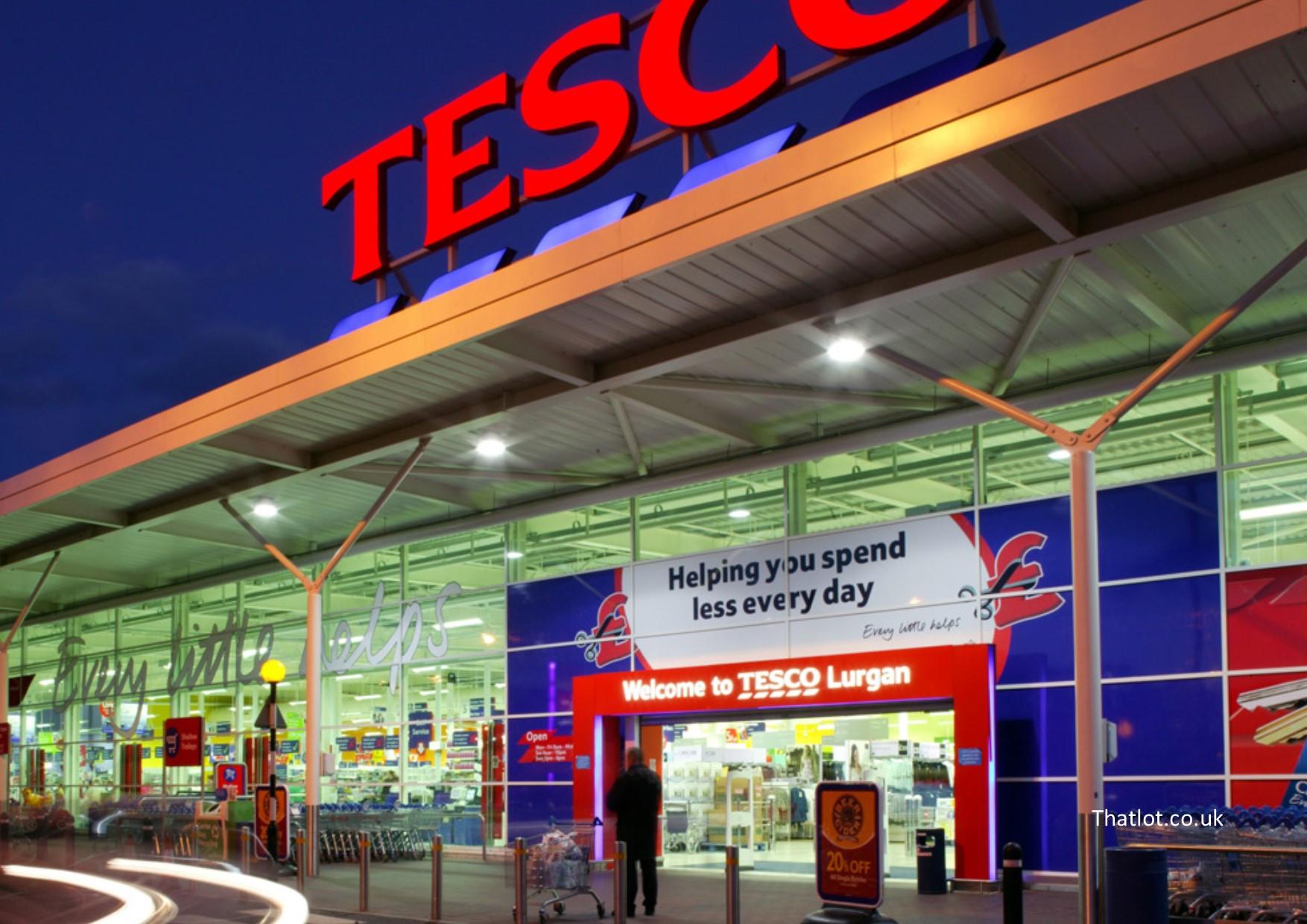
Total grocery sales increased by 3.2 percent compared to the same time last year, according to the latest figures from Kantar Worldpanel, marking 12th consecutive period in a row that total market sales have exceeded 3 percent.
Ready meal sales were a strong driver of the results, with February festivities including Valentine’s Day and Chinese New Year lending themselves to the ready meal market. Sales of chilled ready meals jumped 26 percent over the month, with consumers taking advantage of retailers’ dinner-time set menu options.
Tesco (LON:TSCO) and Morrisons (LON:MRW) were “neck-and-neck” as the two fastest growing supermarkets of the big four, both reporting sales growth of 2.7 percent over the period. Morrisons hung onto its market share of 10.6 percent and entered its 16th consecutive period of growth, boosted by its premium own-label line The Best.
Overall sales growth at Sainsbury’s now stands at 1.1 percent, with Asda attracting an additional 309,000 shoppers to push sales growth to its highest since June 2014, 2.3 percent.
Fraser McKevitt, head of retail and consumer insight at Kantar Worldpanel, said:
“Co-op returned to growth for the first time since July 2017 with sales up 0.4 percent, after a period of decline following the retailer’s sale of nearly 300 stores to McColl’s. Iceland held share steady at 2.2 percent compared to this time last year, increasing sales by 1.3 percent”.
“Aldi and Lidl once again battled to be crowned the UK’s fastest-growing supermarket. Aldi pipped Lidl to the post this month as sales grew by 13.9 percent and 13.3 percent respectively. With both discounters working hard to expand their store portfolio, Aldi and Lidl also benefited from increased shopper numbers as well as growth in basket size.
Grocery inflation now stands at +2.9 percent for the 12 week period ending 25 February 2018, adding to the solid 12 weeks of price increases that have followed a period of grocery price deflation between September 2014 to December 2016.