
YouGov shares jump after 78pc revenue rise

Shares in YouGov (LON:YOU) jumped nearly 5 percent in early morning trading on Monday, after reporting a 78 percent profit boost over the first half of its financial year.
Pre-tax profit hit £4.5 million over the six month period, up from £2.5 million a year earlier. Revenue at the data analytics company more than doubled to £56.3 million.
The group pointed to a “significant US weighting” in their revenues, which allowed them to remain positive about performance despite Brexit uncertainty.
“Trading during the second half has continued positively,” the company said.
“While ‘Brexit’ continues to create uncertainty in the economic and political environment, especially for UK and European businesses, the international spread of our revenues–with a significant US weighting–positions our business well to cope with, or even gain from, potential volatility.
“In the context of both the macro-environment and our own plans to accelerate our investment in technology and geographic expansion, we remain confident of our expectations for the full year.”
Shares in YouGov jumped 4.11 percent to 390.00 (0835GMT).
Fever-Tree co-founder cashes in £82.5m worth of shares

The deputy chairman of Fever-Tree (LON: FEVR) is celebrating a £82.5 million payday after selling a stake in the group.
Charles Rolls, a co-founder of the mixer maker, cashed in the group’s recent success and offloaded a 2.6 percent stake.
Since the group’s stock market flotation in late 2014, share prices of the beverage company have increased over 1000 percent. In the past 12 months alone, the share price has jumped 90 percent.
Chief executive, Tim Warillow, said the company has had an “encouraging start to 2018 and remain confident that we are increasingly well positioned to deliver further growth across the business”.
Rolls sold a total of three million shares, each priced 2,750 pence. He still owns an 8.6 percent stake in the group.
This is not the first time Rolls has made a significant sum from cashing in shares. Last year, the co-founder and deputy chairman cashed in £73 million worth of shares.
Fever-Tree has rapidly expanded its international sales and makes the bulk of annual revenues in the US, Spain and Belgium.
Rolls began his journey into tonic water when he noticed that the world’s finest gins were mixed with mass-produced mixers.
The company offers a premium tonic water with no artificial sweeteners, preservatives or flavourings.
“There’s no point having a good gin if the tonic isn’t right,” he said.
The group now sells 12 different mixers.
Shares dropped 5.4 percent to 2,796 pence in morning trading.
Trump threatens Biden: he would “go down fast and hard”

Donald Trump wasted no time in attacking Joe Biden amid rumours the former vice-president will run for President in 2020.
Taking to Twitter, Trump said that Biden would “go down fast and hard, crying all the way” if the two were to ever take part in a fight.
Trump’s tweet was in response to Biden’s previous comments about Trump’s comments about women.
Speaking at a University of Miami rally to combat sexual assault, Biden said: “A guy who ended up becoming our national leader said, ‘I can grab a woman anywhere and she likes it,’ ”
“If we were in high school, I’d take him behind the gym and beat the hell out of him,” he added.
“I’ve been in a lot of locker rooms my whole life. I’m a pretty damn good athlete. Any guy that talked that way was usually the fattest, ugliest SOB in the room,” he said, referring to the leaked tape that surfaced during the 2016 election.
Trump responded with a fierce tweet: “Crazy Joe Biden is trying to act like a tough guy. Actually, he is weak, both mentally and physically, and yet he threatens me, for the second time, with physical assault. He doesn’t know me, but he would go down fast and hard, crying all the way.”
Rumours of the former Vice President running for the White House in 2020 have been rife, with Biden saying he believed he could have beat Trump in the 2016 election.
While he considered running in the last US election, he decided against it after the death of his son.
Biden is still very much active in politics and on Thursday, announced a three-point “Plan to Put Work – and Workers – First”.
Kellan Group shares soar 10pc on 2017 results

Shares in recruitment agency Kellan Group soared over 10 percent on Friday morning, after reporting increases in both profits and revenue for the year ended 31st December 2017.
The group reported full year revenue of £22 million, an increase of 0.5 percent on the year before, with revenue growing by 13.7 percent in the second half of the year. Full year adjusted EBITDA came in at £1 million, with operating profit at £0.7 million, compared with an operating profit before impairment of £0.4 million in 2016.
The group continued to streamline the business, reducing administrative expenses by 6.7 percent year-on-year.
Executive chairman Richard Ward commented:
“I am very pleased with the impact made to the business by our Managing Director Liam Humphreys, who was appointed in November 2016. Under his leadership, the operational team is demonstrating good signs of growth in Berkeley Scott and positive progress in other divisions. His hands on approach was much needed to provide a clear steer of direction.
“Overall Group performance to date for 2018 is ahead of Board expectation and I am confident that the changes implemented will lead the Group to increase its revenue in 2018 and beyond.”
Shares in Kellan Group (LON:KLN) are currently trading up 10.34 percent at 0.80 (0912GMT).
Trans-Siberian Gold records strong results, but warns on 2018
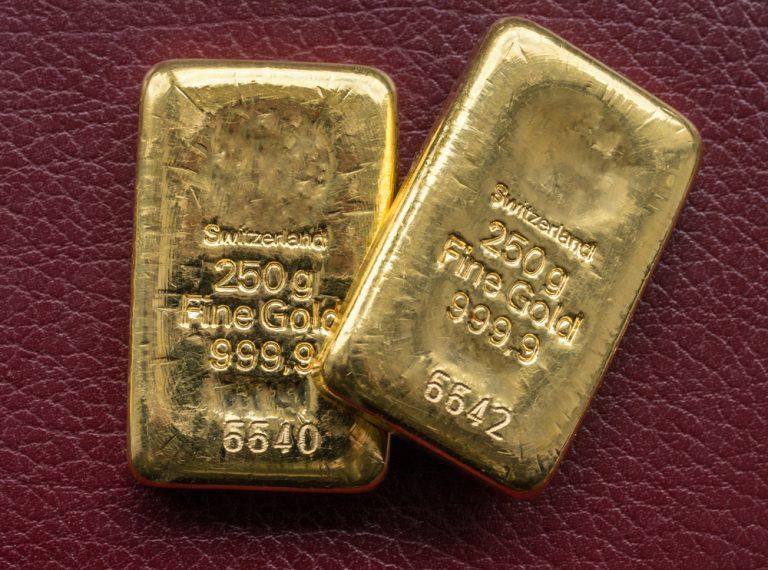
Russian gold-developer and explorer Trans-Siberian Gold (LON:TSG) saw its share price sink on Friday, after warning that profits were likely to fall going forward.
The group’s total gold production for the financial year 2017 of 36,714 ounces exceeded previous guidance, but it warned that profits were likely to fall heading in 2018.
The miner, who is focused on low cost, high grade mining operations and stable gold production in Russia, forecast production in 2018 of of 36,000oz-to-40,000oz.
Revenue remained strong in 2017, up slightly to $43.5 million from $42.2 million the year before. However, “operational challenges” had cut first-half profit to $0.5 million, down from $5.4 million in 2016.
“Whilst operations improved significantly in the second half, it is expected that pre-tax profits for FY2017 will be lower than FY 2016,” the company said.
Shares in Trans-Siberian Gold are currently down 2.44 percent at 40.00 (0849GMT).
Smiths Group shares sink 10pc as revenue and profits drop

Engineering firm Smiths Group (LON:SMIN) saw shares sink 10 percent on Friday morning after reporting weaker-than-expected first half results.
The group’s figures were knocked by a hefty tax impairment charge and weakness in its core businesses, causing pretax profit to fall 12 percent to £217 million. This figure came in well below analysts expectations of £283 million, but the group confirmed its forecast for the full year.
Revenue fell 4.3 percent to £1.55 billion, after delays in new product launches at Smiths Medical dragging down overall revenue figures. The group also warned that foreign exchange, at current rates, will remain a headwind for the year.
Shares in Smiths Group tanked on the news, currently trading down 10.77 percent at 0835GMT.
Next shares up despite 8 percent profit fall
Annual profits at high street retailer Next (LON:NXT) fell 8.1 percent over 2017, saying that the year had been “challenging in several different ways”.
Pre-tax profit fell to £726.1 million, in line with the company’s guidance, with total group sales declining by 0.5 percent to £4.1 billion. In-store sales fell by a whopping 7 percent, marginally offset by an 11.2 increase in sales online.
However, the group kept its full-year dividend steady at 158.0p per share.
“2017 was challenging in several different ways. A weak clothing market coincided with self-inflicted product-ranging errors and omissions.
“At the same time, the business has had to manage the costs, systems requirements and opportunities of an accelerating structural shift in spending from retail stores to online,” the company commented.
The group forecast total full-price sales growth of 1 percent for the 2018 year, compared to 0.7 percent growth on the same metric last year.
Shares in Next are currently trading up 1.44 percent at 4,695.00 (0810GMT).
Bank of England holds rates at 0.5pc
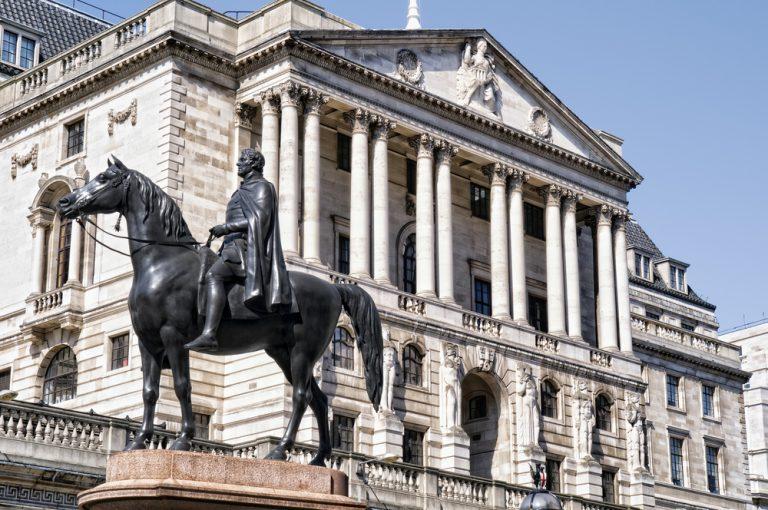
The Bank of England’s Monetary Policy Committee voted against raising rates at their monthly meeting in March, but gave its strongest hint yet that it would reach a different decision in May.
The outcome meant that the bank rate will remain at 0.5 percent, but two of the members voted for a rise to 0.75 percent. The MPC minutes maintained that “given the prospect of excess demand over the forecast period, an ongoing tightening of monetary policy over the forecast period would be appropriate”.
Pressure is increasing on Bank of England governor Mark Carney to counteract the effect of rising wages and domestically-generated inflation, as well as weaker-than-anticipated productivity, which are all pushing inflation upwards.
Rates were last hiked in November, up to 0.5 percent from 0.25 percent. The MPC again highlighted May as likely time for another rise.
“The May forecast round would enable the Committee to undertake a fuller assessment of the underlying momentum in the economy, the degree of slack remaining and the extent of domestic inflationary pressures”, the minutes read.
Flybe shares plunge after Stobart Group loses interest
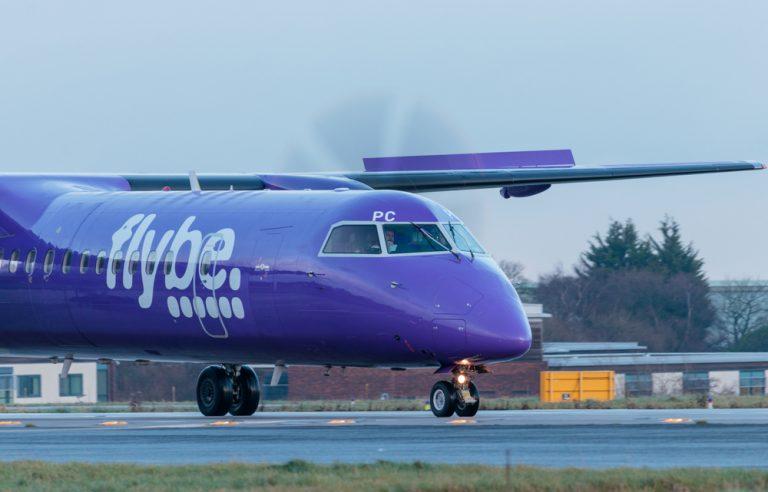
Flybe (LON:FLYB) shares sunk nearly 25 percent in early trading on Thursday, after London Southend Airport owner Stobart Group said it wouldn’t be making an offer for the carrier.
Stobart Group released a statement this morning saying that it had been “unable to reach agreement on satisfactory terms”.
“The board of Stobart Group has determined that it is not in its shareholders’ best interests to increase its latest proposal for Flybe above the level which was rejected by the board of Flybe.
“Given this, Stobart Group confirms that it does not intend to make an offer for Flybe”, it concluded.
Flybe responded with a statement in which it said it remains “highly confident in the prospects of Flybe” and “believes that the group continues to have an exciting future as an independent company, delivering the sustainable business improvement plan as set out in June 2017.”
“This plan is focused on driving sustainable profit and cash generation and will see the fleet size reduce to an optimum level for the number of identified profitable routes and make the business demand-driven rather than capacity-led”, it said.
The airline were hoping for a takeover after a spate of profit warnings and a 50 percent drop in profits in the first half of 2017. Shares in Flybe (LON:FLYB) are currently trading down 23.13 percent at 35.90 (0938GMT).
Venture Life shares up 14pc after posting maiden profit

Consumer self-care company Venture Life reported its first profit on Thursday morning, after a strong year of organic growth and international expansion.
The group posted a maiden pre-tax profit of £0.1 million for the 2017 year, up from a loss of £1.1 million the year before. Revenues rose 12 percent to £16.1 million, driven by an expanded product range and the strong performance of its Ultra DEX line in the UK.
Jerry Randall, chief executive officer of Venture Life, said: “Venture Life has delivered another year of good organic revenue growth across its business, and achieved another of its objectives by delivering a profit before tax for the first time. This coupled with a cash positive H2 2017, means we expect to be sustainably profitable going forward.
“Having invested in and established excellent operating leverage within our business, these growing revenues have translated into increasing profitability, with the majority of incremental gross margin falling through to the bottom line.
“This again demonstrates the opportunity in our business to grow the bottom line at a faster rate than the top line, and with the recent reorganisation of our plant in Italy, we have increased our capacity such that we can now accommodate twice the volumes of 2017.
“Our strategy continues to be a focus on revenue growth, through both organic growth of our existing portfolio and through acquisition. 2018 has started well with our order book ahead of the same point in 2017, and I look forward to another good year of growth for the group.”
Venture Life (LON:VLG) shares are currently trading up 14 percent at 49.02 (0921GMT).