
House prices increasing despite plummeting confidence

House prices across the UK are increasing at their fastest rate since February, according to mortgage lender Halifax.
In the year to October prices rose by 4.5 percent, up from a previous level of 4 percent in September. The latest figure puts the average UK house price at a record high of £225,826, with Halifax saying prices were likely to continue to stay at this level, supported by cheap mortgages and high employment rates.
However according to the lender’s figures, consumer confidence dropped over the same period to hit its lowest level since 2012.
Halifax’s figures showing impressive house price growth have contrasted with those of other similar lenders, many of which predict a much slower rate of growth. Nationwide put quarter-on-quarter growth at just 0.8 percent, compared to Halifax’s figure of 2.3 percent.
G4S shares plunge on growth forecast downgrade
G4S (LON:GFS) became the biggest faller on the FTSE 100 on Tuesday, after weak performance in the Middle East led the group to slash its growth forecast for the year.
The security company now expects revenue growth of between 3 and 4 percent in 2017, down significantly from a previous expectation of between 4 and 6 percent. Disappointing performance in the Middle East and India contributed to the downgrade, with G4S CEO Ashley Almanza saying:
“Trading for the nine months was in line with expectations. Organic revenue growth was 4.4 percent, with all regions growing apart from the Middle East and India region. Organic revenue growth excluding Middle East and India was 6.1 percent for the first nine months.”
The group said it remains focused on cash flow and are on track for the Group’s net debt to EBITDA ratio to be 2.5x or lower by the end of 2017.
Shares in the company plunged on the news and are currently trading down 6.69 percent at 260.90.
Germany Dax 30 At All Time Highs – Where Next?
This report includes:
⇒Technical Outlook for The German DAX
⇒Long-Term Outlook
⇒Fundamental Considerations
Request your free copy now:
Terms, Risk Warning & Disclaimer:
This report is issued by Clear Capital Markets Ltd of 9 Devonshire Square, London EC2M 4YF, which is authorised and regulated by the Financial Conduct Authority, No. 706689. Trading in equities may not be suitable for all investors. The value of investments and any income from them can fall as well as rise, and you may get back less than you invested. An investment’s past performance is not a reliable indicator of future performance. Tax allowances depend on your personal circumstances and the benefits of tax-efficient accounts could change in the future. Before you begin to trade, you should obtain details of all commissions and other charges. You should make sure you can afford any potential losses before you begin to trade. Make sure you fully understand the risks involved and seek professional financial advice is necessary. If you are in any doubt, please seek further independent advice. Any person placing reliance on the report to undertake trading does so entirely at their own risk and CCM does not accept any liability as a result. Information and research produced by CCM does not constitute a recommendation or offer to make a transaction in any derivatives or securities, and is intended to be general in nature. This report is prepared and distributed for information purposes only.
Bank of England deliver rate hike for first time in 10 years
The Bank of England has raised interest rates for the first time in over 10 years, after the Monetary Policy Committee said falling unemployment meant there was “limited slack” in the economy.
The official bank rate has been lifted from 0.25 percent to 0.5 percent, the first time that rates have been lifted since before the financial crisis.
Seven out of the nine members voted in favour of higher rates., but the committee reiterated that future increases in rates would be at “a gradual pace and to a limited extent”.
The financial markets are expecting the Bank of England to follow a similar strategy to that of the US Federal Reserve, with several more rate hikes to come over the next three years.
The Bank of England is currently facing a challenge from inflation, which despite governor Mark Carney’s target level of 2 percent hit 3 percent in September. Wage growth also remains weak, at just 2.1 percent. The rise in interest rates is likely to have a positive impact on savers, with Vince Smith-Hughes, retirement expert at Prudential, commenting: “Rising interest rates will be welcomed by retired people who often have a large proportion of their savings in deposit accounts. Rising inflation has eroded their retirement income as deposit accounts fail to keep pace with inflation. The rise in interest rates will hopefully see better returns from savings accounts. Using the right wrappers to minimise tax is also important.”Centimin shares fall despite reporting record levels of production in Q3

Gold mining group Centamin reported record levels of production on Thursday, maintaining its full year guidance for 2017.
Centamin produced 156,533 ounces of gold in its fiscal third quarter on Thursday, 26 percent higher than production in the previous quarter and 5 percent higher than the same period last year.
It maintained its full-year guidance for 2017 at 540,000 ounces, with a $580 per ounce cash cost and USD790 per ounce all-in sustaining cost. Third quarter EBITDA of $103.6 million was up 57 percent from the second quarter, boosted by both the price of gold and an increase in sales.
Quarterly throughput was 3.0 million tonnes from the Sukari process plant, which enjoyed an “excellent quarter”.
“Open pit mining rates reached another record, with ore production from high grade areas allowing a significant increase in open pit plant feed grade”, said Chief Executive Officer Andrew Pardey, adding that “the underground operations delivered another quarter of good grades at an annualised 1.2 million tonne rate and the process plant again achieved a quarterly throughput of approximately 3 million tonnes.”
However, investors failed to be impressed by the results, with leading Centamin’s share price to drop 3.71 percent in morning trading.
Shell earnings boosted by uptick in oil prices
Oil giant Shell (LON:RDSA) saw its share price rise on Thursday, as the oil market’s recovery led earnings to surpass analysts’ expectations.
Shell reported $4.1 billion in earnings for the last quarter on a current cost of supply basis, well above analyst forecasts of $3.6b billion.
The figure is almost 50 percent higher than in the same quarter last year, with CEO Ben Van Beurden said the group’s oil and gas production business generated almost half of its $10 billion cash flow from operations at an average price of $52 a barrel.
The group’s performance has benefitted significantly from an increase in the price of oil, with the effects of OPEC’s oil output limits beginning to filter through to the market. Oil prices have edged up towards $60 a barrel in recent weeks, about 13 percent higher than a year ago, raising expectations for the oil industry’s full-year results.
Ben van Beurden, the group’s chief executive, said the “competitive performance” provided “further evidence of Shell’s growing momentum, and strengthens my firm belief that our strategy is working”.
Shell shares are currently trading at a price of 2,385.00, up 1.08 percent on the day (1129GMT).
Is the FTSE 100 overvalued?

The FTSE 100 has posted sharp gains over past 18 months and has broken to fresh records on numerous occasions. As the market currently resides with touching distance of recent highs, we ask is the FTSE 100 overvalued?
Valuation
When evaluating the price levels of stocks one of the most commonly used metrics are price-to-earnings (PE) ratios. There are several variations of PE ratios and they value a stock or share index by dividing earnings of equity by their current price or market capitilisation. It can be used to predict the returns investors will receive on stocks; a higher PE ratio would suggest that stocks are overvalued and lower PE suggests stocks are cheap. This logic is then applied to stock markets as a whole as the current value of the share index is divided by total earnings. PE Ratios are the most widely used metric of valuations and it is important to understand the different variations to help predict future returns.CAPE Ratio
Shiller’s cyclically adjusted price-to-earnings (CAPE) ratio uses a ten-year period that adjusts earnings according to inflation. In some quarters it is considered a superior predictor to the core PE ratio as it avoids the economic cycle skewing the data. In regard to the FTSE 100, the PE ratio, as of 30 September, was 25.6 whereas the CAPE ratio was 15.7. The CAPE ratio is trending towards its historical mean, as is assumed it will continually do over time, of 16, however the PE ratio is significantly above its historical mean of 15. Similarly the FTSE CAPE ratio is considerably lower than in other large countries, such as the US and Germany, however, the PE is higher than in these countries.Is the FTSE 100 Overvalued?
So, why is there this disparity? Is the FTSE 100 currently over or undervalued? Part of the answer may be revealed when looking at when the PE ratio of the FTSE began to climbed. In the six months between the end of 2015 and July 2016 this ratio more than doubled, going from 17.18 to 36.49. This may have been caused by how highly weighted commodities were on the FTSE at this time. At this time commodity prices began to plummet and as a result, earnings also dropped sharply. Prime examples of this are BP and Shell who began posting dramatically reduced earnings – and large losses in the case of BP – as their share price either continued as they were and began to climb again. The price of the FTSE has continued to climb since this point as well. This is because of historically low interest rates has led to investors further turning toward trading in stocks in order to get higher returns. Since the huge spike in the trailing PE ratio in 2016 it has been slowly dropping consistently quarter on quarter, likely the value of the pound dropping 16% up to July 2017, which has caused earnings for the FTSE to increase. This is likely why the PE ratio is seemingly reverting to mean and this should continue to occur. This process will continue in one of two ways, either earnings continue to rise or stock prices takes significant drop off. Considering the fall in the pound has led to an increase in earnings as many of the FTSE 100 companies are multinationals, so earnings abroad are inflated when converted to pounds, this suggests prices are too high. As a consequence, unless the pound carries on dropping or companies improve earnings substantially, the PE ratio will remain above long terms averages, therefore it is likely a drop in price will facilitate the drop in the PE ratio, leading to a conclusion that the FTSE 100 is currently overvalued. by Will HintonJust Eat continues strong expansion as revenue rises 47%

Takeaway app Just Eat has posted another strong set of results in which revenue increased by 47% and a 29% increase in orders.
Just Eat set out to develop their technology and marketing earlier this year and the results have reflected the greater engagement of customers throughout the period.
The company pointed to success internationally with a 43% increase in overseas orders to 16.9 million.
Just Eat also noted that after three years as a listed company, it will now proceed with financial updates on a half-yearly basis.
CEO Peter Plumb said of the results:
“The Just Eat team has once again delivered another period of strong growth. As I get to know the company, it is great to see the UK business in good health and positive momentum across our international markets, particularly in Canada where SkipTheDishes’ delivery expertise and relentless focus on customer service are driving excellent results. We will continue to invest for growth in technology, marketing and great people.“
Weir Group sinks as full year guidance is slashed
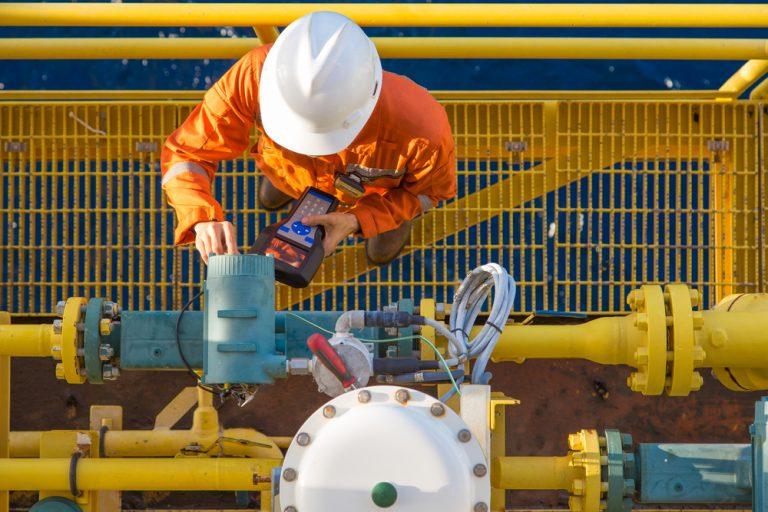
Weir Group shares sunk on Tuesday following the release of a trading statement in which the company said operating profits were expected to be ‘slightly lower’ than previously thought.
Shares in Weir Group were down over 6% in early trade.
The company attributed the weaker outlook to the phasing of mineral projects and one-off configuration costs.
CEO Jon Stanton, commented in the update:
“In 2017 we continue to build on our leadership positions in rapidly improving main markets whilst investing to maximise the significant opportunities ahead of us. “As the North American onshore oil and gas industry continues to demonstrate its increased relevance as a source of global supply, our Oil & Gas business is fully leveraging its market leadership position in support of higher activity levels among customers. While international markets remained challenging the division has accelerated in 2017 as we expected and is well placed to continue to fully capture future opportunities. “In Minerals our brownfield solutions delivered good order growth with an increasing pipeline of future opportunities. Profits will be slightly lower than previously indicated due to project phasing, incremental investment in growth and one-off plant reconfiguration as we ensure the business is well set to benefit from increased momentum in 2018 and beyond.”
“At a group level, we anticipate strong growth in full year constant currency revenues and profits. Minerals profits are expected to be slightly lower than previously indicated while expectations for Oil & Gas and Flow Control are unchanged.”
BP shares rise following share buyback announcement
BP reported Q3 earnings on Tuesday morning and comfortably beat analysts expectations giving the board confidence to announce a share buyback.
BP’s net profit for the quarter was $1.9 billion against analysts expectations of $1.6 billion. The increase in profit represented a near 100% increases in earnings from a year earlier when the company suffered significant impairment charges.
The Oil major said a dividend of 10 cent per share would be paid in December in line with payments over the past few years. There have been concerns that BPs cashflow could put pressure on the dividend but asset sales and strength in the midstream has helped their cash position.
BP recorded an average price $49 per barrel of oil in the quarter highlighting the cost efficiencies the company has implemented to help the bottom line in a period of low oil prices.
Bob Dudley, BP CEO commented on the results:
“We are steadily building a track record of delivering on our plans and growing across our businesses. This quarter, three new Upstream projects and the highest Downstream earnings in five years, underpinned by reliable operations and disciplined spending, have generated healthy earnings and cash flow. There is still room for further improvement and we will keep striving to increase sustainable free cash flow and distributions to shareholders.”