
Toshiba confirms sale of memory chip business to Bain Capital

Shares in troubled technology giant Toshiba (TYO:6502) traded up on Thursday, after the group announced it had finalised the sale of one of its businesses to Bain Capital.
The $18 billion deal to sell its computer memory chip business will aim to make up for losses incurred after the failure of its US nuclear business, which plunged the company into financial difficulties towards the end of last year.
The deal was announced by Toshiba and Bain Capital, who are leading a consortium that includes South Korea’s SK Hynix Inc and US buyers of Toshiba chips such as Apple and Dell. However rival bidder Western Digital, who was tipped as the favourite for the deal, is not likely to give up without a fight. In a statement, they said:
“We are disappointed that Toshiba would take this action despite Western Digital’s tireless efforts to reach a resolution that is in the best interests of all stakeholders”.
The sale of Toshiba Memory is likely to boost its finances by 740bn yen after taxes, pulling its out of negative shareholder equity and ensuring it remains a listed entity.
Shares in Toshiba are currently trading up 2.34 percent at 306.00 (1224GMT).
Boohoo share price sinks for second day running as CEO sells shares

Boohoo (LON:BOO) shares traded down nearly 10 percent on Thursday morning, after one of its chief executives sold over 4 million shares and reduced her stake in the business to just 4 percent.
The shares sold by joint CEO Carol Kane were worth around £10.7 million, selling for 230 pence each. The downwards push on shares came despite strong earnings reports released on Wednesday, with revenues and profits jumping 41 percent in the six months to August 31st.
The company maintained its current profit guidance, however, causing a share sell-off exacerbated by Kane’s divestment.
“The strong performance in the first half-year and our expectations for the second half have given us confidence to raise guidance for the full year,” said joint chief executives Mahmud Kamani and Carol Kane in a statement.
Investors failed to be impressed by the results, however, with shares falling on the results on Wednesday. Shares were down almost 10 percent by mid-morning, a move that was echoes early on Thursday.
Co-founder Mahmud Kamani and his siblings sold 36.6 million shares earlier this year, taking home around £80.5 million earlier this year.
Shares in Boohoo, who also own the Nasty Gal and Pretty Little Thing brands, are currently trading down 13.76 percent at 16.98 (1155GMT).
Oil rally pauses day after Kurdistan referendum

Oil prices fell on Tuesday after strong gains in the previous session on fears Turkey was going to refuse to receive oil from the semi-autonomous Kurdistan region of Iraq.
Kurdistan held an independence in defiance of central Iraqi government which drew condemnation from both Turkey and Iran.
The Kurdistan region voted decisively for independence but the Iraqi refused to recognise the result.
Turkey and Iran have significant Kurdish populations and fear the independence referendum could lead to calls for similar votes in the regions close to Kurdistan.
Turkey considers many Kurdish military forces fighting in Iraq against ISIS as terrorist organisations and see an independent Kurdistan destabilising the region.
The Turkish oil pipeline going through Ceyhan usually pumps around 500,000-600,000 barrels of oil per day. Oil prices have rallied sharply over recent days on the prospect of Ceyhan supply ceasing and putting pressure on supply, adding to OPEC cuts currently in place.
The recent gains added to a strong run in Brent oil which is in a technical bull market having rallied over 20% from June lows.
Thomas Cook summer bookings jump, signs of recovery in Turkey and Egpyt
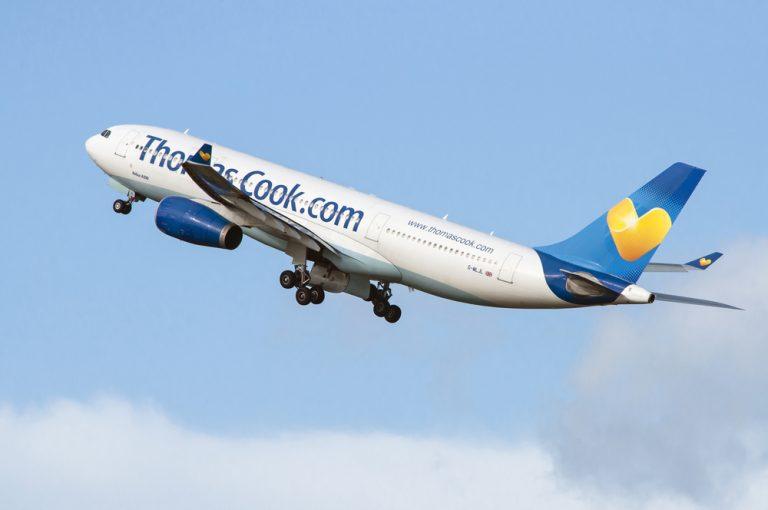
Thomas Cook announced on Tuesday summer bookings were up 10% and their Winter programme was 90% sold in trading statement that pointed to a gradual recovery in the business.
The travel firm noted they were once again seeing and uptick in demand for holidays in Turkey and Egypt were they had recently seen declines following concerns over security of the destinations.
Winter trading was broadly flat when compared to last year as bookings rose 1% but the average selling price was down 1%.
Thomas Cook CEO, Peter Frankhauser, said of the update:
“Customers’ appetite to go abroad on holiday this summer is good across all our markets despite continued political and economic uncertainty. Our decision to expand our holiday offering to Greece has helped support customer demand, with bookings to Greece up by around 40% versus last year, while smaller destinations like Cyprus, Bulgaria and Croatia are also proving popular. After a slow start to the season and a tough year in 2016, we’re seeing early signs that customers are beginning to go back to Turkey and Egypt.”
“Following strong growth last year, bookings to the Spanish Islands have levelled off in a very competitive market. Competition is particularly intense in the airline sector, putting downward pressure on pricing.”
“As we look ahead to the rest of the year, I am confident that the work we’re doing to strengthen the quality and appeal of our holiday offering will win more fans for Thomas Cook, demonstrating continued progress in our transformation to put our customers at the heart of the business.”
AA plc shares crash following trading update
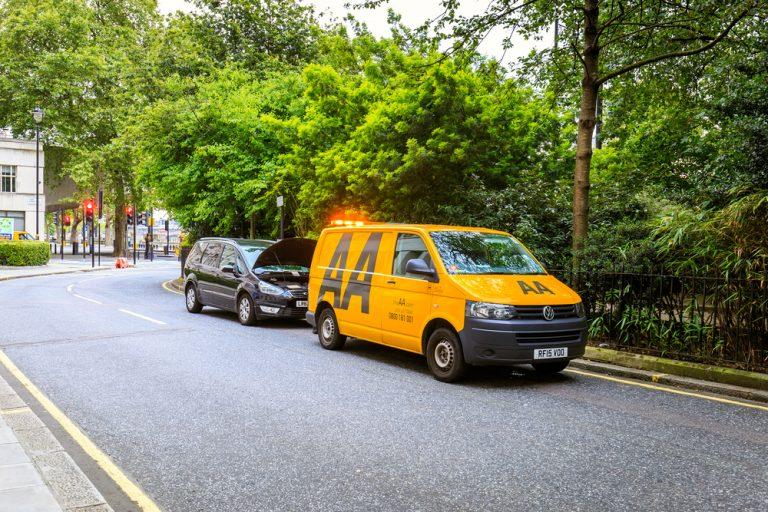
AA PLC shares fell in early trade on Tuesday as the motoring assistance company released a trading statement pointing to higher revenue.
Trading revenue for the six months to the end of July 2017 rose 1% to £471m to £467m.
However, investors were displeased with the update and dumped the shares sending them 9% lower and to the lowest level since their IPO in 2014.
AA also confirmed Simon Breakwell would be the new permanent CEO and was setting about reviewing the business.
Mr Breakwell commented:
“I am delighted to be appointed CEO of this great company. As a member of the Board since September 2014, I have had time enough to recognise that it is indeed a great company with enormous strength at a fundamental level. A huge amount has also been done since the IPO to improve its performance and create a platform upon which to grow.”
“I am now reviewing what the business needs to deliver its potential. I am confident that we have the financial strength to build the right team and equip it appropriately to deliver a distinctive business proposition which can generate growth. This will give us the best chance to realise the promise we have all recognised in the AA.”
TfL fails to renew Uber’s license in the capital

Transport for London have failed to renew Uber’s license to operate in the capital, detailing safety concerns and a “lack of corporate responsibility”.
TfL said it was not a “fit and proper” taxi operator, and said it will lose its license when its existing one expires on September 30th. The company will have 21 days to appeal the decision, during which it can continue to operate.
Tom Elvidge, general manager of Uber in London, said: “3.5 million Londoners who use our app, and more than 40,000 licensed drivers who rely on Uber to make a living, will be astounded by this decision.
“By wanting to ban our app from the capital Transport for London and the Mayor have caved in to a small number of people who want to restrict consumer choice.
“If this decision stands, it will put more than 40,000 licensed drivers out of work and deprive Londoners of a convenient and affordable form of transport.
“We have always followed TfL rules on reporting serious incidents and have a dedicated team who work closely with the Metropolitan Police.”
TfL said Uber’s approach to business highlights several important safety implications, including its “approach to reporting serious criminal offences” and “its approach to how medical certificates are obtained.”
Uber was granted its four-month temporary license back in May.
Johnson Matthey shares jump 15pc after move into electric vehicle market

Shares in chemicals company Johnson Matthey soared nearly 15 percent on Wednesday, on news that it would be expanding its battery material business in order to take a slice of the growing electric vehicle market.
Johnson Matthey announced their plan to spend £200 million on investing in its battery material technology business, with the overall market likely to be worth more than $30 billion as more and more carmakers prioritise the production of electric models.
The company’s plan to “future proof” the business will begin next year and trial for two or three years, with money going into improving the technology behind the cathodes it makes for batteries that can be used in electric vehicles.
Alongside the announcement the company confirmed its overall guidance for the year, with chief executive Robert MacLeod commenting:
“We want to be able to produce about 10,000 tons of material for cathodes a year in a market that could be several millions of tons.
“We want to play in the high-quality end of the market, and not the commodity end. Our products would probably used in very high-end batteries such as those required to run very long distances.”
Shares in the company are currently trading up 13.56 percent at 3,359.00 (1545GMT).
GlaxoSmithKline share price rises alongside pharmaceutical sector
GlaxoSmithKline shares rose on Wednesday, after the group clawed back some of their lead in respiratory medicine with regulatory approval for their new lung disease drug.
The group’s new three-in-one inhaler for chronic lung disease, Trelegy Ellipse obtained approval from US regulators on Tuesday, just after winning a recommendation for approval from the European Medicines Agency.
The leading pharmaceutical company suffered some problems after sales of its top selling drug Advair fell as the market flooded with own-brand alternatives. Trelegy Ellipse is one of the first drugs brought out by the company since, in an attempt to increase revenue streams and beat off competition from competitors such as AstraZeneca and Novartis. Analysts with Jefferies have predicted GSK’s Trelegy Ellipta could grow to peak sales of $1.5 billion.
Other products in its pipeline, labelled by CEO Emma Walmsley as “critical” to get the company’s sales back on track, include shingles vaccine Shingrix and a dual-drug regimen for HIV. Several months ago Walmsley announced the decision to streamline the roup’s drug research and allocate 80 percent of its R&D budget to respiratory and HIV/infectious diseases, along with two other potential areas of oncology and immuno-inflammation.
Shares in GlaxoSmithKline are currently trading up 0.45 percent at 1,458.00.
Zero hours contracts fall to lowest level in three years
The number of people employed on zero hours contracts has fallen to its lowest level since 2014, suggesting controversy over the contracts have caused a fall in their popularity.
Tuesday’s report from the Office for National Statistics shows that there were 1.4 million of the contracts in the three months to June, down from 1.7 million a year earlier.
The number of people working on these contracts also fell to 883,000, 20,000 less than the previous three month period.
The contracts have attracted controversy for not guaranteeing employees actual work, causing a lack of security for those needing a full-time job. However, others argue that the contracts offer the necessary flexibility for those wanting causal work, such as students or self-employed staff.
Senior ONS statistician David Freeman commented:
“In May this year there were 1.4 million employment contracts in use that didn’t guarantee minimum hours, down from a peak of 2.1 million two years previously.
“Coupled with figures we’ve already seen from the Labour Force Survey showing a small fall in the number of people who say they’re on zero-hours contracts, it seems possible that the trend towards this type of work has begun to unwind.” Asking prices in London drop to lowest in ten years

Asking prices in London fell 2.9 percent in September, marking their biggest drop for a decade.
House prices fell by an average of £18,000 since last month, according to the latest figures from property website Rightmove, with expensive areas such as Chelsea and Camden being hit the hardest.
According to the Telegraph’s calculations, a new seller in Camden would be marketing their property for almost £74,000 less than they would have done exactly one year ago, while a new seller in Hackney is asking for almost £63,000 more than they would have done in September 2016.
House prices over the whole of the UK fell during the month, down by 1.2 percent to mark their third fall over the last four months.
Rightmove’s Miles Shipside said of the figures:
“Estate agents are clearly advising many sellers that they have to lower their price expectations to fit in with buyers’ stretched financial resources, with that price compromise hopefully generating extra buyer interest,” he said.
Rightmove’s figures took into account over 98,000 asking prices on properties listed for sale between 13th August and the 9th September, representing around 90 percent of the UK market.