

Heathrow reports positive results for first quarter

Heathrow airport has reported record-breaking results for the first quarter of 2018.
Between January and March 2018, 200,000 passengers passed through Europe’s busiest airport every day – a 3.1 percent increase from the first quarter of 2017.
“We’re delighted that passengers are choosing Heathrow in record numbers – it’s a strong signal that we’re delivering value for money,” John Holland-Kaye, Heathrow’s chief executive.
“We’re within touching distance of Parliament voting on expanding Heathrow and now more than ever we’re committed to developing and delivering a hub airport that Britain can be proud of for generations to come.”
The airport’s operating profit was £220 million, up eight million from the same period last year. Spend from retail earnings increased percent cent to £8.82 for the average passenger.
Data released by the airport showed the busiest destination remains Europe. Passengers to South America have increased by 6.9 percent.
The third runway has not yet been approved but if plans are given the go-ahead, it would be open by 2025.
The new runway has faced a backlash with a government analysis showing that it would expose an additional two million people to aircraft noise.
It has long been clear that the DfT have understated the numbers who will be impacted by an expanded Heathrow’s noise,” said Paul McGuinness, the chair of the No 3rd Runway Coalition.
“So it’s hardly surprising to learn that these calculations were not presented to the public and parliament. The DfT wish to conceal the true impact of expanding this highly disruptive airport.”
Heathrow maintains that even with a third runway, fewer people will be affected by the noise.
“We stand by our commitment to expand Heathrow while reducing the number of people affected by noise, compared to today. We are currently consulting with our local communities on airspace modernisation, which will redesign how planes fly over Heathrow in coming years,” a spokesperson said.
“Any future modelling of noise impacts must take into account these changes, as well as the stringent mitigation and insulation plans Heathrow will put in place, which will continue to reduce the number of people affected by our operations.”
How can you invest wisely to enjoy retirement?

Retiring at a reasonable age and having enough saved to live comfortably is becoming an ever-distant dream for some
How can you make sure that you have enough savings to enjoy a comfortable retirement? To support a reasonable level of income in retirement, around 10-15% of annual income should be saved, yet few people maintain this level. So, the question is, why is there such a gap between what we need when we retire, and what is available to us? Furthermore, how can we ensure we have enough to enjoy our twilight years.Pensions and retirement – the funding gap between what we have and what we need
One factor that affects the capacity to sustain ourselves through retirement, is that we are living far beyond the years the pension was designed. In 1960, if the average individual would retire at the age of 65, they would usually live another 6.1 years on their pension and savings. In 2015 those who retired at the age of 65 would live another 16 years beyond that to just over 81 years old. This longer period influences how much the government can afford to pay out via pensions, especially as public funds are already stretched. There is also a gap between what we need to live comfortably, and what we have saved to live comfortably. This issue mainly affects women, as their retirement balances are on average 30-40% lower than their male counterparts. The problem would be far less severe if the age at which we retire increased in correlation with a longer life expectancy. Yet, that is not the case, and in some countries, such as Poland, the age of retirement is falling. The gap between what we need for retirement and what is available is widening and is compounded by our increased life expectancy. There is also a falling birth rate, which is then affecting how many people of working age are available to support those of retirement age. In 2050 there will be 4 workers per retiree, compared with 8 today. There is a lack of knowledge surrounding pension plans and savings. This means that employees may be opting for a basic company pension plan that does not cover them for the future. Coupled with the rise in the number of casual / self-employed workers (globally over 50% of the workforce) who are the least likely to have a pension plan in place, widens the gap.So, how can we build a nest egg for retirement?
Those who have bought shares or put money into a savings account for retirement might find that the interest they are receiving is not enough. Returns on these types of investments are running at historic lows, sometimes 1%. As we listen to our clients who have invested, building equity to supplement their pension was one of their main motives. One of our investors, Patricia Readshaw, commented “I was coming up to retirement and you cannot simply live on fresh air. You must have savings to fall back on for security. It is worrying when you don’t have a lot of savings set aside. Especially if you are by yourself”. This is where retirement home investments are gathering momentum. As we have mentioned, people are living longer so the need for care homes is more pronounced. This results in excellent occupancy rates, and the caveat of a luxury retirement home is that it attracts self-paying residents, which in turn makes it a more profitable business model compared to care homes.
Why invest in a retirement home? Income for now – accommodation for later
People who choose to invest in care homes can achieve returns of 10% per annum, assured for ten years. The cost of a suite in a retirement home is dependent upon its location, with the south west running at a slightly higher entry point. Investors can expect to pay in the region of £60,000 – £85,000. Our care home investment opportunities are primarily based in the south west region. This is because the south west is popular with retirees due to its scenic countryside and mild climate. It also boasts a high proportion of self-paying residents; an ideal demographic for those wishing to make good returns on their investment. These care homes are often set in picturesque towns and villages, often by the coast or next to National Parks / Areas of Outstanding Natural Beauty. There is even an opportunity for the investor to occupy their own unit, so it is an ideal choice for someone who is thinking of downsizing. According to research carried out by Demos, 33% of the 1500 over 60s they surveyed would like to downsize. A quarter of those had an interest in buying retirement housing. 25% also said they’d rent one on an assured tenancy. Investors can buy a unit, rent it out for some income and then move into the unit in later life. Or they can use the rental yield to cover rental costs at another care home. This helps spread equity as they can leave their family wealth instead of having it hoovered up by inheritance tax. It’s also a very hands-off investment, as we understand those in their later years do not want the stress of managing a property and tenancy issues. This is all taken care of by the management company, so it suits those entering retirement.Personal Use
Downsizing can be a stressful; leaving the house that you have created so many wonderful memories in is difficult. When making the next move and choosing a retirement home to live in, one must conduct a lot of research. It is recommended to visit many retirement villages before making any decisions. It is the sense of community and provision of extra services that one is seeking from a place they will be spending well-deserved leisure time in. The activities provided by Carlauren developments include wine tastings, country walks and fine dining experiences. The chef has experience working for top names such as Antony Worrall Thompson and Michelin-starred Castle Hotel in Taunton. At 25 he had a head chef position to run its Brazz restaurant. All the produce is locally sourced, and residents can cultivate the gardens where the ingredients are grown. In addition to having the investment option, as the owner you can choose to move into the retirement home (provided you are over 65). On site you enjoy the social events hosted by the company, the picturesque grounds and a luxurious living environment. Care plans centre around the individual. The aim is to allow residents to enjoy as much of their independence as possible, whilst ensuring they know help is at hand if they need it. The facility will be fully staffed by an experienced team of care professionals. They all have frontline experience as healthcare assistants and senior healthcare assistants in dementia and specialist mental health care facilities. The benefit of investing in the luxury retirement homes provided by One Touch Property is that one can choose the hands-off 10% net rental income over a ten year commercial lease, or occupy the unit. The ability to self-occupy the suite opens the wider market for resale and allows for capital uplift (the developer must buy the property back from the owner with up to 25% uplift). These investments are usually conversions of Grade II listed buildings based in idyllic areas of the UK such as the south west and the Isle of Wight. Prices start from £69,950 depending on the location, and the facility is fully managed meaning that the investor does not have to concern themselves with the day-to-day upkeep of the suite. Download our luxury retirement home investment guide today to discover the benefits of investing in this robust sector, or visit our website to receive current property investment advice. This article was sponsored by One Touch InvestmentsSainsbury’s growth lags ahead of big Asda merger
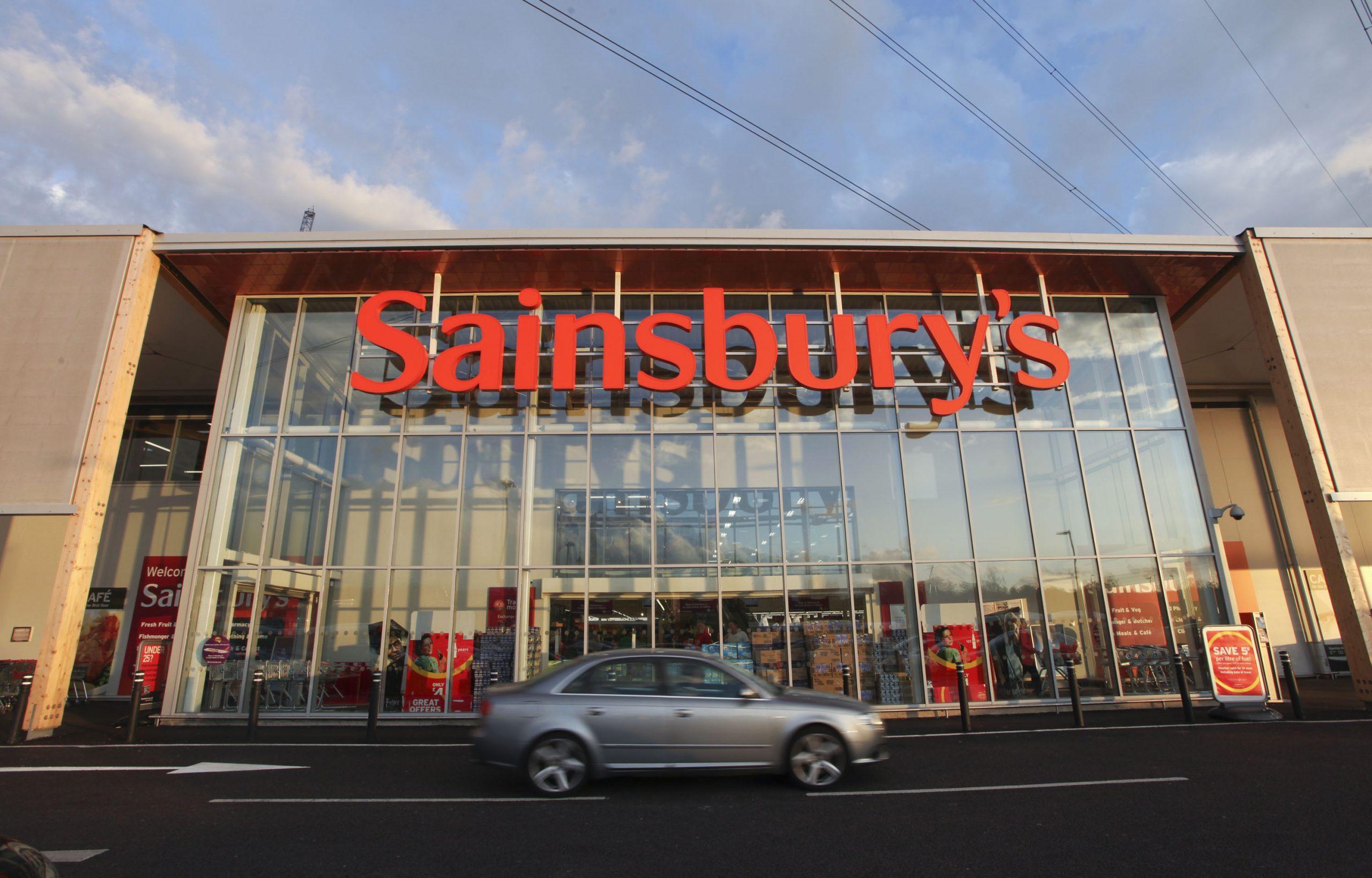
The supermarket sector continued to show growth in the last three months, with Tesco (LON:TSCO) and Morrisons (LON:MRW) leading the way and Sainsbury’s lagging behind.
The latest grocery market share figures out today from Kantar Worldpanel showed Tesco grow by more than 2 percent for the 12th consecutive period, in its best set of performances since 2011. CEO Dave Lewis’s turnaround strategy seems to be coming into its own, with overall market share at 27.6 per cent for the 12 weeks to 22 April 2018.
Sainsbury’s however, the subject of much discussion over the weekend due to its confirmed merger with Asda, saw sales rise just 0.2 percent over the same period. It currently holds a market share of 15.9 percent, with Asda taking a further 15.5 percent. Should the merger come to fruition, the combined group looks set to overtake Tesco as the UK’s biggest supermarket by market share.
Fraser McKevitt, head of retail and consumer insight at Kantar Worldpanel, said:
“This is a pivotal moment for the British grocery market. A merger between Sainsbury’s and Asda would transform the traditional landscape placing nearly a third of market share in the hands of the joint supermarket giant, though the march of the discounters – and any enforced store closures – could impact this figure.”
Over the period the British grocery market actually grew at its slowest rate since March last year, with Lidl recording the best results of the quarter. It saw sales rise 9.1 percent, with market share up 5.4 percent.
Aviva shares up on £600m share buyback announcement

Aviva (LON:AV) shares edged up on Tuesday morning, after the insurance group announced it would begin a £600 million share buyback of its ordinary shares.
The group has already pledged to deploy £2 billion of excess of capital in 2018, including debt reduction and acquisitions. The share buyback programme will begin today, Tuesday 1st May, and will likely run until the end of this year.
“The deployment includes £900 million of debt reduction, £500 million for bolt-on acquisitions (close to £100 million has already been committed to the acquisition of Friends First in Ireland) and a £600 million ordinary share buy-back,” Aviva said.
The announcement comes just after the firm said over the weekend that it would make about £14 million of ‘goodwill’ payments to investors who lost money selling preference shares in March. Aviva had proposed to cancel the high-yielding stocks, sending the price down sharply. 2,000 private and institutional investors are set to get a payout of around £7,000 each.
“We recognise that whilst we were considering our options for the preference shares this caused uncertainty and led some investors to sell their shares,” said Mark Wilson, Aviva chief executive.
“The board and I want to do the right thing and make this goodwill payment.”
Aviva shares are currently trading up 1.17 percent at 535.20 (0826GMT).
BP reports 71pc profit hike, boosted by rising gas and oil prices

Higher gas and oil prices lent a boost to BP (LON:BP) profits in the first quarter of the year, sending shares up at market open on Tuesday.
Profits at the firm rose 71 percent on an underlying replacement cost basis, hitting $2.6 billion for the three months to the end of March. BP production rose 5.7 percent in the quarter to 3.7 million barrels per day, with operating cash flow up to $5.4 billion.
BP’s upstream earnings from exploration and production totalled $3.16 billion on an underlying replacement cost basis in the first quarter, their strongest quarterly figures since 2014. However the group doesn’t expect the same performance in the second quarter, with upstream production set to be lower than the first quarter due to the expiration of the Abu Dhabi offshore concession.
“Our safe and reliable operations and strong financial delivery have continued into 2018. Underlying profit was up 23 percent on the previous quarter and was our best quarterly result in three years. With rising output from our new major projects and excellent reliability, Upstream production was 9 percent higher than a year earlier,’ Bob Dudley, the group’s chief executive, commented.
Shares in BP are currently trading up 1.36 percent at 545.30 (0813GMT).
Just Eat shares jump as orders grow both in the UK and abroad

Takeaway delivery chain Just Eat (LON:JE) reiterated its full-year guidance on Tuesday, as orders continued to rise across the UK and internationally.
Group orders rose 32 percent in the first three months of the year, sending revenues up 49 percent to £177.4 million. The figures were boosted driven by strong order growth and an increase in higher value delivery orders.
In the UK orders increased by 24 percent to 29.7 million, up from 24 million last year, with international orders up 46 percent. the UK benefitted from the performance of Hungry House, its latest acquisition, and international growth was boosted by strong performances from both Italy and Spain.
“Just Eat has had a strong start to the year. We delivered our 400 millionth order in the UK, grew well in Italy and Spain, whilst powering continued momentum in our Canadian delivery service SkipTheDishes,” said Peter Plumb, CEO. He added that the revenue growth would be used to increase it customer base, citing competition from Deliveroo and UberEats.
The firm reiterated full year guidance given in March, of group revenue of between £660 million and £700 million and earnings (uEBITDA) of £165 million to £185 million in 2018.
Shares in Just Eat soared at market open to trade up 3.64 percent (0804GMT).
Carpetright issues fourth profit warning in five months, shares fall
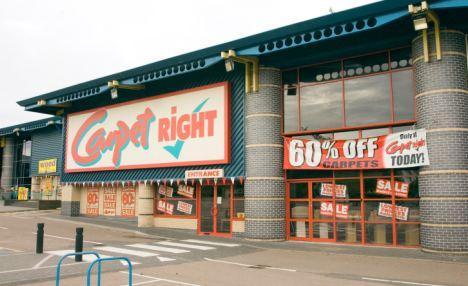
Carpetright (LON: CPR) has warned that it expects this year’s full years losses to be double that previously expected.
Britain’s biggest carpet retailer has estimated losses of between £7 million – £9 million, compared with a profit of £14.4 million last year.
The struggling floor covering chain has issued four profit warnings in the past five months as the retailer has been hit by the weaker consumer confidence and slowing down of the housing market.
Whilst the firm expected £13 million in profits at the start of the year, one month ago Carpetright forecasted a “small loss”, estimated by house broker Peel Hunt at £4.3 million.
Under a company voluntary arrangement, the group plans to shut 92 stores which could result in the loss of 300 jobs.
“The CVA proposal will enable us to take the tough but necessary actions needed to restore our profitability. Having now received approval from both shareholders and creditors we will press ahead with our plans for the proposed equity financing to recapitalise the business and enable Carpetright to address the competitive threat from a position of strength,” said Wilf Walsh, the Carpetright chief executive.
Walsh maintained that he is “committed to the project”. “I don’t think now would be the time to bail,” he added.
Carpetright is not the only retailer struggling in the current climate. The group’s latest profit warning comes just weeks after fashion retailer New Look won approval for a CVA that will lead to the closure of up to 60 stores and rent reductions on many more.
Carpetright shares were down four percent in afternoon trading.
Sajid Javid to replace Rudd as home secretary
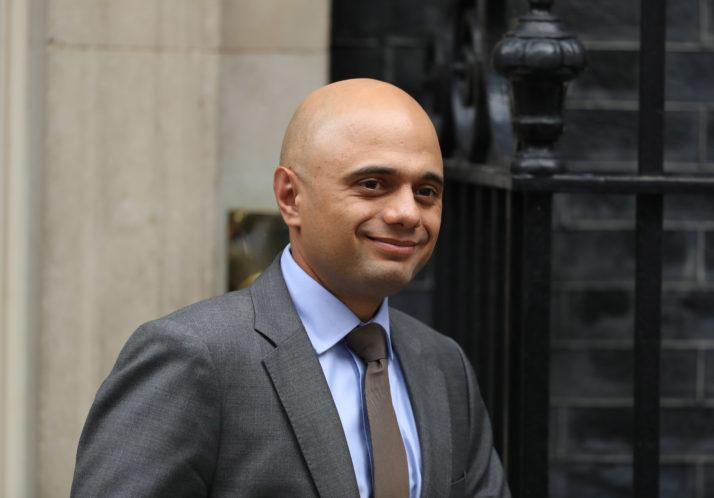
Following Amber Rudd’s surprise resignation, Sajid Javid has been named the UK’s new home secretary.
Announced on Monday morning, Javid is the first home UK secretary that has come from an ethnic minority background.
After Theresa May’s announcement, Javid said that the most pressing task at hand was to get ahold of the Windrush crisis and ensure those affected “are all treated with the decency and the fairness they deserve”.
“We’re going to have a strategy in place that does something the previous home secretary set out last week when she made a statement to parliament – to ensure that we have an immigration policy that is fair, it treats people with respect, and with decency,” he told BBC News.
“That will be one of my most urgent tasks, to make sure that we look carefully at the policy and make sure it achieves just that – fairness.”
Javid is replacing Rudd who resigned after she said she “inadvertently” misled MPs over deportation targets.
The new home secretary has previously expressed anger over Windrush scandal and how it has been handled by the government.
He told the Sunday Telegraph that the Windrush scandal felt “very personal” to him with Pakistani immigrant parents. “It could have been me, my mum or my dad”.
Dianne Abbott said of Javid’s new role: “The new home secretary cannot form another human shield for Theresa May. The prime minister still has serious questions to answer about how this scandal was allowed to happen, and whether she knew Amber Rudd was misleading parliament and the public last week. It’s time Theresa May finally takes responsibility for the crisis she created.”
This was not the only re-shuffle announced by Theresa May this morning. The former Northern Ireland secretary James Brokenshire is returning as the housing, communities and local government secretary. Penny Mordaunt, the International Development Secretary will take Rudd’s other role as the women’s and equalities minister.
Randgold shares edge down as strike affects gold output

Randgold Resources (LON:RRS) saw shares edge down in early trading, after production at its Ivory Coast mine was hit by strikes.
Ongoing strikes at the Tongon gold mine started with employees but then spread to other operations. Operations have now returned to full capacity, but the group said on Monday that disruption would likely impact the mine’s production guidance of 290k ounces for 2018.
Despite this, Rangold said it was “determined” to recover most of the lost output.
“To mitigate the downtime effect and lost plant throughput, Tongon processed ore from the run-of-mine and scats stockpiles during the stoppages and also used the opportunity to upgrade parts of the plant to achieve a higher and more consistent throughput going forward”, it said.
Shares in Randgold are currently trading down 0.30 percent at 5,896.00 (0852GMT).