
Centre-left coalition may be good for sterling, says JP Morgan
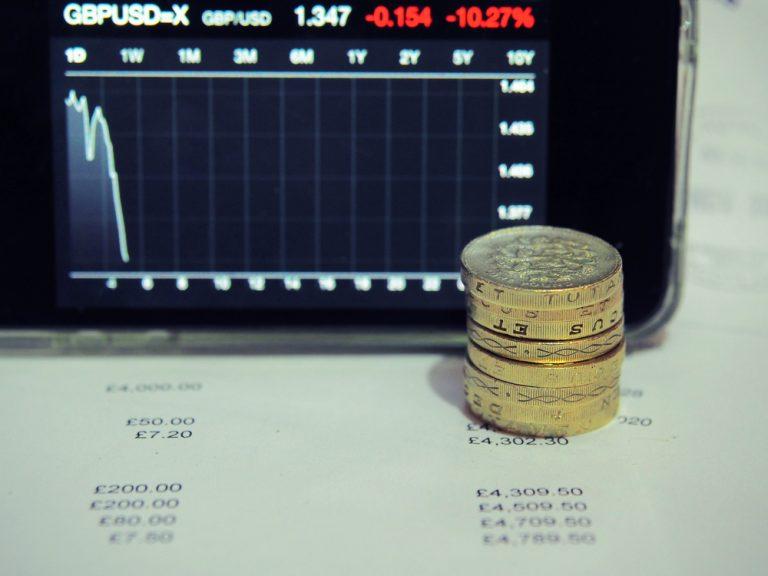
Strategists at JP Morgan have today released a note to the media suggesting that a coalition led by Labour may actually cause the pound to rally.
This goes against conventional market thinking which has been pricing a ‘strong and stable’ conservative government as the best outcome for sterling.
JP Morgan FX Strategist, Paul Meggyesi said:
“The wake-up call for markets was a YouGov poll released on Thursday– this shows a halving in the Conservative lead to only 5pts compared to an average of polls at the start of the week.”
“A hung parliament would in more normal circumstances be viewed as quite negative for sterling – that was very much the experience of the 2015 election when sterling was braced for one of a myriad of potential coalition permutations only for sterling to jump by 3pc once David Cameron secured an improbable narrow majority.”
Meggyesi suggests that a coalition would remove the risk of a ‘Hard-Brexit’ or ‘no-deal’ with the EU being touted by Theresa May if she doesn’t get her way in negotiations.
“In the post-referendum world, all political developments need to be viewed through a Brexit prism and an argument can be made that a hung parliament which delivered or held out the prospect of a softer-Brexit coalition of the left-of-centre parties (Labour/Lib Dems/SNP) might actually be sterling positive.”
Minco shares fall after recording another loss for Q1 2017
Shares in mining company Minco (LON:MIO) fell over 2 percent on Tuesday, after the company confirmed it had recorded no revenue for the three month period to the end of March 2017.
In a statement Minco said it had recorded a loss of $219,000 in the first quarter of 2017, compared to a loss of $426,000 for the same period ended March 31 2016.
The loss for the three-month period ended 31 March 2017 included a foreign exchange loss of $32,000 compared to a foreign exchange loss of $159,000 for the same period ended 31 March 2016.
Minco is a United Kingdom-based mineral exploration and development company focused on exploration in Canada, Ireland and the United Kingdom, and indirectly on base metal and silver projects in Mexico.
Shares in Minco are currently trading down 2.12 percent at 2.08 (0925GMT).
Ryanair shares fall despite record full year profit
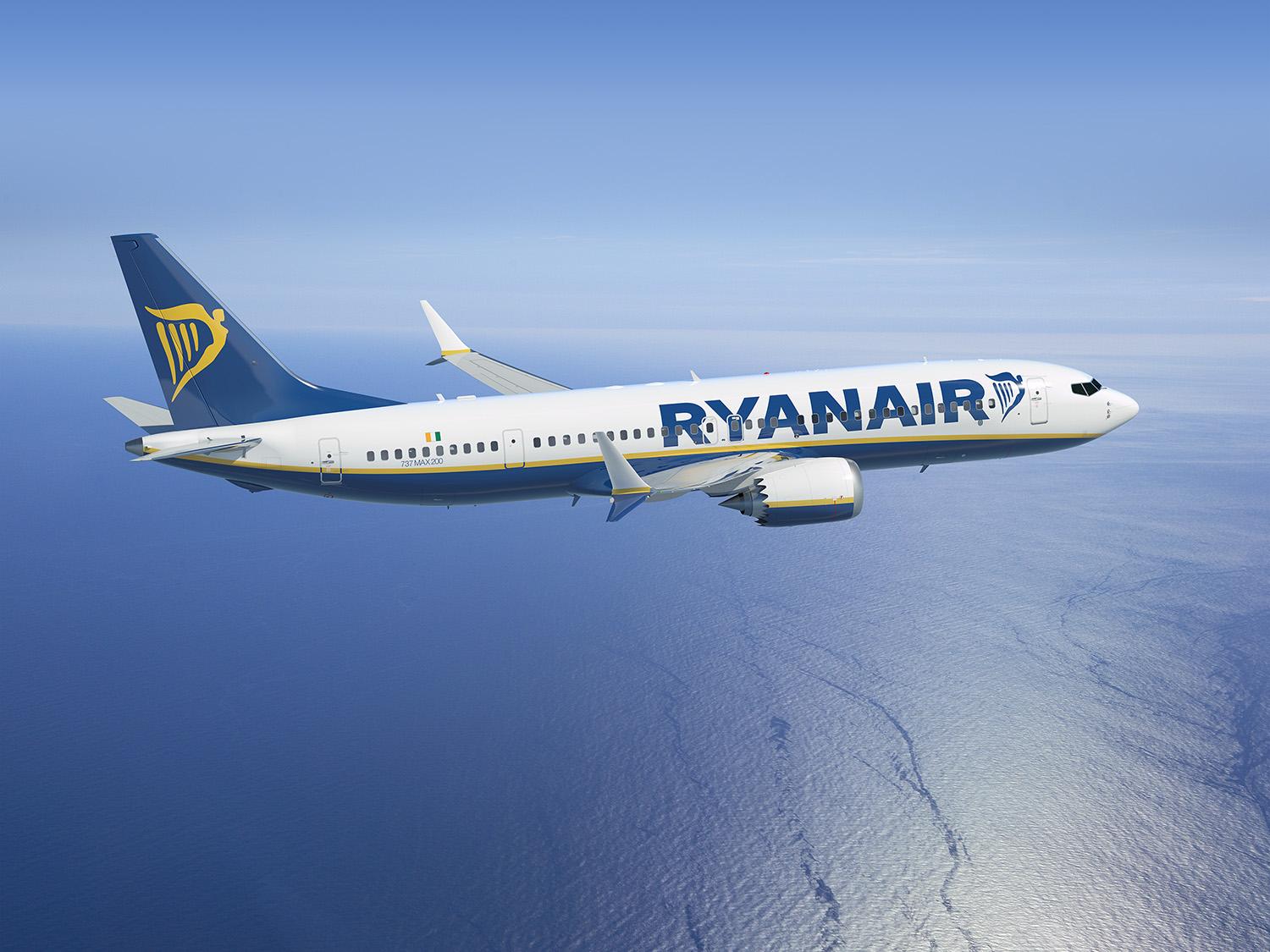
Budget airline Ryanair (LON:RYA) reported a record full year profit on Tuesday, despite expectations that it would be hit by the effects of terrorist attacks and the fallout from Brexit.
Full year net profits rose 6 percent to 1.316 billion euros, with fares cut by 13 percent and an ‘industry leading’ 94 percent load factor.
Ryanair’s CEO Michael O’Leary said:
“We are pleased to report a 6 percent increase in profit after tax to 1.316 billion euros, despite difficult trading conditions in 2017 caused by a series of security events at European cities, a switch of charter capacity from North Africa, Turkey and Egypt to mainland Europe, and a sharp decline in Sterling following the June 2016 Brexit vote. We reacted to these challenges by improving our customer experience, and stimulating growth with lower fares.”
However, looking forward O’Leary added:
“Investors should be wary of the risk of negative Brexit developments, or any repeat of last year’s security events at European cities, which could damage consumer confidence, close-in bookings and this FY18 guidance”.
Ryanair shares are currently trading down 1.22 percent at 17.79 (0907GMT).
FTSE reaches record high as pound plummets on election worries
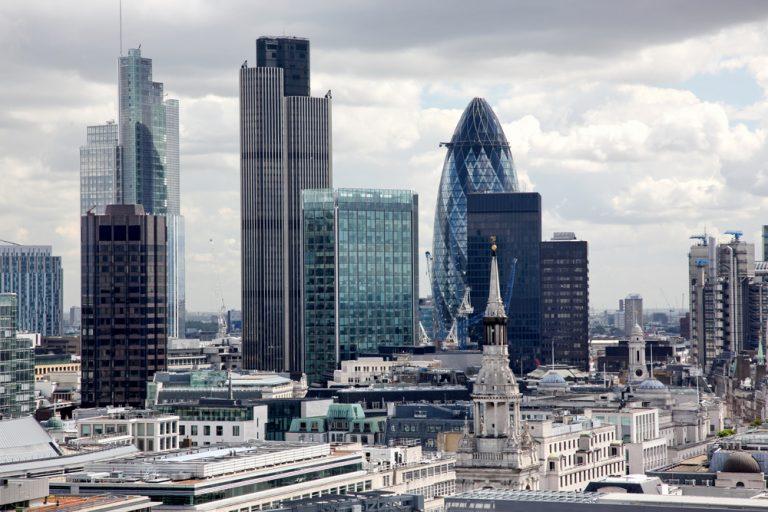
The FTSE 100 hit a new record high in mid-morning trading on Friday, pushed up by a fall in the Pound.
The pound fell after the latest General Election poll found the Conservative Party’s lead over Labour had narrowed substantially, with less than two weeks to go before Britain votes.
Despite the Conservatives starting the campaign with a strong lead, the Labour Party has since increase its projected vote share by five points to 38 percent, with the Conservatives saw theirs drop to 43%, a fall of one point.
The pound is currently trading down 0.68 percent against the dollar at $1.28, and 1.15 against the euro.
Michael Hewson of CMC Markets commented:
“If you look at European markets, they’re lower by a considerable amount. The weaker pound is certainly not hindering the FTSE’s rise,” he says.
The FTSE is currently up 0.15 percent at 7528.62 (12013GMT).
Fever-Tree founder gains £73 million after selling 4pc stake
One of the founders of premium drinks Fever-Tree is now £73 million richer, after selling a 3.9 percent stake in his company.
Deputy chairman Charles Rolls sold almost double the amount of shares he planned to sell, offering 4.5 million shares at £16.25 each. The larger-than-anticipated share sell-off followed “significant” demand from investors. Rolls retains an 11.2 percent stake in the business, which he founded with chief executive Tim Warrilow. The premium drinks group has seen an impressive performance on the stock market since its floated towards with end of 2014. Its share price has rise 900 percent since the IPO, rising more than 50 percent his year alone. In its preliminary results for 2016, Fever-Tree profits soared to £34.3 million last year, up from £16.8 million in 2015, marking an increase of 105 percent. Fever-Tree’s international sales have expanded rapidly, and more than 50 percent of its revenues now come from outside the UK. Fever-Tree (LON:FEVR) shares are currently up 0.96 percent at 1,728.50 (1116GMT).Rocky morning for markets as OPEC decision pushes oil down

The price of oil dipped further on Thursday, despite reports that Opec producers have agreed to extend supply cuts until arch 2018.
Oil had a rocky morning ahead of the announcement, rising just before it was announced on the hope of positive news. However, the agreed extension disappointed markets and saw the price of oil fall in afternoon trading.
WTI Crude is currently trading down 1.03 percent at $50.83 per barrel, with Brent trading down 0.8 percent at $53.83.
The remaining producers not part of the OPEC group – including Russia – are also set to decide later today if they too will extend cuts.
The FTSE 100 also had a volatile morning on the back of the oil price movements, nearing a record high in morning trading before falling back down alongside the price of oil.
The share index hit 7,529.74 – around four points shy of the record intraday high of 7,533 it hit last week – before slipping back around midday.
Ansell sells condom division to Chinese consortium in $600m deal

Historic Australian company Ansell has sold its condom business to a Chinese consortium, in a deal worth $600 million.
Ansell, whose founder Eric Ansell begun making condoms in 1929, sold the division to Humanwell Healthcare Group and CITIC Capital China Partners in an all-cash deal.
Ansell chief executive Magnus Nicolin said: “It is our only consumer business, it is the only business where we’re not number one in the world, it is a business with a dramatically different go-to-market in terms of marketing spend.”
Ansell make brands including Mates, Skyn and Jissbon, whose sales have lagged recently behind those of Reckitt Benckiser’s Durex.
The Chinese condom market is set to expand rapidly in the near future, growing around 12 percent annually between 2016 and 2024, according to a Transparency Market Research report.
The sale will allow Ansell to focus on the manufacturing of its other products, including industrial and medical rubber products.
Dixons Carphone shares rise on solid figures in challenging environment
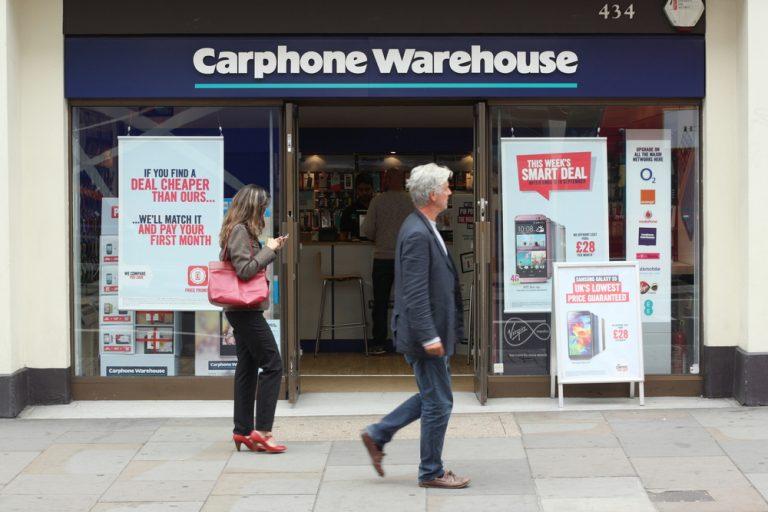
Electrical retailer Dixons Carphone (LON:DC) saw shares rise nearly 5 percent on Wednesday, after reporting a 9 percent rise in sales and boosting profit expectations.
For the 16 weeks to April 29th the retailer saw like-for-like sales grow by 4 percent, with CEO Seb James saying the company had performed well against a “lively political backdrop”.
In an update to investors, the company said that it expects pre-tax profit for the full year to come in between £485 million to £490 million.
Chief executive Seb James said: “Despite a lively political backdrop, we have been able to continue to grow our business and maintain very high levels of customer satisfaction across the group.”
In the UK & Ireland, like-for-like revenues in the full year improved by approximately 3 percent as a result of sales successfully transferred from closed stores and sales disruptions, largely benefitting UK and Ireland electricals, where like-for-like revenues grew 7 percent.
The group’s activity in Southern Europe saw a particular improvement, delivering “another very good year” with full year like-for-like revenues up 6 percent.
“With Greece a particularly strong performer, the business continues to gain market share and improve its service and delivery propositions and in Spain the SmartHouse initiative is providing good momentum against a tough overall market backdrop”, the company said.
Shares in Dixons Carphone are currently trading up 2.85 percent at 335.91 (1724GMT).
KEFI Minerals one step closer to obtaining financing to Tulu Kapi gold project
Gold exploration company KEFI Minerals (LON:KEFI) saw shares rise on Wednesday, after moving one step further to the finalisation of funding for its latest project.
The company, who are currently running projects in the Kingdom of Saudi Arabia and the Federal Democratic Republic of Ethiopia, announced the completion of its 2017 Definitive Feasibility Study Update for the Tulu Kapi Gold Project. KEFI’s Executive Chairman, Mr Harry Anagnostaras-Adams, said:
“By today publishing an updated definitive feasibility study, we are pleased to have completed another vital step towards finalising funding arrangements. Total funding requirements of approximately $160 million and other key aspects remain consistent with recent guidance.
“Comparison with KEFI’s 2015 DFS two years ago summarises the myriad of refinements since then, such as detailed operational plans with project contractors including accelerated ore processing that increases gold production to 115,000 ounces per annum, thus improving profitability and cash flows. The update also details the technical rigour behind the improvements made to the project since KEFI assumed control in 2014.”
Completed by Lycopodium Minerals Pty Limited and approved by KEFI, the 2017 DFS Update is now the base case for overlaying the funding commitments, whilst higher targets will be set for business planning purposes. The financial analyses have been prepared by Endeavour Financial.
Shares in KEFI Minerals are currently trading up 3.25 percent to 5.40 (1039GMT).
How could a Trump impeachment affect the market?
In my 39 years, I have never witnessed a US Presidency with as much drama as I have seen in just over 100 days since Donald Trump was elected. And in this short time talks of a Trump impeachment are already surfacing.
I was too young to be fully aware of President Regan’s presidency, then came Bush Sr who I can only remember for the Gulf War and infamous “no more taxes” statement, then Clinton who went through his own impeachment over his affair with Monica Lewinsky, but survived, Bush Jr who I won’t even attempt to get into and of course Obama. Then came Trump. He could easily win the prize for most dramatic presidency Washington has seen, but could an impeachment really be on the cards?
Why could a Trump impeachment happen?
Since day one there has been a non-stop stream of controversial decisions, comical errors of judgement, and connections to Russia that have raised suspicions. High profile firings did not help his case, especially with the latest firing of FBI director James Comey, whose memos showed that Trump was asking him to drop his investigation on former national security adviser Michael Flynn. A new report claimed that Trump’s campaign has made contact with Russia at least 18 times during the election race, which supports the investigation that was opened against Flynn. He was suspected of helping Trump communicate with Russian President Vladimir Putin without the knowledge of the US national security. In his first conference since firing Comey on Friday 19 May, Trump refused to answer any questions about the subject saying “No, no, next question.”Trump impeachment and the markets
As soon as “Trump Impeachment” appeared in the media, the US dollar index, which measures the strength of the dollar against six major currencies, dropped to a six-month low. US and global stocks came under pressure and the VIX, which is known as the volatility index that gauges the fear on Wall Street, made its biggest daily move since 24 June 2016. A week before that, the VIX had registered its lowest close since 1993. Considering gold is a safe-haven that traders tend to turn to when the market is unsteady, it could gain following more Trump impeachment speculation and possibly reach the key level of $1270, followed by another potential level of $1300. Add the fact that a June rate hike is not very likely to happen, gold could be in a good place to see potential gains.Buy the rumour, sell the fact
If Trump is impeached or resigns, there is a possibility of seeing a different course of action. First, we just might see a case of “buy the rumour, sell the fact,” which would help gold gain leading up to the possible impeachment, but if the impeachment does happen, then gold prices are likely to retrace their gains. Second, Mike Pence (who would replace Trump) could bring positivity to the situation due to his strong relations with Capitol Hill and his experience in the political arena – both facts could help him pass the necessary tax reforms that the market desires.A Trump impeachment versus the Clinton impeachment
Clinton’s presidency was far from squeaky clean and endured a number of scandals in the 1990s. Eventually he was impeached by the House of Representatives in 1998 for perjury and obstruction of justice connected to his affair with Monica Lewinsky. Following the impeachment in 1999, the senate acquitted Clinton. The reaction of the market on the build up to the impeachment fell, but on the official announcement of his impeachment it rallied, covering all its previous losses. Gold, meanwhile, had no reaction whatsoever. In hindsight, the market not highly affected by the whole ordeal. Almost 20 years later times have changed, and the market is obsessed with politics. Especially in the past 12 months or so, the Brexit vote, Trump’s unexpected election and the UK snap election are a few of the political events that have caused a riot in the markets. Based on said facts, a Trump impeachment is very likely to repeat the pattern. Furthermore, Clinton’s impeachment was a slow build up, while speculation of Trump being potentially impeached happened a lot faster.Trump impeachment odds
A Trump impeachment is possible, but an impeachment does not happen overnight. It can take months, even years to come into place, and it does not have strong precedent, with only two impeachments in US history. In my opinion, it is most likely to happen similarly to Richard Nixon’s impeachment. Nixon resigned before the impeachment vote took place; Trump may very well do the same. UK-based bookmaker Paddy Power’s odds on Trump impeachment in 2017 are at 21-10, while odds against Trump’s survival of a full first term are at 4-6 against him.By contributor James Trescothick, Global Strategist, easyMarketsRisk Warning: Forward Rate Agreements, Options and CFDs (OTC Trading) are leveraged products that carry a substantial risk of loss up to your invested capital and may not be suitable for everyone. Please ensure that you fully understand the risks involved and do not invest money you cannot afford to lose. Please refer to our full risk disclaimer. EF Worldwide Ltd