
Burberry soars 7 percent intra-day on bid speculation

Shares in Burberry soared over 7 percent on Friday on increasing speculation that US rival Coach could be looking to make an approach.
Shares in Burberry have fallen considerably since their highs of 1900p back in February last year. The luxury brand’s market update earlier this week caused shares to take a further hit, with a slowdown in sales in Hong Kong and the slide in US demand offsetting the foreign currency benefits from the weaker pound.
According to Betaville, Coach, listed on the New York Stock Exchange with a market cap of US$10 billion, has been working with Evercore for several weeks on a possible deal.
“Burberry could indeed be seen as the British Coach, as we as analysts had pointed out years ago,” said Luca Solca, head of luxury goods at Exane BNP Paribas.
“Yet, contrary to Coach, most of the efforts at Burberry in the past 20 years have gone in the direction of elevating the brand and moving it into mega-brand price territory, rather than squarely into accessible luxury.”
“A more aggressive commercial strategy could be that of running Burberry harder – the ‘American way,'” Solca continued.
“As promising as this looks short-term, this would increase the risk of future brand trivialisation and compromise long-term growth and valuation multiples. We have seen this meteoric trajectory at work several times already, at Coach, Michael Kors and Abercrombie & Fitch.”
Solca went on the comment, “A merger of Coach and Burberry would primarily be a merger of problems,” he said. “M&A history in luxury has shown that mergers don’t obviously help in regaining brand traction and desirability, while cost efficiency in the face of declining brand momentum are often just a way to run in order to stand still.”
Both Coach and Burberry declined to comment.
Nestle shares sink as weak sterling impacts growth

Swiss food giant Nestle saw shares fall in early trade on Thursday, after cutting its annual growth forecast by 0.7 percent.
The group lowered its growth forecast from 4.2 percent, given in August, to 3.5 percent as the weak pound impacts trading. Sales increased in the first nine months of the year to 65.51 billion Swiss francs, up from 64.86 billion in the same period last year.
However, like many other large firms such as Unilever, the weak pound has caused a need to raise prices and is set to impact negatively on sales. The Pound has fallen 16 percent against the euro since Britain’s vote to Leave the European Union in June.
Nestle chief executive Paul Bulcke said in a statement: “In an environment marked by deflation and low raw material prices, we continued to privilege volume growth.”
Nestle (VTX:NESN) shares plunged at the open of Thursday’s session, before climbing higher. They are currently trading down 0.87 percent at 74.00 (1305GMT).
20/10/2016
Robo-advisers could help reduce the “financial advice gap”, says FCA

16 million UK savers could be stuck in a “financial advice gap”, according to the latest report by the Financial Conduct Authority.
The FCA have called on the industry to make financial advice more available for those that need it, after discovering that 85 per cent of investors were not willing to pay the high average cost of investment advice. The report also highlighted the issue that many financial advisers are unwilling take on clients with relatively small assets, leaving a large part of the population on a middle income unable to find suitable advice.
After the findings were released, the FCA leant their support to the new wave of ‘robo-advisers’ taking the investment world by storm. These platforms offer anything from online advice and guidance to their own investment platform and products, at a far lower cost than many brokers. Some sites are free, such as newcomer Investment Superstore, which aims to arm investors with all the information needed to make the most of their savings. Others, such as Nutmeg, offer an investment platform and a range of products in which customers can invest, for a fraction of the price an advisory service may charge.
In July, the FCA admitted the gap had widened since the introduction of new measures under the Retail Distribution Review, which aimed to increase transparency and lower the costs of receiving financial advice. However, it has led to many financial advisory services increasing their upfront costs and pricing out middle-income consumers.
Morgan Stanley profit report surpasses expectations
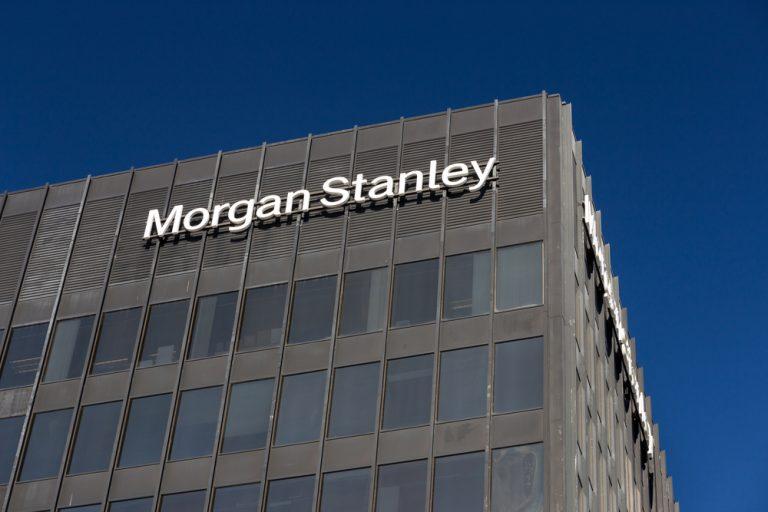
Morgan Stanley (NYSE:MS) reported a 57 percent rise in quarterly profits on Wednesday, after a strong growth in bond trading revenue.
The New York-based investment bank posted better-than-expected quarterly figures, reporting a profit of $1.6 billion (81 cents per share), marking a significant 62 percent increase on the $939 million reported for the same period of last year. Conversely, analysts commissioned by Reuters had initially predicted Morgan Stanley to earn around 63 cents a share, on revenue of $8.17 billion.
Morgan Stanley’s chief executive James Gorman said in a statement:
“While the environment was more challenging for our equity underwriting and asset management businesses, our expense initiatives remain on track. Overall the results reflect steady progress against our long term strategic goals.”
In particular the bank saw a rise in bond trading revenue, with profit almost tripling within this sector. Previously the area had been a continued source of concern, as it struggled to profit from difficult capital requirements. Earlier in the year, Morgan Stanley instigated an effective restructuring of the area, reducing 25 percent of staff as well as appointing new management.
Bond trading has generally been profitable across all recently released Wall Street revenue reports, having benefited on the back of the UK’s destabilising vote to leave the European Union.
Additionally, revenue from their wealth management sector, which the bank has been developing for several years, rose 7 percent to $3.9 billion. As a result, the business hit a 23 percent pre-tax margin effectively meeting Gorman’s last quarter target.
Despite strong revenue figures, Morgan Stanley shares were up by less than 1 percent at 0.5 percent in early trading. The Wall Street bank was the last of the leading US-based banks to post profit earnings for the last quarter this week. Similarly, Goldman Sachs Group Inc (NYSE:GS), Morgan Stanley’s largest competitor, reported a better-than-expected 58 percent growth in third-quarter profit on Tuesday.
Apple supplier Laird PLC nose dives on profit warning

Component supplier Laird PLC (LON:LRD) saw shares fall 50 percent in early trade on Wednesday after issuing a profit warning amidst a challenging smartphone market.
Laird supply components to smartphone makers including Samsung and Apple, and been impacted by slowing growth in the smartphone market. People are changing mobile phones less frequently in developed markets, and where it was once customary to upgrade each year, more consumers are now taking up 2 year contracts.
In early trade Laird shares were trading down 50 percent from the previous day’s close changing hands below 154p a share. Shares attempted a short-lived rally which petered out in afternoon trade.
Information technology research company Gartner noted:
“The smartphone market has reached 90 percent penetration in the mature markets of North America, Western Europe, Japan and Mature Asia/Pacific, slowing future growth. Furthermore, users in these regions are not replacing or upgrading their smartphone as often as in previous years. In the mature markets, premium phone users are extending life cycles to 2.5 years, which is not going to change drastically over the next five years.”
This has resulted in Laird warning that underlying pre-tax profits would be about 30% lower than last year. In their third-quarter trading statement, they said:
“The acceleration of production for mobile devices has come much later than in previous cycles and visibility on volumes remains poor.
“In addition, we have experienced increased margin pressure due to unprecedented pricing pressures and some operational factors.
“This has led to a very challenging trading performance in PM (performance materials) in Q3 and we now anticipate full year group underlying profit before tax to be around £50m.”
The full Q3 RNS statement can be viewed here.
19/10/2016
Reckitt Benckiser shares fall after weak sales

Reckitt Benckiser (LON:RB) sales grew by 2 percent in the last quarter, falling shy of the 2.8 percent growth estimated by analysts.
The health, hygiene, and home products producer put the miss down to “flagged issues in Korea, Russia and our Scholl innovation.”
Reckitt Benckiser suffered a large exceptional charge in first half earnings tied to deaths in South Korea from 2001 to 2011 related to their humidifier disinfectant.
After updating the market in July to expect like-for-like sales growth to be towards the lower end of the previously stated 4 percent to 5 percent it gave in February, today it has advised they are aiming for 4 percent.
Shares in the company are currently trading down 2.62 percent on the news, at 7,135 (1325GMT).
Is Clinton really the ‘safer bet’ for the financial markets?

In the financial markets, it has always been assumed that Democratic nominee Hillary Clinton would make a better president than her Republican counterpart Donald Trump. This is more practical than political, since Clinton is assumed by Wall Street to be a “safer” candidate than Trump, a so-called “wildcard” nominee with no track record in politics. But how true is this assumption? Below we explore reasons why a Clinton presidency may not be a safe bet after all.
For starters, political experts have noted a remarkable similarity between both parties on trade and corporation provisions, which means that a Clinton presidency isn’t necessarily better for stocks or the economy. After all, if we are assuming that Trump is a bad idea simply because he’s the unknown, we also can’t put much stock into Clinton given that her party’s policies on market-sensitive sectors are roughly the same.
For example, Clinton and Trump have both opposed the Trans-Pacific Partnership agreement, despite the latter being more vocal about it. If Clinton is elected president, her stance on TPP wouldn’t benefit US industrials, which rely heavily on international trade.
However, where both candidates differ dramatically is on the tax code. Trump wants to cut taxes, whereas Clinton wants to restructure them to extract more money from high-income earners. It’s too bad she hasn’t yet offered any specifics around some of her popular reforms, such as the middle-class tax cut. There’s little guarantee that raising taxes on high income households will improve the state of the economy. There’s even less evidence to suggest that taxing the rich will solve America’s growing inequality problem.
While Clinton has vowed to reform the financial markets, it’s difficult to take her word seriously when she insists on getting paid hundreds of thousands of dollars to give speeches to Goldman Sachs and other financial institutions. At a time when most Americans want real financial market reform, it’s unclear whether Clinton will initiate them. In this instance, perhaps a wildcard candidate wouldn’t be so bad after all?
One of Clinton’s most noble fights has been against the pharmaceutical industry, which she has accused of price gauging the American public. If you’ve invested in the healthcare industry, a Clinton White House definitely isn’t in your best interest. Healthcare and pharmaceutical stocks have sold off sharply in response to Clinton’s criticisms. In year-over-year terms, healthcare is the fourth-worst performing sector on the S&P 500. Investors can expect more hard times if the tough-talking former Secretary of State is sworn in this winter.
Then there’s the elephant in the room that many in the market community simply overlook: Hillary’s hawkish voting record. The former First Lady is often referred to as “Hillary the Hawk” for her support of military intervention across the Middle East and North Africa. She voted in favour of the Iraq War, the 2009 troop surge in Afghanistan and NATO intervention in Libya to overthrow Muammar Gaddafi. She was also in favour of arming rebels in Syria – many of which would later join ISIS, arguably the most destructive sub-state actor in the modern era.
So whereas Trump may talk tough, Clinton has actually voted on policies that have sunk the United States into a spiral of endless wars and economic peril. She has also supported the same policies that have made the Middle East more destructive than it was before. This has led to many nasty side effects, including the European refugee crisis and growth of terrorist cells around the world.
While nobody is saying Clinton will launch another war once she assumes office, her woeful track record should be enough to give pause to investors assuming she is the safer choice as president; combined with her other policies, there’s little evidence to support this. That’s not to say Donald Trump is the better choice – but we should at least have an honest conversation about where the risks truly lie.
The US presidential election takes place November 8.

Nikolas Xenofontos, Director of Risk at easymarkets.com on 18/10/2016
Risk warning: Forward Rate Agreements, Options and CFDs (OTC Trading) are leveraged products that carry a substantial risk of loss up to your invested capital and may not be suitable for everyone. Please ensure that you understand fully the risks involved and do not invest money you cannot afford to lose. Our group of companies through its subsidiaries is licensed by the Cyprus Securities & Exchange Commission (Easy Forex Trading Ltd- CySEC, License Number 079/07), which has been passported in the European Union through the MiFID Directive and in Australia by ASIC (Easy Markets Pty Ltd -AFS license No. 246566).

Pearson shares fall by 10 percent

Pearson shares fell by over 10 percent on Monday morning, after reporting a worse-than-expected fall in sales amidst a challenging market.
The educational publisher reported disappointing sales numbers, with underlying sales falling by 7 percent in the first nine months of the financial year and 9 percent in North America. This contrasts initial projections by analysts who had only expected a fall in sales of around 5 percent. Today’s fall in shares for the company marked the biggest fall in the FTSE 100.
However, Pearson are expected to meet its profit targets for 2016 due to various cost-saving precautionary measures. Sales had improved in September and October which, coupled with cost reduction efforts, have enabled the company to achieve its expected profit forecast of between £580 million to £620 million this year.
Pearson reported that the required cutting of 9000 jobs, announced in January, is 90 percent complete. The move is expected to have saved the company around £350 million annually.
“While market conditions continue to be challenging, particularly in higher education, thanks to tight cost management we are on track to deliver our guidance this year and to achieve our long-term growth goal,” commented John Fallon, chief executive of Pearson.
Moreover, the company noted that the weakening of the pound in recent months had proven a boost for profits. The company also indicated that if sterling continued to remain weak for the remainder of the year, this would increase the earnings-per-share guidance range by around 4.5p to 59.5p.
Pearson is the largest publisher in the world, and its main headquarters are located in London. The FTSE 100 company publishes educational textbooks and owns the various exam boards behind GCSE and A-level examinations in the U.K. The company also operates in North America, notably its largest market, where it supplies higher education textbooks for college students across the states.
Super-prime property sales fall 86 percent post-Brexit

Uncertainty over the future of Britain’s relationship with the EU and increasing residential property taxes have led to an 86 percent fall in super-prime property sales, according to the latest statistics from the Land Registry.
Over the three months to August 2016, seven times fewer super-prime properties – those above £10 million – were sold than in the same period last year. The average price paid for the top five most expensive sales fell 25 percent from £22 million to £16.3 million.
Sales in the UK’s capital remained stronger than the rest of the country, with all sales within the three months to August being on property in London. This is in comparison to the same period last year where 30 percent took place elsewhere in the country, according to data analysis by London Central Portfolio (LCP).
The reduction in super-prime activity in the last three months could have a negative effect for the British government, who may receive £45 million less in Stamp Duty receipts. According to LCP, these findings could significantly impact next year’s Stamp Duty receipts as top end sales, which were expected to counter lower levels of Stamp Duty under £1m, fall away and prices drop.
Naomi Heaton, CEO of LCP, commented: “Despite roughly stable Stamp Duty takings in the financial year to April reported by HMRC, next year may see a different picture, particularly as the it took account of a major rush in March. Transactions increased 72 percent over February as buyers sought to beat the 3 percent Additional Rate Stamp Duty (ARSD) deadline, buoying overall receipts.”
17/10/2016
New business bank Redwood submits license application

A new business bank is to be founded by Jonathan Rowland and Gary Wilkinson, offering commercial mortgages and business deposit accounts to SMEs across Hertfordshire, Bedfordshire and Buckinghamshire.
Rowland and Wilkinson submitted a banking license application to Financial Conduct Authority and the Prudential Regulation Authority today, and hopes to receive its license in early 2017. The bank will be named Redwood Bank and is expected to attract £50 million worth of investment from a number of high profile investors, including Wildcat Capital Management, Falcon Edge founder Rick Gerson and David ‘Tiger’ Williams of Williams Trading.
AFP’s majority shareholder will the company owned by David and John Rowland, Acorn Global Investments Ltd, who have extensive experience and a successful track record in the banking and finance sectors. Subject to regulatory approval Jonathan Rowland will be the Redwood Bank’s chairman – Jonathan was the Chief Executive of Kaupthing Bank between 2009 ad 2013 and played a leading role in the restructuring and subsequent recapitalisation of the bank into Banque Havilland S.A. and Banque Havilland (Monaco) SAM.
“This is an ideal time to apply for a full banking licence; the major banks have not returned to anywhere near their pre-crisis business lending levels and the uncertainty caused by Brexit is likely to worsen the situation. At the same time, SMEs have shown a strong appetite for new market entrants offering competitive rates and superior customer service. Against this backdrop, we have a compelling opportunity to build a secure, robust and profitable bank”, Jonathan said.
The senior management team of Redwood will be led by Gary Wilkinson as Chief Executive, again subject to regulatory approval. Gary has over 30 years’ experience within financial services, and is the former Chief Executive of Cambridge & Counties Bank, which provides lending and deposit products for SMEs.
Miranda Wadham on 17/10/2016