A leading French think-tank has revised its warning about UK economic growth post Brexit, after abandoning its support for George Osborne’s austerity plan.
Despite the evident weakening of the pound following the June vote, the OECD has nonetheless has reconsidered its stark warning. Further stimulus measures by the Bank of England helped produce better than expected performance in August, motivating the OECD’ to reverse their statement. The OECD now expects the U.K economy to grow by around 1.8 percent, a 0.1 point increase on pre-referendum predictions.
However the OECD said downturn in the economy may still be to come, with the effects delayed until next year. Indeed, Britain has arguably yet to feel the full force of the negative economic effects of the referendum result; the retail sector continues to perform well according to August data and sterling, although still weaker, has rebounded slightly in the aftermath of the initial financial market tremble.
The OECD maintained, “Whilst markets have since stabilised, sterling has depreciated by around 10 percent in trade-weighted terms since the referendum.”
Similarly, the extent of the damage has yet to be fully realised both in the global economy and more specifically the Eurozone. Markets will therefore be watching the movements of Theresa May’s new government intently in order to ascertain the direction in which Brexit negotiations may take. Currently there are very few clues on this, making it difficult to accurately and comprehensively assess the impact this may have upon economic growth.
Last week, the Bank of England confirmed that no further cuts are likely; however, there are indicators that the Bank of England may take further precautionary measures in November, such as lowering interest rate levels. Speaking about the proposed November assessment, the Bank of England committee has said “…if, in light of that full updated assessment, the outlook at that time is judged to be broadly consistent with the August inflation report projections, a majority of members expect to support a further cut in Bank Rate to its effective lower bound at one of the MPC’s forthcoming meetings during the course of the year”.
Chancellor Phillip Hammond’s proposed Autumn Statement could also influence decisions. Hammond has thus far suggested higher spending may be a feature in the statement, proving a direct reverse of Osborne’s austerity measures and a move that until recently, the OECD had supported.
The latest stock market sell-off on Wall Street reminded us that anything can happen in the financial markets. The following three events stand out as part of the markets’ recent surprises.
September 7: USD/JPY
Currency traders have been watching in amazement at the strength of the Japanese yen. The yen has gained a staggering 15% against the US dollar this year despite ongoing efforts by the Bank of Japan (BOJ) to ease monetary policy.
The USD/JPY reached more than one-month highs on September 5. Traders hoping for a continuation of those highs were sorely disappointed. Just two days later, the USD/JPY tanked nearly 2 percent, or 200 pips. Traders who bought the USD/JPY above 103.00 might have saved a lot of pips by invoking dealCancellation. The market moved very fast, so dealCancellation, which gives you a 60-minute window to cancel your position, would have given you plenty of time to digest the losses and get the heck out!
September 6: US Dollar
In the United States, the Labour Day long weekend signals the unofficial end of summer. Traders expressed their dissatisfaction by selling the US dollar, which plunged against a basket of currencies on the first Tuesday back from vacation.
In reality, traders were responding to disappointing non farm payrolls data the previous Friday. Surprisingly, the dollar finished higher on Friday as traders realised that the creation of 151,000 jobs in August wasn’t so bad after all. Sentiment quickly turned bearish after the long weekend.
Traders who decided to buy greenbacks after Labour Day should have quickly caught on that the market wasn’t going to go in their favour. With dealCancellation, they could have avoided a 1 percent plunge in the dollar for the day.
Risk warning: Forward Rate Agreements, Options and CFDs (OTC Trading) are leveraged products that carry a substantial risk of loss up to your invested capital and may not be suitable for everyone. Please ensure that you understand fully the risks involved and do not invest money you cannot afford to lose. Our group of companies through its subsidiaries is licensed by the Cyprus Securities & Exchange Commission (Easy Forex Trading Ltd- CySEC, License Number 079/07), which has been passported in the European Union through the MiFID Directive and in Australia by ASIC (Easy Markets Pty Ltd -AFS license No. 246566).
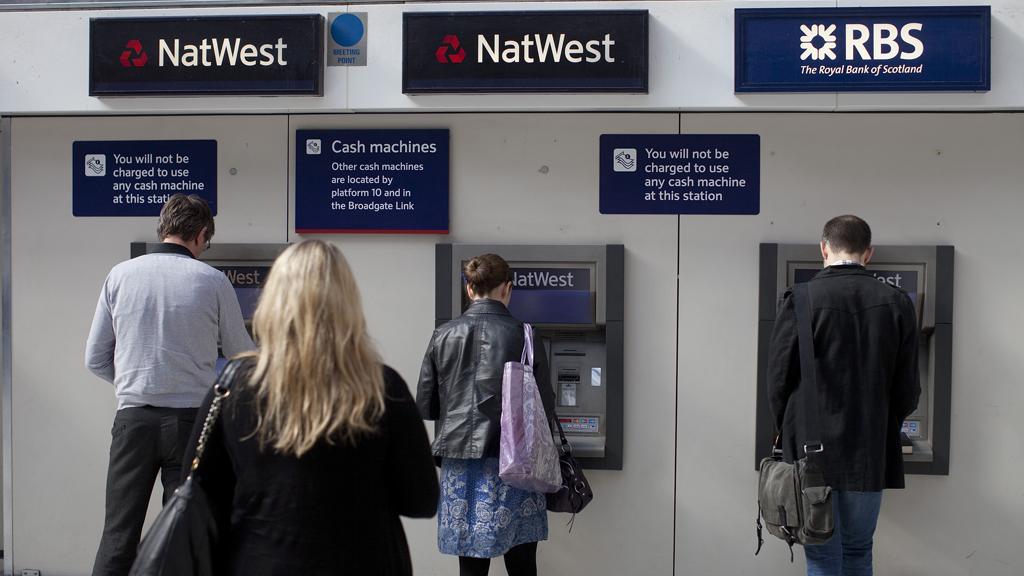
Royal Bank of Scotland’s plans to sell 300 branches may be in trouble after it failed to agree a price with Spanish bank Santander, according to the BBC on Wednesday.
RBS now has a little over a year to find a buyer for the 315 branches, which must be sold as part of the terms of the bank’s 2008 bailout.
The bank tried to get around the obligation by assigning them to their spin-off bank Williams and Glyn, but were beaten by heavy costs associated with the plan.
According to the BBC, talks with frontrunner Santander broke down over a marked difference in price. Although Santander may still be interested, they want a significant reduction on the £1.6 – £1.9 billion price range given by RBS.
RBS (LON:RBS) is currently trading down 1.20 percent on the news, at 181.50 pence (1033GMT).
The Bank of Japan shocked markets this morning by altering its monetary stance after three years of ineffective policy decisions.
The bank refrained from cutting interest rates further from their -0.1 percent low, directing efforts into hitting its two percent inflation target.
The Bank of Japan will continue to buy $80 trillion worth of government bonds, adopting “yield curve control” whereby it will buy long-term bonds to keep yields at current levels.
Interest rates will be placed at the forefront of monetary policy going forward, with the Bank of Japan saying:
“The BOJ will seek to lower real interest rates by controlling short-term and long-term interest rates, which would be placed at the core of the new policy framework.”
The Bank of Japan’s governor Haruhiko Kuroda highlighted the effectiveness of this policy in the long-term, although adding that in the short-term, “there isn’t a clear link between the base money target and inflation expectations.”
“That’s why the new policy framework can respond to changes in the economy and prices more flexibly.”
B&Q owner Kingfisher saw strong profits in the first half of the year, with business in Poland and the UK leading the figures.
The group, who own B&Q and Screwfix in the UK, saw underlying pre-tax profit rise 13.5 percent to £436 million. Adjusted earnings per share were up 10.6 percent to 12.3p, with sales in the UK and Ireland up 3.1 percent.
In a statement, Kingfisher said the first half of the year had shown “good early progress”, and was “on track with first year strategic milestones”.
CEO Véronique Laury commented:
“In the UK, the EU referendum has created uncertainty for the economic outlook, even though there has been no clear evidence of an impact on demand so far on our businesses. In France we remain cautious on the short term outlook.
“Given the expertise and energy of our colleagues we continue to feel confident about the challenges ahead.”
Kingfisher (LON:KGF) shares initially rose on the news, but have since fallen back down. They are currently trading down 1.66 percent to 370.44 (1355GMT).
Pharmaceutical firm Glaxo Smith Kline has announced the appointment of Emma Walmsley as the firm’s first female chief executive, taking over from its current CEO Sir Andrew Witty in 2017.
Walmsley will become one of only seven female CEOS in the FTSE 100. She is currently the firm’s head of consumer healthcare, spending 17 years at cosmetics company L’Oreal before joining Glaxo Smith Kline in 2010.
GSK’s chairman Philip Hampton commented:
“Emma is an outstanding leader with highly valuable experience of building and running major global businesses and a strong track record of delivering growth and driving performance in healthcare.”
Newly appointed CEO Emma Walmsley
Current CEO Andrew Witty has been with the firm for over 30 years, overseeing initiatives including plans to drop patents in the world’s poorest countries and overseeing the development of a malaria vaccine.
In a company statement, Emma Walmsley said she was “delighted and honoured” to take on the role.
“We have the opportunity and the potential to create meaningful benefits for patients, consumers and our shareholders,” she continued.
GSK (LON:GSK) shares moved up steadily on the news, currently trading up 0.12 percent at 1,648.00 (1305GMT).
Leading fund manager Neil Woodford has criticised UK investors for taking a “short-term” approach to tech start-ups, arguing that more capital must be made available for entrepreneurs.
Speaking to the BBC as part of their Tech Talent coverage, Woodford said, “We have been appallingly bad at giving those minnows the long-term capital they need.” He says financing is a major issue in the UK, arguing that investors are not looking at the long-term gains and want investments that are too short-term.
The BBC are currently investigating why so many huge tech firms such as Facebook and Google are headquartered in the US. Whilst the UK is generally good at developing lots of small scale businesses, a lack of long-term funding is the reason many do not take manage to step up to the next level.
Rohan Silva, a former advisor to David Cameron, praised the government’s tax breaks for small-scale businesses but said finding “scale-up cash” needed to help companies grow is still “a big challenge”.
“There is a big role for government in providing a bunch of that funding, particularly when it comes to research in the laboratory and helping that go to market,” he said.
Apple continues to dominate the smartphone market following the iPhone 7 launch last Friday and difficulties faced by Samsung’s recall of various Galaxy devices.
Despite disappointing sales for previous iPhone 6 models, consumer sales for the new handset have thus far proved promising for European networks and phone stockists. On Friday, the iPhone went on sale in 28 countries, marking its biggest global launch to date.
Nevertheless, the added and somewhat incremental changes on the iPhone have underwhelmed critics, as Apple continues to find it difficult to revolutionise the much-loved handset. The addition of a wireless headphone jack and waterproofing has nonetheless proved popular with consumers. The new wireless ‘AirPods’ will be released soon, retailing at £159; a sharp increase from the £29 the older ‘EarPods’ currently retail at. This latest release comes alongside the reconfiguration of the iPhone operating system, iOS 10.
Moreover, Apple have benefited from a recently publicised issue with Samsung devices as a result of a widespread manufacturing fault affecting Galaxy Note 7 smartphones. This caused several of the models device batteries to explode, and led to a global recall of thousands of handsets. It has been speculated that up to 2.5 million Galaxy devices may be affected by the glitch, costing the South Korean tech giants Samsung up to $2 million (£1.5million). Pressure to compete with the impending release of the iPhone 7 has been cited as a potential cause of the manufacturing error, after Samsung’s attempts to rush production. Bloomberg intelligence analyst, Andrea Lei said of the error “Clearly, they missed something…they were rushing to beat Apple and they made a mistake.”
Despite the relatively lacklustre renovations of the iPhone 7, Apple continues to benefit from Samsung’s Galaxy complications and high consumer demand. Independent financial advisor Raymond James has subsequently raised its price target for Apple to $139 from $129, projecting a 20% stock rise as a result of the unexpectedly strong performance of iPhone 7 sales.
British banks may lose their passporting rights to operate across the EU unless the UK stays within the European Economic Area.
The head of Germany’s central bank Jens Weidmann has warned on the impact it would have on the British banking industry, possibly forcing international banks to consider moving to other European cities to retain the ability to conduct business across the EU.
“Passporting rights are tied to the single market and would automatically cease to apply if Great Britain is no longer at least part of the European Economic Area,” Weidmann told the Guardian newspaper.
His comments come after the formation of a new lobby group led by Conservative Eurosceptics campaigning for Britain to leave the European single market and end free movement. The ‘Leave Means Leave’ campaign’s hard line would, according to Weidmann, include the end of passporting for British banks.
As part of the campaign’s launch, the group says remaining in the single market is the “‘no say. low growth, regulatory burden, sovereignty illusion’ option locking in perpetual trade deficits”.
Weidmann also warned of complacency over the health of Britain’s economy.
“Britain hasn’t even applied to leave yet,” he said. “To assume on the basis of the developments so far that there won’t be any negative consequences would be to draw false conclusions.”
Deutsche Bank (NYSE:DB) shares fell over 8 percent in early trading after being asked to pay $14 billion to settle an investigation into its practices in the US.
The bank has been under investigation by the the US Department of Justice into the the bank’s issuance and underwriting of residential mortgage-backed securities between 2005 and 2007.
In a statement released this morning Deutsche Bank said it “has no intent to settle these potential civil claims anywhere near the number cited”, adding that “the negotiations are only just beginning.”
Residential mortgage-backed securities were a key factor in causing the 2008 financial crisis and several US banks have been under investigation since.
Deutsche Bank is down 8.29 percent at 13.54.