
09/09/2016
Morning Round-Up: North Korea nuclear test hits shares, Iran oil slows, German data worrying

Asian shares fall on North Korea nuclear test
Asian shares fell again on Friday after North Korea shook markets with its most powerful nuclear test yet.
Shares fell from three day highs on Thursday, before stumbling further on Friday after a fifth nuclear test from North Korea that had more power than the bomb dropped on Hiroshima. A statement from North Korea said it had mastered the ability to mount a warhead on a ballistic missile.
South Korea’s KOSPI index was down 1.3 percent by close, with the Shanghai Composite down 0.55 percent. China’s CSI 300 also closed 0.25 percent down.
Iran oil production slows, despite plans
Iran’s oil output growth has slowed, according to Reuters and OPEC data, suggesting that the country may be struggling to fulfil plans to raise production to unprecedented highs.
Iran have just been freed from sanctions against their oil, causing them to shun all cooperation with OPEC states to freeze oil production and combat the oversupplied market. Tehran had planned to hike oil production, pushing output up to 3.64 million barrels per day.
However, output has stagnated since June and remains under their production target. The country have since signalled it may be prepared to rejoin OPEC talks and possibly join an output freeze.
German exports latest in weak data from Europe
German exports fell 10 percent year-on-year in July, the latest in a series of disappointing trade data from Europe’s industrial capital.
Imports also fell 6.5 percent, with the country’s trade surplus shrinking to 19.5 billion euros. The figures, published by the Federal Statistics Office on Friday, suggest a worrying impact on Europe’s biggest economy in the wake of Brexit.
The figures come just one day after the ECB failed to announce a further stimulus programme after the current one’s expiry in March 2017.
ING economist Carsten Brzeski commented: “A further cooling of the economy in the months ahead should give more support to just-started discussions about fiscal stimulus.”
One month until P2P lending conference LendIt Europe 2016
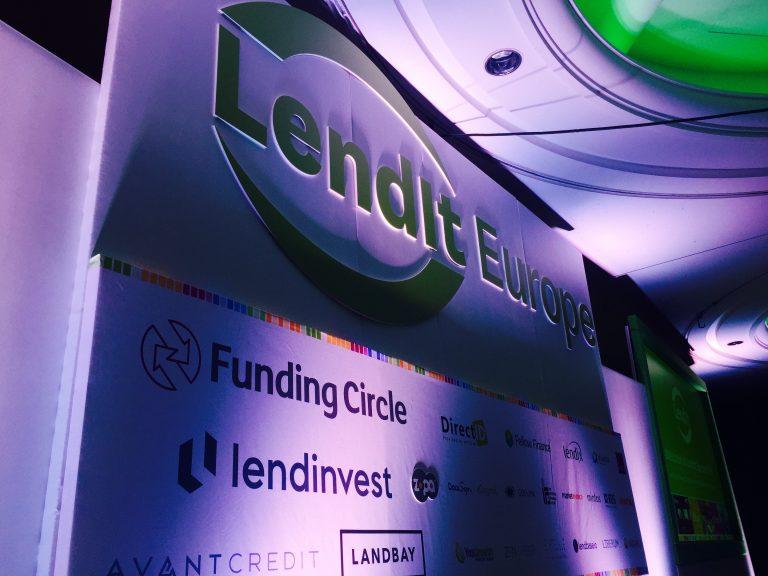
The P2P lending conference, LendIt Europe 2016, will be taking place in London from the 10th to the 11th of October this year.
LendIt Europe 2016, the third of its kind in London, aims to connect lending platforms and investors to facilitate an exchange of information and offer an opportunity to network, as well as do business.
This year’s conference will be held at the Intercontinental London – The O2.
The two-day event will feature more than 150 speakers, including Lord Adair Turner, Senior Fellow at the Institute for New Economic Thinking, Christine Farnish, Chair of P2PFA, Samir Desai, CO-Founder and CEO of Funding Circle and Cormac Leech, Co-Founder and Director of Liberum Alternative Finance.
In over 50 sessions, participants will be able to learn and discuss important topics to the marketplace lending industry, such as “The state of the European Marketplace Lending Industry”, “Lessons Learned from UK P2P Lending” and “Financial Advisors – the untapped opportunity”.
There will also be a 2500m Expo Hall for businesses to display themselves.
Participants from more than 25 countries are expected to participate in this year’s conference and the event is supported by over 20 partners, the title sponsor being Funding Circle.
LendIt Europe 2016 is the third European P2P Lending conference organised by LendIt. LendIt was launched in the US in 2013, when co-founders Jason Jones and Bo Brustkern decided to organise a small meeting to engage with other professionals in the P2P lending industry and combined forces with P2P lending blogger Peter Renton.
Conferences in the US, as well as in Asia have been a great success. The first Europe conference in 2014, attracted more than 500 participants, a number which grew to over 750 attendees in the second round in 2015. This year, LendIt is hoping to attract more than 1000 people.
Registrations are currently open at http://www.lendit.com/europe/2016
Katharina Fleiner 08/09/2016
European markets down & EUR strengthens on ECB decision

European stock and futures markets took a tumble on the disappointing news that the ECB refrained from lowering interest rates further at today’s monetary policy meeting. The Euro initially gained strength against the Pound and the Dollar but has weakened again since the end of the ECB press conference.
Stock markets suffer losses
By 2.05pm, the Euro STOXX 50, as well as the German DAX, lost -1.29%. The FTSE100 dropped 0.27%. After the initial drop, stock markets recovered some of their losses. At market close the Euro STOXX 50 was down 0.25%, the DAX was down 0.75% and the FTSE100 was up 0.18%.Futures fall
By 3.05pm, Euro STOXX 50 futures dropped 25 points. DAX 30 futures lost as much as 114.50 points. FSTE100 futures retracted gains from earlier in the day, to +15.5 points. However, futures also regained a significant part of their losses by market close. Euro STOXX 50 futures closed down 8 points and DAX30 futures lost 81 points. FTSE100 futures were up 16.5 points.Euro strengthens against Pound and Dollar
The EUR/GBP gained 0.56% between 12.10 and 2.20pm, to a week high of 0.84892. It later withdrew 0.25%, to 0.84678 by 4.27pm. The EUR/USD rose to a new two-week high at 1.13157 by 2.20pm. After peaking at 1.13157, the rate retracted 0.41% to stand at 1.12690 at 4.34pm.ECB interest rate remains unchanged – Fiscal policy must support EMU recovery
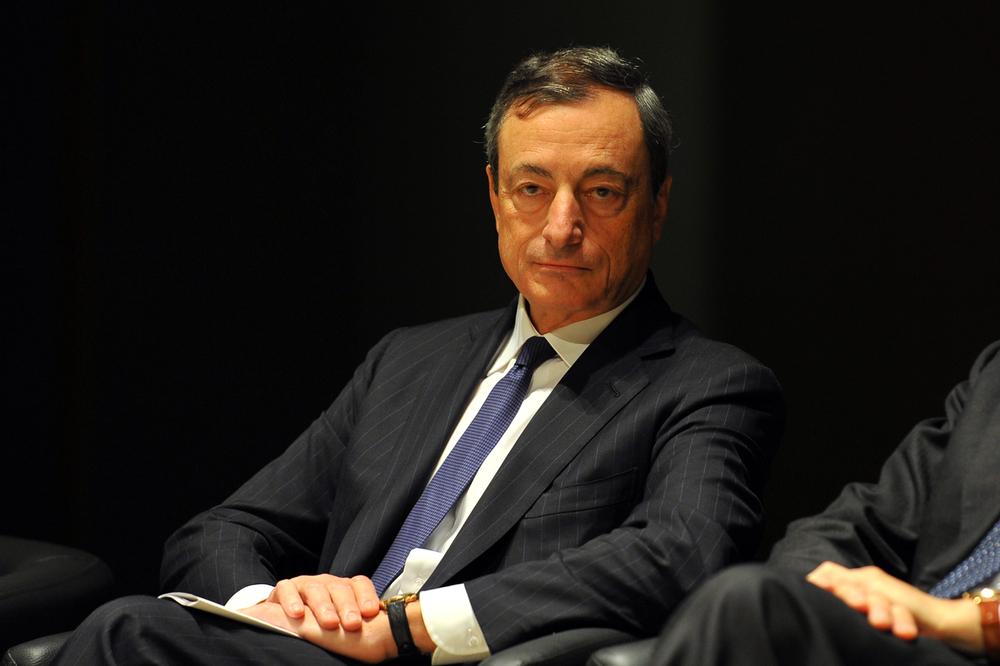
The ECB left interest rates unchanged at their monetary policy meeting this month and neglected to extend their quantitive easing programme, causing European shares to drop after the announcement.
In the press conference following the release, ECB President Mario Draghi spoke on the factors currently dampening Euro Area recovery and the importance of fiscal policy to achieve balanced economic growth.
Rates remain unchanged
Interest rates on main refinancing operations, marginal lending facilities and the deposit facilities will remain unchanged at 0.00%, 0.25% and -0.40% respectively. The current monthly asset purchasing program of €80 billion will run until at least the end of March 2017, subject to further extension if necessary to achieve the Banks goal of inflation just below but close to 2%. However, markets were expecting the announcement of a further quantitive easing programme ahead of March 2017.At the press conference, Mario Draghi stated:
“We continue to expect them [interest rates] to remain at present or lower levels for an extended period of time and well past the horizon of our net asset purchases.”While EMU recovery continues, subdued foreign demand has some adverse impact
Draghi drew attention to improvements in the labour market, as well as low oil prices, which have improved households’ purchasing power. Data suggests that Euro Area recovery continued to progress at a slow but steady pace. However, Draghi also pointed to “subdued foreign demand, partly due to the uncertainty after the recent Brexit vote, necessary balance sheet adjustments in a number of sectors and the “sluggish pace of implementation of structural reforms”, as several factors which continue to negatively impact the Euro Area’s recovery. The annual GDP projections were revised upwards to 1.7% in 2016, but downwards to 1.6% in both 2017 and 2018. The economic recovery of the Euro Area is expected to continue on its slow but steady upward trajectory for the rest of the year.Draghi commented:
“If warranted we will act by using all the instruments available within our mandate.”Low interest rates are not hurting banks
In response to questions relating to the efficiency and negative impacts of low interest rates, Draghi stated that “the transmission of monetary policy has never worked better than it does today”. Transmission of interest rates to lending rates has been almost immediate and has not negatively impacted the abilities of banks to make loans. Service demand and supply has increased, driving lending, thanks to heightened competition between banks. Banks had reported profits dropping as much as 20% in the second quarter of both 2015 and 16. However Draghi mentioned that this has been a consequence of huge profits in the first quarters of both years, due to the beginning of the ECB’s asset purchasing programs. He also stressed that low interest rates should not be used to excuse all that has “gone wrong” with banks lately. There has been no evidence of cash hoarding, a commonly mentioned possible negative consequence of negative interest rates.Draghi: “Interest rates need to be low today for being high tomorrow”
While Draghi recognised that prolonged low interest rates are likely to evenutally have adverse consequences for banks, he asked for patience from the markets. He underlined that interest rates need to stay low to support of the EMU’s economic recovery which, in the future, will also benefit banks.Draghi stresses importance of fiscal policy
In his opening statement, as well as on later inquiry in the Q&A session, Draghi stressed that structural reforms, aimed at raising productivity and an improved business environment, are necessary throughout the Euro Area, to support the region’s economic recovery.Quoting a G20 press communique from the 5th September, he stated:
“…monetary policy alone cannot lead to balanced growth, underscoring the essential role of structural reforms, we emphasise that our fiscal strategies are equally important in supporting our common growth subjective.”Katharina Fleiner 08/09/2016
Nintendo Shares up 13% on news of new Super Mario app for iOS

Nintendo shares gained 13 percent on the Tokyo stock exchange on Thursday on news that the Apple App store will be releasing a new Super Mario app for iPhones.
Wednesday’s Apple launch event for the iPhone 7 involved the introduction of a number of new features and changes, including the new Super Mario Run app for iOS systems. The new game will be available for purchase at the Apple App store shortly. Nintendo has received criticism recently for not keeping up with the development of smart phone apps, which are currently the fastest growing source of revenue for the global gaming industry. However, lately the company has made some waves with the co-creation of Pokémon Go, likely the currently most talked about new gaming app, and the release of their app Miitomo. Nintendo also hopes to reveal more gaming titles by March next year. The news of the Super Mario Run release sent Nintendo share prices up 19 percent, before steadying slightly. At market close Nintendo Co. (TYO: 7974) share prices stood at 27,955.00JPY (+13.20%), the highest since July 22. Share prices have fallen since then after the company disclosed relatively small profit expectations for Pokemon Go.Katharina Fleiner 08/09/2016
Dixons Carphone plc revenue grows 9% in quarter ending July

Dixons Carphone reported revenue growth of 9 percent in the quarter ending the 30th July on Thursday morning, sending the group’s share price upwards.
The groups like-for-like revenue grew 4%, matched by regional like-for-like revenue growth in the UK and Ireland. In the Nordic countries, like-for-like revenue increased by 2%. The group performed particularly well in Southern Europe, where like-for-like revenue was up 13%, mainly driven by strong revenue growth in Greece.
Revenue from the Group’s connected world services grew 45%.
Dixons Carphone reported on continued market share gains as well as good progress in their UK & Ireland property program.
In their January trading update, the group announced that it will be closing down 139 UK and Ireland based PC World, Currys, Carphone Wearhouse and Currys – PC World combined stores. The measure is part of a new property rationalisation programme designed to combine the different brands under one roof. By combining stores, the company will reduce total store numbers from 1,227 to 1,093 stores, with 323 new three-in-one stores opening over this financial year.
In Thursday’s statement the Group stated that the ongoing refurbishing disruptions caused adverse impacts on UK and Ireland revenue of approximately 1%, offset by approximately 1% in revenue improvement due to sales transfers from closed stores.
Seb James, Group Chief Executive, said:
“We have had another very good quarter and I am happy to be reporting this level of performance today. We are delivering pleasing growth in all markets and continued high levels of customer satisfaction, and, thus far, continue to see no detectable impact of the Brexit vote on consumer behaviour in the UK.” “We have an ambitious programme of development right across the Group this year, and this is being delivered on plan…We live in a world with increasingly discerning customers and with more moving parts than ever and we will continue to succeed only by remaining nimble and determined.” Earlier this year, Dixon Carphone was awarded the “Retailer of the Year” Award at the 2016 Retail Week Awards.Dixons Carphone shares rose on the positive report on revenue growth.
At 12.14pm, Dixons Carphone shares (LON: DC) were trading at 388.50p (+3.86%).Katharina Fleiner 08/09/2016
Morning Round-Up: Micro Focus-HP deal, workers on zero hours increase, Dixons Carphone up

Micro Focus shares up on HP deal
Shares in UK tech firm Micro Focus have risen nearly 20 percent this morning after announcing a deal to buy Hewlett-Packard’s software business.
The deal, worth $8.8 billion, will make Micro Focus one of the UK’s biggest tech companies. It is part of Hewlett-Packard’s attempts to downsize after splitting into two last year, and will take Micro Focus’s business to the next level. Revenues at the company doubled in 2015, and entered the FTSE 100 last week after replacing ARM.
Kevin Loosemore, Micro Focus executive chairman, said: “Today’s announcement marks another significant milestone for Micro Focus and is wholly consistent with the long-term business strategy we have been pursuing to be the most disciplined global provider of infrastructure software.”
Micro Focus is currently up 16.39 percent at 2,276 (0937GMT).
Workers on zero hours contracts jump
The number of workers on zero hours contracts jumped in the second quarter, according to the Office for National Statistics.
903,000 people were on zero hours contracts between April to June this year, a sharp rise from 744,000 in the same period last year. The figure accounts for 2.9 percent of all people in employment.
This data comes after the release of Sports Direct’s working practice report, in which the company vowed to offer 12 hour contracts to all direct employees.
Dixons Carphone release strong results
Dixons Carphone saw revenue rise 4 percent in the 13 weeks in July, saying Brexit had had “no detectable impact on consumer behaviour”.
Total sales increased by 9 percent, pushing shares up 3.29 percent to 386.5 (0951GMT).
08/09/2016
Carney defends BoE post-Brexit monetary policy approach
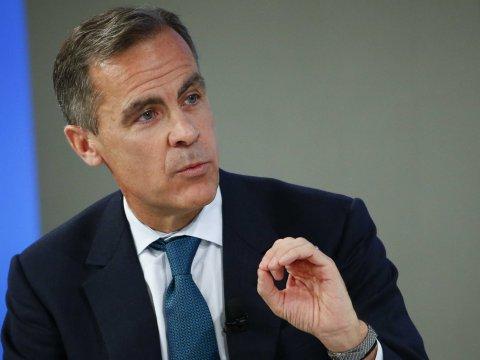
In Wednesday afternoon’s inquisition by the Treasury Select Committee, BoE governor Mark Carney firmly defended the Bank of England’s approach to monetary policy in response to the UK’s vote to leave the European Union.
Carney criticised for view on Brexit effects to economy
Carney had warned of the possible adverse effect an exit of the European Union could have on the on the UK economy. Euro-sceptics criticised this opinion for being to pessimistic. After the Leave-vote became in June, Carney and the BoE decided to cut interest rates and implement further expansionary monetary policy in preparation for possible recessionary pressures. Amid a cohort of data suggesting that two months after the Brexit vote there are no clear indications for a contraction in UK economic activity, Carney is now under criticism of acting to quick on implementing expansionary measures. However, analysts and expert believe that it is still to early to judge whether Carney’s preparation for a worst-case scenario was misplaced. Long-term effects of the UK’s decision still remain unclear. In today’s inquisition, Carney defended his policy measures against the MP’s criticism with these arguments. He also noted that he is prepared to add more stimulus to the economy and lower interest rates further if future data indicate a necessity for such measures.Pound weakens
The Pound weakened amid the inquisition, dropping 0.43% against the Dollar between 2.10pm and 5.49pm, bringing the GBP/USD to 1.33253Katharina Fleiner 07/09/2016
Latin America funds outperform Emerging Market benchmark

Since the January selloff, a selection of UK Unit Trusts and OEIC’s focused on Latin America have provided investors with significant gains. Returns on investment greatly outpaced benchmark gains in emerging markets.
Threadneedle Latin American, Stewart Investors Latin America and Invesco Perpetual Latin American all saw returns to investment above 40% by the start of September.
The highest performers are Aberdeen Latin American Equity with 59.51% and Scottish Widows Latin American with 59.95%, this year to date.

Emerging markets recover from 2015 slump.
After emerging markets struggled greatly under increased volatility in global financial markets as well as higher commodity prices throughout last year and the beginning of 2016, their performance has improved greatly since the start of the year. The recent Brexit vote gave this trend another boost. Initial worries connected to the Brexit vote concerned that growing global uncertainties may spur an investor exit from riskier emerging market, to flood into so called “safe haven assets”. In the immediate aftermath of the vote, distress was felt in emerging markets. The Mexican Peso, usually a preferred emerging market currency due to its high liquidity, became the world’s second-worst performer, after the British Pound. However, the initial signs of distress did not prevail and emerging markets got a boost in late June. Emerging market assets, while considered to represents riskier investments, yield higher returns to their investors, which, with uncertainty and risk also growing in developed world, becomes a more attractive option. As a result, the Brexit helped emerging markets gain nearly 8% in the days after the vote.Latin America has by far outperformed other emerging countries.
UK Retail Funds invested in Latin America received on average around a 12% performance boost. The Brazilian real has done extraordinarily well since the start of the year and the IBrX gained 28.34% over the last year. The Argentinian Burcap gained as much as 49.75% in the past 12 months and the Peruvian S&P/BVLPeruGeneral is up 54.59%. UK Retail Funds reflect this divergence from the emerging market index in their Latin American activity performance.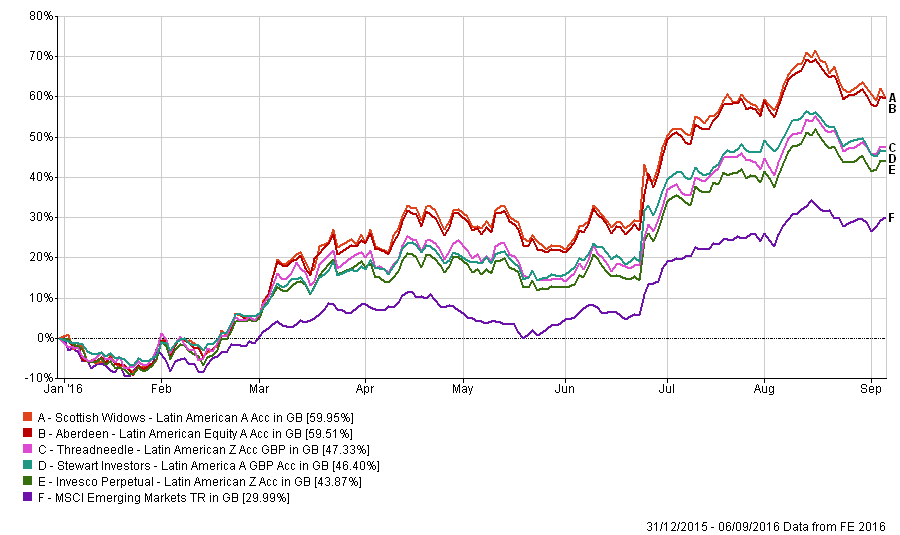
Katharina Fleiner 07/09/2016 Information based on data from FE
Hong Kong Monetary Authority takes initiative to boost local FinTech Scene

The Hong Kong Monetary Authority (HKMA) has announced plans for a “FinTech Innovation Hub” to support the development of the Hong Kong FinTech sector.
HKMA announces new FinTech Hub in collaboration with the Applied Science and Technology Research Institute
Norman T.L. Chan, Chief Executive of the HKMA, revealed the plans for the new hub in his speech at the Treasury Markets Summit 2016 on Tuesday. The hub, set up by the HKMA in collaboration with the Applied Science and Technology Research Institute, will allow both small and big businesses to carry out proof of concept trials for their products and services in a safe, contained environment separate from their internal systems. Further, Chan announced, that the HKMA will launch a second initiative called the “FinTech Supervisory Sandbox”, to allow banks to test and trial newly developed technologies and applications within a pilot program.Chan said:
“Within the Sandbox, banks can try out their new Fintech products without the need to achieve full compliance with the HKMA’s usual supervisory requirements. This will enable banks to gather real-life data and user feedback on their Fintech products or services more easily and in a controlled environment, so that they can make suitable refinements to their products before the full launch.”Building a “Brand” for financial services
Chan began his speech by stating the ambition of building Hong Kong as a “Brand” for financial services. So far, the Chinese territory, which is well known as a global financial hub, has lagged behind other Asian competitors in the development of a technology start-up sector. However, the regulatory authority has in recent months hoped to boost FinTech in Hong Kong through a range of new support initiatives, including setting up the “Fintech Facilitation Office” (FFO) earlier this year and launching the “Cybersecurity Fortification Initiative” in May. With the new initiatives, launched today, Hong Kong is hoping to catch up to other FinTech innovators in the region. The new hub and Sandbox also hope to address important issues of safety to businesses and customers, which Chan also commented on at large in his speech.Chan stated:
“While very few people would dispute the convenience and speed in which new technology can offer in financial services, there is an important catch that no regulators should and could overlook. The issue is whether the new technology is safe enough for the consumers and investors.” “The more correct narrative is that, without compromising consumer and investor protection, the HKMA embraces the use of Fintech and innovation.”Regulations and support matter for start-up development
The HKMA’s commitment to help the development of FinTech along is likely to have a significant impact on the sector. Singapore, currently the leader in the Tech start-up sector in Asia, can attribute much of the positive development to favourable and supportive government-initiatives as well as local investor support. In many cases, the development of a vibrant start-up community hinges on the successful government campaigns to support their development and provide a favourable environment. In the UK, many tech start-ups quote favourable regulations and supportive authorities as a main reason why they chose to set up their business at this location. While Brexit has sparked some worries that start-ups may abandon the UK due to the exit from the European Union, a serious case can be made for the country to hold on to its position as FinTech capital of Europe, if the FCA and other government bodies manage to provide a more favourable regulatory and supportive environment for start-ups, than other European locations.Katharina Fleiner 07/09/2016