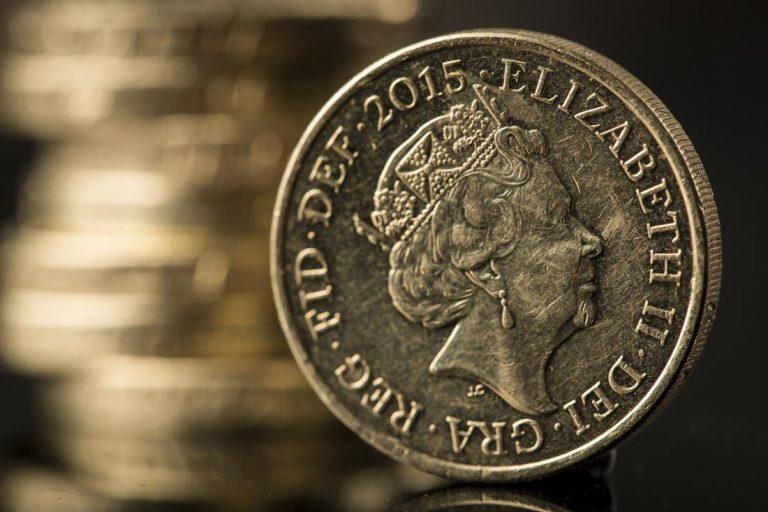
Sterling dropped further on Tuesday, slipping beneath $1.23 to its lowest level since the days just after the European Referendum result in June.
The Pound fell over 10 percent on Friday in a ‘flash crash’ on fears that the British government may be gunning for a ‘Hard Brexit’. It continued to slide yesterday and, after a steadying slightly, fell further 0.8 percent further on Tuesday pushing the Bank of England’s trade-weighted index to a nearly-eight-year low of 74.0.
However, Tom Elliott, International Investment Strategist at deVere Group, warned of the repercussions of knee-jerk reactions by investors. He said: “recent economic data from the UK has been stronger than had been expected in the wake of the 23 June referendum. Doom and gloom forecasters may continue to be proved wrong as a hard Brexit is negotiated.”
Elliott put the Pound’s downward spiral down to Theresa May’s ‘Hard Brexit’ strategy, in which single market membership may be sacrifice for immigration control, the UK’s oversize current account deficit and the possibility of lower interest rates.
FTSE hits record intra-day high
The FTSE has benefitted heavily from sterling’s drop rising 0.5 percent on Tuesday to a record intraday high of 7,129.83 points.
The FTSE 100 is currently trading up 0.04 percent at 7,100.24 (1332GMT).
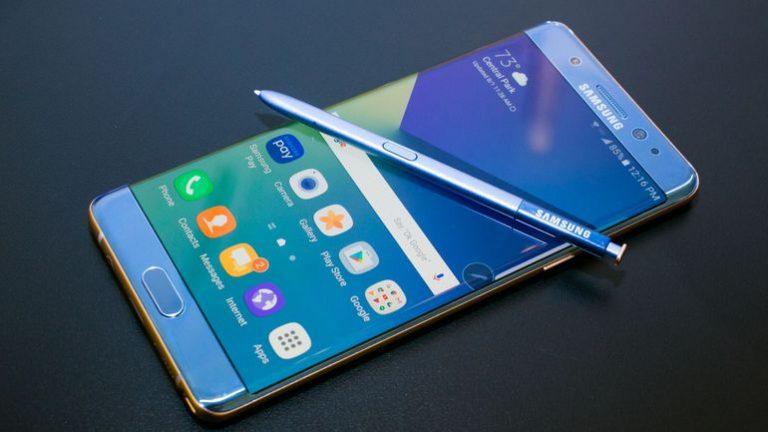
Samsung shares plummeted on Tuesday after it announced it would no longer be producing its flagship phone, the Note 7.
The electronics firm have ceased production of its high-end Note 7 model after even reports that even those models it had deemed safe began catching fire. The firm had already reduced Galaxy Note 7 production after complaints of exploding batteries in September sparked safety concerns.
Samsung recalled devices with battery problems, replacing them with different devices. However, these were later found to have issues after adomestic flight in the US was evacuated after a Samsung phone started smoking.
On Tuesday Samsung announced its decision to halt production of the Note 7 phone altogether, and owners are expected to be able to swap it in store for another Samsung device.
Its shares fell dramatically on Tuesday as investors worried over the long-term impact of the problem. Greg Roh, from HMC Investment Securities, told the BBC Samsung could suffer “a considerable loss of consumer faith.”
“The reason consumers prefer brands like Samsung and Apple is because of product reliability. So in this case, brand damage is inevitable and it will be costly for Samsung to turn that around again.”
Samsung (KRX:005930) shares are currently down 7.5 percent at 1,554,000 (1303GMT).
British bookmaker William Hill has confirmed it is in merger talks with Canadian gambling group Amaya, a deal that may be the perfect solution for the two troubled companies.
Both groups have been seeking a deal for months, with William Hill rejecting takeover bids from both 888 Holdings and Rank Group earlier this year. Amaya has struggled with the expansion of its sports betting business, and William Hill has faced competition from online competitors and increased regulation in the UK market.
On Saturday, the companies confirmed they were beginning negotiations for a £4.6 billion all-share “merger of equals”, saying that the potential merger would “be consistent with the strategic objectives of both William Hill and Amaya and would create a clear international leader across online sports betting, poker and casino.”
The multinational company would combine their online betting, which would account for 60 percent of the business, with “land-based business”. The enlarged company would have 60 per cent of its revenues from online betting, and 40 per cent in “land-based” business and would be fully diversified across all gambling sectors. The cost savings are estimated to be over £100 million.
Investors reacted positively to the news, with Amaya shares up nearly 10 percent on at 23.41 and William Hill up 2.07 percent (1307GMT).
Deutsche Bank (ETR:DBK) shares fell in early trade on Monday after reports that its CEO had failed to agree a deal with US Department of Justice to lower their $14 billion fine.
Chief executive John Cryan was in the US over the weekend for the autumn meetings of the International Monetary Fund and the World Bank, with many hoping he would agree a new figure for the bank’s fine with the US authorities whilst he was there. However, it has been reported that no new deal was made.
The bank was handed the fine back in September for its part in causing the 2008 financial crisis. It is the largest fine awarded so far, causing Deutsche Bank shares to drop dramatically since on worries that the bank will be unable to pay it.
The lender was the biggest faller on Germany’s main stock market in early trading but has since regained some ground, currently trading down 0.83 percent at 12.19 (1248GMT).
Michael Hewson, chief market analyst at CMC Markets, told the BBC: “Deutsche Bank hasn’t as yet been able to come to any agreement with the US Justice Department as it looks to overcome the hurdle of the prospect of a rather large fine.
“Talks are continuing while the bank looks at potentially spinning off a stake in its asset management division in order to free up some extra capital.”
Snapchat’s parent company is considering listing the company on the stock market, in an Initial Public Offering valuing the app at $25 billion.
This would be the largest share sale on the US stock exchange since 2014, when Chinese company Alibaba was first listed at a value of $168 million.
The app has quickly come to dominate the social media world, having been used by various high-profile celebrities and companies alike. Snapchat reportedly has over 150 million users, with 10 billion videos being viewed daily on the App. The company is projected to generate $366.7m in global advertising revenue, according to data.
The app was founded by Evan Spiegel, Bobby Murphy and Reggie Brown in 2011, and has steadily gained popularity. CEO and founder Evan Spiegel, who is reportedly worth $2.1 billion, recently renamed the company ‘Snap’ to reflect the expanding components of the business.
Spiegel rejected a previous bid from social media giant Facebook earlier last year, with Facebook going on to acquire photo-sharing platform Instagram instead. Instagram have been since criticised for recent updates to the App which allowed users to post public videos, in a similar fashion to Snapchat.
The company is preparing to float in March 2017, according to a report released by the Wall Street Journal. The IPO valuation of $25 billion is a significant increase on the May funding evaluation of $17.8 billion, after which Snapchat attracted various new investors. Among these was Sequoia Capital, a venture capital firm which has invested in several other tech businesses including YouTube, Google, Oracle and Yahoo.
In September, Snap Inc introduced plans to expand the business through the launch of Spectacles. Spectacles, are pitched as glasses that are able to record ten second clips which can then be sent to smartphone devices via Bluetooth. The glasses are expected to be released prior to Christmas and retail for $130 (£100).
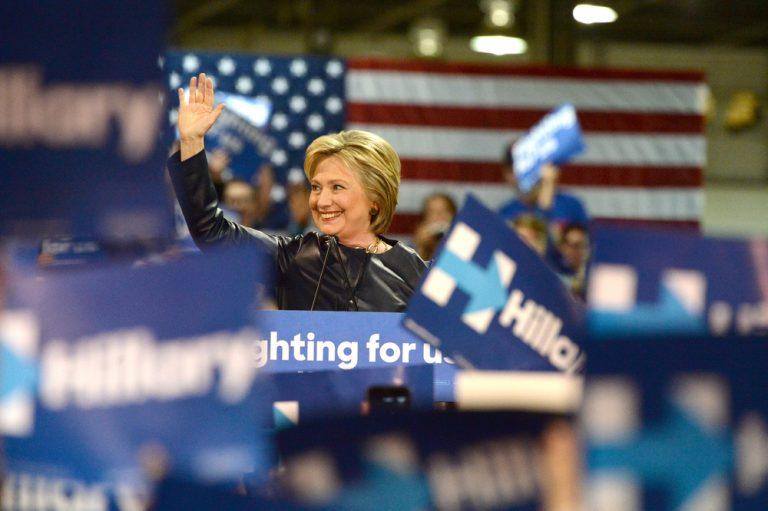
If we assume that the financial markets operate under the principle of maximising returns at minimal risk, then it should surprise nobody that Hillary Clinton is Wall Street’s preferred candidate. However, this has less to do with ideology than the fact Mrs. Clinton is an establishment candidate whose pockets have been lined with Wall Street dough.
But what do the financial markets have to gain from a second Clinton in the White House?
Greater certainty
If there’s one thing the financial markets hate, it’s uncertainty. In an environment constantly pulled between fear and greed, uncertainty generally causes investors to navigate toward risk-aversion. This has all kinds of nasty side effects on the value of assets.
As we mentioned at the outset, Clinton is an establishment candidate who is less likely to rock the political boat. Wall Street knows the establishment type, and would much rather play ball with a candidate they know how to deal with.
No Donald Trump
In practical terms, a Hillary Clinton victory also means Donald Trump doesn’t make it to the White House. For Wall Street, who are predominantly in favour of a Clinton presidency, and the financial markets, this would be viewed as a very good thing. Do we need to take position on this?
Historically, markets love Democrats
Another cold hard fact about putting a Democrat in the White House is the market performs much better. Now, we’re not saying this is solely attributed to Democrats – after all, presidents spend a great deal of time dealing with the policies of past administrations. But if we look at average stock market returns under Democrats and Republicans, it’s no contest who the market prefers.
Since 1900, the Dow Jones Industrial Average has generated an average annual return of 7% under Democrats versus just 3% under Republicans. That’s a total of 19 presidents, so the sample size is fairly large.
But what about the downsides of a Clinton victory?
Pharmaceutical stocks
Clinton has made lowering prescription drug costs one of her biggest election issues, and has repeatedly lashed out at the absurd costs of prescription drugs. While this is certainly a noble effort, it has wreaked havoc on the healthcare sector in general and pharmaceutical industry in particular. One thing is clear: A Clinton presidency could be detrimental to pharmaceutical stocks. If you’re an investor, you may have to rethink your portfolio.
Let’s also not forget to mention that her plan for lowering drug costs has come under attack by the pharmaceutical industry. This could get ugly in a hurry.
Very hawkish
Hillary Clinton may become the first female president in US history, and although it may be easy to project the maternal stereotype on the 68-year old Clinton, she is widely considered to be a war hawk.
“Hillary the Hawk,” as she is sometimes called, has a woeful record when it comes to foreign policy. The Democratic hopeful voted in favour of the 2003 Iraq War, the 2009 Afghanistan surge, intervention in Libya to overthrow Muammar Gaddafi and arming rebels in their siege of Syria (the same rebels who would form part of ISIS) – and that’s only the tip of the iceberg. Another Clinton in the White House might not be good for the country’s finances.
Not a change agent
If there’s one thing Americans are craving, it’s change – serious change. And if significant change is what you’re looking for, Hillary is probably the wrong candidate. For investors, a lack of change probably equates to stability for a short while, until voters demand somebody much more radical. Another four years of status quo policies, doing Wall Street’s dirty work and preparing for a cushy retirement earning $250,000 for 20 minute talks could create a new appetite for change. Who knows what types of candidates that might produce in 2020 – but we have a sneaking suspicion that they could make Donald Trump and Bernie Sanders look like one of the guys.
Risk warning: Forward Rate Agreements, Options and CFDs (OTC Trading) are leveraged products that carry a substantial risk of loss up to your invested capital and may not be suitable for everyone. Please ensure that you understand fully the risks involved and do not invest money you cannot afford to lose. Our group of companies through its subsidiaries is licensed by the Cyprus Securities & Exchange Commission (Easy Forex Trading Ltd- CySEC, License Number 079/07), which has been passported in the European Union through the MiFID Directive and in Australia by ASIC (Easy Markets Pty Ltd -AFS license No. 246566).
The US created 156,000 jobs in September, according to the latest non farm payroll figures released by the Labor Department on Friday.
The figure was slightly weaker than the 170,000 expected by analysts, and below last months revised figure of 167,000. Unemployment rose marginally to 5 percent.
These figures will be watched closely by those looking to ascertain whether a December rate rise is on the horizon. Given the slightly disappointing rise in unemployment and lower than expected jobs creation, it may cast doubt on the suitability of a Fed decision to raise rates before the end of the year.
The USD is trading up 0.38 percent.
House prices rose at a slower rate than expected in September, according to the latest data from mortgage lender Halifax.
Prices slowed from 6.9 percent in the three months to August to just 5.8 percent in the three to September, their slowest rate in over three years. The property market has so far remained largely unaffected by the Brexit vote, however the latest figures may be evidence that negative investor sentiment is beginning to bite.
Martin Ellis, Halifax housing economist, said in a statement:.
“The reduction in annual house price growth from a peak of 10.0 percent in March to 5.8 percent six months later remains in line with our forecast at the end of 2015.
“A lengthy period where house prices have risen more rapidly than earnings has put pressure on affordability, therefore constraining demand. Very low mortgage rates and a shortage of properties available for sale should, however, help support price levels over the coming months,” he said.
In monthly terms, prices saw their first increase since June. However Ellis cautioned that quarterly figures were the the more reliable indicator, which saw house prices 0.1% lower lower than they were between April and June.
Automated sell-offs in Asia caused a “flash crash” on sterling in early trade, pushing the currency down around 10 percent.
Sterling dived from levels around $1.2600 to $1.1378, but has since recovered ground. The crash was triggered by a statement by French President Francois Hollande in the Financial Times, vocalising his desire to stay firm with Britain as Brexit negotiations begin.
“Of course, some in the market may see sterling’s overnight volatility to be the result of French President Hollande demanding tough Brexit negotiations,” Hans Redeker, head of currency strategy at Morgan Stanley, told Reuters.
“The new British government under May appears to have chosen an economic course which could bear substantial risks.”
The pound has been consistently weak since the UK voted to Leave the European Union, trading at its lowest level since 1985 earlier in the week after Theresa May pledged to prioritise immigration over the single market as Brexit negotiations begin.
The pound is currently trading at $1.23 to the dollar, down 0.21 percent.
The dollar rose on Wednesday ahead of Friday’s key US jobs data, as speculation that the Fed will raise rates later this year increases.
The dollar hit a four-week high against the yen, pushing sterling down to a three-year low.
“By and large the dollar is continuing to trade well,” Societe Generale strategist Alvin Tan told Reuters.
“Expectations about the Fed raising rates are edging up and that has been helped by the good run of U.S. data … The big one though is tomorrow with the non-farm payrolls report.”
Friday’s US non-farm payroll figures will be closely watched by the markets, with investors looking for signs that the labour market is strong enough for the Fed to raise rates in December. The median forecast of economists polled by Reuters is for payrolls to rise by 175,000.
However gold, which has been seen as a safe haven of late, sank on the news. The price dropped to three and a half month low as the threat of tighter monetary policy started to bite.
Oil remains steady
Oil prices hovered around their four month high after a surprisingly large drop in US inventory levels sustained investor confidence in the market.
“Optimism on the OPEC deal and surprising storage declines pushed oil prices to the upper end of the recent trading range. Both trends are temporary and unlikely to mark the easing of the oil supply glut,” said Norbert Ruecker, head of commodity research at Swiss bank Julius Baer.
US data released on Wednesday showed a stockpile decrease of 3 million barrels last week, taking the total to 499.74 million barrels. This went against the general expectation for an increase. However, inventories remain at near record highs and a rally in the markets may be hard to sustain.
Oil markets rose again last week after Saudi Arabia and Iran agreed to negotiate an OPEC-led curb on oil output.