Is now the right time to make your fortune on the currency markets?

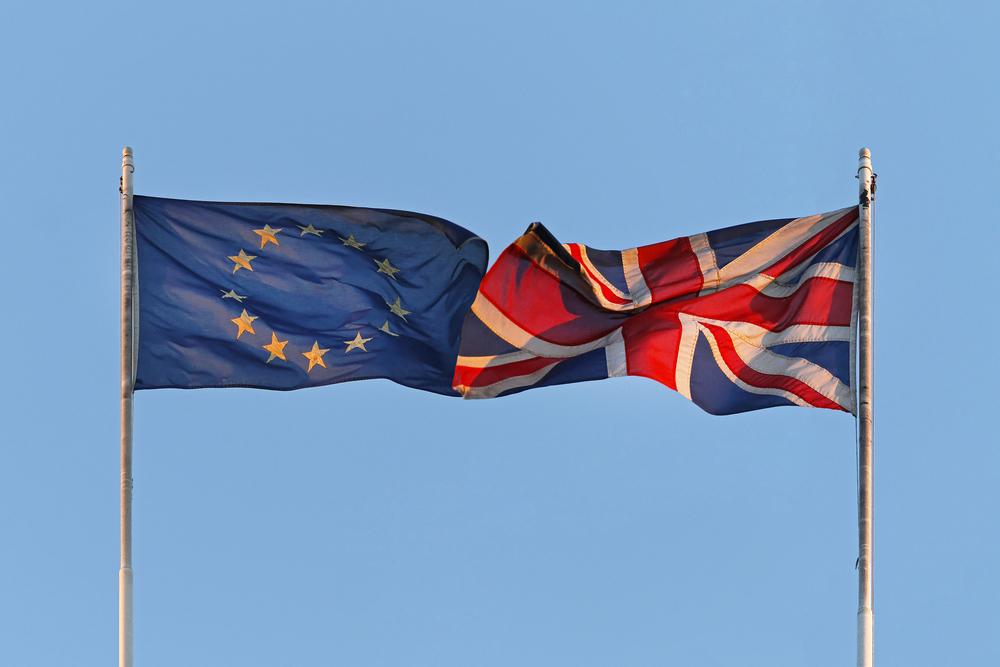
When economies are teetering on potential disaster, there are opportunities for investors betting that these economies will tank as well as their currencies. Several high-profile investors have made their fortune in this way – could recent economic volatility make this the right time for you? On September 16th, 1992 which was also known in England as Black Wednesday, George Soros did the improbable and broke the British pound. The British government lifted the pound from the European Exchange Rate Mechanism (ERM). In the process, George Soros on Black Wednesday made over a billion dollars by constructing a bet against the British pound. After the Second World War, European countries wanted to integrate their economies to prevent war and create a market place that could compete with the United States. The European nations began operating under the ‘European Exchange Rate mechanism’ (ERM), created in 1979. Many of the European countries were not ready to extinguish their nation’s currencies; however, they did agree to fix their exchange rates by letting markets set the rates. In 1990 England joined the ERM which was driven by the prodding of John Major, despite Margaret Thatcher’s opposition. Between 1990 and 1992, England repaed the benefits; inflation decreased considerably, interest rates eased and unemployment dropped below historical standards. However, in 1992 England was dragged into a massive global recession – and, in reaction, the British government wanted to cut interest rates. But by doing so the British government would have to push the pound below the agreed upon amount with the ERM, so they were trapped – and had no choice but to watch the recession continue until during the spring of 1992, only a year and one half prior to joining the ERM, England’s Treasury department realised that the pound was mispriced relative to the Deutschemark, posing a serious problem to England – and leading to the British pound tanking. George Soros led the Quantum Fund in 1992 which at the time was primarily involved in betting on macroeconomic trends. He realised that the markets no longer believed that England would be able to maintain at the time its exchange rate and during the summer of 1992, began building a $1.5 billion position to wager that the price of the pound would fall. Soros believed that the fall of the pound was inevitable and instead of taking a gradual approach of shorting the pound, thought that the Quantum Fund should go all in at once. When the Pound did inevitably fall, going all in netted Soros and the Quantum Fund over one billion dollars – and crashed the Bank of England. For experts in the markets, there are events taking place allowing the opportunity to take advantage of forex trading opportunities. More recently, Switzerland’s central bank incurred massive losses after the bank decided to get rid of the cap on the strength of the Swiss Franc. These actions caused the currency to appreciate dramatically which destroyed the value of the banks euro reserves. Investor Jim Rogers saw this opportunity before it happened – and in a similar way to George Soros, won a goldmine on the Bank’s decision. Clearly, there economic events that transpire from time to time that, if investors are able to see the ramifications before they take place, could reap substantial profits. In the current economic climate, this could be the right time.
24/02/2016
This post is sponsored by trading platform easyMarkets.com. Risk warning: Forward Rate Agreements, Options and CFDs (OTC Trading) are leveraged products that carry a substantial risk of loss up to your invested capital and may not be suitable for everyone. Please ensure that you understand fully the risks involved and do not invest money you cannot afford to lose. Our group of companies through its subsidiaries is licensed by the Cyprus Securities & Exchange Commission (Easy Forex Trading Ltd- CySEC, License Number 079/07), which has been passported in the European Union through the MiFID Directive and in Australia by ASIC (Easy Markets Pty Ltd -AFS license No. 246566).

Mark Carney in Parliament: “Will not make judgments on EU referendum”

0
Bank of England governor Mark Carney spoke in front of the Treasury Select Committee today on Tuesday, saying that the central bank would not make judgments on the outcome of Britain’s referendum on EU membership and will “assume the status quo continues.” On the subject of the sterlings recent plummet against other currencies, Carney drew a comparison with the Scottish referendum held last year, when the same thing happened. Carney also spoke for the first time about further steps to stimulate Britain’s economy, should the referendum jitters have an increasingly negative effect. He said: “If we were in a position where the economy needed additional stimulus … we could cut interest rates towards zero. We could engage in additional asset purchases, including a variety of assets. We could also provide a perspective where we could adjust our policy horizon – in other words we could shorten our policy horizon over which we wanted to return inflation to target.” Carney and several other Bank of England policymakers are answering questions from Parliament today on their projections for the future of the UK economy.
23/02/2016

BHP Billiton cuts dividend for first time since 1988 on severe profit drop

BHP Billiton has become the latest mining company to suffer at the hands of the global commodity rout, seeing shares fall over 3 percent after disclosing a huge net loss for the last half year. The mining giant posted a loss of $5.67 billion, compared to a profit of $5.35 billion the year before. The company also cut its dividend by 75 percent, the first reduction since 1988, and saw revenue tumble by 37 percent. BHP’s Chairman Jac Nasser said in a statement that he believed the company would be going through a period of prolonged volatility, and said the decision to cut its dividend had not been made lightly, but was “a determined response to changing markets”. Seeing the world’s biggest mining company being so severely affected by recent events does not bode well for the industry as a whole. BHP’s shares have fallen over 47 percent so far this year on Australian markets, but rose 2.7 percent after an initial fall this morning. In London (LON:BLT), shares are currently trading down 3.08 percent at 770.50 (1222GMT).
23/02/2016

Home Retail shares jump after bid from Harveys owner Steinhoff

Home Retail Group (LON:HOME) shares jumped this morning as a rival offer was launched for the Argos owner by South African company Steinhoff.

Steinhoff’s offer of 175 pence per share, offered late on Friday, is well above the Sainsbury’s offer that was rejected by Home Retail last month. Sainsbury’s is now expected to ask for an extension of the Tuesday deadline in order to consider launching a competing offer against Steinhoff – a tough competitior who owns both Bensons for Beds and Harveys. The rise in share price has been seen by analysts as a positive market reaction to the offer.

Sainsbury’s were hoping to acquire Argos in an attempt to widen the supermarket’s market share by including Argos’s home retail selection, creating the UK’s largest general merchandise retail business. Whether Sainsbury’s will make another bid remains to be seen.
Home Retail is currently trading up 13.02 percent at 173.60 pence per share.
22/02/2016

Sterling falls as EU exit threats take their toll

0
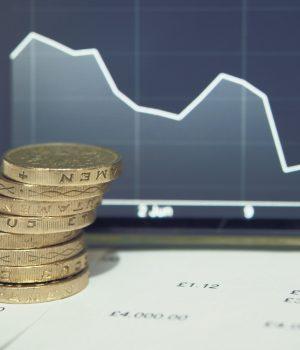
Sterling sunk against the dollar again on Monday to its biggest loss in nearly six years, as fears heighten that Britain may vote to leave the EU in June’s referendum. The Pound dropped 2.1 percent at its lowest point this morning to $1.41020, the largest one-day fall since March 2009. The figure comes as two senior Conservative politicians, London mayor Boris Johnson and Michael Gove, came out in support of a ‘Brexit’. Before this, the Exit campaign lacked the credibility of senior ruling figures – causing volatility in the Pound to shoot up as investors consider the possibility that Britain may be on its own from next year. Ratings agency Moody’s said that it would consider shifting the outlook on Britain’s credit rating to negative after David Cameron announced that the date of the referendum would be the 23rd June. Until then, the uncertainty is likely to continue, ensuring that the exchange rate for the Pound is likely to remain volatile.
22/02/2016

HSBC shares drop as profits fall on economic slowdown

Shares in HSBC (LON:HSBA) dropped over 4 percent this morning after the bank reported an expectedly fall in pre-tax profit. Profit before tax came in at $18.87 billion for 2015, a fall of $0.2 billion on the year before and well below the average analysts’ estimate of $21.8 billion. For the last quarter, the bank reported a pre-tax loss of $858 million. The bank cited volatility in China and the costs of its current restructuring programme as reasons for the figures, as well as legal costs and the disposal of its business in Brazil. Chairman Douglas Flint said the economic environment as “challenging”, adding that “China’s slower economic growth will undoubtedly contribute to a bumpier financial environment, but it is still expected to be the largest contributor to global growth as its economy transitions to higher added value manufacturing and services and becomes more consumer driven.”

Public borrowing falls, retail sales rise in January

0
UK government borrowing fell in January after recording the largest public finances surplus since 2008, according to figures released today from the Office for National Statistics. Government borrowing for the 2015 tax year, which ends in April, was at £66.5 billion – a decrease of over £10 billion on the same period last year. The January surplus, excluding banks, came in at £11.2 billion compared, an increase of £1 billion, and the monthly borrowing figure, although the highest for eight years, still came in below the £12.6 billion forecast by analysts. Chancellor of the Exchequer George Osborne, who has controversially remained committed to austerity measures designed to reign in public spending, tweeted today: “With warnings of weaker economic outlook & challenges for future tax receipts this could bring, we can’t be complacent & think job is done.” He is due to publish his annual budget plan on March 16. Strong retail sales Retail sales volumes also rose in January, showing more consumer confidence, rising The 2.3 percent according to the ONS. This is compared with December when they fell 1.4 percent. The British Retail Consortium also reported strong consumer sentiment today, with some of the UK’s largest high street chains seeing retail spending growth hit a four-month high in January.
19/02/2016

Apple vs. the FBI: what is at stake for iPhone users?

The FBI’s request for Apple to provide a ‘back door’ entry to the phone of San Bernardino terrorist Syed Rizwan Farook has since sparked an international debate over data privacy, with companies such as Facebook and Twitter joining Apple in standing against the US government. If Apple continues to refuse the FBI’s request, the case could end up in the US Supreme Court, setting a precedent for all handling of personal data. Two of the US’s more powerful bodies are going head-to-head in a public battle – but what is at stake for the average iPhone user? What is the FBI requesting? Essentially, the FBI wants Apple to create a new operating system to install on Farook’s phone, altering the System Information File and creating the ability to bypass the traditional iPhone security measures. Apple say that the FBI is asking for a ‘back door’ into the iPhone, something that – once created – could be used by hackers on any iPhone, not just Farook’s. The new software will prevent the phone from erasing itself after more than 10 password attempts, and automate the process for trying out passcode combinations – meaning that the FBI have the power to break the code on the phone. The FBI argue that the SIF will only work on Farook’s phone, and will be known only by Apple, who could choose to destroy it. Apple’s argument Back doors are a big deal in security, and once one is created it will be far easier for it to be stolen or replicated. Apple argue that there is no way to control its use once it is made, and therefore complying with the FBI’s demands risks exposing the data of every iPhone user. Apple says introducing a back door into the iPhone wouldn’t just make Farook’s phone insecure and accessible to the US government – it could make every iPhone vulnerable. In a statement published on their website earlier this week, CEO Tim Cook said: “The government is asking Apple to hack our own users and undermine decades of security advancements that protect our customers — including tens of millions of American citizens — from sophisticated hackers and cybercriminals. The same engineers who built strong encryption into the iPhone to protect our users would, ironically, be ordered to weaken those protections and make our users less safe.” “While we believe the FBI’s intentions are good, it would be wrong for the government to force us to build a backdoor into our products. And ultimately, we fear that this demand would undermine the very freedoms and liberty our government is meant to protect.” Reactions to the debate Several privacy experts have warned that, should the US government win this case, it will set a precedent and enable other – perhaps more authoritarian – governments to do the same; inherently risking the data privacy of citizens globally. Senator Ron Wyden of Oregon, a leading legislator on privacy and tech issues, warned the FBI against their demands: “This move by the FBI could snowball around the world. Why in the world would our government want to give repressive regimes in Russia and China a blueprint for forcing American companies to create a backdoor?” Wyden told the Guardian. Facebook and Twitter have both since stepped in to side with Apple, with the FBI, both saying that they “stand with Apple” and will “aggressively fight” attempts to weaken encryption. “We condemn terrorism and have total solidarity with victims of terror. Those who seek to praise, promote, or plan terrorist acts have no place on our services,” Facebook said in a statement Thursday. Jan Koum, the creator of Whatsapp – which also uses encrypted data – has said: “We must not allow this dangerous precedent to be set. Today our freedom and our liberty is at stake.” Edward Snowden, whose revelations about US government spying provoked Apple’s stance on passcode-protected data, said the FBI was “creating a world where citizens rely on Apple to defend their rights, rather than the other way around”. Effects of the case Should Apple continue to refuse to comply – which is likely – the case will be passed onto the District Court and, if there is no resolution, could end up in America’s highest court. America’s rulings have a significant influence on events globally and, should the FBI be allowed to hack their citizens phone, it ultimately sends the message to other governments that this is acceptable practice and the security of citizens data could well be compromised.
Miranda Wadham on 19/02/2016

3 Stocks & Shares ISA Ideas for 2016/2017

As we approach the end of the tax year, ISA considerations for the current tax year as well as next become an important aspect of tax efficient investing.

This report breaks down the rules and allowance outlined by HMRC and a number of ideas for your ISA.

Request this report now for a breakdown of:

º ISA Rules

º ISA Allowances

º Three Individual stock ideas for 2016/2017


Three Stocks Included:


  • The FTSE 100 media expanding in the US

  • One of the world’s largest airliners

  • A broad-based ETF focussed on the domestic UK economy

This report is now publicly available, you can download your copy below:
A copy of this report will be sent to you immediately

Html code here! Replace this with any non empty text and that's it.

By submitting my details I consent for information to be sent to me via the above contact details by Charles Hanover Investments Ltd. Contact may be made by email, post or telephone call. Any information provided is not an offer to enter into any transaction and Charles Hanover Investments Ltd will accept no responsibility for any loss incurred by acting on this information. By ticking the box below I confirm I have read and agree to the Research Terms,Terms of Business and have read and understood the Disclaimer, Privacy and Order Execution Policy.

Disclaimer: This report is for your information only. The information included is general in nature and is not in any form a recommendation to enter into any transaction nor does it constitute an offer. Depending on specific objectives and financial position the research may be unsuitable for certain investors. Charles Hanover Investments or Equitrade Markets will not accept any responsibility for any losses, including, without limitation, any consequential loss, which may be incurred by acting upon the contents of this report. Although the upmost care is taken to ensure the accuracy of this report information contained may not be entirely complete and accurate and Charles Hanover Investments or Equitrade Markets will not be held liable for any inaccuracies.

Risk Warning: Trading Contracts for Differences (CFDs), Futures and spread betting carries a high level of risk to your capital, and is not suitable for all investors. Only speculate with money you can afford to lose. Trading or placing any bets can result in consumers incurring liabilities in excess of their initial stake. Please ensure you fully understand the risks, and seek independent advice if necessary. Charles Hanover Investments is a trading name of Equitrade Markets Ltd, a company authorised and regulated by the Financial Conduct Authority for the conduct of investment business in Shares, Spread Betting, CFDs, Futures, Options and Rolling Spot Foreign Exchange.

Asda suffers worst results in history

0
Supermarket chain Asda saw sales fall further over Christmas, becoming the worst performing supermarket for the second quarter running. The chain, who released their results yesterday, were hit by a 5.8 percent fall in like-for-like sales in the 13 weeks to January 1, and a fall of 4.7 percent over the year as a whole. It’s parent company, the US super-chain Walmart, also reported a 7.9 percent fall in net income for the fourth quarter – something that may well continue as German rivals Aldi expand into the US next month. Asda’s president and CEO Andy Clarke said 2015 had been a “difficult year”, and conceded that the UK retail market was undergoing “significant and permanent structural change”. The latest set of results were a percentage point worse than those released in the second quarter of 2015, which Clarke labelled the chain’s rock bottom. The British grocery market has been undergoing a significant change for some year now, with budget rivals Lidl and Aldi stealing market share from the Big Four with their cheaper own brands products. Both Tesco and Morrisons performed better than expected over the Christmas period, but Asda remains in steep decline and have since pledged to keep their prices no more than 5 percent above discounters in an attempt to claw back market share.
19/02/2016