
Miranda Wadham on 05/09/2016
Theresa May tight-lipped on Brexit promises
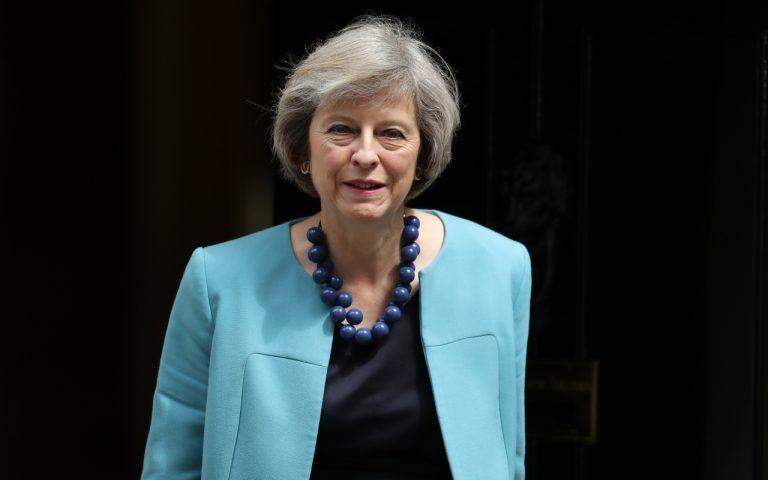
Theresa May has refused to commit to an Australian points-based system of immigration, shedding some light on how the UK may look post-Brexit.
May questioned a system whereby migrants were admitted by skill and spoke of potentially retaining preferential treatment for EU citizens. Warning there was “no single silver bullet” on reducing immigration, she declined to comment further on the type of strategy she would be pursuing.
She also refused to commit to other promises made by the Leave campaign, including the £100 million a week going towards the NHS. Remaining tight-lipped on any concrete plans, she said only:
“I’m going to work for what I just said I’m going to work for: the best possible deal for the UK in terms of the relationship that we would have with the EU, following us leaving.”
She gave her comments just before setting off to China for the G20 summit, where she will meet with other heads of state – some of whom have issued stark warnings over their relationships with Britain post-Brexit.
This morning Tokyo threatened to move its companies to other European countries if the privileges of EU membership are not retained. Yesterday the Japanese government specified a 15-page list of demands designed to protect its car manufacturers based in the UK.
Morning Round-Up: UK services rebound, Morrisons increase price war, car registrations up

UK services rebound in August
The UK service sector saw its largest month-on-month rise on record last month, according to the Markit/CIPS purchasing managers index.
The figure jumped from 47.4 in July to 52.9 in August, pushing it back into expansion.
The adds to the plethora of economic data released recently suggesting the fallout from Brexit may not be as bad as expected.
Morrisons slashes prices yet again
Struggling supermarket Morrisons has slashed prices again, as it attempts to compete with discounters Lidl and Aldi.
Prices on meat and poultry will be cut by an average of 12 percent, alongside price cuts to its range of fruit and vegetables.
Britain’s Big Four supermarkets have already been forced to cut prices to incentivise customers into store and away from budget challenger supermarkets.
Marketing director Andy Atkinson commented:
“We’re a British company, making our own ham and buying our own cattle here in Britain. By doing this efficiently ourselves we can pass much-needed savings on to customers.”
Car sales jump in August
Car sales saw a 3.3 percent increase in August compared to a year earlier, according to the Society of Motor Manufacturers and Traders.
81,640 vehicles were registered last month, up 2.8 percent in the first eight months of the year.
05/09/2016
Will BP have to cut its dividend?
Request this report now to discover:
-
The rate at which BP is burning cash
-
When it is likely BP will have to cut if oil remains low
-
Our forecast price target for BP with detailed explanation of valuation method
By submitting my details I consent for information to be sent to me via the above contact details by Charles Hanover Investments Ltd. Contact may be made by email, post or telephone call. Any information provided is not an offer to enter into any transaction and Charles Hanover Investments Ltd will accept no responsibility for any loss incurred by acting on this information. By ticking the box below I confirm I have read and agree to the Research Terms,Terms of Business and have read and understood the Disclaimer, Privacy and Order Execution Policy.
Download your copy now for free:
Risk Warning: The value of your investments will fluctuate and you may get back less than your original investment. Please ensure you understand the risk of any investment you chose to undertake and seek independent financial advice. Trading Contracts for Differences (CFDs), Futures and spread betting carries a high level of risk to your capital, and is not suitable for all investors. Only speculate with money you can afford to lose. Trading or placing any bets can result in consumers incurring liabilities in excess of their initial stake. Please ensure you fully understand the risks and seek independent advice if necessary. Charles Hanover Investments is a trading name of Equitrade Markets Ltd, a company authorised and regulated by the Financial Conduct Authority (FCA No.441877) or the conduct of investment business in Shares, Spread Betting, CFDs, Futures, Options and Rolling Spot Foreign Exchange. Any research is being provided on the basis that you have agreed to the research terms and conditions of Charles Hanover Investments and Equitrade Markets.
European Stock Markets up on slow US jobs growth

The market opened on a high this morning in anticipation of the afternoon release of US Nonfarm payrolls. The data was published at 1.30pm and missed expectations.
In the aftermath, European markets enjoyed another boost. The FTSE100 was up 112.08 points (+1.66%) by 2.53pm, while the German DAX gained 105.25 points (+1%) by 2.52pm. France’s CAC 40 was the biggest gainer of the major European indices, up 74.83 points (+1.69%) US markets also opened higher amid slow job growth in August. The Dow Jones is up 99.65 points (0.54%) and the NASDAQ gained 28.13 (+54%). The upswing was led by high-dividend utility stocks, benefiting from low interest rates. Energy companies also recorded gains as the price for crude oil overturned a one-week slump.Katharina Fleiner 02/09/2016
Disappointing US Employment figures send Dollar tumbling

Disappointing data on the development of US employment in August saw the dollar fall drastically against other major currencies.
This afternoon, the US Department of Labour released that unemployment remained at the previous level and new job creation had fallen from 255,000 in July to 151,000 in August. In the aftermath, the USD fell nearly 0.4% against the EUR, to a week low at 0.89030. After the initial fall the USD/EUR recovered to stand at 0.89227 at 2.20pm. The USD/JPY fell by nearly half a percent after the data release but since recovered all losses to stand at 103.58967 at 2.20pm. No such recovery can be seen in the USD/GBP. The rate dropped 5.2% to a low of 0.74903 and has since only gained marginally to trade at 0.75009 at 2.30. The USD already had to record major losses yesterday, after the ISM Manufacturing indices came in below expectations.Katharina Fleiner 02/09/2016
US employment data disappoints in August
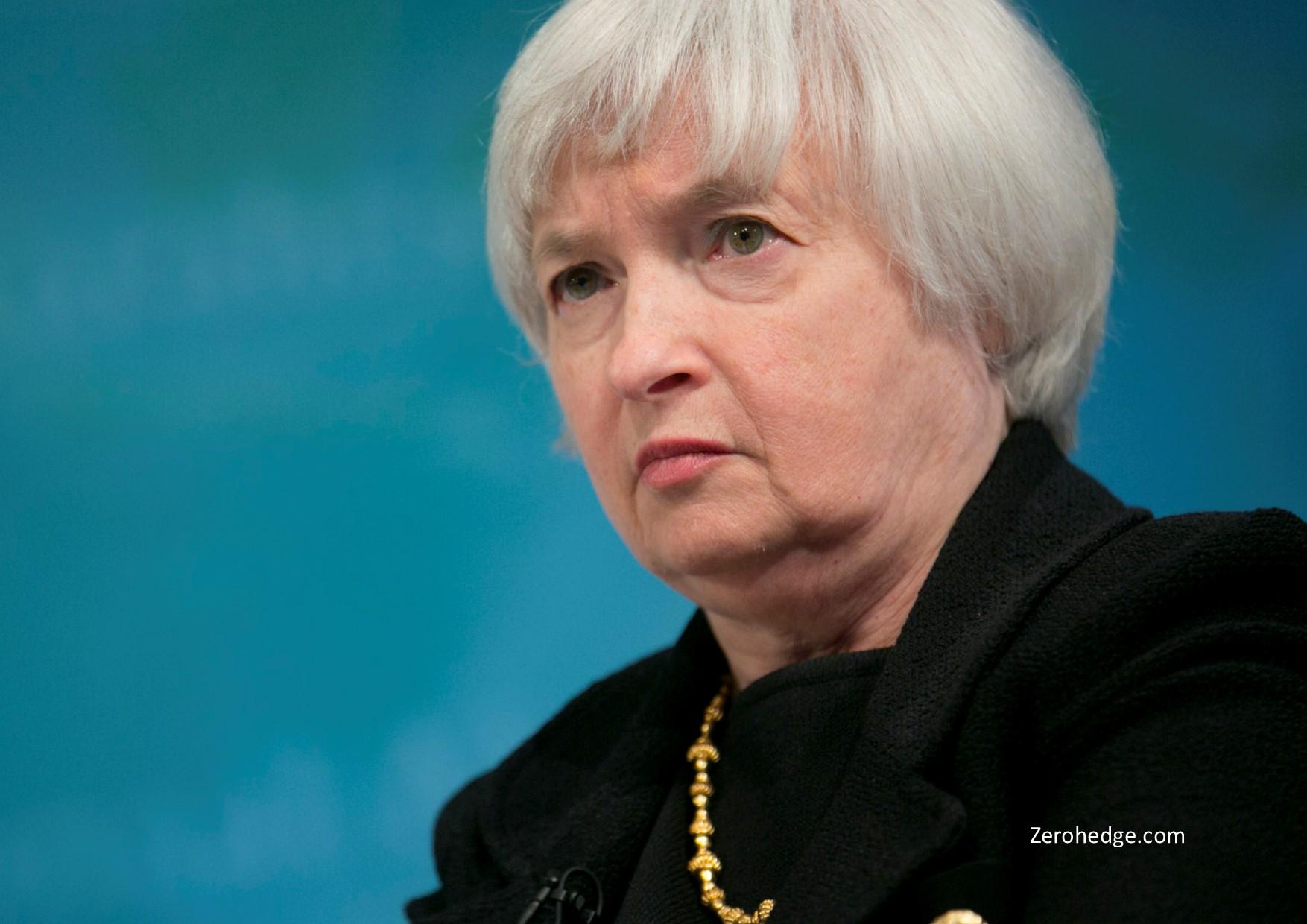
Key US employment figures disappointed on Friday, with just 151,000 jobs being created in August.
The non-farm payroll number came in below analysts’ expectations, many of whom had expected around 190,000. It also falls well below the average monthly rise of 204,000 this year.
The unemployment rate remained flat at 4.9 percent, unchanged from July.
The figures are a key piece of data for the Federal Reserve who are currently deciding when to raise interest rates, and are likely to negate a September rate rise. However, several Fed members have hinted that a change will be made this month, with Yellen herself stating that “the case for an increase in the federal funds rate has strengthened in recent months”.
02/09/2016
Morning Round-Up: Data release – UK PMI Construction up, Italian GDP growth flat, EMU PPI improves

UK PMI Constructions enhances in August
The UK’s PMI Construction rose to 49.2 in August, up 3.3 points from July. The figure beat estimates by 3.1 points. The better-than-expected measure comes in, a day after the Markit Manufacturing PMI made a surprise recovery to 53 points, the index’s biggest upward movement in 25 years. Yesterday, the IMF also admitted, data suggest that initial post-Brexit turbulences have “ebbed” and were seemingly only based on short-term uncertainties.Italian GDP growth flat in Q2
Italy’s year on year GDP growth rate remained at 0.8% in the second quarter of the year, beating estimates by 0.1%. The quarter on quarter figure also remained flat, at 0%.European Monetary Union Producer Price Index improves in July
The EMU’s Producer Price Index improved slightly in July. While the index suggests that prices are still falling, the measure of -2.8% represents an improvement of 0.3% from June and beat estimates by 0.1%. Recently published indices on both inflation and manufacturing sector performance, for August, have however indicated that last month saw a contraction in economic activity in the Euro-Zone.Katharina Fleiner 02/09/2016
Southern Rail co-owner sparks anger with £100 million profit

Go-Ahead, part owner of Southern Rail, has sparked anger from unions after disclosing a profit of nearly £100 million.
Go-Ahead’s yearly profits before tax rose 26.8% to £99.8 million. Its annual adjusted operating profit also came in above analysts expectations at £157.4 million.
The company is the co-owner of troubled railway operator Southern Rail, whose unreliable service has led to delays and hundreds of customer complaints this year alone. Union RMT today described Go-Ahead and Southern as “a money-raking disaster”.
Go-Ahead Chief Executive David Brown turned down a bonus and higher pay package this year after the disruptions, and Go-Ahead chairman Andrew Allner nodded to the problems in a statement:
“Whilst we have largely achieved the financial and strategic targets set at the beginning of the year it is clear that we have not delivered the required levels of passenger service on our Southern routes.”
RMT general secretary Mick Cash commented on the results:
“While Go-Ahead have been driving Britain’s biggest rail franchise into total meltdown, the cash has been sloshing through the boardroom at obscene levels. This is reward for total failure on a scale which is off the map.”
Go-Ahead (LON:GOG) shares rose nearly 10 percent this morning, up 9.56 percent at 2,188 (1031GMT).
02/09/2016
US ISM Manufacturing Index falls in August, GBP near one-month high
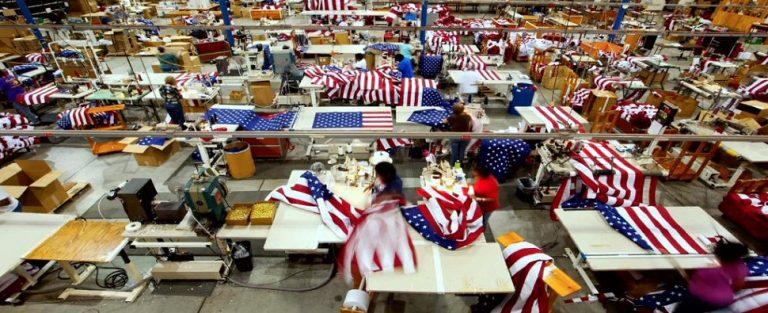
The US Institute for Supply Management Manufacturing index hit its lowest since January.
August’s figure stood at 49.4, down 3.2 points from July’s measure and missing estimates by 2.6 points. In January the index came in at 48.2 but improved since and remained above 50 for all months from March until July. The ISM Prices Paid, an index for the business sentiment towards future inflation, also fell by 2 points, to 53. The Markit Manufacturing PMI, released by Markit economics came at 52, only slightly lower than July’s 52.1 figure, but also 0.1 point below estimates. A growth measure on construction spending, released by the US Census Bureau, increased from -0.6% in July to 0% in August, missing estimates of 0.5%. However UK indicators for the performance of the manufacturing sector came in higher than expected, supporting the idea that the UK economy is recovering well from an initial post-Brexit shock.Pound rises against Dollar
The unexpected drop in US manufacturing indices and positive developments in UK manufacturing contributed to a surge in the GBP against the USD. The GBP appreciated nearly 1.22% against the USD between 9am and 4pm today, recovering the downfall since Yellen’s Fed speech on Friday and reaching a near one-month high. At 4pm the GBP/USD stood at 1.32984. Bullish movements of the GBP may also be aided by a statement of the IMF, admitting that short term instability seems to have “ebbed” since the Brexit-vote, noting that financial markets have fully recovered from post-Brexit slumps.Katharina Fleiner 01/09/2016
UK Gov provided £250 million in Start Up Loans to small businesses

The UK government has provided a quarter of a billion in Start Up Loans to small UK businesses since 2012, it was announced on Wednesday.
The loans, valued up to £25,000 at a fixed 6% interest rate, are awarded by the government backed British Business Bank. They not only help young entrepreneurs to get a financial footing to further their business, but recipients also benefit from free business support.
The loans have benefited young entrepreneurs from all across the country to start a wide variety of small businesses. Over half of the loans, distributed to people between 18 and 24, were offered to those not previously in formal employment or education, and one in five of the loans went to deprived areas of the UK.
In its first evaluation of the program in March this year, the British Business Bank said the loan program has had a positive impact on the UK’s start-rate of beneficiary businesses.
The loans are also said to generate a return on investment to the economy of £3 for every £1.
Business and Energy Secretary Greg Clark spoke about the Start Up Loans program:
“British entrepreneurs and small businesses are the backbone of our economy. This government will build on the success of Start Up Loans to give entrepreneurs the support and opportunities they need to start a business, grow it in Britain and turn it into a global success story.”Katharina Fleiner 01/09/2016