American digital service agency R/GA will be expanding its Venture initiative by starting a UK based accelerator.
In collaboration with Innovate UK, the new start-up accelerator will support up to 10 early-stage as well as growth-stage start-ups to build and expand their business.
The companies will receive £75,000 in capital investment for up to 6% equity, co-working space at the R/GA’s London office and will also benefit from a set curriculum, a speaker series as well as workshops tailored to enhance their individual goals.
Together with R/GA staff, they will have the opportunity to develop their marketing, design, branding, manufacturing and distribution strategy.
The 100-day program will end with a demo day at which the companies can present themselves to investors.
The Vietnamese government has announced plans to sell all its stakes in the country’s two main breweries, after months of speculation.
The government will fully divest from the makers of its three main beer brands, Ha Noi, Saigon and 333, as part of a plan to raise $2.2 billion over 16 months. The stakes will be open to both domestic and international investors, and have already attracted interest from Thailand’s main brewer ThaiBev and Singha beer maker Boon Rawd Brewery.
Beer is the top drink in Vietnam and has seen consumption rising 40 percent in just five years, making it one of Asia’s top beer markets.
The Vietnamese government need the money from the sales to pump into its worn infrastructure, after rock-bottom oil prices hurt the country’s revenue. The National Financial Supervisory Commission has warned that the budget deficit for 2016 may exceed the planned ratio of 4.95 percent of GDP.
The sale of stakes in the breweries has been on the cards since the 1990s, with little headway being made since.
The UK’s Markit PMI, an index for the business conditions in the manufacturing sector, stood at 53.3 in August. The figure beat July’s measure by 5 points and exceeded estimates by 4.3 points.
The indicator suggests that, only two months past the UK’s Brexit vote, the manufacturing industry has moved towards a positive growth outlook again.
The Euro-Zone Markit PMI on the other hand came in at 51.7, down 0.1 point from July as well as analysts’ estimate. The measure adds to a growing cohort of data suggesting that the Euro-Zone is struggling with stagnating economic growth.
British Airways cuts back Business-Only Flights
British Airways announced that the company will cut down its exclusive Business-Class-Only flights between London and New York.
The flights from London City Airport and JFK Airport will be halved from the 30th October due to low demand.
Business-Only operations have in the past always been challenging and BA admitted that it had doubts when launching the new line in 2009.
Odyssey Airline seems however more confident about the profitability of such exclusive flight services. The airline is planning to offer a Business-Exclusive service from London City Airport to a range of destinations, starting next year.
First US-Cuba flight in 55 years takes off
After some minor delays, the first flight service between the United States and Cuba since 1961 took of this morning at 10.05am.
The flight departure from Fort Lauderdale was accompanied by a prolonged party at the gate, which caused a 20-minute delay.
Many of the passengers on the plane heading to Santa Clara are previously exiled Cubans who haven’t been able to return to their home country in years.
The first commerical direct flight from the US to Cuba is the beginning of a process which will, in the future, see as many as 110 flights departing from US destinations to the Caribbean island daily.
The Brexit vote, rising economic uncertainty and difficulty finding access to funding may have made some sceptical as to the future of the UK start-up industry. However, the UK’s small businesses have no such worries – instead showing resilience and determination to grow their business ideas.
Many start-ups in the UK have turned to crowdfunding to raise the money necessary to develop, launch and expand their businesses and have been successful in doing so.
Equity crowdfunding can be a useful fundraising tool, allowing the sale of shares for companies either not big enough or not willing to go public.
For Seedrs, a UK equity crowdfunding platform and itself a successfully funded equity crowdfunding project, success stories are mounting.
DugOut, a Tech start-up offering a fantasy football league on the web and on mobiles, raised 104% of their £175,006 target by offering investors 9% equity in the company.
UnderTheDoormat is a London based start-up which allows Londoners to profit from renting out their homes while on holiday. The young business raised 163% of their £175,000 target.
DatePlay, the date app which was developed by “The Apprentice” – candidate, Vana Koutsomitis, successfully raised £207,430, 173% of the targeted amount.
With a further 24 days to go, “subscription commerce platform for local classes and experiences”, Wonderush reached 83% of their targeted amount, raising more than £200,000.
There are many other success stories on Seedrs – as well as the plethora of other equity crowdfunding platforms. It is safe to say that many more UK start-ups will turn to this method to advance their business aspirations further. Investors seem to have noticed this trend and interest has sharply.
Seedrs reported that in 2015 the average campaign was funded by 189 investors, a number which is set to grow in this year.
Seedrs itself has enjoyed large success since its launch in July 2012. It has expanded its reach and helped businesses from 24 countries fund their ventures.
Blackwood Seven, a new unconventional media agency, announced plans to expand into the UK in a statement on Wednesday.
Having launched in Denmark only three years ago, the start-up has already successfully expanded into Germany and, in June this year, the United States. The business announced that it has successfully raised €13.5 million for a further expansion of their US operations, and is now hoping to to start competing with traditional media agencies in the UK as well.
Carl Erik Kjærsgaard, chief executive and co-founder of the Danish start-up, stated:
“We are looking at the UK and will come back in the autumn with a launch date for when we’ll start in London.”
“Before we go into any market we actually go out and talk to all the big media owners and tell them who we are and what the software does so that they know what to expect from us and how our business model works. We say our business model will always ensure that your model will always get fair share; so radio, TV or print gets fair share, since we use maths to work out that fair distribution between the media groups.”
The group hopes that Britain will provide another willing market for their unconventional approach, connecting advertisers with media outlets.
According to the Paying for Advertisement report from the ISBA and Arc, more than half of British media agency clients currently believe that their agency is making additional revenues from their accounts.
Blackwood Seven aims to be different.
Their model is based on an artificial intelligence supported software, which helps advertisers figure out how much they want to spend on advertisement, based on their own company’s sales data and a wider web of data the program collects from sources such as YouGov and Nielsen. The software allows to make an informed and efficient decision on advertisement spending and is easily accessible through the client’s smartphone.
Blackwood Seven does not operate on commission but a fixed monthly fee instead, further eliminating the possibility to sell more advertisement spaces than effective to the client to simply boost revenues.
The launch date for the UK has yet to be specified, but looking ahead, the agency is likely to make some waves in the UK advertisement business.
Data published this morning on UK housing prices and Euro-Zone inflation in August send the Pound higher against the Euro and the US Dollar.
Growth in UK housing prices accelerates
Nationwide housing prices grew by 5.6% compared to the same month last year. The figure shows an acceleration of increases in UK housing prices of 0.4% compared to July. This measure beat estimates by 1.1%, as many analysts expected growth in housing prices to decelerate post Brexit.
The month on month figure also increased from 0.5% in July to 0.6% in August, 0.9% higher than the estimated reduction in housing prices of 0.3%.
The UK data release this morning has indicated a healthier than expected climate for the UK housing market, which strengthened the Pound.
Euro-Zone inflation misses estimates
Bad news came in for the Euro, as data, also released this morning, indicated lower than expected Euro-Zone inflation, remaining well below target, in August.
The Euro-Zone Consumer Price Index, published by Eurostat, came in at 0.2%. The figure matches July’s measure and misses estimates by 0.1%.
The Consumer Price Index for a basket of core goods fell in August to 0.8%, down 0.1% from July.
On the news the GBP rose against the Euro and the Dollar.
The GBP/USD appreciated by nearly half a percent between 6.30am and 8.50am, to peak at 1.31508, its highest since late last Friday. It has since again depreciated slightly.
At 11.17am the GPB/USD stood at 1.31315.
The GBP/EUR also increased by nearly half a percent between 7am and 8.50am. The rate peaked at a new three weeks high of 1.17988, and has since again fallen slightly.
At 11.24am the GBP/EUR stood at 1.17809.
Tomorrow there may be more movements in the ForEx as well as the stock markets, as both European as well as North American countries publish their Manufacturing PMI for August.
However, most importance will this week be placed on the US Nonfarm payrolls for August, which will be published at 12.30pm on Friday and are likely to lead to some shifts in the market.
Current estimates predict that new jobs creation in all non-farming sectors in the US in August will have decreased from 255K the previous month to 180K. A higher reading may advance a bullish effect on the USD and could also further increase the likelihood of a FED rate hike in the near future.
Shares in property company Styles & Wood Group have risen nearly 15 percent this morning, after an announcement that it will become a strategic partner of one of the world’s largest banking organisations.
The property services specialist, who focus on project delivery and property support throughout the UK, will partner with their client to deliver their UK Capital Plan over the next five years.
Whilst the client in question was not revealed in Wednesday’s statement, the Group have confirmed it is one of the world’s biggest banks. The deal is expected to general £20 million revenue each year for five years. All work will be based in the UK, and is expected to start in November 2016.
Styles & Wood Group’s CEO, Tony Lenehan, commented:
“We are delighted to have been selected as a delivery partner on this five year framework, which provides further evidence of the strength of our business model, broadening customer base and diversification strategy. As new technologies and practices continue to drive fundamental changes within the banking and finance sector, our unique skill set, experience and technical capabilities leave us well positioned to provide the specialist services required by major financial institutions.”
Styles & Wood (LON:STY) is currently up 14.04 percent at 388.88 (1100GMT).
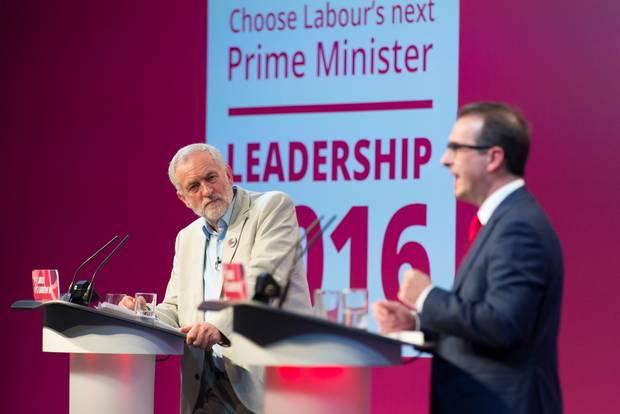
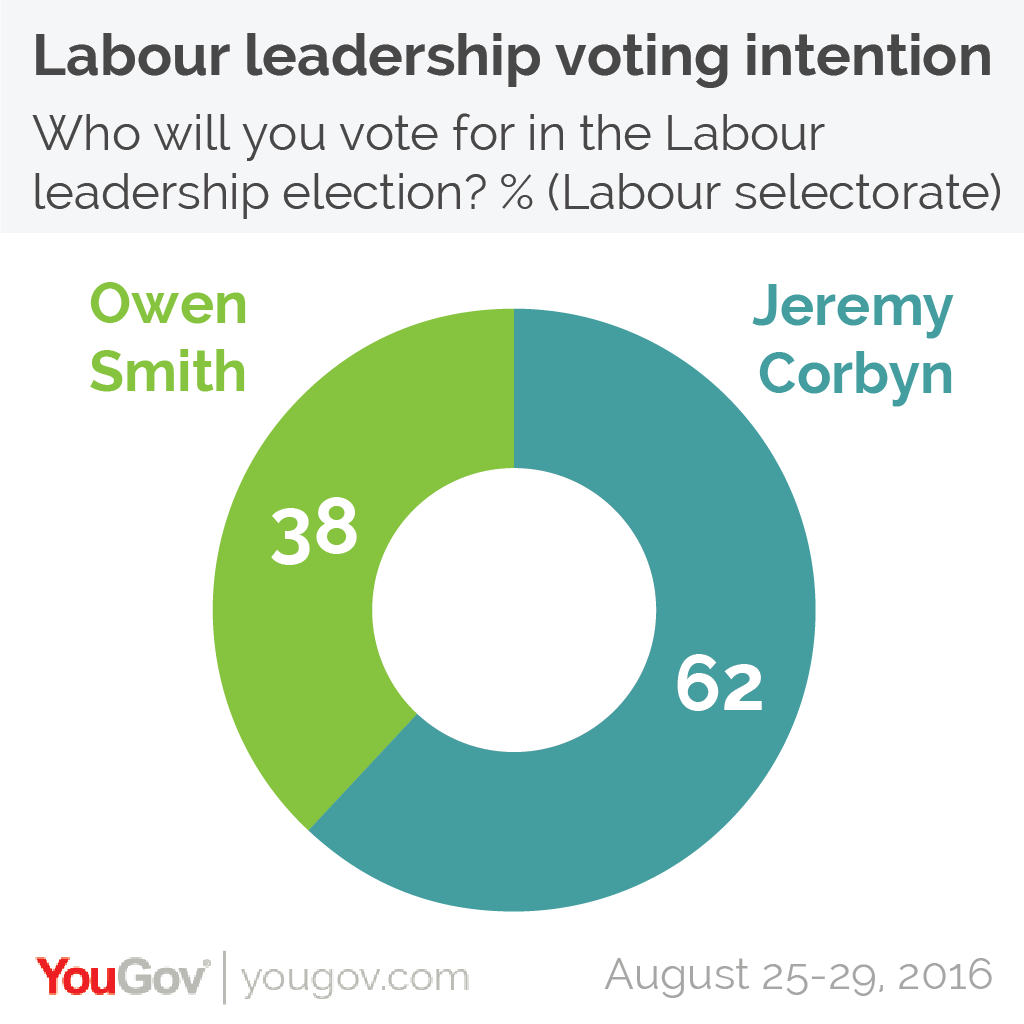
Jeremy Corbyn looks set to retain his leadership of the Labour party ahead of next month’s vote, according to the latest poll from YouGov.
The latest figures, polled between August 25 – 29, put Corbyn in the lead with 62 percent against Owen Smith’s 38 percent. YouGov’s figures proved reliable in the last Labour leadership contest last summer, suggesting Corbyn would win with 59 percent of first preference votes.
Latest YouGov poll
Currently 70 percent of registered supporters have said they will back Corbyn, who also has the majority support of trade union affiliates. Corbyn’s case is helped by the 57 percent of people saying they believed he is doing a good job, with 32 percent saying that, should Labour split after a Corbyn victory, they would follow him to a new party.
A leadership election contest was called after criticism of Jeremy Corbyn’s lacklustre approach to the EU referendum campaign provoked mass resignations and a vote of no confidence. Several other Labour MPs announced their intention to run against him, with Owen Smith remaining the only one still in the race.
Ballots were mailed out to eligible voters on August 22nd, and the ballot will close on September 21st at 12pm. The result will be announced at the Labour party conference on September 24th.
888 reports strong first half results
Gambling group 888 Holdings reported “impressive” revenue increase in the first six months of the year, hitting company records.
Pre-tax profits were up 39 percent, achieving record revenues of $262 million – up 19 percent on the same period last year.
Active players rose 35 percent in Q2 of 2016, alongside strong European growth in both Spain and Italy, where revenues rose over 40 percent.
Itai Frieberger, 888’s CEO, called the performance “encouraging”, and “remains confident of delivering against expectations for the full year”.
888 (LON:888) are trading up 3.72 percent at 223.00 (0947GMT).
House prices up in August – Nationwide
House prices rose 0.6 percent in August, despite recent signs of a slowdown in the housing market in the wake of Brexit.
The figures, released by Nationwide in their most recent House Price Index, show an annual rise of 0.4 percent on July, up to 5.6 percent.
Nationwide said the unexpected rise could be explained by a decline in demand being matched by weakness in supply.
Robert Gardner, Nationwide’s chief economist, commented:
“Surveyors report that instructions to sell have also declined and the stock of properties on the market remains close to thirty-year lows. This helps to explain why the pace of house price growth has remained broadly stable.”
Amazon launches Dash button in the UK
Amazon has launched its Dash button in the UK, allowing consumers to instantly order household items at the push of a button within their home.
The wireless buttons can be set next to items in the house, including toilet roll, nappies and condoms, and instantly set up on order for new products when pushed.
They are linked on to the customers’ Amazon accounts, and cost £4.99 each. The director of Amazon Dash, Daniel Rausch, said:
“There is no retail therapy in buying toilet roll or bin bags. It’s just work. We wanted to take the one-click experience from our website and put it right where people need it most, in the home, near the products that run out. So that buying them is no longer work.”
UK start-ups are increasingly turning to equity crowdfunding through CrowdCube to establish or grow their business.
Ethical sportswear brand Sundried and healthtech start-up Cupris have become the latest successfully funded projects on CrowdCube, one of the UK’s leading equity crowdfunding platform.
The London based start-up produces “ethical active-wear products” and launched its first collection in June this year. It is supported by the Low Carbon Innovation Fund.
Through its campaign on CrowdCube, the business hoped to raise £125,000, offering 12.11% in equity, to expand its business and gain a greater share of the UK’s booming sportswear market.
The campaign ended last week, having raised £176,060, 141% of their targeted amount. 208 investors participating in the funding campaign. The largest single contribution of £40,000 amounts to more than a fifth of the full amount raised.
Also a London based start-up, Cupris has designed a “medical device attachment” which can help diagnose hearing loss and other ear conditions with the help of a smartphone.
With the application, the healthtech business hopes to gain a share in the fast growing international online medical consultation market, which is currently estimated to be worth $60 billion for developed countries.
In 2015 the company won the “Signs and Symptoms” Category at the AXA PPP HealthTech and You Awards.
Cupris also won the “Value and Improvement in Telehealth” Award at the HSJ Value in Healthcare Awards 2015.
It is partnered with the NHS and Innovate UK, the technology strategy board.
Their campaign on CrowdCube targeted £500,000, offering 17.58% in equity. It closed three days ago having raised £548,260 from 380 investors. The highest single contribution figure stood at £200,000.
Other UK start-ups are also performing well in driving their equity crowdfunding campaigns to success.
Graphene Composite is a NanoTech start-up hoping to create “one of the strongest, lightest, most resilient materials ever made”. It raised 149% of their target amount of £100,000 with 17 days to go in their crowdfunding campaign on CrowdCube. The funds will help the early stage business to develop their product further and patent the prototype.
RiskSave Technologies, a company building a new investment platform, only started their campaign last week but have since raised over 80% of their targeted £150,000, before the end of the first week. With another 23 days to go, the campaign has already raised 106% of their initial target from 89 investors.