
Delta Air Lines shares fall as salary increases impact profits

Shares in American airline Delta (NYSE:DAL) fell on Thursday, after announcing a 20 percent fall in profits for the 2017 financial year.
The group made a profit of $1.22 billion over the past 12 months, a fall of just over 20 percent from last year’s figure of $1.55 billion.
This came despite a 2.5 percent increase in passenger unit revenue, and a 0.4 percent larger capacity in the second quarter of 2017. The airline had to contend with a rise in operating expenses during the final quarter, as higher salaries and fuel costs dug into profits.
“The June quarter represented the peak for non-fuel cost pressures this year and we expect our CASM (cost per available seat mile) trajectory to moderate to approximately 2 percent for the September quarter,” Delta Chief Financial Officer Paul Jacobson said in a statement.
Delta Air Lines is the second largest US airline by passenger traffic, and have consistently stayed clear of competing as a budget airline. Instead, it has marketed itself “a carrier of choice”, with better service, seating, in-flight entertainment and loyalty programmes.
Shares in Delta sunk on Thursday, and are currently trading down 1.10 percent at 54.86 (1515GMT).
Oil prices sag after Aramco chief warns on lack of investment

Oil prices fell on Monday after Aramco chief Amin Nasser warned that low investment in the industry could lead to a supply shortage.
The oil industry has lacked investment of late as money is poured into the development of alternative energy sources. However, Nasser said it was ‘premature’ to assume that shale oil and alternative energy resources can be developed quickly to replace oil and gas”
“New discoveries are also on a major downward trend. The volume of conventional oil discovered around the world over the past four years has more than halved compared with the previous four,” Nasser said.
WTI Crude is currently down 0.88 percent at $43.84, with Brent Crude down 0.77 percent at $46.35 (1046GMT).
Chinese markets up as inflation data remains steady

Inflation in China remained steady in June, in line with analysts expectations and sending Asian markets up at the start of the week.
The producer price index (PPI) rose 5.5 percent in June year-on-year, according to the National Bureau of Statistics (NBS), unchanged on May’s figure.
Consumer prices rose 1.5 percent, in line with expectations, giving investors confidence that the country will meet its 6.5 percent growth rate for 2017.
However Capital Economics analyst Julian Evans-Pritchard told the BBC that the positive figures may not last:
“With slowing credit growth likely to weigh on economic activity in coming quarters we think that, volatility in food prices aside, inflation still has further to fall.
“This will disappoint those hoping for a sustained period of reflation that could help to erode corporate debt burdens.”
US non-farm payroll figure beats expectations at 220,000
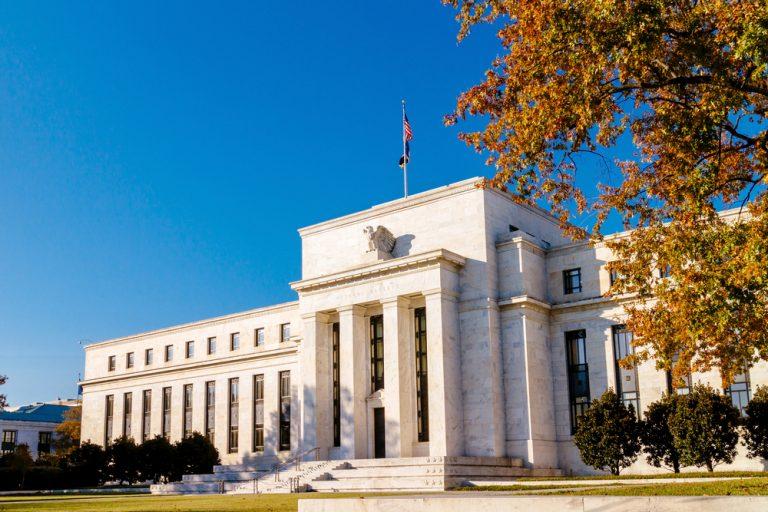
The US non-farm payroll figure came in at 220,000 for the month of June, far higher than analysts were expecting.
The figures, published by the Bureau of Labor Statistics, showed the unemployment rate remained around the same at 4.4 percent. Average hourly earnings (over the year) were up 2.5%.
The statement also revised the figures to April and May upwards, with the US economy creating 207,000 new jobs during April, rather than the 174,000 originally reported. In May, companies created 152,000 new roles, higher than the initial reading of 138,000.
Kully Samra, UK managing director at Charles Schwab, told the BBC that the US employment figures have “surpassed expectations”:
He says: “With only one more rate hike expected this year, investors should turn their attention to the Fed, which will soon attempt to shrink its behemoth $4.5 trillion balance sheet. Success would be if the Fed can gracefully divert the excess liquidity it’s created from financial assets to the real economy.”
UK economic data disappoints, sends sterling down

A spate of disappointing economic data was released by the Office for National Statistics on Thursday, causing the value of sterling to sink.
Output in both the manufacturing and construction sectors fell in May, with manufacturing falling by 1.1 percent in the 3 months to May, the largest 3-month on 3-month fall since July 2015 and below market expectations.
Total real construction output also fell by 1.2 percent on both a monthly and 3-month on 3-month basis in May. The figure is now 2.9 percent below January’s recent peak and marks the second monthly decline in total real construction output.
The total trade deficit widened by £2.0 billion to £8.9 billion in the 3 months to May, driven by large increase in imports in March and then a further increase in May.
Commenting on today’s short-term indicator figures, ONS senior statistician Kate Davies said:
“Activity in the production sector was broadly unchanged in May, though the underlying position is weaker with both total output and manufacturing falling in the three months to May compared with the previous three months. Construction output also fell on a three-monthly basis, though this is after several years of growth.
“Meanwhile the total trade deficit widened by £2 billion in the most recent three months, primarily due to high imports especially from outside the European Union.”
However, reacting to the latest economic figures, Peter Dixon, an economist at Commerzbank, said: “It’s all building up a pattern here that says the economy is clearly losing momentum.
“It’s not pointing to a particularly dynamic second quarter. Under those circumstances, the timing of the hawks on the Monetary Policy Committee pushing for a rate hike doesn’t look great.”
Sterling is currently trading down 0.69 percent against the dollar and down 0.47 percent against the Euro.
Crowd2Fund’s Innovative Finance ISA Exchange booms

Crowd2Fund’s Exchange, a secondary market for trading crowdfunded investments, was first launched 18 months ago. It is benefiting from a significant increase in activity in line with the platform’s exponential growth this year.
The Exchange is attracting increasing investment to the platform due to the ease with which investors can sell their investments to others. Additionally, investors are able to diversify and manage their risk through trading existing loans, either selling their own or buying loans at prices based on market demand. The Exchange’s activity is an unmoderated, free market approach, with no intervention from Crowd2Fund.
In the quarter ending on the 31st of May 2017, the total value of all investments transacted through the Exchange increased by 452% from the previous quarter. The Crowd2Fund investor community now trades hundreds of thousands of pounds worth of investments weekly. Until now, crowdfunding had been an illiquid market where investors had been unable to access their cash; the Exchange has changed that.
Crowd2Fund’s primary market is currently trading at an estimated 9.3% APR, with the secondary market trading at an average of 6.5% APR before fees and bad debt. All returns are tax free if they are held within the Innovative Finance ISA.
How does The Exchange work?
The Exchange allows crowdfunded investments to be resold to other investors. The sale price of the investment listed is defined by the seller; this can be impacted by how quickly the seller wants to sell their investment and market demand at the time of sale. Buyers can easily browse opportunities listed on the Exchange, review the loans’ historic performance and make purchases. Buyers should be aware that the risk of investments defaulting is still a possibility and that the APR offered may not be representative of the level of risk of the opportunity they are buying. As such, we strongly suggest investors still look at each opportunity and do their usual due diligence.Investors can make profits and losses when trading
Many in the Crowd2Fund investor community are generating returns by selling investments to others at a premium. This is made possible due to the demand of opportunities currently exceeding the availability of campaigns fundraising on the main market.
Here is an example of how the Exchange pricing works:
Let’s say an investor lent £1000 to a business, which could potentially be worth £1200 once it matures, and would like access to their capital early: they can trade this investment on the Exchange. If market demand is high, they can sell it at a lower price than the full value of the loan, or a higher price, should market demand be low.
So if the investor sells the loan on the Exchange for £1,080, they would make £80 from the sale and the buyer would still make £120 after the loan matures. The price difference is shown as original APR and offered APR. If market demand is weak, then these investments can also be sold at a loss, should investors need to access their capital quickly.
Alongside diversification, another reason an investor may pay a premium on an investment is that the Exchange may give them some assurance of the credit worthiness of businesses. This is because items listed on the Exchange show their historic performance on repayments.
It’s ‘social finance’…
The Exchange has a social news feed which provides a real-time view of all platform activity. Members of the community are able to see which investments are being traded, watch campaigns on the main market, and follow other investors’ trades. Being able to monitor the frequency of trades and who is buying and selling them acts as an additional layer of purchasing power to investors, as well as adding another layer of due diligence and transparency, which compliments investors’ ability to further scrutinise investment opportunities.Exchange statistics
The 452% quarter on quarter increase in activity on the Exchange is mirrored by the increase in demand on the primary market, which increased by 390% in the same period. This is another reason for the increase in transaction volume through the Exchange which has now reached hundreds of thousands of pounds per week. Chris Hancock, Crowd2Fund CEO said: “The Exchange offers a brilliant mechanic to attract investment to Entrepreneurs and fast growing businesses, as investors feel more comfortable that they can access their capital if needed. “Over the next few months we will be enabling our Artificial Intelligence system, ‘Smart-Invest’, to access Exchange investments, introducing a new dynamic to investing and allowing users to automatically make investments on the Exchange”Worldpay shares sink after agreeing takeover deal with Vantiv
UK payments firm Worldpay (LON:WPG) has agreed to be taken over by US rival Vantiv, after US bank JP Morgan dropped out of the running.
Earlier this week it was announced that both suitors, JP Morgan and Vantiv, were interested in bidding for the company. However on Wednesday Worldpay announced it had accepted an offer from payments giant Vantiv, in a deal expected to be worth around £7.7 billion.
The Vantiv deal values Worldpay at £3.85 per share, a 19 percent premium on their value on Monday.
In a brief statement, JP Morgan withdrew from the running:
“JP Morgan Chase & Co. (“J.P. Morgan”) notes the announcement by Worldpay Group plc (“Worldpay”) on 4 July 2017. In response to an invitation from Worldpay, J.P. Morgan was at a very early stage in considering whether or not to make an offer or the terms of any offer for Worldpay.
“Following preliminary considerations, J.P. Morgan hereby announces that it does not intend to make an offer for Worldpay. J.P. Morgan continues to hold Worldpay in high regard.”
Worldpay shares are currently trading down 7.92 percent on the news at 375.60 (1351GMT). UK productivity falls as service sector reports slump in confidence

UK productivity fell for the first time since 2015 in the first quarter, as political and economic uncertainty impacts on another key figure.
The productivity of UK workers fallen to levels not seen since before the financial crisis levels, according to official figures.
Hourly output fell by 0.5 percent, figures from the Office for National Statistics (ONS) showed on Wednesday, 0.4 percent below the figure seen at the end of 2007. ONS head of productivity Philip Wales said: “UK labour productivity growth has struggled since the 2008 economic downturn, and the fall in the first quarter of 2017 brings to an end a recent run of quarters of positive growth.”Service sector growth slumps
Service sector companies also reported a slump in growth on Wednesday, representing a downturn in one of the economy’s key figures. Service sector companies make up 80 percent of the UK’s economic output, but reported that they had experienced subdued business and consumer confidence in June. The UK Services PMI dropped to to 53.4 in June, down from 53.8 in May.Worldpay shares jump 30pc on takeover bids

Worldpay (LON:WPG) shares jumped nearly 30 percent on Tuesday, after it announced it was considering takeover offers from payment handler Vantiv and JPMorgan Chase.
In a statement the company made it clear it was considering all options: “There can be no certainty either that an offer will be made nor as to the terms of any offer, if made. A further announcement will be made if appropriate.”
Worldpay, the payments processing firm chaired by City veteran Sir Michael Rake, saw shares jump nearly 30 percent on the news, valuing the company at around $8 billion.
It is one of the market leaders in the UK payments industry, handling more than 40 percent of all transactions and employing 5,000 people at its London headquarters.
Its shares are currently trading up 27.86 percent at 408.50 (1357GMT).
Construction sector slows in June as Brexit fallout continues – PMI

Growth in the UK construction sector slowed in June, as uncertainty from Brexit and the general election continues to impact on the economy.
Markit’s construction PMI figure, released on Tuesday, fell to 54.8 in June from from 56.0 in May. Any figure above 50.0 represents growth.
A survey by IHS Markit showed the result sparked “renewed caution”, and caused sterling to drop to a a six-day low. Sterling is currently trading down 0.15 percent against the dollar, but up 0.2 percent against the Euro.
Mike Chappell, global corporates managing director for construction at Lloyds Bank Commercial Banking, commented:
“The headwinds prompted by the EU referendum a year ago continue to challenge the sector. Input price inflation is still an issue and there remain concerns about how the UK’s exit from the EU will affect construction firms, given their reliance on European labour.”