
Poll shows post Brexit hiring freeze and redundancies
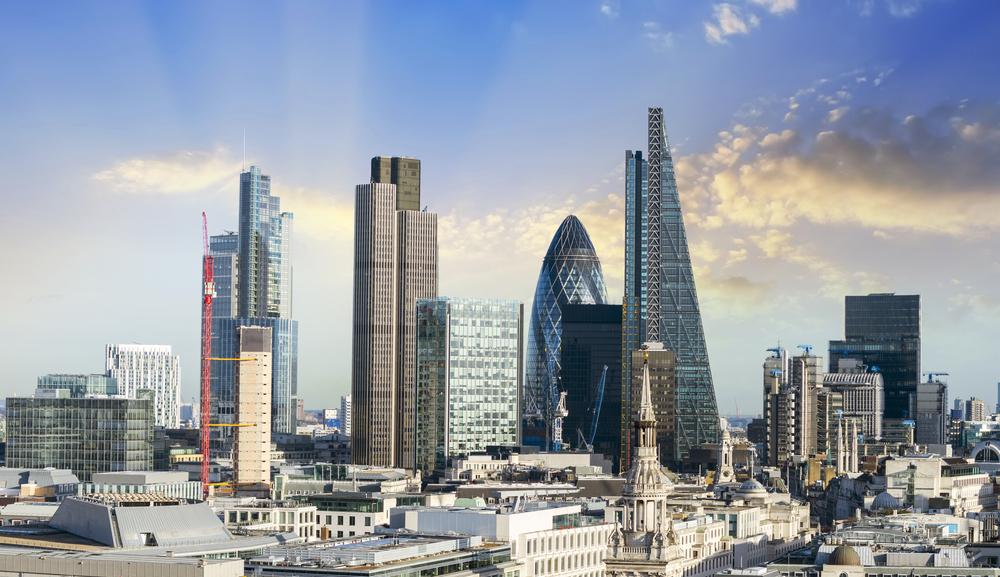
The majority of business leaders called for a remain vote and the shock outcome of Thursday’s Referendum result has left many feeling anxious about the future of their businesses and investment plans.
HSBC has recently announced that it will move a portion of its 48,000 UK based employees into Paris if the UK leaves the single market in post Brexit negotiations. Furthermore, financial giants such as Morgan Stanley, JPMorgan and BNP Paribas are reported to have already begun plans to reduce the size of their companies in the UK following the vote as fears over London’s status as the main financial capital in the world grow.
Amidst the uncertainty and a market, Chancellor George Osbourne made a public speech before markets opened this morning in an attempt to calm investors in the capital.
“Britain is ready to confront what the future holds for us from a position of strength. Growth has been robust and employment is at a record high. Our economy is now about as strong as it could be to confront the challenge the country now faces,” he said
His speech follows the release of a poll this morning conducted by the Institute of Directors (IoD) which began on Friday immediately after the result that has since polled over 1000 business leaders.
The results from the poll show that 64% of business leaders around the country feel that a Brexit vote will harm their business as results show that post Brexit plans are already on the table with 24% of members planning on freezing recruitment and 5% of companies saying they will make redundancies.
Simon Walker, director general of the Institute of Directors, said:
“Businesses will be busy working out how they are going to adapt and succeed after the referendum result. But we can’t sugar-coat this, many of our members are feeling anxious.
A majority of business leaders think the vote for Brexit is bad for them, and as a result plans for investment and hiring are being put on hold or scaled back.”
The concluding outcome of the poll showed that three quarters of Iod members said their top priority is to protect the British economy following the reaction of the financial markets that has seen the pound drop to it’s lowest since 1985.
27/06/2016
The Corbyn Crisis: who’s in and who’s out
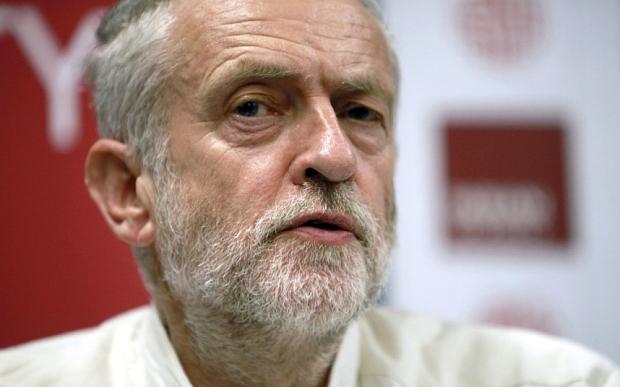
Labour leader Jeremy Corbyn now heads a party in crisis, with nearly half of his shadow cabinet walking out in protest against his handling of the EU referendum.
The Labour leader stood defiant in his position on Monday, despite criticism of his weak leadership during the referendum campaign. Shadow health secretary Heidi Alexander resigned yesterday, with prominent frontbencher Stephen Kinnock following her lead this morning. In a statement, Kinnock expressed his respect for Corbyn as a leader, before saying that his “half-hearted and lacklustre role” in the referendum led him to the “conclusion that [Corbyn is] no longer able to lead our party.”
These resignations were then followed by latest shadow foreign minister Diana Johnson, shadow civil society minister Anna Turley, shadow defence minister Toby Perkins and Wayne David, the shadow Cabinet Office, Scotland and justice minister.
Despite his cabinet’s lack of confidence Corbyn will continue as Labour leader for the foreseeable future, stating on Sunday that he would not “betray the trust” of the people who voted for him and vowed to stand against anyone challenging him for the leadership.
Jeremy Corbyn has reappointed ministers as fast as they can resign, filling at least ten positions so far; these include the promotion of Diane Abbot to shadow health secretary, Emily Thornberry to shadow foreign secretary and Clive Lewis to shadow defence.
27/06/2016
Easyjet shares tank on post-Brexit profit warning
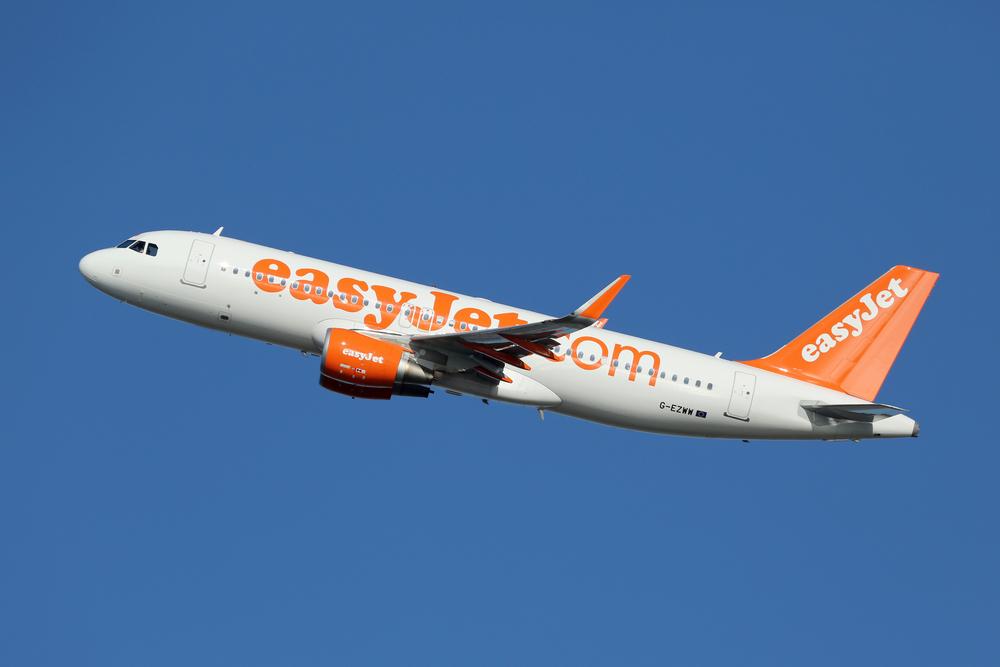
Easyjet shares continued Friday’s downward trend today after issuing a warning on third-quarter profit.
The company have seen demand hit by several issues this year, including French air traffic traffic strikes, congestion at Gatwick airport and the Egyptair tragedy, which led to 1061 flight cancellations.
Pre-tax profit in the three months to the end of June will be £28 million lower than expected, with revenue per seat falling 8.6 percent. The company will provide further guidance on full year profit expectations on July 21st, when it publishes its third quarter results.
“Following the outcome of the EU referendum, we also anticipate that additional economic and consumer uncertainty is likely this summer and as a consequence it is expected that revenue per seat at constant currency in the second half will now be down by at least a mid-single digit percentage compared to the second half of 2015,” easyJet said.
Easyjet are currently trading down 16.37 percent at 1099.00 (0938GMT).
27/06/2016
Post-Brexit Round Up: Osborne supports economy, global shares mixed, hiring will slow

Osborne expresses confidence in UK economy
Chancellor George Osborne said this morning that the result of Thursday’s EU referendum is unlikely to have major effects on the economy, but if it should, Britain is strong enough to cope.
Osborne spoke publicly for the first time since the vote, echoing the opinion expressed by Bank of England governor Mark Carney on Friday that the UK economy is well-equipped to deal with future volatility.
He argued that the UK is currently in a “position of strength”, continuing:
“Our economy is about as strong as it could be to confront the challenge our country now facts.”
Global shares start the day mixed
Global shares are mixed after Friday’s volatility, with Asian shares split and the FTSE opening slightly down.
Both the Shanghai Composite and the Nikkei 225 finished the day on a high, up 1.45 percent and 2.39 percent respectively. European shares opened largely down, with the DAX down 0.45 percent and the FTSE down 0.88 percent.
UK housebuilders have taken the biggest hit since news of the referendum results broke, with Taylor Wimpey and Barratt Developments tanking. However, given Friday’s extreme volatility and dire warnings for the markets in the event of a Leave vote, this range is likely to be a sigh of relief for many.
British companies slow down hiring
British companies are planning to freeze hiring in the wake of the EU referendum, according to The Institute of Directors.
The IoD surveyed 1,000 of its members to find that a quarter planned to freeze recruitment in the near future, with just a third maintaining their current hiring place. 5 percent of members planned to cute jobs, with two thirds saying the outcome would have negative repercussions for their business.
Simon Walker, director general of the Institute of Directors, told the BBC’s Today programme: “Business leaders are very, very concerned. Nearly half of them expect the other member states to punish Britain.27/06/2016
Brexit Leadership odds
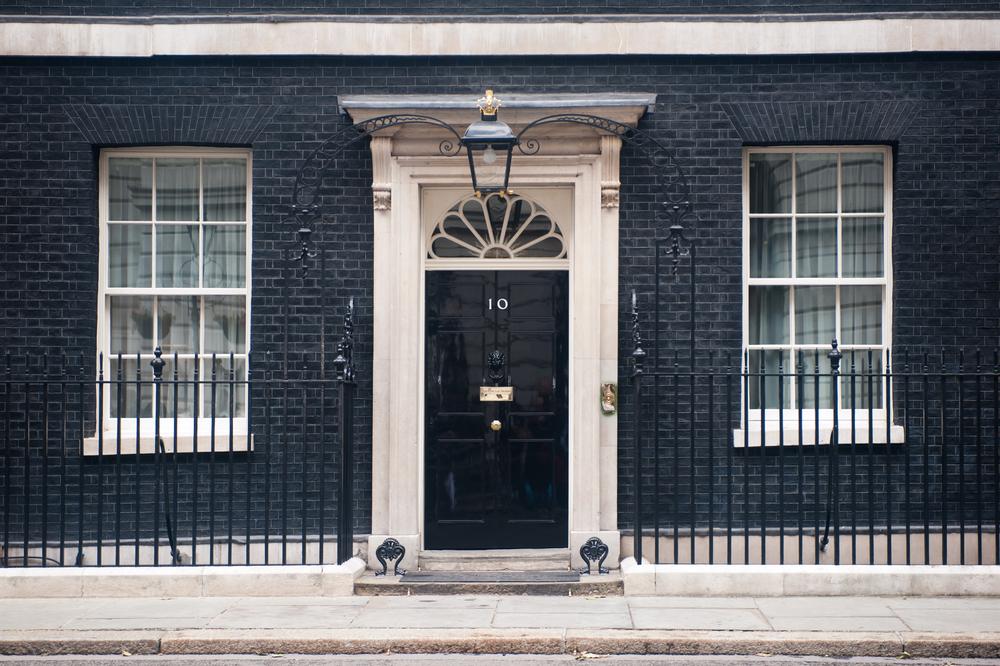
In one of the most dramatic and historic nights in British politics, Britain has decided to leave the EU. Speculation has now begun over who will lead the Brexit after David Cameron steps down later this year.
Despite Cameron’s efforts to persuade the public to remain a member of the EU, the nation has voted against his plea by 52% to 48%. In an emotional statement made outside Downing Street this morning, Mr Cameron acknowledged that the country is in need of ‘fresh leadership’ and said he has informed the Queen that Britain should have a new Prime Minister arranged by the start of the Conservative conference in October.
As discussions begin over who will be the next conservative party leader, who are the bookies backing this morning?
Boris Johnson:
As leader of the leave campaign and one of the most recognisable personalities in British politics, former London mayor now stands on firm ground with many MPs backing his leave campaign to take the lead of the party.
Ladbrokes odds: 4/5
Theresa May:
One of few household MPs to keep her head down during the EU debate, the home secretary is regarded as a unity candidate and may be best positioned to challenge the leadership if a Brexiteer is in the running.
Ladbrokes odds: 3/1
Michael Gove:
A formidable figure beside Boris Johnson in the leave campaign, Mr Gove managed to rally plenty of support during his first live TV debate and led to leadership speculation. He has publicly stated that he is not interested in 10 Downing Street – but could he be Boris Johnson’s closest ally if he were to run for leadership?
Ladbrokes odds: 5/1
Andrea Leadsom:
The Conservative MP stunned remain campaigners after her successful live TV debate in Wembley earlier this week, sharing the stage with Boris Johnson. Her calm manner and financially literate speeches gave the former banker an in to a potential career move that could see her knocking on the door of number 11.
Ladbrokes odds: 10/1
George Osbourne:
In previous years he has been dubbed as the most obvious successor to David Cameron. However, a failed campaign alongside his colleges may see the chancellor’s hopes of moving into No 10 slashed. A post-referendum reshuffle may mean he needs to seek a new cabinet position to stand a chance of being a future Prime Minister.
Ladbrokes odds: 12/1
24/06/2016
China’s rising debt – New concerns post Brexit

As the UK decides to leave the Eurpean Union, markets plummet in Asia. This could be especially worrying for China after the country only recently, and as it looks now only for a short time, defeated great concerns about its rising debt levels.
China’s rising debt
Chinese rising debt first became a major concern in 2014 when debt levels reached US$ 28 trillion, nearly 282% of its’ GDP. Only Greece, Portugal, Ireland and Singapore saw greater debt to GDP ratios. China had fuelled its impressive economic rise since the 1990s through foreign investment and exports, but its’ economy had started to slow after a 2007 peak at 14 trillion GDP and fell below US$ 8 trillion in 2014 which caused concern over China’s ability to service its’ debt. Nether the less China has over the past two year managed to defend its’ market position and the first quarter of 2016 saw the highest rate of growth since the end of 2014. GDP has risen above US$ 8 trillion again, leading many to believe that the Chinese economy may be on a way to recovery. However, new gained strength in the economy was once again funded through borrowing, with bad loans being serviced by new loans and the Chinese government investing heavily in construction and investment through a further expansion of credit. Debt levels are still at 240% of GDP and public debt has further risen from 58% in 2014 to 65% in 2016. These figures may even be an underestimate of real levels as local governments, necessitated to borrow due to low tax incomes, often write of borrowing as corporate debt due to legal barriers to local government borrowing.Asian markets plummet
China may have hoped they avoided painful structural adjustments to decrease debt levels for a prolonged period of time, but last night’s Brexit results may destroy any hope that he country has for now escaped the critical stage. Asian markets have started to plummet with Tokyo, Hong Kong and Sydney loosing 7.2 percent, 4.7 percent and 3.18 percent respectively. The Chinese and communist party controlled news wire Xinhua had previously estimated that a Brexit vote would likely put downward pressure on global markets and could cause Chinese markets to drop 5 to 10% and first motions in the market have shown such fears to be true. This development may result in the debate over the concerns around Chinese rising debt to be wide open again, especially considering the costly venture of currency manipulation China was involved in throughout the past two years, which lost China US$ 8 billion of its impressive accrual of foreign exchange reserves.China’s foreing exchange reserves
Like many other Asian countries China started to accumulate foreign exchange reserve after the Asian Financial Crisis in the late 1990s and by 2014 its’ reserves stood close to US$ 4 trillion, which is more than the amount of all foreign exchange reserve of the next six biggest reserves held by other countries combined and equalled nearly half the Chinese GDP. But as of 2016 Chinese foreign exchange reserves stand at only US$ 3.2 trillion and in January this year alone a further US$ 99.5 billion. Much of these losses can be attributed to a miscalculation on the events and American actions post the Global Financial Crisis. Post the global financial crisis, the US greatly depreciated its’ currency through a number of waves of quantitative easing. China, trying to maintain its’ peg to the dollar and keep its’ competitiveness, engaged in major currency manipulation to hinder its’ currency from appreciating. However, the US did surprisingly well in soaking up the added liquidity and by 2014 the dollar was getting stronger again. Not having anticipated these developments, many countries such as Brazil saw themselves in trouble as their currencies suddenly started to plummet. In order for China not to follow Brazil’s path it had to use vast amounts of its’ foreign exchange reserves to prop up its’ currency.What this could mean for the future
The change in foreign exchange reserves, in respect to the 2014 position, may have major consequences for China, should rising debt levels become a concern again. While in 2014, the vast amount of foreign reserves may have calmed investors and assured that confidence in China could be sustained, by now China has already lost much of its’ reserves to prop up its’ currency. Should the talk about China’s debt spark up again in the eye of trembling Asian markets, China may this time not find itself in the position to defend its’ currency and economic position. It remains to see if last night’s Brexit vote is to cause long term downwards effects on world markets and how the Chinese Central Bank will deal with such events.Katharina Fleiner 24/06/2016
David Cameron resigns: the referendum’s key figures
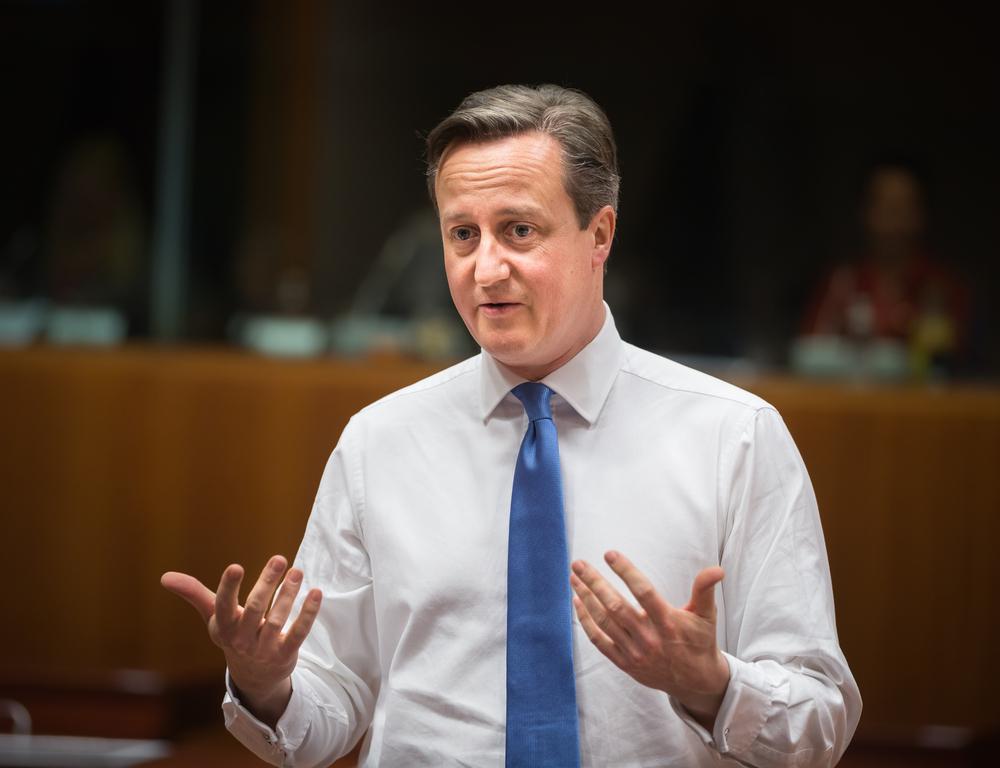
The result was announced this morning: Britain will no longer be part of the European Union. But the final count, standing at 51.9 percent Leave and 48.1 percent Remain, left many voters dissatisfied.
1) 51.9% Leave, 48.1% Remain
The precise figures of the referendum have led to the resignation of Prime Minister David Cameron, whose key belief that Britain is stronger in the European Union will now contrast heavily with that of the country.
He told press outside Downing Street that he was “honoured to have been prime minister of this country for six years,” before admitting there needs to be “the captain that steers our country to the next destination”.
A new election will doubtless add to the country’s economic fragility and further volatility of the Pound.
2) Young – Old divide
The contrast between the opinions of British young people and those above 50 was staggering. 64% of those between 18 and 24 voted Remain, compared to just 33% of those of 65.
These figures suggest a strong divide along age lines, despite young people being arguably most affected by the outcome.
3) Scotland/Ireland – England
All 32 local authorities in Scotland voted to Remain, with a stronger than average 62 percent in favour of Remain. Northern Ireland also voted heavily Remain, marking a bleak divide between the interests of England and Wales and the rest of the UK. Given these figures, suggestions of another referendum on Scottish membership of the UK have already raised, with Scottish leader Nicola Sturgeon confirming that Scotland wants to remain part of the EU. Deputy First Minister of Northern Ireland Martin McGuinness has also called for a border poll on a united Ireland.
24/06/2016
London markets to open, but face challenging day

The London Stock Exchange will open as normal today following a Leave win in the EU referendum, Reuters has reported.
There had been suggestions overnight that the markets would stay closed today to allow volatility to subside. Markets are likely to take a hammering today, with those in Asia having already faced a difficult day; Tokyo’s main index, the Nikkei 225, closed down nearly 8 percent as the votes were counted.
Sterling has dropped to almost unprecedented levels, plummeting over 10 percent to hit a 31-year low; bonds were also sold off sharply, immediately affecting the cost of government borrowing. Traders worked throughout the night yesterday, attempting to contain losses as volatility swept across all sectors.
24/06/2016
BREAKING: Britain set to leave the EU
With 70 percent of votes being counted, Britain is set to leave the European Union.
Leave took the lead shortly after counting began, with Remain struggling to catch up. Percentages stayed within a slim margin, however, with Leave currently having 51.7 percent of the vote. UK Investor predicts the result to be 48 percent – 52 percent in Leave’s favour.
Markets have already started moving downwards, with the pound hitting its lowest level against the dollar since 1985. Asian markets have been hit heavily, with the Hang Seng down 4.78 percent and the Nikkei 225 down 6.68 percent. (0459GMT).
Scotland voted most decisively in favour of Remain, triggering concerns of another referendum on Scottish Independence in the near future. Both Wales and England leant towards Out, swinging the vote in the Leave campaign’s favour.
Turnout was strong throughout the country, hitting 72 percent; higher than that achieved in the last General Election.
Results are still being counted and are not yet final.
DS Smith pre tax profit up 1%
DS Smith (LON:SMDS) today announced a pre-tax profit of £201m up 1% from the previous year for the year ended 30 April 2016. The FTSE 250 Company also said that over the 12 month period revenue rose 6% to £4,066m compared to £3,820m the previous year.
Adjusted operating profits increased by 13% to £379m from £355m as adjusted earnings per share rose 12% to 27.0p from 24.3p a year earlier.
The Company has recommended a final dividend price of 8.8p alongside the interim dividend of 4.0p which gives a total dividend for the year of 12.8p per share. This constitutes a 12% growth from the previous year.
Miles Roberts, Group Chief Executive said:
“We are delighted to report another year of strong growth underpinned by ten per cent organic growth in our adjusted operating profit supplemented by six per cent from acquisitions. Strong financial discipline allows us again to deliver on all our priorities…
Looking ahead, while economic conditions remain uncertain, our innovation-led offering and the scale of our business means that we are confident about further growth and sustainable returns in the years ahead.”
DS Smith said it has proposed two further acquisitions following the success of its recent five acquisitions that are performing ahead of expectations. As part of it’s expansion the company seeks to buy UK-based Creo , a specialist point of sale display and Portuguese packaging company Gopaca that will increase the company’s position in the European market.
At 1:24PM BST DS Smith PLC traded at 412.37 + 25.47 (6.58%)