
IMF cuts forecasts on global growth
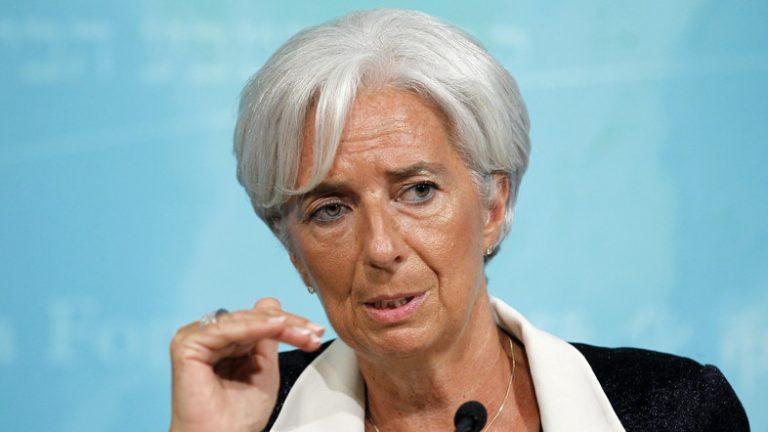
The International Monetary Fund has once again cut its Global Growth Forecasts for 2016/17, due to the consensus that last month’s Brexit vote will impact negatively on economic growth around the world.
Goldman Sachs outperforms expectations in Q2 earnings
Although currently operating in the slowest period for the investment banking sector since 2009, Goldman Sachs managed to outperform expectations of earnings in their second quarter.
Earnings per share, expected at $3 per share, came in at $3.72. Revenue was as high as $7.93 billion, $450 million greater than expected. Net earnings stand at $1.82 billion for the quarter.
The Financial Times writes that the 88 percent rise in earnings per share in comparison to the first quarter stems from strong performance from undertaken mergers, acquisitions and debt-underwriting.
Goldman Sachs’ chairman and chief executive officer said: “Despite the uncertainty created by Brexit, we achieve solid results by continuing to serve our clients across our diversified franchise and by managing our business efficiently.”
Goldman’s earnings were in line with the positive trend set by other American Banks. JP Morgan easily beat estimations of earnings for the second quarter last week. Wells Fargo, Citi Group and BoA matched expectations. Revenues are still low across the sector, with all banks recording earnings lower than last years. However, they have started to recover from a low in the first quarter of this year. In the start of the year, particularly Goldman Sachs, was hit by exposure volatile assets. It remains to see if investor uncertainty post Brexit will have an impact on earnings in the coming quarter.Netflix price hike see’s shares fall 13%

Netflix, Inc. (NASDAQ:NFLX) today watched it’s shares plummet 13% as the company announced it had only added 1.7m subscribers worldwide in its Q2 update. Netflix had forecasted a growth of 2.5m members compared to the same time last year where they obtained 3.3m members.
As of June 2016, Netflix has 83m members worldwide, yet was only able to add 160,000 US subscribers. This was its lowest quarterly gain from the US market in almost 5 years. The company also added 1.7m new international customers compared to a forecast of 2.5m in April. International markets now make up 43% of Netflix’s overall subscribers.
The streaming service was also below sales targets ending Q2 with an operating income of $70m and a net income of $41m against a projected sum of $47m and $9m.
Netflix said:
“We are growing, but not as fast as we would like or have been. Disrupting a big market can be bumpy, but the opportunity ahead is as big as ever and we continue to improve every aspect of our business
Unfortunately, this year the regulatory climate in China for our service has become more challenging. Disney’s streaming service, launched in conjunction with Alibaba, was closed down, as was Apple’s movie offering. We continue to explore options and, in the meantime, have plenty of work to do in our newly opened markets”
Netflix said that the main reason for the drop in membership is due to a planned price hike that was announced in 2014. In May this year, customers were reminded that the new plans to increase the premium price of $7.99 by $2 will soon be imposed which led to a high wave of unsubscribes that ‘ticked up slightly and unexpectedly’
As a result of the higher prices, revenue for the Q2 rose 28% to $2.1bn yet this this could not prevent a fall in shareholders as the prospect of long term growth weakened. In response, Netflix said it expects to add 300,000 US subscribers alongside 2m new members oversea in the current quarter but acknowledges that Olympic coverage may hinder this process.
In reaction to the statement, Netflix shares fell 13% to $85.90 in after hours trading in the US.
At 9:15am EDT Netflix Inc traded at 85.33 – 13.49 (-13.67%)
19/07/2016
US housing market likely to perform well

Data on housing starts and building permits in the US for June is promising and bodes well for the growth of the US housing market.
The two figures published today by the US Consensus Bureau at 1.30pm GMT exceeded expected levels of growth.
The number of housing starts, which tracks the construction of new single-family homes, has risen from 1.135 to 1.189million. This figure exceeds expectations by 19.000 new homes. Building permits are also up from 1.138 to 1.153million.
The new stats give a positive outlook on US economic development and in particular the real estate industry.
This is likely to have a bullish effect on the USD. This movement is further supported by downwards pressure on the Euro after this morning’s ZEW indicators showed more pessimistic economic sentiment between European investors than expected.
Economic sentiment in the Euro Zone falls post Brexit
The ZEW indicator of European and German economic sentiment for July 2016 has fallen sharply to the previous month, clearly reflecting Post-Brexit uncertainty.
The centre for European Economic Research, located in Mannheim, Germany, published its survey data reflecting European institutional investor sentiment for this month early this morning. The survey indicators measure differences between shares of investors who are optimistic and shares of analysts who are pessimistic.
Experts expected indicators for this month to be lower the month before, due to the effects last month’s Brexit vote has had on the markets and investor confidence. However, the readings missed even most pessimistic expectations.
Germany
The ZEW indicator for economic sentiment in Germany in July dropped a staggering 26 points from 19.2 all the way to minus 6.8. This is the lowest reading since November 2012 and represents a great shift in economic sentiment with more investors being pessimistic than optimistic about the economic future following last month’s UK vote to leave the European Union. The overall assessment of the economic situation in Germany has also fallen from 54.5 to 49.8. This is a level 2.2 points lower than expected and further represents the rising doubtful view by investors which is likely to have bearish influence on the Euro.Euro Zone
The indicator on economic sentiment within the European Monetary Union has also fallen greatly from 20.2 to minus 14.7. This is a full 27 points lower than expected. European economic sentiment has been effected far more strongly by recent events installing uncertainty in financial markets, most notably the Brexit vote. Levels of pessimism of investors are now at levels as low as in the Euro Crisis in late 2012, but it remains to see if these outcomes simply represent investors short term response to the shock of the unexpected decision of the UK or long term changes in economic sentiment.CPI Index rises 0.5% in June 2016

The Consumer Price Index (CPI) today released its official monthly report announcing that UK inflation rates have risen 0.5% up from 0.3% in May 2016.
The Office of National statistics states, that although the June figure increased month-on-month, it is still ‘relatively low historically’.
The recent EURO 2016 tournament could be a leading factor in the results as the popular tournament caused a rise in air travel fares and prices for fuel on top of high consumer spend.
The main points from the report show that transport prices grew by 1.1% from May this year compared to a rise of 0.2% in the previous year. As with Air travel, the rise is due to a 10.9% growth in fares which was its largest movement between the months May and June on record. Petrol (111p June) and diesel (112.1p June) prices also increased by 2.3p and 2.6p per litre.
Other smaller upward trends consisted of a 0.6% rise in Recreation and Culture compared to a fall of 0.1% in 2015 as well as a rise in communication as telephone equipment and services had a 0.6% rise between May and June in contrast to a 0.2% fall in the same period last year.
Household maintenance, equipment and furniture prices overall dropped 0.3% compared to a 0.3% rise in 2015. The fall is considered to be due to a downward trend in furniture and kitchen unit prices.
Following the recent sharp drop in the pound, it is thought that inflation prices may increase as imports into the UK will become more expensive. The Office of National statistics however have said that it is still too early to see the impact on inflation and the drop in the value of the pound following the EU Referendum vote.
19/07/2016
Royal Mail revenue grows only 1% in ‘Quiet period’
The Royal Mail (LSE:RMG) today released its latest trading update covering the three months ended 26 June 2016.
The report announced that while this time of the year is traditionally seen as a quiet period, group revenue increased only marginally by 1%. UK revenue, however, had a 1% fall.
The UK postal and parcel service also announced that parcel volumes were up 2% alongside a 2% rise in parcel revenue due to international imports including a 13% growth in European parcels network GLS.
The group faces increasing threats of lower economic growth which could heavily hinder the delivery service following Britain’s decision to leave the EU.
Moya Greene, Chief Executive Officer, Royal Mail plc, said:
“In what is traditionally a quieter trading period for the business, we saw no material change in overall trends. Group revenue was up 1% while in the UK revenue was down 1%. In Europe, GLS continued to perform well.
“We continue to face the challenges caused by the current low inflationary environment and our highly competitive markets. We remain, however, very focused on operational and financial efficiency and delivering a high quality service for all our customers.”
In reaction to the announcement, shares in the Royal Mail dropped 2p 0.4% down to 500p in early morning trading.
At 10:09am BST Royal Mail PLC traded at 503.10 +1.10 (0.22%)
19/07/2016
Wells Fargo buys new London headquarters
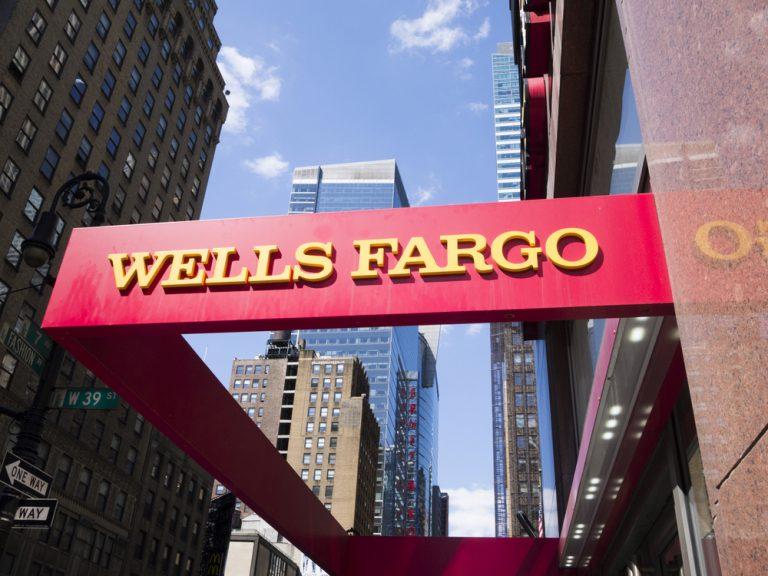
Despite London commercial real estate markets being hard hit by Brexit, US Bank Wells Fargo has just decided to invest around £300million in a new office block in the British capital.
Wells Fargo, the US third biggest bank by assets came to an agreement with the Slovak housing developer HB Reavis. The bank will buy a new 225,000 square meter office block in London close to the Bank of England. An official statement of the exact value of the deal has not been published. However, sources close to the deal have quoted a figure close to £300million according to Reuters reports.
The building is supposed to be finished in autumn 2017. Wells Fargo is set to relocate their London headquarters there by 2018.
Frank Prizzo, Wells Fargo’s regional president for Europe, Middle East and Africa has stated that the move to the new building will is possible for the bank to “more efficiently and effectively manage our operations.”
The investment in London real estate comes as a welcomed surprise to many. The London property market and particularly commercial real estate has been a big concern post Brexit as many funds stopped withdrawals.
Housing prices have started to rise more slowly nearly everywhere in the UK post the Brexit vote. In London prices have even started to fall.
The new deal may be a first indication that major businesses are still interested in staying in the UK and will invest in properties even after an exit from the European Union.
There are worries that London may lose its position as the financial capital of Europe after a loss of the easy access to all European Financial markets its European Union Membership currently provides.
After striking the deal with Wells Fargo, Marian Herman, chief financial officer of HB Reavis, has given optimistic comments on the future of the London housing market. She said the deal shows resilience “even under seemingly challenging market conditions.”
Concerns in markets for travel firms after Turkey’s failed coup

Political turmoil in Turkey following the coup attempt on Friday initially impacted markets negatively. The market is however optimistic most sectors as well as the Turkish Lira will rebound. However, travel companies may have reason for concern if we see prolonged political unrest.
In a move to crack down on the perpetrators, the number of people incarcerated for connections to the attempt has risen to 6,000. President Erdogan has promised to “purge state bodies of the virus that caused the revolt”.
The number of casualties has risen to close to 300.
Accusations of incitement have been directed towards Fethullah Gulen, head of the Hizmet movement. He is supported by many military officials in Turkey.
To counteract allegations Mr. Gulen, who has been living in the United States for 15 years, he suggested that President Erdogan may have staged the coup himself in an effort to better his political position.
A Turkish minister has accused the United States of taking part in supporting the plot against the government.
In midst of the turmoil the Turkish Borsa Istanbul 100 Index went down nearly 5 percent. Turkish bonds have fallen, with 10-year yields rising as much as 9.64 percent. The Turkish Lira tumbled to its lowest in eight years, losing 4.6 percent.
After plunging on Friday evening, the Lira has retraced 50 percent of its losses. Other affected emerging market currencies such as the South African Rand and the Mexican peso, which dropped initially after the coup attempt, have rebounded 1.7 percent and 0.7 percent respectively.
Experts, such as Head of EM Asset Allocation at UBS, Michael Bolliger, are confident that Turkey will manage a full recovery and markets will not be hit too hard by the political uncertainty.
It is clear that the situation is fragile as Turkey is greatly dependent on foreign investment to run its consistent current account deficit. But Bolliger told Bloomberg TV this morning that he does not expect a massive outflow of foreign capital.
The Borsa Istanbul 100 gained 15.5 percent so far this year, outperforming the broader MSCI Emerging markets index by 4.5 percent and the last time the military openly involved itself in Turkey’s domestic politics in 1997 the Index only dropped by 15 percentage points, starting its’ recovery after only three trading days and closing on a 254 percentage gain that year.
Bolliger also stated that the future movements in the markets will depend greatly on actions taken by the government to provide liquidity, ensure investor confidence and reinstall the presidential system.
The Turkish Prime Minister convened with his cabinet this morning at 9 am to discuss fiscal measures. The Finance Minister has reached out in a 2 hour long conference call to international investors expressing there is no need to panic. The Central Bank has promised unlimited liquidity to banks in order to ensure confidence.
But President Erdogan is seemingly not ready to reconcile with the parties of the failed coup and looks to strengthen his grip on power. In an address to a crowd of his followers, he stated that he is thinking of reinstating the death penalty which Turkey abolished in 2004 as part of their bid to join the European Union. Erdogan reportedly told the people that those that launched a coup have to pay the price for it. This stance may prolong political instability and violence in Turkey and have negative effects on the markets.
Trouble for travel firms
The real worry at the moment lies however with the travel sector. Turkey is one of the most popular travel destinations for many Europeans and especially British holidaymakers. The Foreign Office has issued a strong warning to tourists: “We strongly advise you to stay indoors, avoid public places, in particular demonstrations, and remain vigilant.” British Airways have cancelled all flights between the UK and all Turkish destinations. Thomas Cook as well as Thompson are offering refunds and cancelations to their customers. In the aftermath of the event on Friday Turkish Airlines tumbled 6.5 percent. Malaysia Airports Holdings Bhd., who owns Istanbul’s second largest airport, has dropped 5 percent. Shares of travel agency Tui have fallen 4 percent on the FTSE 100. Thomas Cook dropped as much as 5 percent on the FTSE 250. This comes only months after Thomas Cook and other companies, whose most popular holiday destination last year was Turkey, saw their share prices drop as much as 19 percent after having to report a 5 percent decrease in summer bookings due to the rising levels of terror threat in Turkey. While the Lira may be on its’ way to recovery and markets have generally shrugged off the failed coup attempt in Turkey, travel agencies and airlines are likely to feel the negative impact of the events for a while to come.ARM Holdings up 44% in takeover deal

ARM Holdings plc (LON:ARM) has soared 43% after the company announced it was subject to a takeover deal with SoftBank Group Corp in a deal worth up to $32 billion.
The 1700p offer represents a premium of 43% of ARM’s closing price of 1189p per share on Friday 15 July, as investors in the company are also entitled to receive an interim dividend of 3.78p per share to be paid on 10 October.
The 1700p offer also represents a 69.3% premium of the volume weighted average closing price of 1004p per ARM share over the past three months.
The deal to buy the UK based chip-designer is a significant move that see’s the Japanese tech giant advance its position into the mobile industry. ARM had become attractive buy for oversea investors as the weakening of the pound has made such a takeover more feasible.
ARM has the highest market value for a technology company in London due to wide use of its chip technology by both Apple and Samsung.
SoftBank have stated that the transition will see the number of employees in ARM in the UK double and the business will continue to be based in Cambridge under individual management.
Chairman and CEO of SoftBank, Masayoshi Son said:
“We have long admired ARM as a world renowned and highly respected Technology Company that is by some distance the market-leader in its field. ARM will be an excellent strategic fit within the SoftBank group as we invest to capture the very significant opportunities provided by the “Internet of Things”
“This investment also marks our strong commitment to the UK and the competitive advantage provided by the deep pool of science and technology talent in Cambridge. As an integral part of the transaction, we intend to at least double the number of employees employed by ARM in the UK over the next five years.
18/07/2016