Japan has entered its fourth recession since the financial crisis of 2008, according to growth figures for the third quarter, as Prime Minister Shinzo Abe’s economic policies fail to hit the mark.
Asia’s second largest economy shrunk by 0.8 percent between July and September, plunging the country back into recession.
Tokyo has been following a set of economic policies named ‘Abenomics’, involving mass government spending, central bank bond-buying and significant economic restructuring. However, further disappointing figures have led to speculation as to whether these policies are right for the Japanese economy.
Akira Amari, Japan’s economic minister, cited a shortage of labour available for public works projects to stimulate the economy as one reason for the slow recovery.
However, the government maintained its cautiously upbeat outlook in a statement, saying that despite some weaknesses, the economy continued to recover moderately on improvements in job and income conditions.
“While there are risks such as overseas developments, we expect the economy to head toward a moderate recovery thanks to the effect of the various (stimulus) steps taken so far.”
Japanese consumer prices are steadily growing and the country rose out of deflation earlier this year, and Japan’s GDP figures are looking positive.
Global stocks have fallen on Monday in the wake of the Paris attacks, with travel and tourism companies leading the drop.
French companies were hit the hardest, with Eurotunnel Group and Aeroports de Paris falling almost 5%. Airlines were also amongst the biggest the fallers, with budget airlines Easyjet (LON:EZJ) and Ryanair (LON:RYA) falling around 3 percent. Air France (EPA:AF) is down 5 percent and British Airways owner IAG (LON:IAG) is down 3.4 percent. The tourism sector accounts for about 7.5 percent of French GDP.
Asian shares also experienced a disappointing day, with the Nikkei stock index falling nearly 1.1 percent, almost wiping out last week’s 1.7 percent gain. The Hang Seng is also down 1.72 percent.
French financial markets are open again today, with extra security measures in place for staff – especially in the La Defense business region of Paris.
To say that gold has had a hard time of late might be one of the year’s biggest understatements. Demand and value have fallen to such an extent that gold plummeted to a five year low during July 2015. So are the heady prices achieved in 2011 no more than a distant memory, or should we live in hope of gold’s return to its former glory?Nikolas Xenofontos, Director of Risk Management of leading online trading services provider easy-forex, believes that gold has the potential to make a comeback in 2016. He explains:
“The price of gold is impacted by so many factors that it’s far from easy to assess where it might be headed, but there are certainly some positive indications that could mean a resurgence in both demand and value over the next year, particularly during the latter part of the year.”
In fact, gold prices are so tough to call at the moment that even hedge fund managers are “posting a track record no better than a coin flip when it comes to betting on the metal,” according to Bloomberg.
Throughout the 1980s and 1990s, gold prices remained relatively stable, fluctuating between US$300 and US$500 per ounce. A dip in the early 2000s then made way for a staggering rise in value. As the rest of the world focused on the housing market crash and whole nations’ economies became unsustainable, gold prices seemed on an endless upward trajectory, thanks to the precious metal’s reputation as a safe haven during difficult times.
Of course, what goes up must come down and since peaking at more than US$1,900 per ounce in August 2011, gold’s value has reduced considerably. In early November 2015, it dropped below US$1,100 per ounce.
“The prospect of a US rate increase is keeping gold prices down right now,” continues easy-forex’s Nikolas Xenofontos, “but we’ve also seen other factors impacting on gold’s value. The driest monsoon season in six years, for example, has led to plummeting demand in India compared with previous years.”
Gold sales in India usually boom during Diwali, but with rural farmers accounting for around 60% of consumption, the lack of rain and its impact on the country’s crops has led to a steep downturn in demand compared with years when agriculture has boomed. According to the Times of India, the state of Gujarat, for example, saw gold imports fall by 87% in October 2015, compared with a year earlier.
The result of these and a myriad of other factors is that now doesn’t look like the most attractive time to buy gold – or, indeed, to sell it. So could that change over the course of 2016?
It’s certainly a possibility. While the US economy is broadly back on track, global financial uncertainties continue and the impact of the death of the BRICs (Brazil, Russia, India and China, and belatedly South Africa) is yet to be fully felt. Just as the housing crisis in the US triggered a global financial crisis, if the BRICs come crashing down in tandem over the remainder of the 2010s, the shockwaves will reverberate around the world. And where economic uncertainty builds, so too does the price of gold.
“2016 is going to be a key year for gold prices,” concludes easy-forex’s Nikolas Xenofontos. “I wouldn’t rule out prices dropping to US$1,000 per ounce, but I also believe there’s a real chance that gold might rally during the second half of the year as a result of a range of global factors.
“American gold futures speculators have dominated during 2015, but investors could change the story considerably in the coming year. Gold is certainly one commodity to keep a very close eye on over the weeks and months ahead.”
For further details visit www.easy-forex.com, email pr@easy-forex.com or call +44 203 1500 748. Risk warning: Forward Rate Agreements, Options and CFDs (OTC Trading) are leveraged products that carry a substantial risk of loss up to your invested capital and may not be suitable for everyone. Please ensure that you understand fully the risks involved and do not invest money you cannot afford to lose. Our group of companies through its subsidiaries is licensed by the Cyprus Securities & Exchange Commission (Easy Forex Trading Ltd- CySEC, License Number 079/07), which has been passported in the European Union through the MiFID Directive and in Australia by ASIC (Easy Markets Pty Ltd -AFS license No. 246566).
The government has sold £13 billion of former Northern Rock mortgages that taxpayers acquired during the financial crisis to US private equity firm Cerberus.
Northern Rock collapsed in 2007, triggering the financial crisis, and the government were forced to put millions of pounds of taxpayers’ money in to save it. The UK have now sold more than 85% of the assets of the Newcastle-based lender, as part of Chancellor George Osborne’s plan to raise over £30 billion over 2015-16 by selling off publicly-owned assets.
In a statement, he said proceeds from sales have now totalled over 24 billion pounds since April 1:
“We are now clear that taxpayers will get back more money from Northern Rock than they were forced to put in during the financial crisis.
“The highly competitive process, unprecedented scale, and the fact that these mortgages have been sold for almost £300m more than their book value demonstrates the confidence investors have in the UK.”
Cerberus was the winning bidder in a competitive bidding process, believed to have included offers from JPMorgan and Blackstone.
Portuguese chef Nuno Mendes has jumped on the crowdfunding bandwagon and is hoping to raise £1.75 million, in order to reopen his Michelin-starred restaurant ‘Viajante’ on the banks of the Thames.
Mendes, the chef responsible for turning the Chiltern Firehouse into a celebrity destination, closed his original Viajante restaurant in Bethnal Green in February of last year, after gaining a Michelin star within eight months of opening. Now, he wants to reopen it – on the ground floor of the Metropolitan Wharf in Wapping, and with the support and investment of his friends, diners and fans.
Nuno said: “As many of you who I have had a chance to meet may know, Viajante was a very special project for myself and the team, a project that we were all incredibly proud of and extremely sad to have to end. We all believed that the restaurant was going from strength to strength at the time of closing and ever since I have been committed to launching it one day.”
The Chiltern Firehouse in Marylebone
The minimum investment is set at just £10, although those investing larger amounts will gain a variety of rewards ranging from priority booking to dinner for 12 hosted by Nuno himself. The £1.75 million target will be spent on kitting out the restaurant building and on upfront costs – and will be in exchange for a third of his business, 33.33 percent.
The restaurant will have an outdoor terrace overlooking the river, where guests can arrive by boat. Mendes chose Wapping over other restaurant spots such as Mayfair and Soho to attract a more local crowd; the area boasts many new residential developments and the restaurant aims to place a Michelin-starred restaurant on the doorstep of its affluent neighbours.
Mendes said of the project:
“We have now secured an amazing location and we have decided to launch Viajante through an equity crowdfunding platform because we want to give our friends and supporters, the people of London, Portugal and from around the world, a chance to become part of making our dream a reality, while also sharing in the planned success.”
“We could have done it with major financial backers but I want to do it in a democratic way,” says Mendes, who will stay on as executive chef at the Chiltern Firehouse. “I love the idea that anyone who has been to Viajante or liked Taberna or the Firehouse has the chance to participate.”
The aim is to open the restaurant in Autumn 2016, and the project is crowdfunding on Seedrs now. Visit their campaign page for more information.
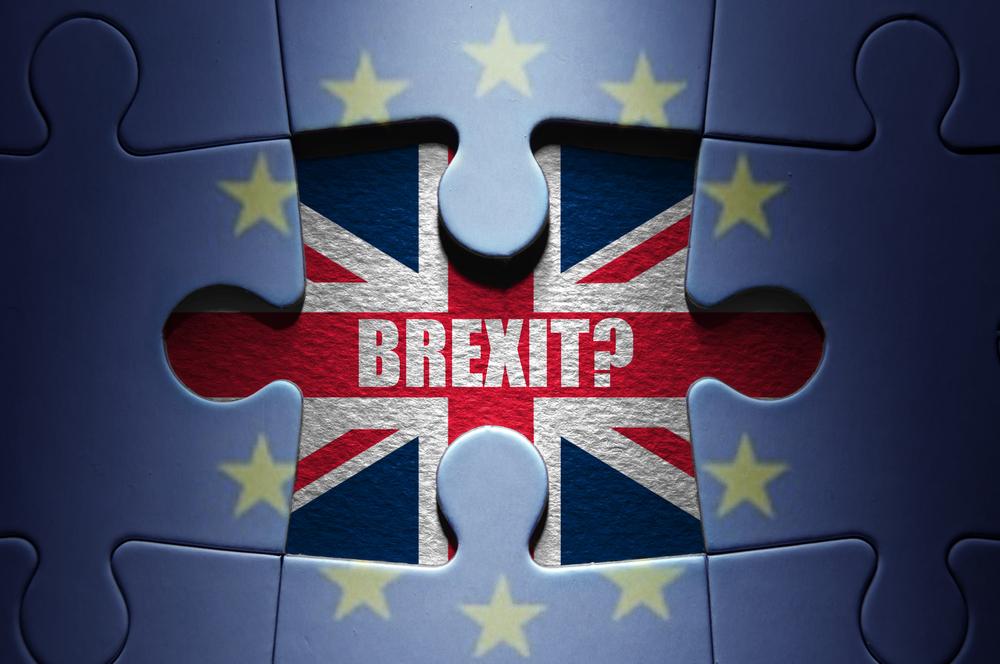
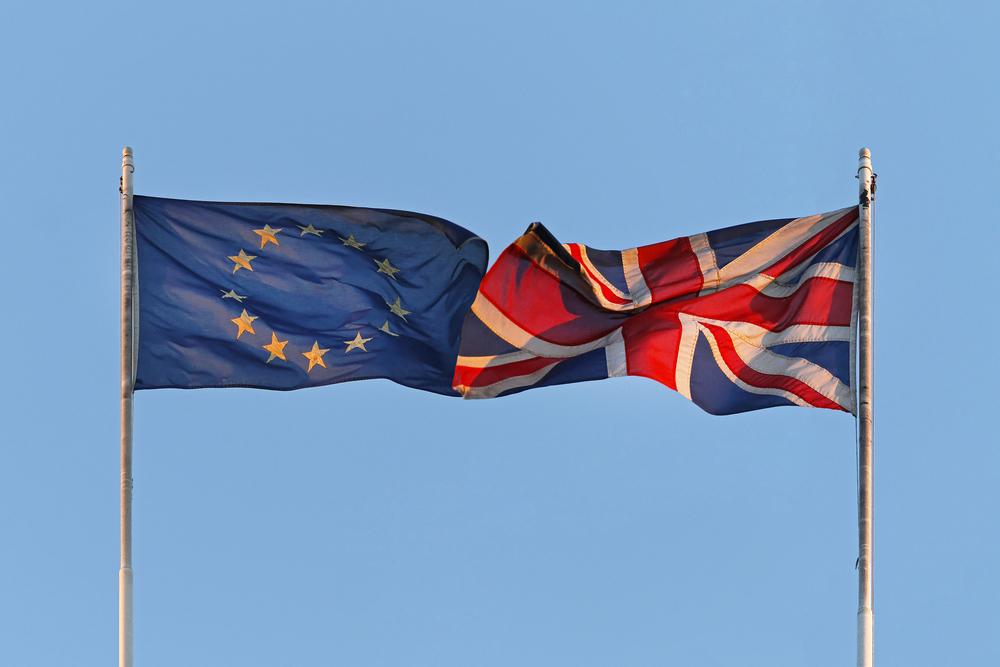
The UK is largely divided on the subject of whether to leave the European Union, with 50 percent wanting to leave and 47 percent wanting to stay, according to an opinion poll conducted by pollster Survation.
The poll was conducted on behalf of the ‘out’ campaign between the 9th and the 11th of November, an surveyed 2,007 Britons. It is the first set of poll results since Prime Minister David Cameron laid out his specific demands for reform earlier this week, which include changes to welfare benefits for migrants and economic safeguards for European countries outside the Euro.
Cameron has said that, if the reforms are accepted, he will “campaign with all my heart and soul to keep Britain inside a reformed European Union”. However, if they are not, he has not ruled out the possibility of a ‘Brexit’.
The future doesn’t look bright for Cameron; European Council President Donald Tusk has since commented on his demands, saying that they were ‘very tough’ and that it will be ‘difficult to find an agreement’ before December, when the EU leaders will meet at a summit.
However, sceptics say that Cameron’s demands do not go far enough, with former Tory cabinet minister John Redwood said Mr Cameron should be asking for “much more” and backbencher Bernard Jenkin asking simply “is that it?”.
The referendum must take place before the end of 2017, where the future of Britain and Europe will be decided by the British public.
Cyber security software company Panaseer have successfully raised $2.25 million through a syndicated seed investment round, allowing founder Nik Whitfield to take his start-up to the next level.
Founded in 2014 by Whitfield and a team of cyber security experts from BAE Systems, Panaseer is one of a new wave of UK cyber security start-ups working with commercial enterprises to prevent security breaches from hackers.
Cyber hackers are increasingly using more sophisticated software, previously exclusive to the world of national espionage. Organised gangs are now able to steal cash and customer details from major companies; the UK has suffered a spate of cyber attacks in recent months – including the infamous Ashley Madison hack and, more recently, TalkTalk – waking companies up to the need for better protection of their customers.
To combat this threat, Panaseer uses the latest data science techniques to help major corporations increase their security. The company has built a platform which analyses the data provided by all the different cyber security solutions and provides a visual interface to drill down into and understand this information, and so inform board-level decisions on the allocation of security budgets or weaknesses in cybersecurity policies.
Stephen Newton, founder & managing partner of Elixirr, one of Panaseer’s new investors, commented:
“We are delighted to be a part of this seed investment round. We love to invest in game-changing companies and the insight Panaseer can provide to enterprises is unrivalled. We know from our clients that cyber security is a big topic around the boardroom table at the moment and we are looking forward to seeing Panaseer join these conversations.”
CEO Nik Whitfield is “delighted to have successfully completed this round of investment” and is “looking forward to working closely with our partners and making use of their considerable experience.”
Shares in British aerospace manufacturer Rolls-Royce (LON:RR) dropped nearly 20 percent this morning after issuing its fourth profit warning in just over a year.
The company cited sharply weaker demand for spares and services for existing aero-engines and corporate jet aftermarket services as reasons for the results.
Rolls Royce said profit forecasts for the year would be 30 percent below a current consensus estimate – which was cut in July, after it announced that reduction in deliveries of its Trent 700 engine would affect profits in 2016 and 2017.
In a statement, the company said that profits in 2016 will be hit by £650m of “headwinds” as a result of “sharply weaker demand”.
Chief Executive Warren East, who was appointed in April and has been heading a structural review of the business, said:
“The speed and magnitude of change in some of our markets, which have historically performed well, has been significant and shows how sensitive parts of our business are to market conditions in the short-term.”
Rolls Royce are currently trading down 20.49 percent at 136.40 pence per share.
India’s Prime Minister Narendra Modi arrives in Britain for a state visit today, the first since 2006, hoping to discuss millions of dollars worth of trade deals and promote India as a country for investment.
Modi is expected to have a hectic schedule, meeting David Cameron for talks today, being hosted at Chequers and visiting Tata Motors’ plant in the West Midlands before giving a speech at Wembley to India’s diaspora in Britain on Friday.
Modi recently suffered an electoral blow in the Bihar state, where his Bharatiya Janata Party were defeated after a campaign he played a strong role in. His office hopes that this visit to Britain will secure trade deals and prove himself as a figure worthy of the international stage.
David Cameron’s office said Britain would seek to promote London as a centre for offshore rupee bonds. Cameron has described the trip as “extraordinary”, saying in a statement:
“I am excited by this visit. I am excited by what Prime Minister Modi is doing in India and I’m excited about the partnership that we can build together.”
The UK and India have always had a strong investment ties, the most recent of which was made in September with the ‘Fintech 2020 India’ agreement. India and Britain will collaborate to create a ‘FinTech bridge’ between the two countries. Led by Alok Vajpeyi and Britain’s Startupbootcamp, it will encourage close partnership and investments in Britain and Indian FinTech companies, and help them expand globally.
However, Modi’s state visit to Britain is not without opposition.
Modi’s perceived Hindu nationalist political agenda had led more than 200 writers, including authors such as Salman Rushdie, Ian McEwan and Nikita Lalwani, to pen an open letter to David Cameron urging him to raise concerns about freedom of expression in India.
“We, the undersigned, are extremely concerned about the rising climate of fear, growing intolerance and violence towards critical voices who challenge orthodoxy or fundamentalism in India,” the letter said.
Similarly, a number of groups have announced a “day of protest” on Thursday, before his speech at Wembley on Friday, including those by the “Modi Not Welcome” campaign and CasteWatchUK.
Supermarket chain Sainsbury’s (LON:SBRY) have reported further struggle in a challenging market, with an 18 percent fall in first half profit proving to be its lowest for six and a half years.
However, the figure was still above analysts’ average forecast of £293 million, sending shares up 2 percent in early trade.
The supermarket sector has been a tough environment over the last few quarters, with big chains like Tesco and Sainsbury’s losing out to budget shops such as Lidl and Aldi. Sainsbury’s chief executive Mike Coupe laid out plans last year for a series of price cuts and quality improvements to tempt back customers, but so far progress has been slow.
“The grocery retail marketplace remains challenging,” said Coupe. “I am confident we are making progress and we are looking forward to a successful Christmas.”
The company’s full-year profit is expected to fall again on last year; before today’s results, analysts had forecast a 2015-16 pretax profit of £573 million, down from £681 million made in 2014-15.