Shares in AIM listed Highland Natural Resources (LON:HNR) rose 30% following the announcement of a agreement with Calfrac Well services.
The deal involves the delivery of re-fracking services to Calfrac in seven US states through the DT Ultravert Technology. Highland Natural Resources owns a 75% stake in the DT Ultravert Technology aimed at re-fracking processes.
As part of the deal, Highland Natural Resources are entitled to a 2% royalty on all revenue earned by Calfrac from the fracking operations for the duration of the contract.
“We are delighted to have entered into another licence agreement with a highly reputable oilfield services provider in the US and Canada. Together with our agreement with Schlumberger, these agreements will help accelerate the market penetration, commercialisation and industry adoption of DT Ultravert, a technology we believe has the potential to transform and significantly reduce the costs associated with unconventional exploration and production via re-fracking using a diverter technology, particularly in the current oil price environment,” said CEO Mr Price.
The share price of Highland Natural Resources have gone from strength to strength after listing in March 2015 with the aim of targeting assets in distressed oil & gas companies.
Shares Rally
Having traded as low as 6.7p on it’s first day of trading, shares have rallied 800% since it’s initial IPO.
The major shift in Highland’s share price began in April of this year when news of the DT Ultravert deal started to surface alongside the announcement of the acquisition of North Dakota acreage with strong prospects in natural gas.
In November 2015, Acquisition of the Gravity Prospect North Dakota acquired 1,972 acres targeting the shallow natural gas prospect ‘Gravity’ in Niobrara and Muddy Formations in Emmons Couny, North Dakota.
The cost to complete the well is estimated to be approx 50,000 U$$ with sights set on completing the well by mid-june 2016
Shares in Highland Natural Resources traded at 54.3p +30.1% at 11.00 am London time.
23/05/2016
By Aaron Kidd
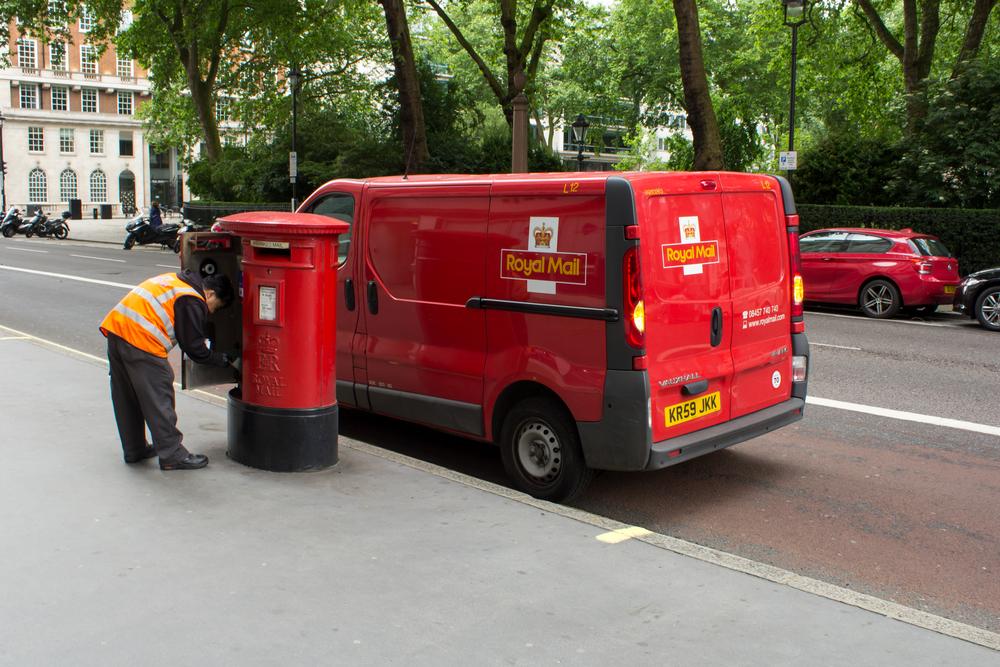
Royal Mail shares are up nearly 4 percent this morning, after upgrades from multiple brokers.
Cantor Fitzgerald reiterated its buy rating on the stock, raising its forecast from 530p to 550p. Cantor’s Robin Byde called Royal Mail’s progress “encouraging”, continuing:
“Royal Mail faces potentially tough wage and pension negotiations this year but the risks are probably overstated. The stock is good value, trading on a calendar 2016 estimated PE discount of 16% to the sector.”
RBC Capital Markets also raised its rating to “sector-perform” from “underperform”. The upgrades come after Royal Mail revealed better than expected results in today’s tough market, showing restructuring and cost-saving measures beginning to take effect.
Royal Mail (LON:RMG) shares are currently up 3.37 percent at 508.50 (1103GMT).
Two thirds of institutional investors say they will sell UK equities in the event of Brexit.
An overwhelming amount of UK and international investors believe that there will be a negative impact on investment markets should the UK vote to leave the EU.
The research comes from the Investor Relations Society In Partnership with Quantifire whose society has over 750 members from the UK Europe including representatives from a majority of the FTSE 100 have produced a report that was designed to examine the opinions of fund managers and buy-side analysts regarding the likely impact that a Brexit leave would have on investment markets.
In total 407 responses were taken from 361 institutions, including 11 of the top 20 global investors by assets under management.
The Key findings of the report:
78% of investors say that the potential for Brexit is now an important factor when making investment decisions
88% think that a Brexit would have a negative impact on UK investment markets in the short term
64% will reduce or sell UK equities and 54% will reduce their exposure to UK debt securities, if Brexit looks likely
Financial services and real estate investments are expected to be the main losers if Brexit occurs
44% believe that there will also be winners in the UK economy, with exporters and industrials most preferred
30% of investors are contrarian, believing that the effect of Brexit would be neutral to positive for UK securities over the medium to long term.
(source: IRS)
As the financial sector is believed to be the sector that is at its greatest risk, several commentators state that the main reaction to the UK voting to leave the EU could be through the currency markets. With an expected drop in value of sterling, it points investors in the direction that the UK exporters would be the most likely beneficiaries.
Commenting on this research, Charles Hamlyn, Managing Director of QuantiFire said:
“The results of our research clearly indicate that risk appetite among institutional investors is very likely to fall if Vote Leave gains ground in the run up to the referendum. Whilst there are conflicting arguments surrounding Brexit, these results underline the fact that uncertainty is never good news for capital markets”.
Bayer bids for Monsanto in biggest deal in sector
German chemicals giant Bayer has made moves to acquire US seed company Monsanto, in a merger that would create the world’s biggest agricultural supplier.
The $62 billion offer for Monsanto represented a 37 percent premium over the closing price of Monsanto shares on May 9, with Bayer shares dropping 8 percent on the news. Bayer said the bid was an “extraordinary opportunity to create a global agriculture leader.”
CEO Werner Baumann continued, “we have long respected Monsanto’s business and share their vision to create an integrated business that we believe is capable of generating substantial value for both companies’ shareholders.”
Ryanair profits surge, fares to drop 7 percent
Budget airline Ryanair saw profits surge 43 percent over the past year to €1.242 million after its customer service initiative prompted significant growth.
Traffic grew 18 percent, with load factor rising to 93 percent. Revenues jumped 16 percent €6.5 billion.
Looking to the year ahead, the company said it anticipates cutting fares up to 7 percent to keep load factor high in the face of recent terror attacks and airport strikes. It expects profit in 2017 to rise 13 percent.
Ryanair shares opened higher this morning after the news, trading up 0.60 percent at 13.45 (0820GMT).
Japanese shares fall on trade data
Japanese shares fell on Monday after weak economic data from the country, which saw exports drop for the seventh consecutive month.
Exports from Japan fell by 10 percent in April compared with the same month last year, with imports dropping 23 percent. These are the latest in a string of figures that suggest Prime Minister Shinzo Abe’s finance policies are not having the desired effect.
The figures leave Japan’s trade balance with a 823 billion yen surplus, with the Nikkei 225 closing down 0.49 percent.
According to statistics released by The National Audit Office, two thirds of public sector projects are completed late, over budget or do not deliver the outcomes expected. Most projects due to be delivered in the next five years, have already been announced to be completely unachievable. But unfortunately, this problem is not just within the public sector, as research conducted by a number of academics, professional bodies and consulting companies have found that most investment projects fail by definition, taking into account delays and over expenditure. This doesn’t necessarily mean they never come to fruition, but it does mean a severe delay in ROI, which as a savvy investor is something you never want to hear.
It’s a global issue, across multiple sectors, and one which needs to be addressed if there is to be the vast economic development we hope for in the next generation. But getting to the core of why these projects are failing is the only way in which a solution can be found.
Timescales
There’s a common trend of being overly optimistic with timescales when it comes to project development of any kind. And whilst people may be giving you a glowing projection that rings all the bells and whistles, you have to be the pessimist in the room that asks the hard questions. Targets and timelines for your projects will need to be clarified, and if they fail to deliver when promised you need to prepare for that failure. If you cut a loss how is that going to affect you and your business, and is a loss even possible?
Identifying risk
There is uncertainty in every investment that you make, no matter the project, there is no such thing as a fail safe. As every project is unique, it is essential that you take each investment on a case by case basis and proactively anticipate the things that might go wrong. Knowing your risks and how to respond to them should they occur, ensures that your project has a strong strategy that will see it through any delays.
Unreliable estimates
Most investment projects fail to realise their forecasted benefits, and once the project goes from idea to reality, the costs significantly increase. This will be down to unreliable estimates or ‘guestimates’ as they’re often called, but this does not need to be the case, with many current financial systems on the market that can help you to create reliable investment appraisals such as Invest for Excel, a best practice can be implemented and risks quickly identified.
The planning process plays the key role in the deterring failure from the word go. There are multiple causes of failed projects, each with it’s own set of issues, but as clearly identified in the statistics that have been revealed, common mistakes are strongly contributing to a process which by now, should work without delay.
This post is sponsored by Data Partner. For more information, visit www.datapartner.fi
If you are gearing up to invest in real estate in the London area, there are certain strategies worth adhering to.
Download this free guide to find out what you should be thinking about if you are looking to invest in real estate.
Please fill in your details to download your free guide
Cogress Limited is authorised and regulated by the Financial Conduct Authority (no.696171). Guides are provided for informational purposes and should not be taken as investment advice or inducement to invest.
Issued and approved by Cogress Ltd
By entering your details you agree to be contacted by UK Investor Magazine and the company operating this investment opportunity regarding this opportunity specifically and similar investment opportunities and news.
Is your portfolio ready for the FinTech revolution?
Financial Technology, also known as FinTech, has become a buzz word for investors searching for early stage innovative companies which have the potential for substantial long-term returns.
Due to the relatively recent emergence of the sector, many FinTech companies are still in the start-up and early stage of the business cycle meaning it can be difficult for investors to gain exposure to the sector. In this report, we have detailed a number of companies listed on London’s main market, easily accessible to investors seeking exposure to this rapidly expanding area of finance through established companies.
Request this report now to discover:
UK-listed stocks leading the way in financial technology
Areas of finance set to be developed by ‘disruptor companies’
How your finances could be impacted by changes driven by FinTech
This report is now publicly available, you can download your copy below:
A copy of this report will be sent to you immediately
By submitting my details I consent for information to be sent to me via the above contact details by Charles Hanover Investments Ltd. Contact may be made by email, post or telephone call. Any information provided is not an offer to enter into any transaction and Charles Hanover Investments Ltd will accept no responsibility for any loss incurred by acting on this information. By ticking the box below I confirm I have read and agree to the Research Terms,Terms of Business and have read and understood the Disclaimer, Privacy and Order Execution Policy.
Disclaimer: This report is for your information only. The information included is general in nature and is not in any form a recommendation to enter into any transaction nor does it constitute an offer. Depending on specific objectives and financial position the research may be unsuitable for certain investors. Charles Hanover Investments or Equitrade Markets will not accept any responsibility for any losses, including, without limitation, any consequential loss, which may be incurred by acting upon the contents of this report. Although the upmost care is taken to ensure the accuracy of this report information contained may not be entirely complete and accurate and Charles Hanover Investments or Equitrade Markets will not be held liable for any inaccuracies.
Risk Warning: Trading Contracts for Differences (CFDs), Futures and spread betting carries a high level of risk to your capital, and is not suitable for all investors. Only speculate with money you can afford to lose. Trading or placing any bets can result in consumers incurring liabilities in excess of their initial stake. Please ensure you fully understand the risks, and seek independent advice if necessary. Charles Hanover Investments is a trading name of Equitrade Markets Ltd, a company authorised and regulated by the Financial Conduct Authority for the conduct of investment business in Shares, Spread Betting, CFDs, Futures, Options and Rolling Spot Foreign Exchange.
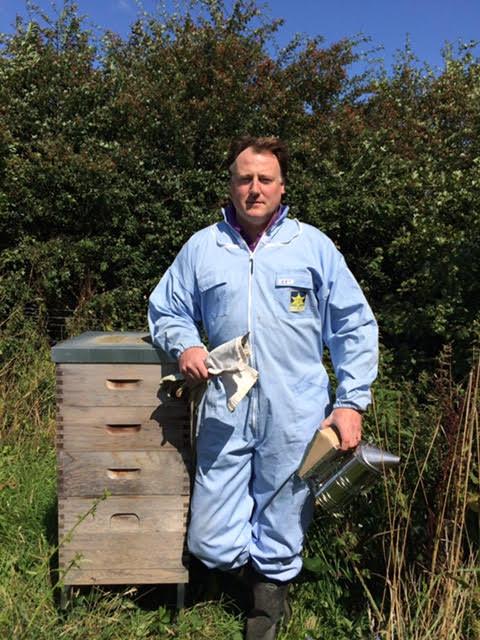
More than 100 investors have backed an £80,000 crowdfunding investment campaign from premium honey brand Haughton Honey to support the next stage in the company’s growth. Just over four weeks into the campaign, around £52,000 had been pledged for investment.
Haughton Honey founder Crispin Reeves said:
“We’ve had a flood of inquiries from potential investors seeking more details and in order to process them and allow them time to consider the investment, we’ve extended the deadline for investment by two weeks,” he said.
“I’ve been delighted to see so much interest in investing in Haughton Honey and in helping us to expand and meet the growing demand for our pure, raw honey.”
Crispin Reeves, founder of Haughton’s Honey
Cheshire-based Haughton Honey hopes to recruit more bee farmers and move onto the next stage of growth by attracting investors via crowdfunding platform, Crowdcube, in return for shares in the business.
Since launching in 2014, the firm has steadily expanded and recently began supplying the fine food retailer Booths, as well as The Protein Works, a large sports nutrition brand owned by Alliance Boots, which has just launched a co-branded Cashew Nut Butter Luxe product containing Haughton Honey.
The honey market within the UK is worth £119.5 million per annum, with healthy annual growth. UK sales of jams, spreads and honey grew 5.9% in the year up to October 2015, with growth in honey sales alone between 2014 and 2015 increasing by £9.8m year-on-year.
The company, based at Radmore Farm, Haughton, bottles raw honey which comes straight from the hive, is cold extracted and never pasteurised which means that it retains all of the natural enzymes and proteins that make English honey so special. It is also 100% natural and pure and features traces of dandelion, chestnut, blackberry, clover and other wildflowers.
Due to the high number of inquiries and strong demand for information, the timescale for investment has been extended until midnight on 27th May, to allow potential investors to get involved, and any investment in Haughton Honey through the Crowdcube project will attract Seed Enterprise Investment Schemes (SEIS) tax relief.
A series of rewards are on offer for those who invest in Haughton Honey, including discounts, honey, bee farming experiences, and hotel, restaurant and cookery school vouchers.
To find out more about the Crowdcube investment opportunity visit www.crowdcube.com
For more information about Haughton Honey visit www.haughtonhoney.comInvestments of this nature carry risks to your capital. The availability of any tax relief, including SEIS and EIS, depends on individual circumstances. You should seek independent tax advice.Approved as a financial promotion by Crowdcube Capital Ltd which is authorised and regulated by the Financial Conduct Authority (No. 620205).
US Fed hints at June rate rise
The US Federal Reserve have hinted that a rate rise could be on the cards in June, if economic date remains strong.
The minutes from the committee’s latest meeting suggest the Fed are confident inflation is moving towards its 2 percent target, and a rate rise may follow. However, they mentioned the threat of external factors – including the EU referendum, which will fall a week after the Fed’s next meeting.
Royal Mail beats expectations on cost-cutting measures
The bank has kept interest rates between 0.25 percent and 0.5 percent since December, its first rate rise in nearly a decade.
Royal Mail delivered slightly better-than-expected results this morning, showing the group’s cost-cutting measures are beginning to take effect.
Adjusted operating profit before transformational costs rose 5 percent to £742 million in the year ended March 27, but pre-tax profit fell 33 percent to £267 million. An increase in parcel revenue was offset by a a decline in letter delivery.
Royal Mail shares have fallen 2.85 percent to 493.50 (0836GMT).
Thomas Cook shares take plunge over fall in Turkish holidays
Tour operator Thomas Cook saw shares plunge over 17 percent this morning, after its summer figures were hit by a decline in bookings to Turkey.
Summer bookings were down 5 percent in the first half of the year, but revenue grew to £2.67 billion. Its underlying operating loss rose by 5 percent to £163 million pounds, due to higher margins on package holidays.
Thomas Cook are currently trading down 17.93 percent at 73.45 (0845GMT).
Burberry to cut costs by 10 percent
Luxury clothing retailer Burberry are set to overhaul operations in order to stay above competition in an ongoing tough market.
The group has announced plans which aim to cut operating costs by 10 percent, it said on Wednesday, and deliver savings of at least £100 million by 2019. Burberry reported adjusted pretax profit of £421 million for the period to the end of March, and is expected to come in at the bottom of market forecasts in March 2017.
CEO and chief designer Christoper Bailey commented: “While we expect the challenging environment for the luxury sector to continue in the near term, we are firmly committed to making the changes needed to driver Burberry’s outperformance.”
Suzuki shares plunge on emissions scandal
Suzuki shares have plummeted 9 percent, after reports that it had become the latest carmaker to become embroiled in an emissions scandal.
Japanese media reports reported that Suzuki had found a problem with its testing method, with chairman Osamu Suzuki due to present to Japan’s transport ministry later today.
Shares are currently down 9.37 percent at 2613.00 (0820GMT).
Japanese economy beats recession
The Japanese economy expanded faster than expected in the first quarter of 2016, beating analysts expectations and fuelling speculation that the country’s economic measures may be starting to take effect.
The economy grew at an annual rate of 1.7 percent between January and March, after slipping back in the final quarter of 2015.