BT Group has reported a fall in annual revenue but a rise in profit, as aggressive cost-cutting and a record fibre rollout helped the telecoms giant offset competitive pressures across its markets.
A 2% decline in BT shares on Thursday is more of a reflection of the strong run the stock has had going into earnings, rather than any major disappointment with the update.
Mark Crouch, Market Analyst at eToro, said “BT’s results reinforce why the company has become one of the safer corners of the UK market over the past couple of years.”
“In a period dominated by geopolitical uncertainty, volatile interest rate expectations and concerns around consumer confidence, investors have increasingly gravitated towards businesses capable of delivering resilient cash flow, dependable dividends and visible long-term infrastructure growth. BT now ticks far more of those boxes than it did historically, which helps explain the strong share price appreciation seen over the last 18 months.”
For the year to 31 March 2026, reported revenue slipped 3% to £19.7bn, with adjusted revenue down 4% to £19.6bn.
The decline was driven largely by a shrinking International division following five planned disposals, weaker handset sales, and softer voice volumes in the Business and Consumer arms as the country edges towards the closure of the old copper network.
Despite the top-line squeeze, pre-tax profit climbed 8% to £1.4bn. The improvement came from lower one-off charges, reduced depreciation and amortisation, and tight cost discipline, partly offset by higher finance costs. Adjusted EBITDA held flat at £8.2bn, but stripping out divested businesses, underlying earnings actually edged up 1%.
Cost savings were one of the biggest takeaways from today’s update. The group delivered £580m of gross annualised savings in the year, taking the two-year total to £1.5bn. Chief executive Allison Kirkby has now raised the overall target to £3.7bn from £3.0bn and extended the programme by a year to FY30.
BT lifted its full-year dividend 2% to 8.32 pence and introduced a new policy to grow the payout by low-to-mid single digits annually. Despite a 33% run up in BT shares over the last year, BT shares still yield 3.6%.
Tomorrow morning, Friday 22nd May, we should be seeing AG Barr (LON:BAG), the multi-beverage business, issuing a Trading Update ahead of its AGM later in the day.
There are hopes in the market that its contents will be enough to turn around the recent decline in the Cumbernauld-based maker of market-leading drinks brands like IRN-BRU, Rubicon and Boost.
Tomorrow’s event covers the approval of the Report & Accounts for the group’s year to end-January 2026.
The Business
The £683m-capitalised company is a brand owner and builder, offering a diverse and differentiated portfolio of br...
Yü Group, the AIM-listed independent supplier of gas and electricity, has extended its key structured trading agreement with Shell Energy Europe by three years to 2032, in a move designed to fund its next phase of growth.
The Hedging Facility, first struck in February 2024 as a five-year deal, gives Yü structured access to commodity markets without tying up capital as collateral against mark-to-market swings, a major benefit when navigating volatile energy markets.
The extended agreement is capable of underpinning annual revenues comfortably north of £2bn.
Importantly, the deal comes with a sizeable uplift in volume capacity and added product flexibility, both aimed squarely at supporting the Group’s ambitious three-year SS2B growth plan. That plan targets a 7-9% share of the market by 2028.
Bobby Kalar, Chief Executive Officer of Yü Group, said: “This extension clearly demonstrates the strength of the relationship between our respective businesses, and whilst our ambitious growth plans were not precedent on getting this deal done it gives us a clear runway to continue the job of becoming the fastest growing dominant B2B supplier in the UK. As always, I would like to thank the hard work put in by my amazing team.”
Having followed Chemring Group (LON:CHG) for decades, I have to say that I am somewhat surprised to see its shares lagging behind, as other less well-constructed quoted businesses go to significant premium ratings.
Based in Hampshire, the £1.29bn-capitalised group is a specialist manufacturing and technology business with unique market positions at the heart of national security, defence and aerospace sectors.
Has the market overlooked Chemring’s important participation in the growth of the global Space Sector?
The B...
The FTSE 100 was trading little changed on Wednesday despite the US President threatening to attack Iran if they don’t agree to a deal.
This follows the news that US allies in the Middle East urged not to launch strikes yesterday and underscores the unpredictability of the US President, which fuels uncertainty in markets.
The FTSE 100 had started the session in the red before rallying to trade almost flat at the time of writing.
“The latest ultimatum to Tehran from President Trump has done little to quell investor nervousness and oil prices remain above the $110 per barrel mark,” said AJ Bell investment director Russ Mould.
“US stocks fell on Tuesday as investors reacted to rising government bond yields which reflect growing fears about inflation and the knock-on effect on interest rates.
“There was some modest relief on the inflation front as UK CPI came in lower than expected, but this relief is likely to be temporary unless the Strait of Hormuz can be reopened in the near future. Utility, mining, defence and energy stocks were the bright spots in London, while retailers were among those on the back foot.”
There was no visible evidence of any positive reaction to inflation data in UK stocks beyond a minor bid in cyclical names.
Marks & Spencer was the FTSE 100’s top riser after releasing full-year results that showed the retailer bounced back from its cyber attack in the second half.
“It was a year of two halves for Marks & Spencer (M&S), with significant operational disruption from the cyber incident in the first, followed by a return to sales and profit growth in the second,” said Aarin Chiekrie, equity analyst, Hargreaves Lansdown.
“Granted, full-year sales growth was inflated by the consolidation of its half-owned joint venture, Ocado Retail. But stripping out this impact, total sales were still in positive territory, rising 1.9% to £14.2bn.”
Experian shares were the worst performers of the session after the credit agency failed to convince investors that it had a viable growth strategy amid pressure from AI.
Adam Vettese, market analyst for eToro, says:“Experian’s full year results this morning were solid but uninspiring, landing in line with recent trading updates and at the upper end of guidance. Organic growth held steady, margins expanded modestly and CEO Brian Cassin pointed to ongoing AI momentum through the Ascend platform.
“Investors appear to have been hoping for a sharper acceleration or more bullish 2027 outlook, instead they got more of the same. Softer UK and EMEA credit markets continue to weigh on sentiment.”
Experian shares were down 4% at the time of writing.
Adsure Services has set out an ambitious strategy to grow from a single trading subsidiary into a diversified cluster of specialist professional services firms across the UK, powered by in-house AI technology developed in partnership with Innovate UK.
Adsure’s new AI-driven acquisition strategy is supported by its existing subsidiary, TIAA, which generated £10m in revenue in its 2025FY period. TIAA provides business assurance services to the UK public sector across housing, health, education, and local government through long-term contracts that provide excellent revenue visibility at a group level.
Harnessing this foundation, the Adsure board has formally endorsed a vision to expand beyond TIAA through selective acquisitions, while remaining committed to TIAA’s organic growth.
The company said the aim is to bring like-minded firms under one roof, focusing on firms offering services across internal audit, management consultancy, digital consultancy, and investigatory and security services. These are all sectors primed for the adoption of AI with clear benefits to client outcomes and increased profitability for the companies working the technology into their operations.
AI technology
At the heart of the plan is Adsure’s proprietary AI technology, TIAA Insight, developed with the University of Essex through an Innovate UK Knowledge Transfer Partnership.
Following extensive real-world testing and model training, Adsure is rolling the technology out fully within TIAA.
This technology will also be central to the new growth strategy, with plans in the pipeline to create a dedicated AI solutions subsidiary to help capture the opportunity presented by the deployment of AI in professional services.
Adsure has not yet announced the specific services the new AI solutions entity will provide across the group, but we can safely assume they are encouraged by the capabilities of their new technology suite.
Beyond AI, the strategy is being built around the ethical foundations that led to TIAA’s B Corp certification. Adsure said it intends to extend its B Corp certification to the group level, holding all current and future subsidiaries to the same social, environmental, and governance standards.
Kevin Limn, CEO of Adsure Services, said: “Today marks an exciting new chapter for Adsure Services. Building on more than three decades of trusted assurance work at TIAA and the breakthrough of our proprietary AI technology, TIAA Insight, we are setting out a clear and ambitious path to become one of the UK’s leading clusters of specialist, purpose-driven professional services businesses.”
“Our focus now is on finding the right businesses to join us on our journey. We are looking for specialist firms run by people who care deeply about their clients, and who share the values that have earned TIAA its B Corp status.
“We look forward to sharing further updates as we build the Adsure Services Group.”
In addition to the growth prospects of the new strategy, Adsure Services is one of the few companies listed on Aquis that pays dividends to shareholders, yielding around 6% at current levels.
Automotive interior components manufacturer CT Automotive (LON: CTA) reported a 4% dip in revenues to $114.8m, while pre-tax profit improved by one-fifth to £9.5m. Earnings were 11.4 cents/share. A further improvement is expected this year. The share price jumped 34.8% to 31p.
Shoe Zone (LON: SHOE) chairman Charles Smith and Anthony Smith a director of the main retail subsidiary have between them acquired 2.76 million shares at 50p each. The aggregate holding of the Smith family is 64.1%. The share price recovered 21.2% to 51.5p.
There was a positive response to the trading update by legal services firm Knights Group Holdings (LON: KGH). Full year revenues are 28% ahead and there was double digit organic growth in the second half. Full year pre-tax profit is expected to increase 18% to £32.9m. Net debt is expected to be flat at around £65.4m, despite £17m of payments for acquisitions. Discussions continue with Moore Barlow. The share price rose 11.3% to 192.5p.
Identity management software provider Intercede Group (LON: IGP) has agreed a reseller partnership with OneSpan, which will sell the MyID products alongside its own Digipass-as-a-Service offer. OneSpan has more than three-fifths of the largest banks as clients. The share price improved 8.25% to 111.5p.
Gene therapy technology developer 4basebio (LON: 4BB) increased 2025 revenues from £900,000 to £1.7m and it is forecast to rise to £2.5m. The loss was £17.9m. There should still be £8.5m in the bank at the end of 2025. The company has secured a clinical supply deal with a biotech company for supply of synthetic DNA to a phase II immunotherapy programme. The shares are tightly held and the share price rebounded 7.87% to 480p.
FALLERS
Commodity export controls announced in Indonesia mean that the palm oil produced by MP Evans (LON: MPE) and others will have to be sold through state-owned enterprises. This is to boost the country’s tax revenues. MP Evans is not a direct exporter, but it will be affected and it is likely to be required to keep more of its cash in Indonesia. The lack of detail has worried the market. The share price slumped 31% to £13.09.
Premier African Minerals (LON: PREM) has reached a settlement agreement with certain creditors. A total of £163,000 was settled by the issue of 881.7 million shares at 0.0185p each. Acrrued and unpaid salaries of £54,000 were settled by the issue of 95.8 million shares at the same price. The share price slipped 7.78% to 0.2075p.
Chesterfield Special Cylinders (LON: CSC) warned that interim figures would be disappointing. Revenues improved from £5.4m to £6.4m, while the adjusted operating loss was reduced from £1.7m to £1m. Defence was the main generator of revenues, although some UK navy work was delayed. There is uncertainty about hydrogen projects. This means that full year revenues are likely to be similar to the previous year. The share price fell 4.49% to 42.5p.
Assets under management continue to decline at Impax Asset Management (LON: IPX) and interim pre-tax profit slumped 45% to £11.3m on revenues that were 23% lower at £58.8m. The interim dividend is 2p/share. A weaker second half is expected. Costs are being cut and there will be redundancies. It is hoped that improved performance will help to generate fund inflows. The share price dipped 4.21% to 99.05p.
In this episode, we speak with Dr Christian Marston, COO of Altilium, about the company’s mission to build a circular economy for EV batteries and critical minerals.
We explore why battery recycling and supply chain security have become such pressing global issues, and how Altilium’s proprietary “urban mining” technology differs from conventional approaches.
The conversation covers the company’s progress to date, including an £18.5 million UK Government grant, strategic backing from SQM, Marubeni and Mizuho Bank, and partnerships with major automotive names including JLR and Nissan.
We also discuss the environmental benefits highlighted by independent lifecycle analysis, the scale of the commercial opportunity ahead of upcoming European recycled-content regulations, and the long-term vision for the UK’s circular battery economy.
Analysis for informational purposes only. Capital at risk.
The headlines for China’s humanoid robots focus on televised dancing and running.
The reality is much quieter: a rapid build-out of local supply chains and early factory deployments.
To look past the show-floor demonstrations and understand the actual market, we assess these key questions:
Value Chain: Why is China dominating the supply chain?
Utility: What can these robots actually do today?
Constraints: What engineering hurdles are delaying adoption?
Timeline: When will mass commercial deployment happen?
Unit Economics: What is the financial break-even point for replacing human labour?
Humanoid Volume: The China Monopoly
In 2025, five Chinese startups (Unitree, AgiBot, UBTech, Leju, EngineAI and Fourier) accounted for roughly 85% of humanoid robot volume, according to Omdia.
U.S. players (Agility, Figure AI, Tesla) represented just 3%.
Source: The companies, Omdia, AP
Europe’s Silent Adoption
Recognising this hardware lead, European industrial incumbents are already deploying Chinese humanoids.
Airbus is deploying UBTech’s Walker S2 directly into its aircraft manufacturing facilities.
BMW is piloting the Swedish-built “Aeon” humanoid, which relies heavily on core components—such as five-finger dexterous grippers—sourced from Chinese suppliers.
German conglomerate Schaeffler has partnered with Leju and ROKAE to deploy humanoids and establish a robotics subsidiary in China, while German integrator EnduX has pivoted to importing Chinese humanoid platforms for its European clients.
The EV Playbook: The Supply Chain Moat
This massive volume lead is the direct result of a highly domesticated supply chain.
Manufacturing advantage: China’s existing ecosystems for smartphones, EVs and consumer electronics have the core inputs for humanoids — batteries, servos, sensors, cameras, etc. The supplier base is already in place.
Economies of scale: In 2025, UBTech partnered with Foxconn to pilot Walker S1 robots on iPhone assembly lines. Lingyi iTech (a Foxconn supplier) is building a Beijing “super‑factory” targeting 10,000 humanoids/year by end‑2026 and 500,000/year by 2030.
Price competitiveness: Unitree lists the G1 at ~$16k. Tesla’s Optimus, which leverages its own Shanghai supply chain, targets $20k–$30k. In contrast, Boston Dynamics’ Atlas remains many times pricier, underscoring a severe Chinese cost advantage.
The Reality Check: Three Tiers of Utility
Having said that, volume does not equal capability.
While acrobatics look great on video, factory floors are unpredictable. To understand actual utility, we break robotic skills down into three tiers of difficulty:
L1: The structured factory (Happening now): Repeatable motions in a rigid, tightly controlled environment. Tasks have high repeatability with minimal sensing or decision‑making.
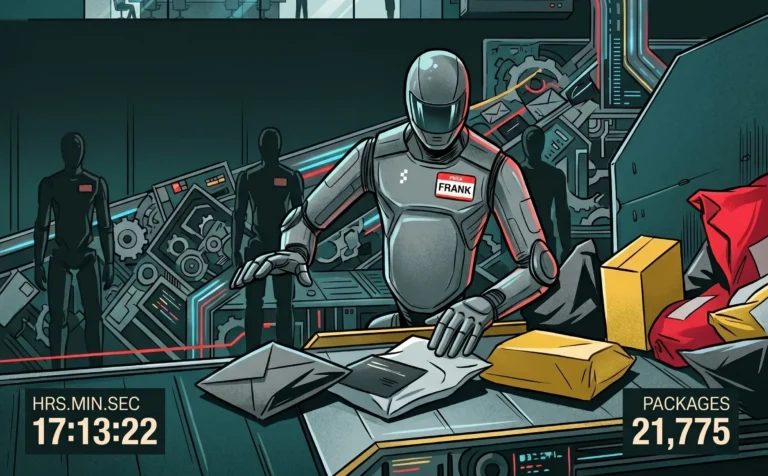
Example: A robot in a fenced car assembly station that picks the door panel from a fixed conveyor position and places it onto a welding jig. In addition, Figure AI recently hosted a livestream showing a team of humanoid robots (F.03) sorting packages for over 40 hours.
L2: The shared workspace (Testing): Multi‑step tasks in environments where humans and robots coexist. Robots have basic perception, path planning and simple error recovery. Robots operate with pre‑mapped layouts and modest variability.
Example: A logistics robot that navigates aisles, identifies a cardboard box of expected dimensions, retrieves it and carries it to a packing station — slowing or stopping safely if a human crosses its path.
L3: The unpredictable real world(Future): Robots handle soft, squishy, or delicate items. They can operate in completely messy, unsupervised environments. Most importantly, if a totally new problem arises, they can figure out a solution on its own without needing a human programmer to intervene.
Example: A robot deployed in a hospital or eldercare facility. It can walk into a messy, unfamiliar bedroom, gently sort and fold a pile of soft laundry, and then safely hand a paper cup of water directly to a patient.
Figure AI robots sorting packages
Source: The company
Robots currently sits between L1 and L2: basic multimodal perception, execution, and reasoning. Locomotion has advanced significantly but manipulation is a different matter. Fine motor tasks that constitute most blue-collar work require environmental generalization that current models have not achieved.
As a current industry benchmark, UBTECH’s Walker series performs parcel-handling and logistics tasks at roughly 30% to 50% of a human worker’s efficiency.
The Engineering Bottleneck: What Delays Mass Adoption
Reaching that final tier of unpredictable real-world utility is currently constrained by several bottlenecks:
Hands: The human hand has 27 degrees of freedom. The combination of precision, reliability, and cost has not been solved at production scale.
Sensor: Six-axis force-torque sensors which give a robot the ability to feel force while handling objects are still expensive for mass deployment.
Power: Typical continuous operation is 2–4 hours; swappable batteries help but current battery energy density limits heavy‑duty, continuous lifting.
Cognition: Fragmented technological approaches (Vision‑Language‑Action vs. World Models) mean there is no unified, robust architecture for physical reasoning yet. In addition, training data remains insufficient and real-world, simulated, and video data are being combined to compensate this.
Reliability: Current units need regular maintenance; industrial 24/7 uptime remains a target, not a reality.
The Accelerated Rollout: Mapping the Adoption Curve
Despite these hurdles, the market is not waiting for perfection.
While the market assumes widespread adoption is still many years away, recent industry targets point to a much faster timeline. We expect the rollout to happen in three phases:
2026–2027: Factory use and early home models
Carmakers move from testing to production (UBTech at BYD/Nio; Figure AI at BMW; Tesla using Optimus internally). Simultaneously, US firms like 1X and Tesla plan limited, expensive early consumer launches by 2027.
2028–2029: Warehouses and broader home appeal
Broad use in logistics and warehouses, contingent on robots running reliably for full eight-hour shifts. In the consumer space, prices dropping to the $12k–$18k range allows robots to transition from tech novelty to household purchase.
2030+: Mainstream public and care roles
Everyday use in unpredictable settings like retail, hospitals, and eldercare. This requires near-perfect safety and autonomous problem-solving capabilities.
The Tipping Point: When Humanoids Beat Human Wages
Financially, achieving mass commercial deployment hinges heavily on unit economics crossing the break-even threshold.
Break‑even sketch: Assuming a Chinese manufacturing wage of USD 10k/year, 20% downtime and 20% annual maintenance, net annual savings per robot ≈ USD 6k. That implies a 2–3 year payback when purchase price is roughly USD 12–18k.
Source: AP
Product vs. economics: Unitree’s lineup illustrates the gap — entry and mid models may approach parts of the break‑even window, but true heavy‑duty models (H2/H1) remain materially more expensive. Until heavy‑duty humanoids fall into the USD ~12–18k range for single‑shift equivalence, mass replacement of human labour is unlikely.
Source: The company, AP
The consumer crossover: For the average consumer, the break-even price range of a robot is comparable to an entry-level car, making it a financeable household expense. Once the hardware achieves the cognitive AI required to navigate unstructured domestic environments, humanoids will transition from industrial assets to consumer durables. This expands the Total Addressable Market (TAM) from factory labour to domestic services.
Navigating the Value Chain
As the sector moves from the lab to the factory floor, we assess beneficiaries along the value chain, each offering a distinct risk-reward profile:
Component Suppliers
Suppliers benefit from sector-wide volume growth regardless of which robot brand ultimately dominates the market. In addition, there is a systematic displacement of Japanese and European component monopolies across the humanoid supply chain.
However, near-term financials remain tied to legacy segments like industrials, as robotic revenue remains a fraction of total turnover.
Reducers: It converts high-speed motor rotation into the precise torque needed for robot joints. Harmonic Drive Systems (Japan) held the dominant position. Leaderdrive (688017 CH) now holds over 60% of the domestic market and ranks second globally. Shuanghuan Transmission (002472 CH) serves lower-body joints where higher torque is required.
Coreless motors: Previously Switzerland’s Maxon and Germany’s Faulhaber territory. Moons Industries (603728 CH) has broken through: 35% domestic market share in humanoid dexterous hand motors, pricing at one-third to one-half of Maxon’s equivalents. It has entered the supply chains of both Unitree and Tesla Optimus.
Planetary roller screws: Critical for knee and elbow joints — were dominated by European producers Rollvis and GSA, who held over 80% of global supply. Hengli Hydraulic (601100 CH) is now passing client validation at multiple humanoid integrators.
At system integration level:Sanhua Intelligent Controls (002050 CH) is the exclusive supplier of 14 rotary joint assemblies to Tesla Optimus, representing approximately RMB28,000 in hardware value per unit. Tuopu Group (601689 CH) functions as a Tier 0.5 supplier, producing integrated actuator assemblies rather than individual parts.
Robot Manufacturers
Direct exposure but heavy capex and margin pressure until scale is achieved.
UBTECH (9880.HK) is a listed pure-play manufacturer currently, with peers Unitree and AgiBot planning IPOs in 2026. In addition, Xiaomi (1810.HK) and Midea (330.HK) are expanding into the robotic market.
Downstream Users
Early adopters such as BYD (1211.HK), NIO (9866.HK), CATL (3750 HK) could drive margin expansion through 24/7 productivity and labour replacement. However, material financial impacts are likely years away.
This article is a “periodical publication” for information only and is not investment advice or a solicitation to buy or sell securities. This article does not constitute a “personal recommendation” or “investment advice” under UK FCA regulations. Investing in equities involves significant risk. The author holds NO position in the securities mentioned. There is no warranty as to completeness or correctness. Please do your own due diligence or consult a licensed financial adviser. Please read the Full Disclaimer before acting on any information. Images created with the assistance of Gemini AI.
Marks & Spencer shares were higher on Wednesday after the retailer released full-year numbers that beat market expectations, despite profits being lower than the year prior due to the cyberattack.
The group has shrugged off the worst of last year’s cyber incident, posting a second-half recovery that points to better days ahead.
“Full-year profits might have slumped due to the bruising cyber-attack that derailed first-half results, but the strength of the M&S turnaround looks like the real story here,” said Duncan Ferris, Investment Writer at Freetrade.
“Food is M&S’s crown jewel. Sales growth of 7% and increased market share firmly mark the segment as the retailer’s recovery engine. A slight dip in margins may give some investors pause, however. The business has momentum here, but can it translate this into improved profitability?
“This is even more crucial considering how sales faltered in the Fashion, Home & Beauty segment. This section bore the brunt of M&S’s digital disruption, so achieving the clear growth guided for in 2026/27 is crucial. For now, Food is still doing the heavy lifting.”
Group adjusted profit before tax fell 23.8% to £671.4m for the 52 weeks to 28 March 2026, dragged down by the attack that paused online trading and disrupted stock flow.
Statutory profit before tax dropped 28.8% to £364.6m. But the second half told a different story, with adjusted profit up 4.1% year-on-year as the business clawed back momentum.
Marks & Spencer shares have settled into a range between 310p – 410p where the price has remained since the beginning of 2025. Today’s results suggest this range will persist, with numbers not being bad enough to send the stock lower and a gentle grind higher looking likely as the underlying performance remains strong.