Petards lands four-year ANPR deal with Northumbria Police

Petards Group has announced a win for its QRO Solutions subsidiary who has signed a four-year framework agreement with Northumbria Police to supply ANPR (automatic number plate recognition) equipment and support.

QRO came top in the relevant Lot of Northumbria’s wider IT hardware tender, making it the preferred supplier for any direct awards for ANPR systems and support placed under the framework.

Petards notes the deal opens the door to Durham and Cleveland forces who are able to procure services under this contract. Northumbria and Durham are existing customers, while Cleveland is a brand-new addition to QRO’s books.

The tender pegged the ANPR Lot at an estimated £650,000, but QRO reckons that figure is a floor rather than a ceiling, with current market demand pointing higher.

A four-year framework brings welcome revenue visibility and locks QRO in as the go-to supplier across three forces.

Raschid Abdullah, Chairman of Petards Group plc said: “We are delighted to see customers are continuing to recognise QRO as a leading player in the UK ANPR market, and its ability to deliver the quality, service and value for money required in the modern policing market.”

Petards recently announced revenue of £14.9m for 2025 – an increase from £12m in the year prior. Today’s deal will be a welcome addition and help drive further growth this year.


Helix Exploration shares jump on helium sales agreement

Helix Exploration has agreed its first contracted route to market for helium from the Rudyard project in northern Montana, marking the company’s commercial debut three months after production began on 23 February.

The short-term spot arrangement is with an unnamed industrial gases group, which has committed to take 100% of Rudyard’s deliverable volumes for an initial three months.

Both sides expect to extend it given current market conditions. Initial deliveries are running at roughly 30 to 40 Mcf per day from three producing wells, with further wells available to ramp up as the deal scales.

While terms are confidential, the board confirmed pricing is at prevailing spot rates for Grade A helium and “substantially in excess” of the assumptions baked into its pre-IPO model.

Bo Sears, Chief Executive Officer of Helix Exploration, commented: “This is a defining moment for Helix as a company. From first gas at Rudyard in February 2026 to a contracted offtake arrangement with a leading industrial gas company in May 2026, the Company has transitioned from an explorer to a revenue generating business in just over 2 years since its IPO.”

The CEO continued to explained why they hadn’t released pricing information at this stage.

“I appreciate that some shareholders will want to see pricing disclosed, however the terms agreed are commercially attractive and, in the Board’s view, represent a positive outcome for the Company,” Sears said.

“The pricing is at prevailing spot market rates, and it is substantially higher than the price assumptions used in our pre-IPO model, a model that was itself built on conservative estimates. I can confirm to shareholders that the Arrangement represents a strong commercial opportunity, and we look forward to updating the market on its financial contribution in due course.

“The global helium market is tight. Supply from traditional sources remains constrained. Helix has built a producing asset in the Montana Helium Fairway and is entering production at a favourable point in the market cycle.  We are now producing, selling, and being paid at rates that exceed our own expectations. This is just the beginning of an exciting new chapter.”

UK inflation falls as energy bill price cap kicks in

The Bank of England and the UK government will breathe a sigh of relief after UK inflation fell to 2.8% in April from 3.3% in March.

The reading was also slightly lower than expected, as the energy bill price cap kicked in and food and holiday prices fell.

“Annual CPI inflation eased slightly to 2.8% in April from 3.3% in March, partly a fleeting statistical quirk owing to the base effect of a lower reading this time last year combined with the temporary reprieve of lower energy prices over that timeframe,” said Rob Morgan, Chief Investment Analyst at Charles Stanley.

“The month-on-month increase of 0.7% was also a little lower than anticipated, which will be of some comfort to policymakers attempting to quell the inflationary flames without damaging the economy.”

Although the data will be welcomed by those setting policy, there are signs that the drop in inflation could be temporary, with headline rates set to rise in the near term as energy prices remain high.

But economists are also suggesting that consumer behaviour has played its part in tempering inflation, which could help keep prices in check if the trend continues.

“More importantly, looking at the figures, we see evidence of so-called “demand destruction”, i.e. a preference to reduce demand for items that have been inflated. So, while energy prices rise, consumers have cut down on some items, possibly preventing further inflation jumps,” explained George Lagarias, Chief Economist at Forvis Mazars.

IXICO posts 23% revenue growth as order book swells to £18.1m

IXICO, the neuroscience imaging and biomarker analytics specialist, enjoyed a positive reaction in its share price on Tuesday after delivering a solid first half, with revenues climbing 23% to £3.9m in the six months to 31 March 2026, up from £3.2m a year earlier.

IXICO shares were 16% higher at the time of writing.

Gross margin nudged up to 53% from 50%, while the EBITDA loss narrowed to £0.5m as new contract wins and higher analysis volumes began to outweigh continued investment under the company’s ‘Innovate, Lead, Scale’ strategy.

These were all good numbers, but the order book was the most interesting stat, jumping 38% year-on-year to £18.1m, pointing to a healthier pipeline going into the second half.

The firm has the war chest to push its strategy forward after raising £10m in late April.

Management expects full-year 2026 results to be at least in line with market expectations, with the strengthened order book and broader commercial footprint providing a reasonable degree of visibility for the remainder of the year.

Bram Goorden, CEO of IXICO, said: The first half of the 2026 financial year saw strong continued revenue growth driven by new contract wins and extensions, and increased biomarker analysis activity.”

“This momentum, combined with improved operational leverage, has delivered an increase in gross margin while our order book has also grown significantly, providing good visibility of future revenues. 

“While we continue to invest for growth, we have reduced our EBITDA loss year-on-year, demonstrating progress towards profitability. I am also very excited about the recently completed capital raise which aims at driving increased value from our IXITM platform as a premium technology.  We IXICANs are a mission driven team and for us to be in the middle of the current surge in research into neurodegenerative diseases means everything.” 

AIM movers: IXICO on track for full year and Thor Explorations boosts cash pile

0

Interim figures from medical imaging company IXICO (LON: IXI) show a 23% rise in revenues to £3.9m. There is already 95% visibility for the full year revenues forecast of £7.5m. Although gross profit will improve, additional costs for the TechBio strategy to find partners to help grow the business mean that the full year loss is expected to increase from £1.7m to £2.4m. The share price is 16.7% higher at 7.875p.

Pennant International (LON: PEN) has secured the first contract for its conversion services business. This will convert existing documentation into S1000D data modules for a North American military customer. The share price rose 15% to 23p.

Novacyt (LON: NCYT) has launched an upgraded DPYD pharmacogenomics assay and regulatory approvals are expected in the next few months. This is a high margin genetic test for liver cancer patients with an international market. The share price has risen recently, and it gained a further 5.87% to 48.7p,

First quarter results from gold miner Thor Explorations (LON: THX) show year-on-year revenues increasing from $64m to $74.3m and lower operating costs per ounce of gold. Net income rose from $34.4m to $46.7m. Net cash was $177.9m at the end of March 2026. A dividend of C$0.0275/share was announced. Full year production guidance is 75,000-85,000 ounces of gold with average costs likely to edge up. The share price increased 4.2% to 74.5p.

Asia-focused oil and gas producer Jadestone Energy (LON: JSE) reported a loss of $133.7m on revenues of $408m for 2025, but that figure is complicated by $126m impairment charge and the $18.5m write off for the abandonment of the SKUA-11 well. That masks the strong cash generation of the business last year. Cash generated from operating activities was $91.4m, helped by lower operating costs, and along with the $39.4m proceeds from a disposal this was more than enough to fund capital expenditure and interest charges. Net debt reduced to $89.1m. Jadestone Energy has refinanced debt through a $200m bond issue, which increases the cash available. Production in 2026 could be at the lower end of the 18,000-21,000 boe/day guidance range – last year it was 19,829 boe/day – because of a storm stopping production at the Stag field. That should generate enough cash to cover investment this year. The farm-out process for the Vietnam asset has commenced. The share price initially declined to 30.25p but recovered that loss to be unchanged at 31.5p.

FALLERS

IoT investment company Tern (LON: TERN) is raising a further £222,000 at 0.6p/share. The share price slipped 15.6% to 0.675p.

Lords Group Trading (LON: LORD) has fallen ahead of full year results tomorrow. The consensus forecast pre-tax profit is £2.63m. The share price of the building and plumbing distributor has dropped 7.75p. to 17.25p.

Abingdon Health (LON: ABDX) is issuing 1.67 million shares to cover £200,000 of earn-out consideration for IVDeology Holdings after it achieved its maximum revenues target. The share price fell 4.17% to 11.5p.

FTSE 100 gains as UK unemployment data reduces chance of interest rate hikes

The FTSE 100 bounded higher on Tuesday as bond yields fell back amid trimmed bets on interest rate hikes after traders digested UK jobs data.

But what’s good news for the FTSE 100 isn’t necessarily good news for the underlying UK economy. UK unemployment rising to 5% was the force behind tempered fears about inflation and interest rate hikes.

“The rise in unemployment from 4.9% to 5% adds to mounting evidence that cracks are beginning to widen in the labour market. Vacancies are also continuing their steady descent, falling again to 705,000, the lowest level since early 2021,” said Susannah Streeter, chief investment strategist, Wealth Club.

The Bank of England is unlikely to make as many interest rate hikes this year if the jobs market continues to soften.

Further stabilisation of bond markets helped lift the mood as traders mulled the implications of an Andy Burnham-led government. 

London’s leading index was 0.6% higher as the 30-year UK gilt yield eased back to 5.73%.

FTSE 100 companies received a minor boost from oil prices as Brent fell back after Trump reportedly called off an attack on Iran. News that the US President was swayed by its Middle Eastern allies ultimately shows a broad willingness to end the conflict, even if negotiations are taking longer than everyone would like. 

“Trump’s hot/cold demeanour around the Iran war continues to cause volatility on the markets,” said Russ Mould, investment director at AJ Bell.

“With the US president having yesterday called off a new military attack on Iran, investors are showing relief that tensions haven’t escalated. That’s helped oil prices to ease back slightly and equity markets to move higher in Europe and Asia.”

Brent was trading down 1.8% at the time of writing but was still above $100. 

Defensive names were again among the better performers as investors sought havens amid rising tensions in the UK political scene and the Middle East war.

The reliable revenues and a recent sell-off of utilities, including Severn Trent, National Grid, and United Utilities, have made them an attractive option. The three were all around 2% higher on Tuesday.

Mining stocks were the top fallers at the time of writing as losses for the sector continued. The miners have had a solid 2026 to date, and recent declines look like natural profit taking.

IG Group was the FTSE 100’s top riser, storming 8% higher on the news that Q1 total revenues soared 21% to £339.9m. The firm typically does well during periods of volatility, such as that we saw after the US and Israel attacked Iran.

Currys shares jump as full-year guidance hiked

Currys have achieved quite the turnaround. Both the share price and the underlying business have improved dramatically in recent years, and today’s full-year trading update revealed further progress for the technology retailer.

Investors will have been pleased to learn that full-year adjusted pre-tax profit for the year ending 2 May 2026 will come in around £191m, ahead of its previous £180-190m guidance and up 18% year on year.

The group enjoyed growth in both the UK & Ireland and the Nordics, with the UK & Ireland adjusted EBIT is expected to be slightly ahead year-on-year, supported by market-share gains and strong growth in Services, B2B, and newer categories. iD Mobile subscribers were up 18% to 2.6m.

The Nordics business is delivering stronger EBIT growth, driven by share gains and standout performance in Kitchens and computing components, with margins broadly stable and costs kept in check.

The group also said it hadn’t yet felt any impact from the Middle East conflict.

Currys shares were 10% higher at the time of writing on Tuesday.

“Against a difficult backdrop, Currys’ latest update has helped electrify its share price as investors react to an upgrade to full-year profit guidance. It’s a testament to the job CEO Alex Baldock has done in recent years and underlines why he will be a loss when he leaves to run retailer Boots,” said Russ Mould, investment director at AJ Bell.

“Baldock’s strategy of helping people navigate an increasingly complex world of consumer technology through the lifecycle of a product – from credit services to repairs and recycling – has paid off. While it offers credit services to customers, Currys is not exposed to risks around rising levels of bad debt because these are underwritten by a third party.”

Altilium recycles EV batteries into UK-made critical minerals, strengthening energy security

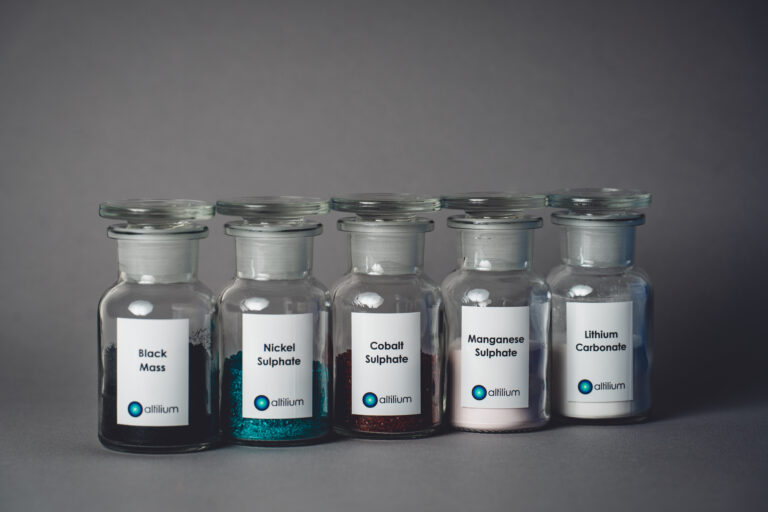
Altilium is pioneering the UK’s transition to sustainable battery materials by recycling old EV batteries into low-carbon materials for next-generation battery production.

Through its proprietary clean technology, the company is building a secure domestic supply chain for critical minerals including lithium, cobalt and graphite, helping reduce the UK’s dependence on imported materials from China while strengthening national energy and industrial security.

Altilium recently secured an £18.5 million UK Government DRIVE35 grant to support development of its ACT 3 scale-up facility, to build the UK’s first EV battery recycling plant.

The company aims to supply up to 50% of the UK’s battery material demand through domestic recycling by 2040, supporting the shift away from imported oil and accelerating the adoption of EVs and Battery Energy Storage Systems (BESS).

Altilium’s EcoCathode™ process produces recycled cathode materials with up to 74% lower CO₂ emissions than conventional mined alternatives, aligning energy security with decarbonisation goals.

Investor confidence remains strong, with the company’s recent Series B2 retail investment campaign on R Europe fully subscribed within just two hours. Institutional backing includes a £10 million investment from SQM, the world’s largest lithium group, alongside strategic investment from Marubeni Corporation and Mizuho Bank.

Having progressed from operating its recycling pilot line ACT 2 to preparing for commercial-scale production, Altilium’s recycled battery materials have been validated through testing with Imperial College London and gigafactory manufacturing trials at UK Battery Industrialisation Centre. The company is also delivering UK Government-backed programmes alongside Jaguar Land Rover and Nissan Motor Corporation, positioning Altilium at the forefront of the UK’s circular battery economy.

To find out more visit here.

Water Intelligence doubles revenue growth in Q1 as B2B push gathers pace

Water Intelligence reported a 9% uptick in first-quarter revenue to $23.2m, more than doubling the prior year’s growth rate, with the leak detection specialist saying April had reinforced the momentum and reaffirming full-year guidance.

The company helps identify leaks in ageing water infrastructure and install new water delivery systems.

International business was the key driver, with corporate locations up 38% to $4.3m on the back of strong trading in Ireland and from franchise-related activities, up 14% to $2.6m, as the B2B channel covering insurance and property management climbed 16%.

US corporate locations grew a more modest 3% to $14.7m, with January trading held back by adverse weather. Franchise royalties dipped 2% to $1.58m, reflecting recent reacquisitions.

Adjusted EBITDA rose 8% to $4.4m, holding margins steady at 19%.

The group’s American Leak Detection arm has rolled out paid B2B pilots for both StreamLabs and Bluebot wireless monitoring devices, as part of its push into preventive maintenance with integrated “Five Star” service-level agreements. A strategic partnership with Bluebot was also announced after the quarter end, alongside the appointment of Michael Moulton as Group CFO.

Looking ahead, management says April growth has carried Q1’s pace into the second quarter, with the B2B channel in particular continuing to build, and the group keeping the door open on opportunistic acquisitions and further share buybacks.

Dr. Patrick DeSouza Executive Chairman, commented: “We are pleased with our team’s operating progress in integrating leading wireless monitoring products with our market-leading minimally-invasive leak detection and repair services offerings. We are now able to offer first-class solutions and provide a great user experience for our water infrastructure customers, especially insurance companies and property management.  We see strong market demand for such integrated offerings. 

“Q1 2026 financial results were much stronger than in Q1 2025.  April reinforced this momentum. We anticipate continued growth momentum for our technology-enabled solutions platform as customers look to preventive maintenance to reduce the cost of water and the cost of damage from water leaks.”

Shares trade at around 13x earnings, which could fall further if Q1 earnings growth continues through the year. After a recent decline, today’s update may be what Water Intelligence shares need to build a base and recover lost ground.

Dr Martens returns to profit growth

Dr Martens has returned to profit growth in FY26, with adjusted pre-tax profit up 61.3% to £55.0m as the business completed its pivot from a channel-led to a consumer-first model.

Revenue came in at £764.9m, down 1.4% in constant currency and in line with guidance, with the dip a deliberate trade-off as management pulled back on clearance and off-price activity to improve the quality of the topline.

This is evident in the margins: gross margin expanded by 120 bps to 66.2%, adjusted EBIT rose by 30% to £79.3m, and statutory PBT jumped to £32.7m from £8.8m. Adjusted EPS rose 75% to 4.2p.

Shoes were the standout product story, with revenue up 19% across new styles like Lowell, Buzz and Zebzag, which now account for 9% of pairs, triple last year.

The group said their famous boots show signs of ‘stabilisation’, but US sales still fell 8%.

Regionally, the Americas was the strongest performer. Full Price DTC revenue rose 14% with Full Price mix up 9 points, while wholesale grew 1.2% in constant currency despite a large off-price deal in FY25. APAC delivered improved quality of revenue, with Full Price DTC up 15% and South Korea particularly strong.

“In FY26 we returned the business to profit growth, delivering a 61% increase in adjusted PBT, with revenue in line with guidance, and made good progress pivoting the business to a consumer‑first operating model,” said Ije Nwokorie, Chief Executive Officer.

“Shoes were the standout performer, up 19%. Our focus on execution is paying off: we are improving the quality of revenues whilst strengthening margins, cash generation, the Balance Sheet and overall model resilience.

“There is still work to do in pivoting the business, however in FY27 we will also enter the scale phase of our strategy. Desire for the Dr. Martens Brand continues to grow, with more collaborators approaching us, increased wholesale partner support, strong consumer response to new product families, and an excited reaction from the market to our first beacon store on Brewer Street, London.”